
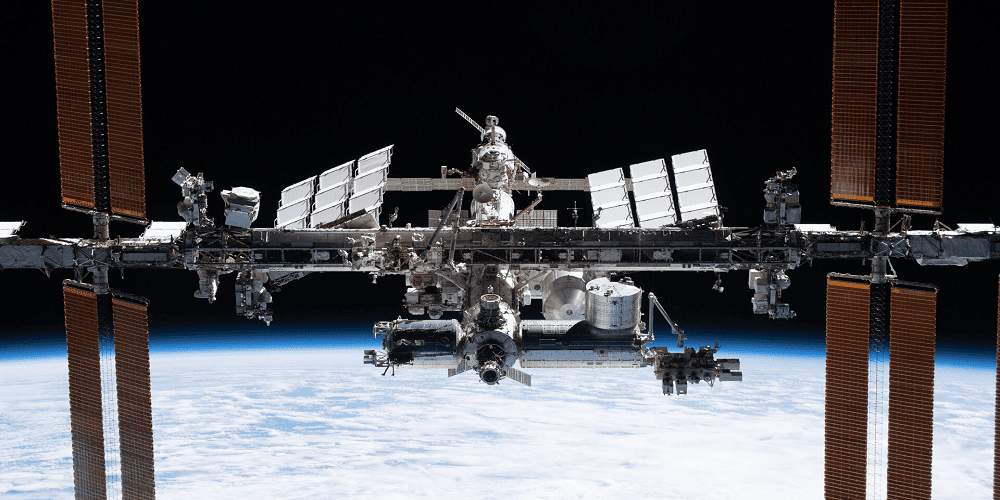
The International Space Station (ISS) is one of humanity’s greatest engineering achievements. Since its launch in 1998, the station has served as a research laboratory, technology testing platform, and symbol of international cooperation in space. However, the ISS is approaching the end of its operational life, and plans are already being developed for its controlled deorbit. As discussions about the future of the station continue, many experts and environmental organizations are examining the ISS deorbit environmental impact and what it could mean for Earth, space operations, and the environment.
The International Space Station weighs approximately 420 metric tons, making it the largest human-made structure ever assembled in orbit. When its mission ends, it cannot simply remain in space indefinitely because aging systems, orbital decay, and safety concerns make a controlled reentry necessary. Understanding the ISS deorbit environmental impact is important because the process involves atmospheric reentry, debris management, emissions generation, and potential effects on both Earth's environment and the space ecosystem.
This article explores the environmental consequences of deorbiting the ISS, the strategies being developed to minimize risks, and the broader lessons for future space infrastructure.
What Is ISS Deorbiting?
ISS deorbiting refers to the controlled process of lowering the station’s orbit until it reenters Earth’s atmosphere. During reentry, most of the station is expected to burn up due to extreme heat generated by atmospheric friction.
Space agencies including NASA, Roscosmos, ESA, JAXA, and CSA have been planning a safe and controlled descent. The objective is to guide any surviving debris toward a remote area of the Pacific Ocean often called the "spacecraft cemetery."
The ISS deorbit environmental impact depends largely on how much material survives reentry, the emissions released during atmospheric burn-up, and the potential effects on marine ecosystems where debris may eventually land.
Why the ISS Cannot Stay in Orbit Forever
The ISS constantly loses altitude due to atmospheric drag. Even at an altitude of around 400 kilometers, traces of Earth's atmosphere create resistance that gradually slows the station.
Without periodic boosts from spacecraft and propulsion systems, the station would naturally descend and eventually reenter the atmosphere uncontrollably. A controlled deorbit is therefore considered the safest option.
Several factors contribute to the decision:
- Aging infrastructure
- Increasing maintenance costs
- Structural wear and tear
- Technological obsolescence
- Safety concerns for astronauts
The controlled process is designed to reduce the overall ISS deorbit environmental impact while ensuring public safety.
Understanding Atmospheric Reentry
Atmospheric reentry occurs when an object from space enters Earth's atmosphere at extremely high speeds.
As the ISS descends:
- Friction generates intense heat
- External structures begin to melt
- Components break apart
- Most materials vaporize
Temperatures can exceed several thousand degrees Celsius during reentry. Aluminum, titanium, steel, and composite materials are exposed to extreme thermal conditions.
Because of this intense heating, approximately 90% or more of the station's mass is expected to burn up before reaching Earth's surface. This significantly reduces the physical debris associated with the ISS deorbit environmental impact.
Atmospheric Pollution Concerns
One of the primary environmental concerns involves emissions produced during reentry.
When spacecraft materials burn in the atmosphere, they release:
- Aluminum oxides
- Nitrogen compounds
- Metal particles
- Trace chemical residues
Scientists are studying whether repeated spacecraft reentries could influence atmospheric chemistry.
The ISS deorbit environmental impact is particularly significant because of the station's enormous size. The quantity of material entering the atmosphere is much larger than that of typical satellites.
Although a single ISS reentry is unlikely to cause measurable global environmental damage, researchers are increasingly interested in cumulative effects as space activity expands worldwide.
Aluminum Oxide Production
A major focus of environmental studies is aluminum oxide.
Large portions of the ISS structure are constructed from aluminum alloys. During atmospheric burn-up, these materials can form aluminum oxide particles.
Potential concerns include:
- Changes in upper atmospheric chemistry
- Interactions with ozone-related processes
- Long-term accumulation of particles
Current scientific evidence suggests that one controlled ISS deorbit event will have limited environmental consequences. However, the event provides a valuable opportunity to study how large-scale spacecraft reentries affect atmospheric systems.
Understanding aluminum oxide generation is an essential part of assessing the overall ISS deorbit environmental impact.
Effects on the Ozone Layer
Some researchers have suggested that metal particles from spacecraft reentries could influence ozone chemistry.
The ozone layer protects Earth from harmful ultraviolet radiation. Any process affecting ozone concentration receives significant scientific attention.
Possible concerns include:
- Chemical reactions involving metal oxides
- Alteration of atmospheric composition
- Localized atmospheric disturbances
At present, scientists believe the effect from a single ISS reentry will be minimal. Nevertheless, increasing numbers of satellites entering Earth's atmosphere each year make ongoing research important.
The ISS deorbit environmental impact may therefore contribute valuable scientific data regarding future atmospheric protection strategies.
Carbon Emissions and Energy Use
The deorbit process itself requires propulsion systems and supporting missions.
Fuel consumption occurs through:
- Deorbit spacecraft operations
- Mission planning activities
- Launches supporting final station operations
- Ground infrastructure usage
Compared with global industrial emissions, these contributions are extremely small.
However, environmental assessments often include all mission-related activities when evaluating the complete ISS deorbit environmental impact.
Space agencies are increasingly focused on sustainable spaceflight practices to reduce environmental footprints associated with launches and spacecraft disposal.
Impact on Marine Ecosystems
Some ISS debris may survive reentry and land in designated ocean regions.
The selected impact area is expected to be a remote section of the South Pacific Ocean, far from populated regions and major shipping routes.
Potential marine concerns include:
- Metal contamination
- Habitat disturbance
- Physical debris accumulation
Scientists generally consider the risk to marine ecosystems relatively low because:
- Debris will be widely dispersed
- The affected area is extremely large
- Most materials will burn up before impact
Nevertheless, marine monitoring may be conducted to better understand the ISS deorbit environmental impact on ocean environments.
The Spacecraft Cemetery
The Pacific Ocean contains a remote region commonly known as the spacecraft cemetery.
Many retired spacecraft and space stations have been directed there, including:
- Russian space stations
- Cargo spacecraft
- Satellites
- Orbital modules
This location is preferred because:
- Human activity is minimal
- Shipping traffic is low
- Ecological disruption is limited
Directing ISS remnants to this area helps minimize the environmental and safety risks associated with uncontrolled reentry.
Comparison with Natural Space Debris
Earth constantly receives material from space.
Every day:
- Dust particles enter the atmosphere
- Small meteoroids burn up
- Natural debris deposits metals into atmospheric layers
Some researchers compare spacecraft reentry emissions with naturally occurring cosmic material.
The difference lies in composition. Human-made objects contain engineered metals and alloys not commonly found in natural meteorites.
Therefore, the ISS deorbit environmental impact involves unique chemical inputs that scientists continue to investigate.
Space Sustainability and Future Lessons
The retirement of the ISS represents an important moment in space sustainability.
Future space stations are likely to incorporate:
- Easier disposal methods
- Recyclable materials
- Reduced environmental footprints
- Improved end-of-life planning
The lessons learned from the ISS deorbit environmental impact will influence the design of future orbital infrastructure.
Engineers are already developing concepts that prioritize sustainability throughout a spacecraft's entire lifecycle.
Risks of Uncontrolled Reentry
A controlled deorbit is essential because uncontrolled reentry could create larger environmental and safety concerns.
Potential risks include:
- Debris reaching populated areas
- Increased property damage
- Greater uncertainty in impact zones
- Emergency response challenges
By carefully controlling the station's descent, agencies can substantially reduce both environmental and public safety risks.
In many ways, a planned deorbit represents the most environmentally responsible option available.
Scientific Opportunities
The ISS deorbit environmental impact is not only a challenge but also a scientific opportunity.
Researchers can study:
- Atmospheric chemistry changes
- Material burn-up behavior
- Reentry dynamics
- Ocean impact patterns
- Environmental monitoring techniques
The data collected may improve future spacecraft design and disposal procedures.
As commercial spaceflight expands, understanding environmental consequences becomes increasingly important.
Growing Concerns About Satellite Reentries
The number of satellites in orbit has increased dramatically.
Large constellations launched by commercial companies mean that thousands of spacecraft will eventually require disposal.
Scientists worry about:
- Increased atmospheric pollution
- Metal accumulation
- Long-term chemical changes
- Space sustainability challenges
The ISS deorbit environmental impact serves as a high-profile example that may help guide future regulations and best practices.
International Cooperation and Environmental Responsibility
The ISS itself was built through international collaboration, and its retirement reflects the same cooperative approach.
Participating agencies are working together to:
- Ensure safe disposal
- Protect human populations
- Minimize environmental effects
- Advance scientific understanding
Environmental assessments are an important component of deorbit planning.
This collaborative effort demonstrates how global partnerships can address the environmental challenges associated with space exploration.
Future Space Stations and Sustainable Design
Several next-generation space stations are already being planned.
Future facilities may feature:
- Modular architecture
- Recyclable components
- Controlled disposal systems
- Lower environmental impact materials
The experience gained from studying the ISS deorbit environmental impact will help engineers create more sustainable orbital habitats.
Sustainability is becoming a central objective for both government and commercial space programs.
Conclusion
The ISS deorbit environmental impact is an important topic that combines space exploration, environmental science, and sustainability. Although most of the International Space Station will burn up during atmospheric reentry, researchers continue to examine potential effects related to atmospheric emissions, aluminum oxide particles, ozone interactions, marine ecosystems, and long-term space sustainability.
Current evidence suggests that the environmental impact from a single controlled ISS deorbit will be relatively limited. However, the event represents a significant opportunity to improve our understanding of how large spacecraft interact with Earth's environment during reentry. As satellite launches increase and future space stations are developed, the lessons learned from the ISS deorbit environmental impact will play a crucial role in shaping responsible and sustainable space operations for decades to come.
FAQs
What is the ISS deorbit environmental impact?
The ISS deorbit environmental impact refers to the environmental effects associated with the International Space Station's controlled reentry into Earth's atmosphere, including emissions, debris disposal, and potential atmospheric changes.
When will the ISS be deorbited?
Current plans indicate that the International Space Station may be retired around 2030, although final schedules could change based on operational requirements.
Will the entire ISS burn up during reentry?
Most of the station is expected to burn up in the atmosphere, but some larger components may survive and fall into a designated ocean region.
Can ISS reentry damage the ozone layer?
Scientists are studying this possibility, but current evidence suggests that a single ISS reentry is unlikely to cause significant ozone depletion.
Where will ISS debris land?
Any surviving debris is expected to be directed toward a remote area of the South Pacific Ocean known as the spacecraft cemetery.
Is the ISS deorbit environmental impact dangerous for people?
A controlled deorbit is specifically designed to minimize risks to human populations by directing debris away from inhabited regions.
Why is environmental research important during ISS deorbiting?
Environmental research helps scientists understand atmospheric effects, pollution concerns, and sustainability issues related to future space missions.
How will the ISS deorbit environmental impact influence future spacecraft?
The findings will help engineers design spacecraft and space stations with safer disposal methods and lower environmental footprints.
Leave A Comment
0 Comment