
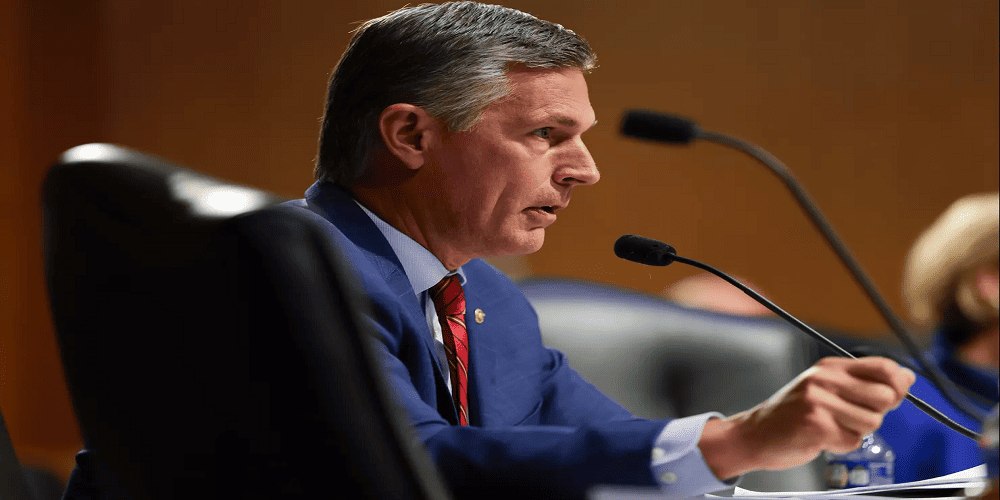
The phrase “senate blocks data center bill” became a major search trend after a Senate effort to quickly advance legislation focused on the rising electricity costs associated with large data centers failed on September 17, 2026. The development came just one day after the U.S. House of Representatives overwhelmingly approved the Ratepayer Protection Act by a vote of 417–3.
The Senate action does not mean that Congress has permanently rejected the legislation. Instead, the immediate effort to pass the House-approved measure through a fast-track procedure was stopped after Senator Martin Heinrich, a Democrat from New Mexico, objected to unanimous consent. Heinrich also wanted the Senate to consider a different proposal dealing with the same broader issue.
The disagreement highlights a growing national debate over artificial intelligence, electricity demand, utility infrastructure and who should pay when massive data centers require new power-generation and transmission capacity.
What Is the Data Center Bill?
The legislation at the center of the dispute is the Ratepayer Protection Act. The measure is designed to address concerns that rapid data center construction could increase electricity costs for ordinary households.
Modern data centers consume enormous amounts of electricity. The facilities support cloud computing, artificial intelligence, online services, data storage and other digital operations. As companies build larger AI infrastructure, their demand for power has grown rapidly.
The concern among lawmakers and consumers is relatively straightforward: when a large data center connects to the electrical grid, utilities may need to build or upgrade generation, transmission and distribution infrastructure. If those costs are spread across the broader customer base, households and smaller businesses could potentially end up paying for infrastructure primarily needed by very large electricity users.
The House-passed Ratepayer Protection Act attempts to address this concern by directing state utility regulators to consider whether large electricity consumers should cover the additional infrastructure costs associated with their operations.
Why Did the Senate Block the Bill?
The Senate did not vote down the Ratepayer Protection Act in a conventional roll-call vote.
Instead, Senator Jon Husted, Republican of Ohio, attempted to move the House-passed measure through unanimous consent. This procedure can allow the Senate to approve legislation quickly when no senator objects.
Senator Martin Heinrich objected to the request.
Because unanimous consent requires agreement from senators, the objection prevented the bill from moving forward through that expedited process. Heinrich argued for consideration of his own proposal, known as the GRID Savings Act.
Senator Bernie Moreno, Republican of Ohio, then objected to Heinrich's effort to move his alternative legislation.
As a result, neither proposal received Senate approval during that exchange.
This is why headlines describing how the senate blocks data center bill can be somewhat misleading. The Senate did not permanently kill the legislation. Rather, a procedural attempt to pass the House measure quickly failed.
What Happened in the House?
The House action was much more decisive.
On September 16, 2026, the House passed the Ratepayer Protection Act by a vote of 417–3. The overwhelming vote demonstrated unusually strong bipartisan support for addressing the electricity-cost concerns surrounding data center expansion.
The legislation has attracted attention because data centers are increasingly connected to the country's artificial intelligence expansion.
AI systems require significant computing resources, and those resources depend on large data centers. As companies compete to develop increasingly powerful AI products, demand for electricity and related infrastructure is expected to remain a major policy issue.
The House bill therefore represents one of the first major federal legislative attempts to address the economic impact of the data center boom.
However, the measure does not directly impose a nationwide electricity surcharge on data centers. Instead, it focuses on state utility regulators and asks them to consider whether large electricity users should be responsible for incremental costs related to their power demand.
Why Are Data Centers Becoming a Political Issue?
Data centers were once largely viewed as a technology and business issue. That has changed significantly.
The rapid growth of artificial intelligence has turned data center development into an energy and infrastructure issue as well.
Large facilities can require substantial amounts of electricity. When several projects are developed in the same region, utilities may need additional generation capacity, transmission lines, substations and distribution upgrades.
Those projects can be expensive.
This has raised an important political question: Who should pay for the infrastructure?
Supporters of the Ratepayer Protection Act argue that large electricity consumers should not shift their infrastructure costs onto ordinary households.
Critics, however, believe the federal legislation does not go far enough. Environmental and consumer advocates have argued that the debate should also consider issues such as water consumption, pollution, local economic effects and the broader environmental impact of large data centers.
Martin Heinrich's Alternative Approach
Senator Martin Heinrich's objection was not simply opposition to protecting electricity customers.
Heinrich has promoted an alternative approach through the GRID Savings Act. His proposal reflects a different view of how the federal government should address the growing electricity demands of data centers.
The disagreement is therefore partly about the level and structure of regulation.
The House-backed approach emphasizes state utility regulators considering cost allocation for large electricity users.
The alternative approach seeks stronger federal action concerning the costs and infrastructure associated with large electricity loads.
Both approaches are responding to the same fundamental problem: rapidly increasing electricity demand from large facilities and concerns about the effect that demand could have on other customers.
What Does Ratepayer Protection Mean?
A ratepayer is essentially a customer who pays for electricity through a utility.
Ratepayer protection means ensuring that ordinary electricity customers are not unfairly charged for costs caused primarily by another customer.
For example, imagine a region where a massive data center requires a new transmission line and major electrical upgrades. If the utility spreads the entire cost across all customers, residential users could indirectly contribute to infrastructure built largely to serve the data center.
Supporters of the Ratepayer Protection Act want regulators to examine whether the large electricity user should instead pay some or all of those incremental costs.
This concept is becoming increasingly important as electricity demand from AI-related infrastructure grows.
Why Are AI Data Centers Driving Electricity Demand?
Artificial intelligence requires significant computing power.
AI models are trained and operated using specialized computing systems that can consume large amounts of electricity. Companies also need data centers to store information, operate cloud services and provide computing resources to users.
As AI adoption increases, companies are investing billions of dollars in new data center infrastructure.
The result is a growing connection between the technology sector and the energy sector.
A company may announce a new AI facility because it needs more computing capacity. The utility serving that facility then has to determine whether the existing electrical infrastructure can handle the additional demand.
If upgrades are necessary, someone has to pay for them.
That is the central economic issue behind the current congressional debate.
Could Data Centers Increase Household Electricity Bills?
Potentially, depending on local utility rules and how infrastructure costs are allocated.
The concern is not necessarily that every data center will automatically cause household electricity bills to increase.
Instead, the issue involves the cost of expanding the electrical system to accommodate extremely large new customers.
If utilities recover those costs from a broad customer base, other ratepayers could potentially experience higher costs.
This is why supporters of the Ratepayer Protection Act want state regulators to examine whether large electricity users should be responsible for the additional expenses associated with serving them.
The House legislation was designed around that principle rather than imposing a single nationwide price structure.
Why Did the House Vote 417–3 Matter?
The 417–3 vote was significant because it showed strong bipartisan agreement.
Data center regulation is not traditionally a simple Democratic or Republican issue. Some lawmakers support AI development and economic investment but also want to make sure communities are not left with higher utility bills.
The overwhelming House vote demonstrated that concern about electricity costs has become politically important.
It also came less than seven weeks before the 2026 midterm elections, making energy costs and data center development increasingly relevant to political campaigns.
Recent political reporting has shown that candidates from both parties are increasingly discussing the impact of large data centers on local electricity systems and communities.
What Happens After the Senate Blocks Data Center Bill?
The House-passed Ratepayer Protection Act has not become law.
For legislation to become federal law, it must successfully pass both chambers of Congress and then go through the presidential process.
Because the Senate did not approve the House measure during the September 17 effort, additional legislative action is necessary.
The Senate could potentially consider the bill through another procedure. Senators could also negotiate changes or develop an alternative proposal.
Another possibility is that the two sides could attempt to combine elements of their respective approaches.
Therefore, the current Senate blockage should not necessarily be interpreted as the end of the legislation.
It represents a significant political disagreement over how the federal government should respond to the energy demands of the AI and data center industries.
What Are Supporters Saying?
Supporters of the Ratepayer Protection Act argue that electricity customers should not be forced to subsidize the infrastructure needs of extremely large commercial users.
Senator Jon Husted described the measure as an important bipartisan effort to protect Americans from higher electricity prices.
The argument is especially relevant in areas experiencing rapid data center development.
Supporters also believe the legislation could encourage data center operators and utilities to negotiate more appropriate arrangements for infrastructure costs.
From this perspective, large companies that create unusually high electricity demand should have greater responsibility for the costs created by that demand.
What Are Critics Saying?
Critics have raised several concerns.
One criticism is that the legislation does not go far enough because it primarily tells state regulators to consider cost allocation rather than establishing stronger mandatory federal requirements.
Environmental groups have also argued that electricity costs are only one part of the data center debate.
Large facilities can require significant amounts of water for cooling, occupy substantial amounts of land and affect local communities. Some advocates therefore want broader rules covering environmental impacts, community benefits and transparency.
The debate is consequently much larger than a single bill.
It is becoming a question about how the United States wants to develop AI infrastructure while balancing consumer costs, energy reliability and environmental concerns.
What Does the Dispute Mean for the AI Industry?
The dispute could become increasingly important for technology companies.
AI development depends on computing infrastructure, and computing infrastructure depends on electricity.
If electricity becomes more expensive or new data center projects face greater regulatory requirements, the cost of building AI infrastructure could increase.
On the other hand, clearer rules could provide companies and utilities with greater certainty.
Data center operators may be more willing to invest when they understand exactly how infrastructure costs will be calculated and who will be responsible for them.
Utilities could also benefit from clearer guidelines when negotiating with large customers.
In that sense, the debate is not necessarily about stopping data center development. It is about determining how that development should be financed.
Why the Senate Fight Matters to Consumers
For ordinary consumers, the issue may appear distant from everyday life.
However, electricity infrastructure is ultimately paid for through utility systems.
If a region needs major investments to support new large electricity users, the method used to recover those costs can affect electricity customers.
That is why the debate has attracted attention beyond Washington.
Consumers want reliable electricity without unnecessarily high bills. Technology companies want enough power to operate increasingly demanding computing facilities. Utilities need to maintain and expand the grid.
Lawmakers are now trying to balance all three interests.
Is the Senate Blockage Permanent?
No.
The September 17 action prevented the House-passed bill from receiving expedited approval through unanimous consent. It did not permanently eliminate the legislation.
The House has already passed its version, but the Senate has not approved it.
That means lawmakers still have several possible paths forward.
The Senate could take up the House bill through regular legislative procedures, negotiate changes, consider alternative legislation or leave the issue unresolved.
For now, the Ratepayer Protection Act remains pending at the federal level.
The Bigger Picture
The senate blocks data center bill story is ultimately about much more than one congressional procedure.
It reflects the growing tension between America's push to expand artificial intelligence and the physical limitations of the electrical grid.
AI companies need data centers. Data centers need electricity. Electricity infrastructure requires investment.
The central question is who should carry the financial burden of that investment.
The House has signaled strong support for protecting ratepayers from potentially unfair costs. The Senate debate shows that lawmakers have not yet reached agreement on how that protection should work.
As AI development accelerates, this issue is unlikely to disappear.
More data centers are expected to be proposed, more utilities will face questions about large electricity loads and more communities will debate whether the economic benefits justify the infrastructure and environmental costs.
The Senate's September 17 action therefore represents an important moment in a much larger national conversation.
The immediate attempt to advance the Ratepayer Protection Act failed, but the underlying issue remains active: how should America pay for the enormous amount of electricity required to power its next generation of AI and digital infrastructure?
Conclusion
The senate blocks data center bill development on September 17, 2026, highlights a growing disagreement in Washington over data center electricity costs.
The House had overwhelmingly passed the Ratepayer Protection Act, 417–3, seeking to ensure that state utility regulators consider whether large electricity users should cover the additional costs created by their operations.
In the Senate, Senator Jon Husted attempted to advance the legislation through unanimous consent, but Senator Martin Heinrich objected. Heinrich wanted lawmakers to consider an alternative approach, while Senator Bernie Moreno later objected to Heinrich's proposal.
As a result, neither measure received Senate approval during the exchange.
The dispute does not mean the issue is finished. Instead, it shows how quickly data centers and artificial intelligence have become major energy and political issues.
For consumers, the biggest question is whether the rapid expansion of data centers will increase electricity costs. For technology companies, the question is how much infrastructure investment will be required to support AI growth. For lawmakers, the challenge is finding a policy that protects consumers without unnecessarily slowing technological development.
The debate is likely to continue as the United States expands its AI infrastructure and faces growing pressure to modernize the electrical grid.
FAQs
1. What does “senate blocks data center bill” mean?
It refers to the September 17, 2026 Senate effort in which Senator Martin Heinrich objected to an attempt to quickly pass the House-approved Ratepayer Protection Act through unanimous consent. The objection prevented the expedited passage of the legislation.
2. What is the Ratepayer Protection Act?
The Ratepayer Protection Act is legislation designed to address concerns about electricity costs associated with large electricity users such as data centers. It would direct state utility regulators to consider whether these customers should cover incremental infrastructure costs related to their power demand.
3. Did the House pass the data center bill?
Yes. The House passed the Ratepayer Protection Act on September 16, 2026, by a vote of 417–3. The strong bipartisan vote made the legislation one of the most significant recent federal efforts addressing the economic impact of data center expansion.
4. Why are data centers causing concerns about electricity prices?
Large data centers can require substantial amounts of electricity. Serving them may require new generation, transmission and distribution infrastructure. Lawmakers and consumer advocates are concerned that ordinary electricity customers could end up paying some of those costs if they are spread across the wider rate base.
5. Is the data center bill dead after the Senate blockage?
No. The Senate's September 17 action stopped an expedited attempt to pass the House bill, but it did not permanently reject the legislation. The measure could still be considered through future Senate action or become part of negotiations over alternative legislation.
Leave A Comment
0 Comment