
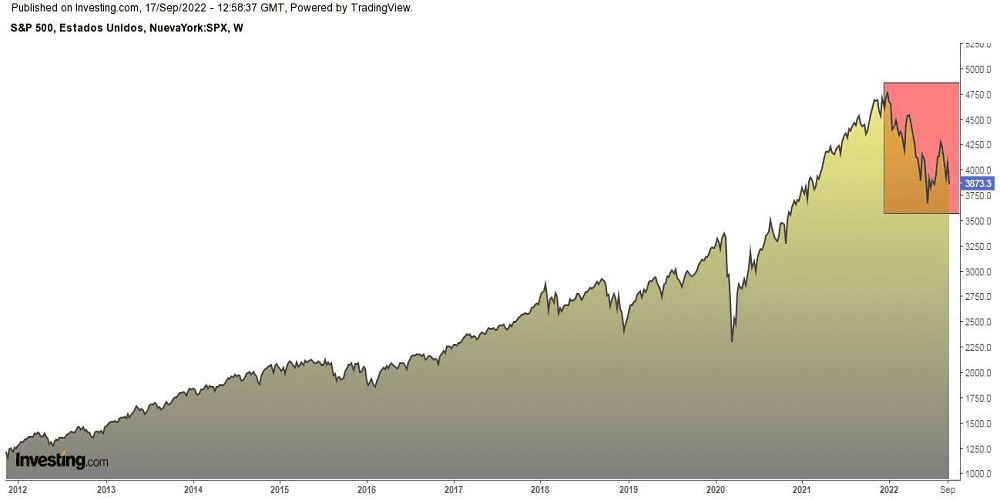
The stock market has always moved through cycles of growth, decline, recovery, and expansion. Among the most closely watched market indicators in the world, the S&P 500 stands out as a benchmark for measuring the performance of large publicly traded companies in the United States. Investors, economists, and financial analysts frequently study the S&P 500 rapid rise history to understand how market rallies develop and what factors drive extraordinary gains.
The S&P 500 represents 500 of the largest companies listed on U.S. stock exchanges. Because it covers a broad range of industries, it is often viewed as a reflection of the overall health of the U.S. economy. Throughout its history, the index has experienced periods of remarkable growth, sometimes rising at a pace that surprised even experienced investors.
Understanding the S&P 500 rapid rise history can help investors identify patterns, appreciate the role of economic cycles, and recognize how innovation, monetary policy, and investor sentiment contribute to market performance.
What Is the S&P 500?
The S&P 500, short for the Standard & Poor’s 500 Index, was introduced in 1957. It tracks the performance of 500 major U.S. companies across various sectors, including technology, healthcare, finance, energy, and consumer goods.
Some of the largest companies in the index include technology leaders, financial institutions, healthcare providers, and consumer brands. Since the index is weighted by market capitalization, larger companies have a greater influence on its movement.
Because of its broad representation, the S&P 500 is often considered one of the best indicators of the U.S. stock market.
Why Investors Study S&P 500 Rapid Rise History
The S&P 500 rapid rise history provides valuable insights into how markets behave during periods of strong economic growth and investor optimism.
Investors analyze these periods to:
- Understand bull market behavior
- Identify economic conditions that support growth
- Learn from past investment opportunities
- Evaluate market risks
- Improve long-term investment strategies
Studying historical rallies also reminds investors that major gains often follow periods of uncertainty and market declines.
The Early Growth Years
During the 1950s and 1960s, the U.S. economy experienced strong post-war expansion. Manufacturing output increased, consumer spending grew, and businesses expanded rapidly.
This period marked one of the earliest chapters in the S&P 500 rapid rise history. Economic prosperity, infrastructure development, and rising household incomes contributed to sustained market growth.
Investors who remained invested during these decades benefited from long-term appreciation as corporate earnings increased steadily.
The Bull Market of the 1980s
One of the most significant periods in the S&P 500 rapid rise history occurred during the 1980s.
Following high inflation and economic challenges in the 1970s, the U.S. economy entered a period of recovery. Lower interest rates, tax reforms, technological advancement, and improved business productivity helped fuel a major stock market rally.
Several factors contributed to the rapid rise:
- Economic expansion
- Declining inflation
- Increased corporate profitability
- Growing investor confidence
- Financial market innovation
Although the market experienced volatility, including the famous 1987 crash, the overall decade delivered impressive gains for long-term investors.
The Technology Boom of the 1990s
No discussion of S&P 500 rapid rise history would be complete without mentioning the technology-driven rally of the 1990s.
The rise of personal computers, internet companies, and software innovation transformed the global economy. Investors poured money into technology stocks, anticipating enormous future growth.
During this period:
- Technology companies expanded rapidly.
- Internet adoption accelerated worldwide.
- Corporate profits increased significantly.
- Venture capital investment surged.
The S&P 500 climbed sharply as major technology firms became market leaders. Investor enthusiasm reached unprecedented levels, pushing valuations higher.
While the technology bubble eventually burst in 2000, the decade remains one of the most remarkable growth periods in stock market history.
Recovery After the Dot-Com Crash
The early 2000s brought significant challenges. Following the collapse of many internet companies, stock prices declined substantially.
However, the S&P 500 rapid rise history demonstrates that markets often recover from downturns.
Between 2003 and 2007, the index experienced a strong rebound driven by:
- Economic growth
- Corporate earnings recovery
- Housing market expansion
- Increased consumer spending
This recovery highlighted the resilience of the U.S. economy and reinforced the importance of long-term investing.
The Financial Crisis and Historic Rebound
The global financial crisis of 2008 created one of the most severe market declines in modern history.
Banks faced significant losses, credit markets froze, and economic activity slowed dramatically. The S&P 500 suffered substantial declines as investor fear spread across global markets.
Yet one of the most important chapters in S&P 500 rapid rise history began shortly afterward.
Starting in 2009, markets launched a historic recovery fueled by:
- Government stimulus programs
- Central bank support
- Low interest rates
- Improved corporate balance sheets
- Economic stabilization
The rally that followed became one of the longest bull markets ever recorded.
The Long Bull Market of 2009–2020
Many market experts consider the decade following the financial crisis one of the strongest periods in S&P 500 rapid rise history.
Several factors contributed to sustained growth:
Technological Innovation
Companies involved in cloud computing, social media, e-commerce, and digital services expanded rapidly.
Low Interest Rates
Low borrowing costs encouraged business investment and consumer spending.
Strong Corporate Earnings
Many companies consistently reported growing profits, supporting higher stock valuations.
Global Economic Growth
International trade and expanding consumer markets helped large corporations increase revenue.
Investors who maintained long-term positions during this period experienced substantial portfolio growth.
The Pandemic Crash and Extraordinary Recovery
The COVID-19 pandemic created one of the fastest market declines ever witnessed.
During early 2020, uncertainty regarding global lockdowns and economic disruptions caused sharp declines in stock prices.
However, the recovery that followed became a defining moment in S&P 500 rapid rise history.
Key drivers included:
- Massive fiscal stimulus
- Central bank intervention
- Rapid technological adoption
- Increased online commerce
- Investor confidence in economic recovery
Within months, the market rebounded significantly and eventually reached new record highs.
This rapid turnaround demonstrated how quickly market sentiment can change when investors anticipate future economic growth.
The Role of Technology in Market Surges
Technology companies have played a major role throughout the S&P 500 rapid rise history.
Many of the largest market rallies have been supported by innovation in:
- Computing
- Software
- Internet services
- Artificial intelligence
- Cloud infrastructure
- Digital communication
As technology firms grew larger, their influence on the index increased. Because these companies often generate substantial profits and revenue growth, they frequently drive overall market performance.
Economic Conditions Behind Rapid Market Growth
Several common themes appear repeatedly throughout the S&P 500 rapid rise history.
Economic Expansion
Strong GDP growth often supports rising corporate earnings.
Low Interest Rates
Lower borrowing costs encourage investment and spending.
Corporate Profit Growth
Companies that generate increasing profits typically attract investors.
Innovation
Technological breakthroughs can create entirely new industries and investment opportunities.
Positive Investor Sentiment
Optimistic expectations often contribute to higher stock prices.
When multiple factors align simultaneously, rapid market advances become more likely.
Lessons from S&P 500 Rapid Rise History
The S&P 500 rapid rise history offers several valuable lessons for investors.
Markets Recover
Even after severe declines, markets have historically recovered over time.
Long-Term Investing Matters
Investors who stay invested often benefit from long-term market growth.
Volatility Is Normal
Periods of rapid gains are frequently accompanied by temporary declines.
Diversification Helps
Holding a diversified portfolio can reduce risk during uncertain periods.
Patience Is Rewarded
Many of the strongest gains occur after challenging market conditions.
How Investors Can Learn from Historical Rallies
Studying historical market surges helps investors develop realistic expectations.
Instead of attempting to predict short-term movements, many successful investors focus on:
- Long-term goals
- Consistent investing
- Diversification
- Risk management
- Fundamental analysis
The S&P 500 rapid rise history demonstrates that wealth creation often results from staying invested through multiple market cycles.
Common Misconceptions About Rapid Market Growth
Several myths surround major stock market rallies.
Myth 1: Markets Only Go Up
Even during strong bull markets, temporary declines occur regularly.
Myth 2: Timing the Market Is Easy
Predicting exact market tops and bottoms is extremely difficult.
Myth 3: Rapid Growth Lasts Forever
Every market cycle eventually slows or corrects.
Myth 4: Past Performance Guarantees Future Results
Historical gains do not guarantee future returns.
Understanding these realities helps investors make more informed decisions.
Future Outlook
While nobody can predict future market performance with certainty, the principles behind the S&P 500 rapid rise history remain relevant.
Innovation, economic growth, corporate earnings, and investor confidence will likely continue influencing market direction.
Emerging technologies such as artificial intelligence, automation, renewable energy, biotechnology, and advanced computing may shape future periods of rapid growth.
Investors who understand historical trends may be better prepared to navigate future opportunities and challenges.
Conclusion
The S&P 500 rapid rise history reflects decades of economic growth, technological innovation, corporate success, and investor optimism. From post-war expansion and the technology boom to the recovery following the financial crisis and pandemic rebound, the index has repeatedly demonstrated its ability to recover and reach new highs.
While market declines can be unsettling, history shows that long-term investors often benefit from patience and discipline. By studying the S&P 500 rapid rise history, investors gain valuable insight into how markets evolve and why maintaining a long-term perspective remains one of the most effective approaches to investing.
FAQs
What does S&P 500 stand for?
S&P 500 stands for Standard & Poor’s 500 Index, which tracks 500 large publicly traded U.S. companies.
Why is the S&P 500 important?
It serves as a benchmark for the overall U.S. stock market and reflects the performance of many major industries.
What was the biggest period of growth in S&P 500 rapid rise history?
Several periods stand out, including the 1990s technology boom and the recovery following the 2008 financial crisis.
How often does the S&P 500 experience rapid growth?
Rapid growth periods occur during strong economic expansion, technological innovation, and favorable financial conditions.
Can investors predict the next major S&P 500 rally?
No one can predict future market movements with certainty. Most experts recommend focusing on long-term investment strategies.
What causes the S&P 500 to rise quickly?
Factors include economic growth, strong corporate earnings, low interest rates, technological innovation, and positive investor sentiment.
Is the S&P 500 a good long-term investment?
Many investors consider it a strong long-term investment because it provides exposure to leading U.S. companies across multiple sectors.
What can investors learn from S&P 500 rapid rise history?
Investors can learn the importance of patience, diversification, long-term investing, and maintaining discipline during both market gains and downturns.
Leave A Comment
0 Comment