
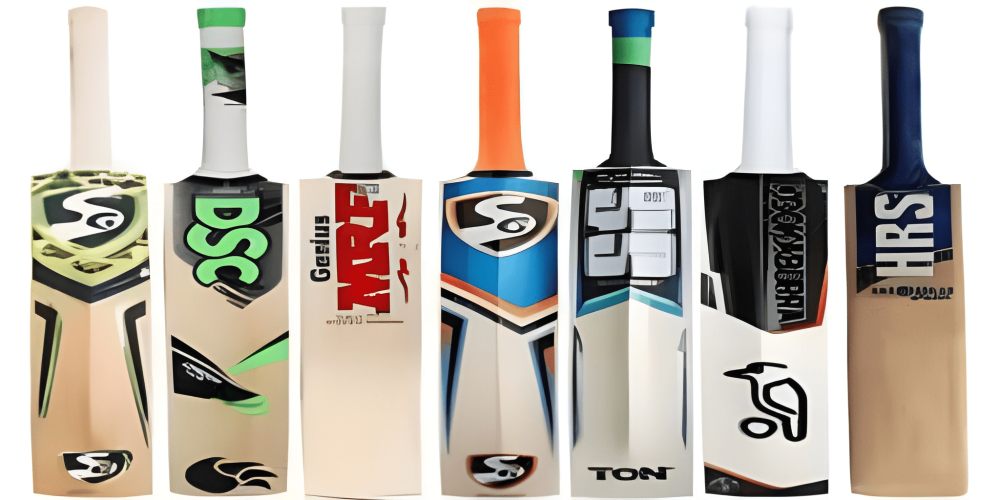
The Cricket Bat: A Deep Dive into the Willow, the Craft, and the Soul of the Game
There is a moment, just before a fast bowler begins his run-up, when the world falls silent. The crowd holds its breath. The batsman taps his cricket bat gently on the pitch, a ritual as old as the game itself. That piece of willow is more than equipment; it is an extension of the batsman’s ego, a tool of defiance, and a canvas for heroism. No other sport has a relationship between player and implement quite like the one between a batter and their cricket bat.
To the uninitiated, a cricket bat might look like a simple plank of wood: a flat front, a curved back, a long handle. But to those who know, it is a masterpiece of biomechanical engineering, natural physics, and centuries of tradition. The journey of the modern cricket bat—from a sun-drenched English willow farm to the thunderous cauldron of the MCG or the dusty maidans of Mumbai—is a story of obsession.
The Anatomy of Power: Breaking Down the Cricket Bat
Before we discuss the legends who wield them, we must understand what a cricket bat actually is. According to the Laws of Cricket (Law 5 specifically), the bat must consist of a blade and a handle. But the nuance lies in the details.
The blade is traditionally made from willow, specifically Salix alba caerulea, or Cricket Bat Willow. The face of the cricket bat must be flat, and the edges, spine, and toe all play specific roles. The sweet spot—that mythical area that sends the ball rocketing to the boundary with minimal effort—has migrated upwards over the last twenty years. Modern bats have massive edges, often exceeding 40 millimeters, and a pronounced spine that runs down the back like the keel of a ship.
Then there is the handle. Made from cane and rubber, the handle is glued and bound with twine before being inserted into the splice of the blade. This is the shock absorber. A poorly spliced cricket bat will transfer the full vibration of a leather ball into the batsman’s hands, stinging for days. A great one feels like a feather duster striking silk.
English Willow vs. Kashmir Willow: The Great Debate
If you walk into any cricket shop, the first question you will be asked is: "English or Kashmir?" This is the great schism of the cricket bat world.
English Willow is the gold standard. Grown primarily in Essex, Suffolk, and Nottinghamshire, this wood is light, responsive, and fibrous. An English Willow cricket bat requires "knocking in"—hours of manual labor with a mallet to compress the fibers. When done right, it yields a "ping" that no other wood can replicate. However, it is fragile. English Willow can crack, split, or lose its rebound if mistreated.
Kashmir Willow, on the other hand, is the working-class hero. Grown in the northern regions of the Indian subcontinent, it is denser, heavier, and harder. A Kashmir Willow cricket bat does not have the same springy response as its English cousin, but it is nearly indestructible. For village cricket, tennis ball cricket, or junior players who are still learning, a Kashmir Willow cricket bat offers durability without the heartbreak of a costly crack. The price difference is stark: a top-grade English cricket bat can cost as much as a used car, while a decent Kashmir bat is accessible to a schoolchild.
The Grading Myth: Is Grade 1 Always Better?
Manufacturers grade cricket bat willow from Grade 1 (best) down to Grade 4 or 5. But here is the secret the shops don't always tell you: Grade is about aesthetics, not performance.
A Grade 1 cricket bat is visually perfect. It has straight, evenly spaced grains (ideally 6 to 12), no knots, and a creamy, uniform color. It looks like a museum piece. However, some of the most explosive bats ever made—the ones that broke records—had knots or wavy grains. A Grade 3 cricket bat might have a slight discoloration or a tiny pin knot, but if the pressing is correct, it will out-hit a dead Grade 1 bat every day of the week. When buying a cricket bat, do not fall in love with the grains; fall in love with the "pick-up" (the balance) and the rebound off a mallet.
The Evolution of the Cricket Bat: From Hockey Stick to War Club
Look at a cricket bat from the 1950s. It looks like a hockey stick: a long, thin blade, a high swell, and a small edge. Don Bradman used a bat weighing just over 2 pounds. Fast forward to the 2020s, and you see bats weighing 2 pounds 12 ounces or more, with edges that look like slices of bread.
The turning point was the introduction of limited-overs cricket. When batsmen needed to hit sixes, they needed mass behind the ball. The cricket bat became bottom-heavy. Then came the "thicker edges" revolution, popularized by batsmen like Matthew Hayden and the iconic "Spartan" bat used by Brian Lara.
But the biggest change was the abolition of the 40-millimeter edge thickness restriction by the MCC in 2017? Actually, the MCC has always had limits, but manufacturers pushed the boundaries of interpretation. Today, a modern T20 cricket bat resembles a log. Yet, paradoxically, the handle has gotten thinner and the toe has become rounded to allow for scoop shots and reverse sweeps. The cricket bat is now a weapon of versatility.
How to Choose Your Perfect Cricket Bat (Without Getting Cheated)
Walking into a store and picking up a cricket bat is an emotional experience. You will see a dozen bats that look identical. They are not. Here is how to navigate the noise.
First, forget the brand. Virat Kohli uses an MRF, but that bat is custom-made in a basement in England. A store-bought MRF is a licensed replica. Look for the "pressing." A good cricket bat will have a slight "give" when you press your thumbnail into the toe—too hard, and the bat is dead; too soft, and it will crack.
Second, test the "pick-up." Close your eyes and hold the cricket bat in your stance position. Does it feel like a wand or a sledgehammer? For junior players, a heavy bat ruins technique. For power hitters, a light bat offers no momentum. There is a formula: your height minus 6 inches for the bat length (standard is 33.5 inches for adults, but "long handles" exist for tall players). Weight is personal, but if you cannot comfortably play a defensive shot off a fast bowler for ten overs, the cricket bat is too heavy.
Third, inspect the splice. Where the handle meets the blade, there should be no gaps. A single drop of glue missing here means the handle will twist after fifty runs. Also, look at the toe. A dry, cracked toe is the death of a cricket bat. Always apply protective sheet or fiberglass tape to the toe and edges.
The Sacred Ritual: Knocking In and Oiling
If you buy a cricket bat and take it straight to the nets against a fast bowler, you are committing sacrilege. You will hear a dull "thud," then a crack, and then you will see a split running down the blade. This is because a new cricket bat has raw, uncompressed fibers.
The process of "knocking in" is tedious but holy. You take a specialized mallet (or an old ball in a sock) and tap the face, edges, and toe of the cricket bat for four to six hours. You increase the intensity gradually. You are essentially pre-micro-fracturing the wood so it compresses into a hard, springy shell. A properly knocked-in cricket bat will sound like a gunshot when it meets the ball.
Raw linseed oil is another step. A thin coat of oil on the face, toe, and edges (never the splice) prevents the cricket bat from drying out. Willow is wood; wood needs moisture. An oiled cricket bat once a season lasts for years. A dry bat left in a car boot in summer will turn into a brittle plank within weeks.
The Legends and Their Wands
History is written with the cricket bat. Think of Vivian Richards walking out to the crease holding a heavy Gray-Nicolls Scope. He didn't wear a helmet; he just intimidated bowlers with the sheer presence of his cricket bat.
Sachin Tendulkar’s 2003 World Cup bat—the one he used to hit 98 against Pakistan—was a custom-made MRF Genius. It weighed just under 3 pounds, heavy for his frame, but he had the wrists of a watchmaker. Then there is the infamous "Mongoose" cricket bat, a short-bladed, long-handled abomination that was legal for five minutes in 2010 before everyone realized it was useless for defense.
Modern giants like Chris Gayle use bats that look like railway sleepers. Gayle's bat has such thick edges that it resembles a cartoon. Yet, because the wood is high-quality English Willow, it remains light enough to swing at 100 miles per hour. The cricket bat has enabled innings that were once impossible. When AB de Villiers reverse-scooped a 150 kph delivery for six, it wasn't just skill; it was the balance of his cricket bat that allowed the wrist to turn that fast.
Maintenance, Repair, and When to Let Go
A cricket bat is a living thing. After a season of use, the face will develop "pressure marks"—those dark, bruised-looking lines where the ball has hit. This is good. That means the bat is "seasoned." However, if you see a crack running parallel to the grain, panic. A vertical crack is usually cosmetic. A horizontal crack is the bat telling you it is dying.
You can repair a split toe with epoxy and clamps. You can sand down surface cracks. You can replace a broken handle (a specialist job). But when the cricket bat develops a "rattle" inside—a loose piece of willow in the core—it is time for a funeral. That bat is now a garden ornament or a museum piece for your man cave.
Never store a cricket bat in a damp garage. The willow will absorb moisture, become heavy, and rot. Never leave it in a hot car. The glue in the handle will melt. Treat your cricket bat like a Stradivarius, and it will reward you with centuries.
The Future of the Cricket Bat
Will we ever see a carbon fiber cricket bat? No, the laws forbid it. The MCC is clear: the blade must be made of wood. However, manufacturers are playing with the handle materials and the shape of the "sweet spot." Some bats now have "concave" backs to shift weight to the edges. Others have "mid-blade" swells for low-bouncing pitches.
There is also the rise of "player specific" bats. Using AI and high-speed cameras, companies can now analyze a batsman's mistake—hitting too high on the blade, for example—and design a cricket bat that moves the sweet spot to exactly where they hit the ball. This is the future: the cricket bat is no longer a standard tool; it is a customized prosthetic for scoring runs.
Conclusion
The cricket bat is the soul of cricket. It is the only thing standing between a batter and humiliation. It is the tool that turns a defensive prod into a cover drive that poets write about. Whether it is a cheap Kashmir willow bat on a beach in Goa or a handcrafted Grade 1 English willow bat used in a Test match at Lord's, the principle is the same: it is wood, it is will, and it is war.
The next time you pick up a cricket bat, do not just swing it. Feel the grains. Tap the toe. Listen to the ping. Respect the hours of growth, the craftsmanship of the pressing, and the ghosts of every batsman who held a bat before you. Because in the end, a cricket bat isn't just a piece of sports equipment. It is a promise of runs yet to be scored.
Frequently Asked Questions About the Cricket Bat
What is the best wood for a cricket bat?
English Willow is universally considered the best wood for a professional cricket bat due to its superior rebound and lightweight properties.
How long does a cricket bat last?
A well-maintained cricket bat used by a club player can last two to three seasons, while professional bats may only last a few months due to intense usage.
Do I need to knock in a Kashmir Willow cricket bat?
Yes, even Kashmir Willow requires knocking in, though it is harder and less prone to cracking than English Willow.
Why do cricket bats have stickers?
Stickers protect the wood from moisture and minor abrasions, but they also serve as primary branding and sponsorship space for manufacturers.
Can I use a cricket bat for tennis balls?
Yes, but a tennis ball is heavier and harder on the wood than a leather ball, so use a cheaper Kashmir Willow bat to avoid destroying an expensive English Willow bat.
What happens if I hit the ball with the edge of the cricket bat?
Hitting with the edge usually results in a "snick" to the wicketkeeper, and repeatedly edging the ball can cause structural cracks along the side of the blade.
How much does a professional cricket bat weigh?
Professional cricket bats typically weigh between 2 pounds 8 ounces and 2 pounds 14 ounces, though some power hitters use bats over 3 pounds.
What is the difference between a long handle and short handle cricket bat?
A long handle cricket bat is two inches longer in the handle for tall players over 6 feet 2 inches, while a short handle is the standard 33.5 inches for most adults.
Why do batsmen tap their cricket bat on the pitch?
Tapping the bat compresses loose soil, creates a mental rhythm, and tests the bounce of the pitch before facing a delivery.
Is it legal to oil the face of a cricket bat?
Yes, applying raw linseed oil to the face, toe, and edges is legal and recommended, but oiling the splice or handle is illegal and can ruin the grip.
Can a cracked cricket bat be repaired?
Small vertical cracks can be glued and clamped, but large horizontal cracks or a rattling sound inside the blade usually mean the cricket bat is beyond repair.
Why do some cricket bats have a concave back?
A concave back removes wood from the center spine to redistribute weight to the edges, creating a larger sweet spot without increasing total weight.
What is the most expensive cricket bat ever sold?
A bat signed by Don Bradman sold for over $200,000 at auction, while the most expensive new production bat costs around $1,500 for a top-grade English Willow model.
Do women use different cricket bats than men?
No, women use the same cricket bat sizes and weights as men, though many prefer lighter bats in the 2-pound 4-ounce range for better bat speed.
How do I store my cricket bat during winter?
Store your cricket bat in a cool, dry room at room temperature, standing on its toe or lying flat, and apply a light coat of oil before storage to prevent drying out.
Leave A Comment
0 Comment