
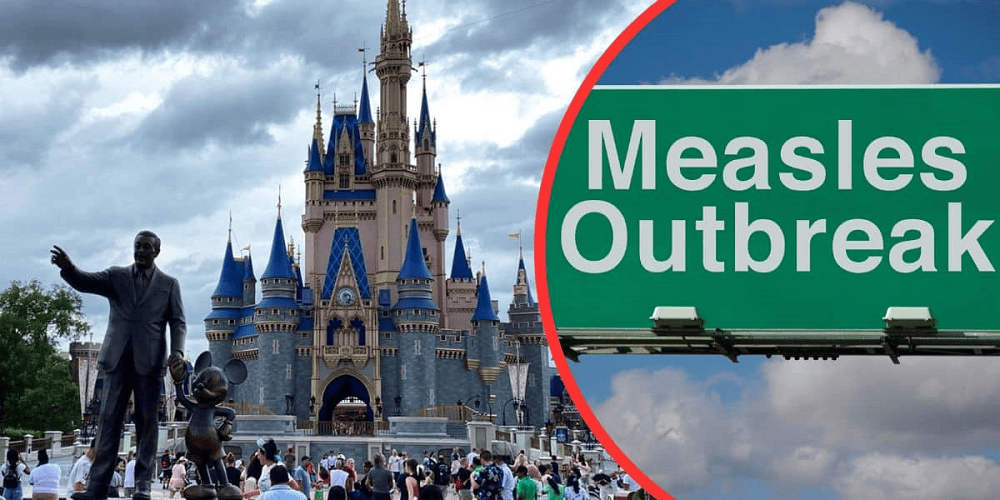
The Disney measles outbreak continues to be one of the more talked about public health events in the U.S. in the past decade. Based at the celebrated Disneyland Resort in Anaheim, California, the outbreak also served as a reminder of how highly contagious measles can be, how international travelers can help fuel outbreaks and how vaccination levels affect the spread of vaccine-preventable diseases. The Disneyland measles outbreak has been used to describe both the large flare-up that began in late 2014 and more recent clusters linked to travelers who visited theme parks. This post delves into the history, spread, origins, responses and some of the ongoing public health implications of the Disneyland outbreak as well.
Understanding Measles and Why It Matters
Measles is a highly contagious viral disease caused by the measles virus, a member of the genus Morbillivirus. It spreads through respiratory droplets when an infected person coughs, sneezes, or even breathes. The virus can linger in the air or on surfaces for up to two hours, meaning that anyone who enters a room recently occupied by someone with measles can still get infected even after the person has left. Symptoms typically begin with fever, cough, runny nose, and conjunctivitis, followed several days later by a characteristic rash that spreads over the body. Complications can be serious, including pneumonia, encephalitis (brain inflammation), and even death, especially in young children or immunocompromised individuals. The disease was declared eliminated in the United States in 2000, meaning there was no continuous transmission for more than a year, largely due to the success of the measles-mumps-rubella (MMR) vaccine. Yet elimination does not mean the disease cannot reappear; measles can enter the country through international travel and spread among unvaccinated populations.
What Happened at Disneyland in 2014–2015?
The most notable Disneyland measles outbreak began in late December 2014 when an infected person visited Disneyland Resort in Anaheim, California. Public health investigations later determined that this initial exposure led to a significant outbreak that would spread across several U.S. states and even into parts of Canada and Mexico. The first identified case linked to this outbreak was reported on January 5, 2015, in an unvaccinated 11-year-old resident of California. The outbreak grew quickly due to the large number of visitors to Disneyland, including international tourists, and the low vaccination rates in some susceptible communities. The outbreak ultimately resulted in at least 131 confirmed measles cases in California alone, with additional cases linked to the Disneyland measles outbreak in other states and countries. In Quebec, Canada, for example, a religious community with low vaccination rates saw 159 infections connected to the spillover from the Disneyland outbreak. In Mexico, a case was also linked. Almost all who became infected were either unvaccinated or had unknown vaccination status. The initial source person was never definitively identified, but genetic evidence suggested links to concurrent outbreaks elsewhere in the world.(Wikipedia)
The Role of Low Vaccination Rates
One of the central causes of the Disneyland measles outbreak was the low vaccination rate among certain groups of people. Measles requires a high level of population immunity—often estimated at roughly 95 percent—to achieve what public health experts call “herd immunity,” the level at which enough people are immune that the disease cannot sustain transmission in a community. However, researchers examining the 2014–2015 outbreak found that vaccination rates among those exposed were far below that threshold. Some estimates placed vaccination coverage among exposed individuals as low as 50 percent and rarely above 86 percent, far below the 95 percent needed for reliable herd immunity. This gap in immunity allowed the virus to spread rapidly, especially among unvaccinated or partially vaccinated individuals. Much of the spread occurred in communities with vaccine hesitancy or refusal, where parents declined or delayed recommended doses of the MMR vaccine for their children. The Disneyland measles outbreak thus became a touchstone in the national conversation about the risks associated with vaccine refusal and the importance of maintaining high immunization levels in the population.(California Healthline)
Spread Beyond Disneyland
Although the virus originated at Disneyland, its impact was not confined to the theme park itself. Visitors to Disneyland come from all over the United States and the world, meaning that an infected individual could easily spread the virus to multiple locations after leaving the park. During the peak of the outbreak, cases appeared in at least seven U.S. states, including Utah, Washington, Colorado, and Oregon, and in parts of Mexico and Canada. The Canadian outbreak tied to the Disneyland measles outbreak occurred in a community with low vaccination coverage, which allowed the disease to intensify. The spread of the virus beyond Disneyland underscored how quickly measles can travel in our interconnected world, especially when people gather in locations with high human density, such as theme parks, airports, or public spaces.(KPBS Public Media)
Public Health Response and Containment
Local, state, and national public health authorities responded to the Disneyland measles outbreak with a series of containment measures. These included case investigations, contact tracing to identify those exposed, recommendations (and in some cases requirements) for vaccination, and communication campaigns to inform the public about measles symptoms and prevention. Hospitals and clinics were alerted to test suspected cases and implement isolation procedures to prevent further spread. In California, health officials engaged in outreach to parents and caregivers to ensure children received the recommended two doses of the MMR vaccine. After an extended period with no new cases reported—typically defined as 42 days or two full incubation periods for measles—the outbreak was declared over by the California Department of Public Health in April 2015.(Medical Xpress)
Vaccination Laws and Policy Changes
The Disneyland measles outbreak had effects beyond the immediate public health response. The outbreak helped to catalyze a reassessment of vaccine exemption policies in several states, most notably California. At the time of the outbreak, California allowed parents to claim non-medical exemptions from school vaccine requirements based on personal or philosophical beliefs. However, following the outbreak, California passed Senate Bill 277 in 2015, which eliminated personal belief exemptions for school-entry vaccination requirements. Only medical exemptions, approved by a physician, were permitted thereafter. This change aimed to increase vaccination coverage and prevent future outbreaks by reducing the number of unvaccinated children in schools and communities. The Disneyland measles outbreak thus played a pivotal role in shaping public policy and reinforcing the societal value placed on vaccination as a public health tool.(Wikipedia)
The Global Context of Measles and the Disneyland Outbreak’s Legacy
Globally, measles remains one of the most contagious viruses known to science. Even with widespread vaccination efforts, outbreaks occur when vaccination coverage drops or when the virus is reintroduced into susceptible populations. Since the 2000s, global efforts led by the World Health Organization and public health partners have dramatically reduced measles mortality and incidence through vaccination campaigns. Yet pockets of low immunization can still allow measles to flourish. The Disneyland measles outbreak served as a stark reminder of this reality in the heart of America, a country that had previously achieved measles elimination. It highlighted that elimination is not immunity; it refers only to the lack of sustained transmission. The virus can and will reappear if conditions allow.(Wikipedia)
The Disneyland measles outbreak also fed into broader discussions about vaccine hesitancy, misinformation, and public trust in science and medicine. Anti-vaccine narratives, some based on debunked claims and misinformation about vaccine safety, have contributed to declines in vaccination rates in some communities. Public health officials and clinicians have had to grapple with both the medical and social dimensions of outbreak prevention, including how to communicate the importance of vaccination effectively, how to counter misinformation, and how to address cultural or ideological resistance to vaccines.
Recent Disneyland Measles Exposure Events (2026)
More recently, in early 2026, public health authorities confirmed additional measles cases tied to visitors at Disneyland Resort. In January 2026, an international traveler who visited Disneyland, California Adventure Park, and associated locations while infectious was confirmed to have measles. Health agencies in Orange County and California urged anyone present at specific times and locations to check their immunity status and monitor themselves for symptoms. As of early February 2026, hundreds of measles cases have been reported across multiple states, marking one of the most significant measles resurgences in decades. With ongoing international travel and fluctuating vaccination rates across the United States, authorities emphasize checking one’s vaccination status, receiving the recommended two doses of MMR vaccine, and seeking medical advice if exposed.(People.com)
The risk of exposure at Disneyland and other crowded attractions reflects wider trends in global and U.S. measles activity. The Centers for Disease Control and Prevention (CDC) has reported fluctuating annual measles cases, with notable increases in recent years as vaccination coverage fell below herd immunity thresholds in some communities. These recent events echo the lessons of the original Disneyland measles outbreak and reinforce the importance of staying current with vaccinations.
Why Disneyland Became a Focus of Attention
Disneyland’s role in the measles outbreak was not about the park itself being inherently unsafe. Rather, it became a focal point because of the large flow of visitors from diverse locations, including international tourists, and the presence of people of all ages, including those too young to be vaccinated or with compromised immunity. Places where many people congregate in close quarters are natural environments for highly contagious diseases like measles to spread if an infectious individual is present. Once a virus like measles enters such an environment, it can spread rapidly to susceptible individuals, especially those who lack immunity through vaccination or previous infection.
Key Public Health Lessons from the Disneyland Measles Outbreak
Reflecting on the Disneyland measles outbreak yields several core public health lessons:
1. Vaccination is the primary defense against measles. High levels of community vaccination are essential to preventing outbreaks of measles and other vaccine-preventable diseases.
2. Herd immunity protects the vulnerable. Individuals who are too young to be vaccinated, immunocompromised, or otherwise unable to receive vaccines depend on high vaccination coverage in the community to remain protected.
3. Global travel can reintroduce diseases. Measles may be rare or even eliminated in one region, but travelers can import the virus from areas where it remains endemic or where outbreaks are occurring.
4. Public trust and accurate information matter. Misinformation and vaccine hesitancy can undermine public health efforts and contribute to gaps in vaccination coverage.
5. Policy can influence behavior. Laws that require vaccination for school entry with limited exemptions can help increase vaccination rates and prevent outbreaks.
The Disneyland measles outbreak remains a case study in infectious disease epidemiology and public health practice. It shows how deficits in vaccination coverage can lead to outbreaks that spread far beyond their point of origin and how public health systems must remain vigilant, responsive, and communicative to protect communities.
Frequently Asked Questions (FAQs)
What is meant by the term “Disneyland measles outbreak”?
The Disneyland measles outbreak refers to a significant cluster of measles infections that began at Disneyland Resort in California in late 2014 and spread to multiple states and countries. It is also used to describe newer cases linked to visitors at Disneyland in 2026.(Wikipedia)
What causes measles to spread so easily?
Measles spreads through respiratory droplets and can remain airborne or on surfaces for hours. It is one of the most contagious viruses known, meaning a single infected person can spread the virus to many others if they are not immune.(Wikipedia)
Why did the outbreak start at Disneyland?
The outbreak did not “start” because of Disneyland itself but because an infected person visited the park, where large crowds gather. Because many visitors were unvaccinated or partially vaccinated, the virus had fertile ground to spread.(Wikipedia)
How many people were affected by the original Disneyland outbreak?
The original Disneyland measles outbreak sickened at least 131 people in California, with additional cases in other states and countries. Many of the infected individuals were not vaccinated.(Wikipedia)
Are there recent measles cases connected to Disneyland?
Yes. In early 2026, health officials confirmed measles in an international traveler who visited Disneyland and nearby attractions while contagious, prompting warnings for potential exposure among visitors on specific dates.(People.com)
Can vaccinated people get measles?
While the measles vaccine is about 97 percent effective after two doses, no vaccine is 100 percent effective. However, vaccination greatly reduces the risk of infection and severe illness. High vaccination coverage also protects those who cannot be vaccinated.(California Healthline)
What should someone do if they were exposed to measles at Disneyland?
Individuals exposed should check their vaccination status, consult a healthcare provider, monitor for symptoms for 7–21 days, and consider post-exposure vaccination or immune globulin if recommended by a clinician.(People.com)
Did the Disneyland outbreak cause policy changes?
Yes. In the wake of the outbreak, California passed legislation removing personal belief exemptions from school vaccine requirements, aiming to increase vaccination rates and prevent similar outbreaks.(Wikipedia)
Is measles still a threat in the United States?
Measles can resurge when vaccination coverage drops below critical thresholds. Fluctuating annual case counts and periodic outbreaks remind public health officials that measles remains a threat without sustained high vaccination coverage.(Wikipedia)
What is the best way to prevent future outbreaks?
Widespread vaccination with the MMR vaccine, strong public health surveillance, and efforts to counter misinformation about vaccines are essential to preventing future measles outbreaks.(Wikipedia)
Conclusion
The Disneyland measles outbreak is more than a historical event; it is a living reminder of the interplay between individual choices and community health. Through the lens of this outbreak, we can see how vulnerabilities in vaccine coverage can quickly translate into outbreaks that affect large populations across state and national boundaries. The lessons learned from Disneyland’s experiences continue to shape vaccination policies, public health strategies, and our collective understanding of how to prevent and respond to infectious diseases in an increasingly globalized world. Maintaining high levels of immunization, promoting accurate health information, and supporting robust public health infrastructure are crucial to ensuring that outbreaks like the Disneyland measles outbreak remain history—and not a recurring headline.
Leave A Comment
0 Comment