
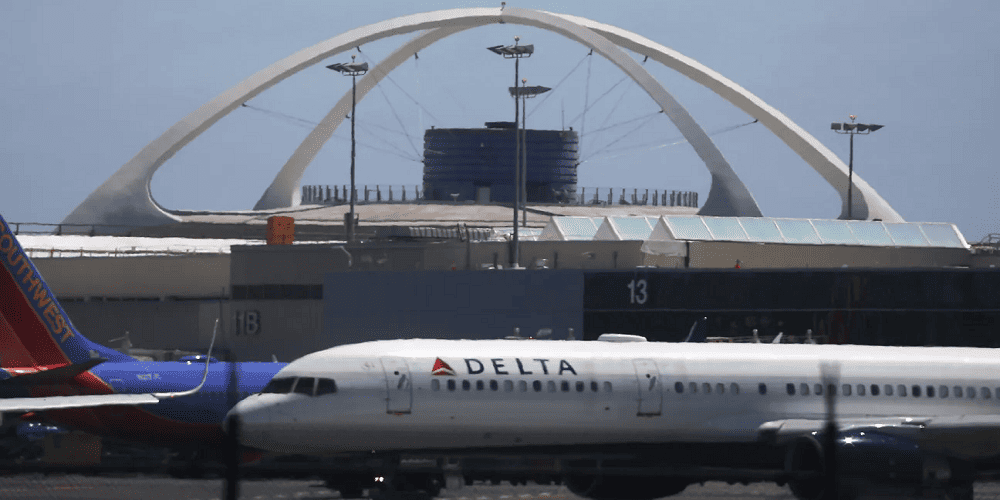
On October 12, 2025, flight operations at Los Angeles International Airport (LAX) were temporarily suspended when the Federal Aviation Administration (FAA) issued a ground stop, citing an equipment outage that impaired air traffic control systems. (Reuters) This abrupt disruption brought arrivals and departures to a halt, affecting hundreds of passengers and triggering ripple effects across the U.S. aviation network. (The Economic Times)
In the hours following the incident, FAA officials, airport authorities, airlines, and technical teams worked to restore operations. The outage was resolved, and flights gradually resumed. (The Economic Times) But the episode underscores underlying vulnerabilities in aviation infrastructure—especially within critical systems whose failure, even momentarily, can cascade into large-scale disruption.
In this piece, we explore what it means when “LAX flights are grounded”: what precisely happened, why it matters, how such events unfold and are handled, lessons for resilience, and what to expect in a world of ever-increasing complexity. We end with a comprehensive FAQ to clarify key questions.
The Event: What Happened at LAX?
The Ground Stop
A ground stop is an order from air traffic control to temporarily prevent aircraft from departing an origin airport en route to a particular destination (in this case, LAX). It is among the stronger traffic flow management tools available to controllers, short of a full shutdown of the airspace. (The Economic Times) In this incident, the FAA determined that the outage affected equipment integral to ground or approach control coordination, and risk mandates required pausing arrivals and departures until safe operations could be ensured. (Bangla news)
Important nuance: a ground stop does not necessarily mean all flights in the sky are grounded. In many cases, aircraft already en route may still land if conditions permit. The stop affects new departures targeting the affected airport. Some Reddit commentators observed this distinction:
“it’s a ground stop; Ground stop means planes bound for LAX cannot depart from the origin airport. Those already departed or in flight can still land.” (Reddit)
Duration and Scale
FAA and airport officials did not immediately publish a precise duration of the halt, but they emphasized that the disruption was temporary and that operations were resumed once technical teams brought systems back online. (The Economic Times) During the pause, all inbound and outbound flights were delayed or held. Airlines like Delta, American, and United—all of which have significant operations through LAX—were impacted. (The Economic Times) Because LAX handles roughly 1,500 flights per day, even a brief ground stop can affect scores of flights. (Gulf News)
Cause: Equipment Outage
The official cause given: an equipment outage within the air traffic control (ATC) system supporting ground operations at LAX. The FAA has not (as of reporting) disclosed exactly which systems were affected or the root technical fault. (The Economic Times) Speculation ranges from hardware failure to software glitches, redundant-system misconfigurations, or power fluctuations. Because such systems are tightly interlinked with radar, communications, and control logic, even a partial failure can force delays.
Complicating matters is the backdrop of staffing challenges and system stress, especially during high-traffic periods or under budget or personnel constraints. (Gulf News) Some aviation analysts have noted that the U.S. air traffic control network has been under strain due to increased traffic, aging legacy systems, and intermittent staffing pressures.
Why It Matters: The Impact of a Grounding at LAX
Passenger Disruption
For passengers, the effects are immediate:
- Delays and missed connections – Many travelers connecting through LAX to other domestic or international flights may miss their onward legs due to disruptions.
- Stranded passengers – Those scheduled to depart might be held at originating airports, or in worst cases, overnighted if operations cannot resume quickly.
- Stress, uncertainty, rebooking headaches – Travelers must contend with shifting schedules, contacting airlines, waiting in lines, and rearranging plans.
Airline and Network Effects
Because airline schedules are tightly interwoven, a disruption at a major hub like LAX ripples outward:
- Aircraft, crews, and ground operations downstream may be affected.
- Delays may propagate across the airline’s network, affecting flights not directly associated with LAX.
- Reaccommodating passengers—rebooking, standby, compensations—becomes a logistical challenge.
Infrastructure Vulnerabilities Laid Bare
An event like this spotlights single points of failure in aviation infrastructure:
- Redundancy gaps: If an alternate system fails or is insufficient, even a minor outage can force a halt.
- Aging systems and integration complexity: Many ATC systems are decades old and gradually patched or bridged to newer architectures.
- Interdependence: Failures cascade—when one system goes down, related components (communications, radar, logic controllers) may also be affected.
Safety as Priority
The grounding, though disruptive, underscores an essential tenet: safety over convenience. ATC systems manage aircraft separation, approach vectors, taxiing instructions, and communications. Any uncertainty in those systems raises unacceptable risk. Thus, even conservative action (halting operations temporarily) is justified until safety is assured.
Reputational and Economic Costs
LAX is a globally prominent airport. Its reputation is tied to reliability. Frequent disruptions undermine traveler confidence and can shift traffic to alternative hubs. There’s also the economic cost of delays: airlines incur fuel, crew, and passenger service costs; airports face congestion and compensation claims.
Historical Context: Groundings and ATC Disruptions
This is not the first time U.S. airports have faced ground stops or systemic outages:
- In January 2023, the FAA’s NOTAM (Notice to Air Missions) system suffered a database error, leading the FAA to pause all U.S. flight departures during the fix. (Wikipedia)
- In 2014, a fire at the Chicago Air Route Traffic Control Center forced large-scale flight groundings across the Midwest. (Wikipedia)
- Cyberattacks on European airports in recent years (Heathrow, Brussels) have disrupted check-in and boarding systems, triggering cancellations and delays. (Gulf News)
- The 1991 runway collision at LAX underscored the importance of robust ATC and ground radar systems; deficiencies in situational awareness and redundancy were among the factors identified by investigations. (Wikipedia)
Each such incident offers lessons: resilience through redundancy, robust failover, enhanced monitoring, and stronger response protocols.
Anatomy of a Grounding: How System Failures Cascade
To understand why a single equipment fault can lead to a complete stop, it helps to look at how ATC systems integrate:
- Sensors and radars track aircraft position, speed, altitude, and vector data.
- Communication systems (voice, data links) connect controllers to pilots and to adjacent sectors.
- Control logic and decision support systems compute separation, approach trajectories, conflict warnings.
- Tower and ground systems manage taxi instructions, runway allocation, gate control, departure sequencing.
- Interface and redundancy layers—backup systems, alternate communication paths, failover logic—hold everything together.
If one of these layers fails—say, logic controllers, synchronization modules, or communications relay—the system may lose integrity in giving safe, coordinated instructions. The controller could risk giving conflicting paths or blind spots. In such a case, a ground stop is far safer than continuing with degraded data.
Failures can stem from:
- Hardware breakdown or age (circuit boards, network switches, power supplies)
- Software bugs or configuration mismatches
- Communication link failures (fiber cuts, signal disruption)
- External events (lighting, interference, physical damage)
- Maintenance or upgrade errors
- Cascading effects from a seemingly minor fault
Once the system alarm flags inconsistency, protocols often demand immediate suspension until diagnostics, reset, or failover is assured.
The Restoration Phase: How Operations Resume
The recovery typically unfolds in phases:
- Diagnostics: Technical teams isolate the fault—hardware, firmware, software, or communications.
- Repair, replacement, or fallback switch: A failing module is reset, bypassed, or switched to backup.
- System calibration and validation: After recovery, the system is tested with simulated inputs, verifying correct behavior.
- Incremental reintroduction: The facility may slowly bring segments of operations back (e.g. arrival paths, then departures).
- Monitoring and contingency: For a period, performance is closely monitored; staff remain on alert.
In the LAX case, the outage was resolved in a few hours, and operations resumed—but airlines likely faced residual delays as they cleared backlogs. (The Economic Times)
Challenges During a Grounding
Even after the technical fix, multiple challenges remain:
- Backlog clearance: Dozens or hundreds of delayed flights need slots in departure windows.
- Crew duty limits: Airline crews have regulated duty hours and may require replacements.
- Passenger rebooking and accommodations: Many travelers need to be re-accommodated, sometimes across airlines.
- Gate and ramp logistics: Congested gates, stand allocation, refueling, catering all need resynchronization.
- Inter-airport coordination: Adjacent airspaces, approach sectors, and other airports must adjust to the resumed flow.
Lessons and Resilience Strategies
As air traffic density, complexity, and digital integration grow, so do risks of localized failures. Some strategies to reduce these risks:
- Redundancy and fault tolerance
Systems should have hot backups, alternative data paths, and cross-checks so that no single point of failure triggers collapse. - Modular design
Decoupling critical subsystems reduces cascading risk when one node fails. - Continuous testing and simulation
Regular stress tests, simulated failure drills, and “black-box” testing of failover logic help valdate resilience. - Monitoring and predictive maintenance
Sensor-driven alerts and real-time diagnostics can warn of imminent failures (e.g. temperature anomalies, signal degradation). - Upgrading legacy infrastructure
Phasing out outdated or patch-heavy systems in favor of more modern architectures can reduce fragility. - Human readiness and protocol discipline
Controllers and technical teams must be trained to respond to anomalies, escalate safely, and coordinate under degraded conditions. - Interagency coordination
Airlines, airport authorities, and federal regulators must have clear contingency plans and communication lines before crises strike.
What to Expect Going Forward
While technology continues advancing, the aviation system will never be absolutely immune to disruption. But we can expect:
- More frequent minor disruptions as systems age and complexity increases.
- Heightened investment in digital resilience (AI diagnostics, self-healing networks).
- Regulatory pressure to adopt stronger redundancy and reporting standards.
- Greater transparency from authorities when outages occur—public postmortems and root-cause reports.
- Increased traveler flexibility (e.g. travel insurance, automated rebooking) as consumers demand protection against such events.
LAX itself may require audits, upgrades, and additional investment following this incident. Airlines routing through LAX will likely examine their scheduling buffers, crew plans, and contingency protocols.
Frequently Asked Questions (FAQs)
What does it mean when we say “LAX flights grounded”?
It usually means a ground stop was imposed: aircraft scheduled to depart toward or arrive into LAX were temporarily prevented from departing or being dispatched until the conditions (often technical or safety) are resolved. Flights en route may or may not be halted or diverted depending on the severity and location of the fault.
Why did flights at LAX get grounded this time?
On October 12, 2025, an equipment outage in air traffic control systems supporting ground operations at LAX led the FAA to issue a ground stop. The outage affected communications and control logic, making continued operation unsafe until repaired. (The Economic Times)
How long did the grounding last?
The exact duration was not immediately disclosed. FAA and airport authorities indicated the outage was temporary, and operations resumed after technical repairs. (The Economic Times) Though the technical fix was relatively quick, airlines had to deal with resulting scheduling backlogs.
Were all flights affected?
Not necessarily. The ground stop typically affects new departures and scheduled arrivals targeting LAX. Flights already in the air or those passing nearby might continue under special coordination. (Reddit)
Which airlines faced disruption?
Major carriers operating through LAX—such as Delta Air Lines, American Airlines, United Airlines—experienced delays in arrivals and departures. (The Economic Times)
Is LAX the only airport vulnerable to such events?
No. All major airports and ATC systems globally are subject to equipment failures, system outages, software bugs, and staffing pressures. Past instances (NOTAM outage in 2023, fire at Chicago ATC, cyber disruptions) have shown other airports are also at risk. (Wikipedia)
Why can’t the system failover automatically?
In many ATC systems, failover capability exists—but it may not cover every subsystem. In some cases, multiple subsystems fail, or the backup itself might be unavailable or misconfigured. Also, controllers may lose confidence in degraded systems and opt to halt operations until full integrity is restored.
How do the authorities restore operations safely?
After diagnosing the fault, the technical teams repair or switch to alternate modules, conduct calibration and tests, then reintroduce operations in a phased manner. Meanwhile, they monitor performance closely to prevent recurrence.
Will I be compensated if my flight was delayed?
Compensation depends on airline policies, ticket terms, and regulatory regimes. In the U.S., airlines are generally not required by law to compensate for delays caused by system outages or air traffic control issues (which fall under “acts of God” or “force majeure”). But many airlines do offer accommodations or rebooking at no extra charge as a customer-service gesture.
What should passengers do when such a grounding occurs?
- Monitor airline notifications (email, SMS, app)
- Check live flight status
- Contact the airline or look up rebooking options
- Be patient—backlogs take time to clear
- Prepare for contingencies (overnight stays, alternative routes)
- Use travel insurance if available
Does this incident signal a systemic collapse in aviation?
Not necessarily. While disconcerting, a single outage does not mean system-wide collapse. It is, however, a reminder that as systems grow more interconnected, resilience must grow accordingly. Each incident becomes a lesson for future strengthening.
In summary, the recent “LAX flights grounded” event is a sharp illustration of how even a brief equipment failure in air traffic control can have outsized effects. The cost is borne by travelers, airlines, and the reputation of the infrastructure itself. But it also offers a clarion call: in an era of ever-growing complexity, aviation systems must evolve resilience, redundancy, transparency, and adaptability to sustain both safety and reliability.
If you like, I can also produce a shorter version (600–800 words) or a version focused for general readers. Would you like me to do that?
Leave A Comment
0 Comment