
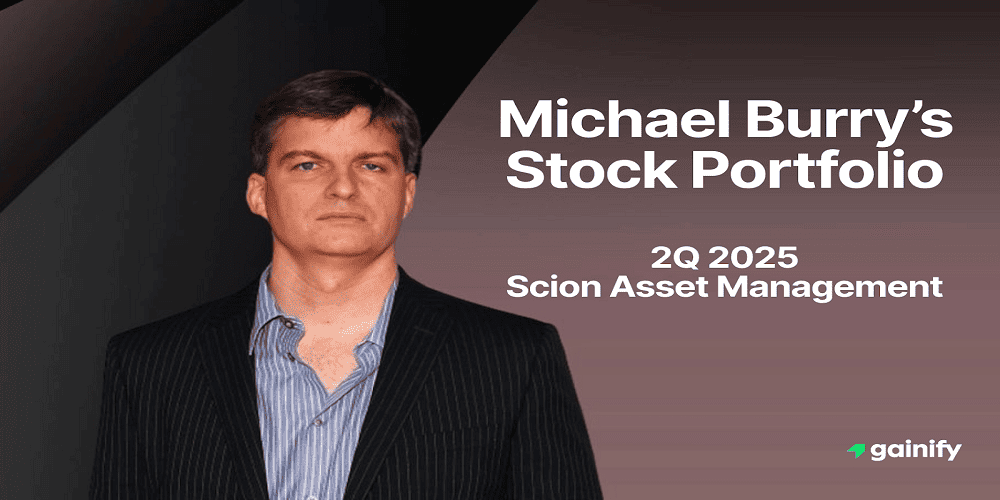
In the world of finance, a few names stand out for their ability to see what others cannot. One of the most famous among them is Michael Burry, the American investor, hedge fund manager, and physician who famously predicted the 2008 housing market crash. His bold contrarian bets against the U.S. housing bubble made him a legend on Wall Street and a household name after being portrayed in the Hollywood film The Big Short.
But Michael Burry’s story is not just about one historic prediction. It’s about intellect, conviction, and the courage to stand against the crowd. His investment philosophy, shaped by deep value investing principles, continues to influence traders, analysts, and financial thinkers across the globe.
This comprehensive article explores Michael Burry’s life, his early career, investment style, philosophies, major investments, controversies, and the lessons we can all learn from his journey.
Early Life and Education
Michael James Burry was born on June 19, 1971, in San Jose, California. From an early age, he displayed a sharp intellect and a deep curiosity about how things work. He was a quiet, introverted child who preferred books and research over social interaction—a trait that would later define his investment career.
Burry attended the University of California, Los Angeles (UCLA), where he studied economics and pre-med. Later, he earned his Doctor of Medicine (M.D.) degree from the Vanderbilt University School of Medicine. Interestingly, though he trained as a physician, his passion for financial markets overshadowed his medical career.
While completing his medical residency at Stanford Hospital, Burry spent his nights analyzing stocks and writing detailed investment posts on internet forums like Silicon Investor. His insights were so sharp that even professional investors began following his writings. This reputation caught the attention of several major players in the finance industry, and soon, Burry decided to switch careers entirely—from medicine to finance.
The Birth of Scion Capital
In 2000, Michael Burry founded Scion Capital, a hedge fund named after his favorite science fiction novel, The Scions of Shannara. He started the fund using his own savings and additional funds from family members.
Right from the beginning, Scion Capital’s performance was extraordinary. Burry followed a value investing approach inspired by Benjamin Graham and Warren Buffett, focusing on undervalued stocks with strong fundamentals. He avoided speculative trades and preferred detailed analysis before investing.
Between 2000 and 2008, Scion Capital consistently outperformed market benchmarks like the S&P 500. Burry’s success was built on rigorous research, patience, and a willingness to act independently of popular opinion—a theme that would define his most famous bet.
Predicting the 2008 Housing Market Collapse
By the mid-2000s, the U.S. housing market appeared unstoppable. Real estate prices were rising rapidly, mortgage lending standards were declining, and Wall Street was packaging risky subprime mortgages into complex securities called mortgage-backed securities (MBS).
However, Michael Burry saw something others didn’t.
Through meticulous research of mortgage data, he noticed that a significant portion of mortgage loans were subprime—granted to borrowers with low creditworthiness—and many of them were adjustable-rate mortgages (ARMs) that would soon reset to higher rates. Burry realized that when those rates increased, many borrowers would default, triggering a collapse in the housing market.
To capitalize on this insight, he approached major financial institutions like Goldman Sachs and Deutsche Bank to create credit default swaps (CDS) that would allow him to bet against the mortgage bonds.
His investors were skeptical, and some even tried to withdraw their funds, thinking he had lost his mind. But Burry held firm, believing the data spoke louder than emotions.
When the housing market crashed in 2007–2008, his prediction came true. Scion Capital’s returns skyrocketed, with profits exceeding 489% while major markets collapsed. The move earned Burry personal profits exceeding $100 million and more than $700 million for his investors.
This incredible foresight was later immortalized in Michael Lewis’s book “The Big Short” and the subsequent 2015 movie adaptation, in which actor Christian Bale portrayed Burry.
The Big Short and Its Aftermath
The success of Burry’s “Big Short” against the housing bubble made him both a hero and a controversial figure. He had been right when almost everyone else was wrong.
However, the intense media spotlight and stress of managing investor expectations took a toll. In 2008, Burry decided to close Scion Capital and return money to his investors. He stated that he needed time away from the chaos of Wall Street and wanted to focus on personal investments.
Despite stepping back, Burry’s reputation as one of the most insightful financial minds remained intact. Many analysts began studying his writings, stock picks, and interviews for clues to his thought process.
Michael Burry’s Investment Philosophy
Michael Burry’s investment strategy is rooted in value investing—the principle of buying securities that appear undervalued based on intrinsic worth. But he adapts it with unique elements of deep analysis, contrarian thinking, and risk management.
Here are some key pillars of his philosophy:
1. Deep Fundamental Analysis
Burry doesn’t rely on surface-level data or trends. He studies company balance sheets, cash flow statements, management integrity, and market conditions before investing.
2. Independent Thinking
Burry often says, “Good investing is boring.” He doesn’t follow the herd. His decisions are based on logic and research, not emotion or public sentiment.
3. Margin of Safety
A core principle of Benjamin Graham’s philosophy, “margin of safety” means buying assets only when their prices are significantly below intrinsic value. This limits downside risk.
4. Patience and Conviction
Burry is known for his patience. He often holds positions for years, waiting for the market to recognize true value.
5. Contrarian Bets
He’s not afraid to go against the crowd. His greatest successes came from taking unpopular positions—whether shorting the housing market or investing in out-of-favor stocks.
6. Focus on Risk Management
Despite his boldness, Burry is meticulous about minimizing losses. His detailed risk assessments allow him to position investments with asymmetric reward potential.
Notable Investments After 2008
After closing Scion Capital, Burry re-emerged in 2013 with a new fund, Scion Asset Management. He continued to make unconventional but data-driven investments.
Some of his well-known post-crisis investments include:
1. Water
Burry has repeatedly said that water will be one of the most critical resources in the future. However, instead of directly investing in water rights, he focuses on agricultural land that grows water-intensive crops in regions where water can be exported through food.
2. Tech and Semiconductor Stocks
He has occasionally invested in tech companies and semiconductors, particularly when valuations seemed attractive.
3. GameStop (GME)
Before the 2021 meme stock frenzy, Burry’s fund had invested heavily in GameStop, arguing that the market had undervalued it relative to its balance sheet strength. This early position contributed to the stock’s eventual short squeeze fame.
4. Inflation Hedge Assets
He has expressed concerns about inflation and often invests in assets that hedge against it, such as gold, farmland, and certain commodities.
5. Short Positions Against the Market
True to his contrarian style, Burry occasionally takes short positions on market indexes, especially when he perceives overvaluation or speculative excess.
Michael Burry’s Economic Warnings
Burry is known for his outspoken predictions about financial markets. His Twitter account (often deactivated and reactivated) has been a platform for brief but impactful statements.
Some of his notable warnings include:
- Stock Market Bubble (2021–2022): He compared speculative trends in tech and meme stocks to previous bubbles.
- Cryptocurrency Risks: He called Bitcoin a speculative asset lacking intrinsic value.
- U.S. Debt and Inflation Concerns: Burry often warns about excessive government spending, monetary stimulus, and their potential to trigger inflation and economic instability.
While not all his predictions have materialized immediately, his analytical rigor ensures that investors take his words seriously.
Personality and Traits
Michael Burry is often described as intensely private, analytical, and unorthodox. He has publicly shared that he was diagnosed with Asperger’s syndrome, a condition on the autism spectrum that influences how he perceives and interacts with the world.
Burry believes this trait allows him to focus deeply on data and remain unaffected by social pressures—qualities that serve him well in finance.
He lives a relatively quiet life away from media attention, preferring research and family over publicity.
Michael Burry’s Lessons for Investors
- Think Independently: Following the crowd leads to average results. The best opportunities often lie where few dare to look.
- Do the Work: Deep research and critical thinking are essential before investing.
- Be Patient: Markets often take time to reflect reality. True value investing requires patience.
- Control Emotions: Successful investing is more about discipline than excitement.
- Prepare for Uncertainty: Risk is unavoidable; managing it is the key to survival.
- Stay Contrarian: Some of the biggest profits come from unpopular bets.
- Adapt and Learn: Even after great success, Burry continues to evolve and reassess his strategies.
Michael Burry in Popular Culture
Michael Burry’s story became world-famous after the release of The Big Short in 2015, directed by Adam McKay. Actor Christian Bale portrayed Burry, earning an Academy Award nomination for Best Supporting Actor.
Bale spent time with Burry to understand his mannerisms and thought process. The film highlighted Burry’s unique communication style, analytical depth, and his struggles with investor skepticism.
The movie cemented Burry’s image as a financial maverick—a lone thinker who stood firm against systemic complacency and emerged victorious.
Michael Burry’s Legacy
Michael Burry’s legacy goes far beyond his profit from the housing crisis. He represents a mindset—courageous independent thinking, intellectual rigor, and moral conviction.
His ability to analyze complex systems, remain unemotional under pressure, and challenge the status quo has inspired a generation of analysts, traders, and finance students.
In many ways, he embodies the essence of modern contrarian investing: not merely opposing the crowd for its own sake, but doing so with reason and evidence.
FAQs
Q1. Who is Michael Burry?
Michael Burry is an American investor, hedge fund manager, and physician known for predicting the 2008 housing market crash. He founded Scion Capital and later Scion Asset Management.
Q2. How did Michael Burry predict the financial crisis?
Burry studied mortgage loan data and realized that subprime mortgages were bound to fail once interest rates reset. He used credit default swaps to bet against mortgage-backed securities, profiting when the market collapsed.
Q3. What is Michael Burry’s investment philosophy?
His strategy centers on value investing, deep analysis, patience, and contrarian thinking. He looks for undervalued assets and avoids following popular trends.
Q4. Did Michael Burry make money during the 2008 crash?
Yes. Burry’s fund made over $700 million for investors and earned him personally around $100 million.
Q5. What does Michael Burry invest in now?
He invests through Scion Asset Management in undervalued stocks, water-related assets, commodities, and occasionally short positions on overvalued markets.
Q6. What was his role in The Big Short movie?
Michael Burry was portrayed by Christian Bale in the film The Big Short, which depicted his successful bet against the U.S. housing market.
Q7. What are some of his famous quotes?
One of his best-known quotes is: “Good investing is boring.” Another is: “All my investing is based on the idea that people do not act rationally.”
Q8. Does Michael Burry still manage a hedge fund?
Yes, he currently manages Scion Asset Management, where he continues to make strategic and sometimes contrarian investments.
Q9. What is Michael Burry’s net worth?
As of recent estimates, his net worth is approximately $300–400 million, though it fluctuates with his fund’s performance.
Q10. Why is Michael Burry important in financial history?
Because he exemplified foresight, courage, and independence in identifying one of the biggest market bubbles in history and turning it into a profitable opportunity.
Conclusion
Michael Burry’s story is a testament to the power of intellect, discipline, and conviction in investing. From a medical student fascinated by balance sheets to a financial legend who challenged Wall Street’s arrogance, his journey reflects the essence of true contrarian thinking.
He taught the world that success in markets is not about luck or timing—it’s about seeing reality clearly when others are blinded by optimism. Whether through his “Big Short” triumph or his ongoing critiques of economic excess, Burry remains one of the most intriguing and respected voices in modern finance.
His life reminds investors everywhere of one simple truth: The greatest opportunities often lie where the few dare to look.
Leave A Comment
0 Comment