
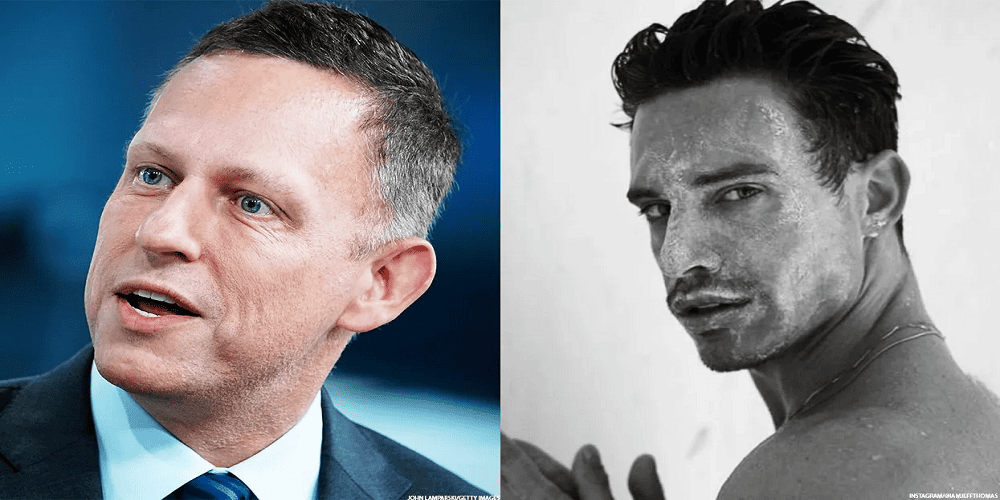
Peter Thiel is one of the most influential figures in Silicon Valley and the global business world. Known for his sharp intellect, unconventional ideas, and early investments in game-changing companies like Facebook, Thiel has built a legacy that stretches across technology, finance, and politics. As a co-founder of PayPal and Palantir Technologies, and the first major outside investor in Facebook, he’s a name synonymous with innovation and disruption.
This article explores Peter Thiel’s life, career, philosophy, and influence — offering a detailed look at what makes him one of the most intriguing minds of the 21st century.
Early Life and Education
Peter Andreas Thiel was born on October 11, 1967, in Frankfurt, West Germany. When he was just one year old, his family moved to the United States, eventually settling in California. Thiel displayed exceptional intelligence from a young age, excelling in mathematics and chess — even ranking among the top young chess players in the country.
He graduated from Stanford University in 1989 with a Bachelor of Arts degree in Philosophy and went on to earn his Juris Doctor degree from Stanford Law School in 1992. While at Stanford, Thiel founded The Stanford Review, a conservative and libertarian student newspaper that became a platform for challenging mainstream campus ideologies.
This early experience shaped Thiel’s lifelong tendency to question authority and conventional wisdom — a trait that would later define his entrepreneurial journey.
From Law to Finance
After law school, Thiel briefly worked as a judicial clerk and later joined a New York law firm. However, he quickly realized that corporate law wasn’t his calling. He then transitioned into finance, working as a derivatives trader for Credit Suisse.
In 1996, Thiel returned to California and founded Thiel Capital Management, a small hedge fund. This move marked the beginning of his career as an investor and entrepreneur.
It was during this period that Thiel began networking with like-minded thinkers and future tech innovators — relationships that would soon lead to one of Silicon Valley’s most successful startups.
The Birth of PayPal
In 1998, Thiel co-founded Confinity with Max Levchin, which initially aimed to develop security software for handheld devices. However, the company pivoted to a much more groundbreaking idea — enabling people to send money via email.
Confinity merged with Elon Musk’s company X.com, and together they formed PayPal. The goal was to make online payments easier and safer for consumers and businesses.
When PayPal went public in 2002, it became one of the fastest-growing financial technology companies of its time. Shortly thereafter, eBay acquired PayPal for $1.5 billion, and Thiel — who held a 3.7% stake — walked away with roughly $55 million.
This success not only made Thiel wealthy but also gave rise to what became known as the “PayPal Mafia” — a group of former PayPal employees who went on to found or fund some of the biggest companies in tech, including Tesla, LinkedIn, YouTube, and Yelp.
The Facebook Investment
One of Peter Thiel’s most legendary moves came in 2004 when he made a $500,000 angel investment in Facebook. At the time, Facebook was a small startup founded by Mark Zuckerberg and his college friends.
Thiel recognized the platform’s potential to redefine communication and community in the digital age. In exchange for his investment, he received a 10.2% stake and a seat on the board.
When Facebook went public in 2012, Thiel sold most of his shares, earning over $1 billion. This investment remains one of the most successful early bets in Silicon Valley history.
Founding Palantir Technologies
In 2003, Thiel co-founded Palantir Technologies, a data analytics company that uses sophisticated algorithms to process large amounts of information for intelligence and government agencies.
Palantir’s software has been used by organizations like the CIA, FBI, and the U.S. Department of Defense for data analysis and counter-terrorism. The company’s technology also found applications in healthcare, finance, and disaster response.
Palantir’s public listing in 2020 cemented Thiel’s reputation as a visionary who could blend technology with national security and data intelligence.
Other Ventures and Investments
Beyond PayPal and Facebook, Peter Thiel has been involved in numerous other ventures through his venture capital firm Founders Fund. The firm has invested in companies such as SpaceX, Airbnb, Spotify, Stripe, and Lyft.
Thiel is also known for creating the Thiel Fellowship in 2011, which grants $100,000 to young entrepreneurs who drop out of college to pursue innovative ideas. This initiative reflects Thiel’s skepticism about traditional education and his belief in real-world problem-solving over academic credentials.
He has also authored and co-authored several books, most notably Zero to One: Notes on Startups, or How to Build the Future (2014), which became a bestseller and is considered essential reading for aspiring entrepreneurs. The book’s central message is about creating new value in the world by building unique businesses — moving from “zero to one” rather than copying existing models.
Thiel’s Philosophy and Ideas
Peter Thiel’s success isn’t just financial — it’s philosophical. He often describes himself as a “contrarian,” challenging conventional thinking at every turn.
Some of his key ideas include:
- Monopoly Over Competition:
Thiel argues that the most successful businesses create monopolies by being so unique that no other company can compete directly. He believes that healthy capitalism and innovation thrive when businesses focus on creating something new rather than engaging in endless competition. - Stagnation in Innovation:
Thiel has criticized modern society for focusing too much on globalization rather than technological innovation. He believes that while the world has become more connected, progress in science, energy, and engineering has slowed. - The Power of Secrets:
Thiel often talks about the importance of finding “secrets” — truths that most people don’t see or believe. In his view, successful entrepreneurs are those who discover hidden opportunities that others overlook. - Skepticism About Higher Education:
Thiel’s views on education are controversial. He believes the traditional college system often discourages independent thought and innovation. His fellowship program is a direct response to this belief.
Political Involvement and Views
Peter Thiel’s political stance is as unconventional as his business ideas. A libertarian at heart, he has long advocated for limited government and individual freedom.
Thiel was an early supporter of Ron Paul and later became one of the few Silicon Valley figures to back Donald Trump in the 2016 U.S. presidential election. His support for Trump sparked both admiration and criticism, especially in the largely liberal tech industry.
He even spoke at the 2016 Republican National Convention, becoming the first openly gay speaker to address the event. Despite the controversies surrounding his political leanings, Thiel continues to emphasize his belief in independent thinking and challenging the status quo.
Thiel and Seasteading
Another fascinating aspect of Peter Thiel’s vision is his involvement in the Seasteading Institute, a project aimed at creating independent, floating cities in international waters.
The idea is to experiment with new forms of governance and society free from traditional government control. While still in development, the concept represents Thiel’s broader ambition — to push the boundaries of what’s possible for humanity.
Controversies and Criticism
Peter Thiel’s career hasn’t been without controversy. His role in funding Hulk Hogan’s lawsuit against Gawker Media — which ultimately led to the company’s bankruptcy — raised ethical questions about power and free speech.
Critics argue that Thiel’s wealth and influence allow him to shape narratives and silence critics. However, his supporters view the lawsuit as a justified response to media intrusion and irresponsibility.
Thiel’s political donations and public statements on topics like artificial intelligence, globalization, and surveillance have also sparked debates. Yet, his willingness to take unpopular stands only reinforces his reputation as a contrarian thinker.
Philanthropy and Future Vision
Beyond business, Thiel is deeply involved in philanthropy. Through the Thiel Foundation, he supports initiatives in science, technology, and liberty. The foundation backs efforts in anti-aging research, artificial intelligence safety, and long-term human survival.
He has funded organizations like the Methuselah Foundation and SENS Research Foundation, both of which aim to extend human lifespan through biotechnology. Thiel has openly expressed interest in radical life extension and the quest to overcome aging.
His future vision is one where innovation continues to expand human potential, rather than limit it. Thiel remains optimistic about technology’s ability to solve global challenges — from disease to climate change — if approached creatively and ethically.
Legacy and Influence
Peter Thiel’s impact on technology, entrepreneurship, and thought leadership is undeniable. He helped shape the digital economy through PayPal and Facebook, influenced national security through Palantir, and inspired a generation of entrepreneurs with his book Zero to One.
His combination of intellect, risk-taking, and philosophical depth makes him more than just a billionaire investor — he is a symbol of unconventional success.
Whether one agrees with his views or not, Thiel’s career serves as a powerful reminder that thinking differently can redefine industries and societies.
Key Lessons from Peter Thiel
- Be Contrarian, But Right:
Challenge mainstream thinking, but do it based on deep insight, not rebellion for its own sake. - Focus on Unique Ideas:
Don’t just improve existing products — create something entirely new that has no competition. - Long-Term Vision Matters:
Thiel’s greatest successes came from seeing potential others missed, like Facebook and Palantir. - Question Conventional Paths:
His critique of higher education reminds aspiring innovators to seek knowledge outside traditional systems. - Philosophy and Business Go Hand-in-Hand:
Thiel’s philosophical grounding helped him navigate business with clarity and conviction.
Conclusion
Peter Thiel stands as one of the most fascinating figures in modern history — a philosopher-entrepreneur who bridged the gap between ideas and innovation. His journey from immigrant child to Silicon Valley billionaire embodies the power of vision, intellect, and courage to defy convention.
Whether through PayPal, Facebook, Palantir, or his controversial political and philosophical views, Thiel continues to provoke thought and inspire debate. He challenges the world to think differently — to go from zero to one — and in doing so, leaves an indelible mark on the future of technology and humanity.
Frequently Asked Questions (FAQs)
1. Who is Peter Thiel?
Peter Thiel is a German-American entrepreneur, investor, and author best known as the co-founder of PayPal and Palantir Technologies and the first outside investor in Facebook.
2. What companies did Peter Thiel co-found?
He co-founded PayPal, Palantir Technologies, and Founders Fund, among others.
3. How did Peter Thiel become a billionaire?
Thiel made his fortune through early investments in companies like Facebook and the success of PayPal, which was sold to eBay in 2002.
4. What is the Thiel Fellowship?
The Thiel Fellowship offers $100,000 to young people under 23 who want to skip college and work on entrepreneurial projects instead.
5. What is Peter Thiel’s book Zero to One about?
Zero to One focuses on innovation and how startups can create new value by building something unique rather than competing in existing markets.
6. What are Peter Thiel’s political views?
He identifies as a libertarian and has supported candidates like Ron Paul and Donald Trump. His political beliefs center around individual freedom and limited government.
7. What is Palantir Technologies?
Palantir is a data analytics company co-founded by Thiel that provides tools for big data analysis, particularly for government and intelligence agencies.
8. What is Peter Thiel’s net worth?
As of recent estimates, Peter Thiel’s net worth is around $8–9 billion, depending on market fluctuations.
9. Why is Peter Thiel considered controversial?
His political donations, role in the Gawker lawsuit, and unconventional opinions on education and innovation have made him a polarizing figure.
10. What is Peter Thiel’s vision for the future?
Thiel envisions a future where technology and innovation drive human progress, with fewer limitations from traditional systems like government and academia.
Leave A Comment
0 Comment