
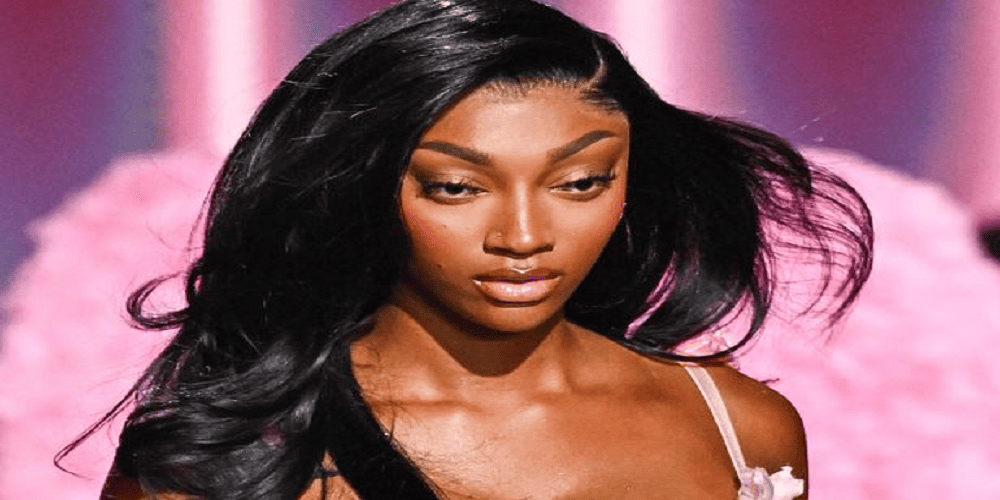
Angel Reese is best known for her prowess on the basketball court: the WNBA star (Chicago Sky forward) has drawn wide attention for her athleticism, rebounding dominance, and bold persona. But over recent years, she has also cultivated a presence off the court — in branding, endorsements, style, and public image. The phrase “Angel Reese vs Fashion Show” evokes a clash or a meeting of two worlds: the hard-nosed athletic domain and the curated, image-driven world of runway and design.
In October 2025, Angel Reese made headlines by walking in the Victoria’s Secret Fashion Show, becoming the first professional athlete to do so. (AP News) This moment is symbolically rich: the runway has traditionally been dominated by models whose primary identity is fashion, beauty, or modeling. Reese’s entry disrupts that paradigm, raising questions about what a “fashion show” can encompass, and who has access.
But this was hardly spontaneous. Reese had signaled her aspirations. She once attended the Victoria’s Secret show as a spectator, publicly expressed her dream to walk it, and manifested it in her social media and public commentary. (Andscape) Her style evolution had been visible in other arenas — red carpets, the Met Gala, campaigns — so the runway appearance is a kind of culmination of that crossover trajectory.
When she walked, Reese donned two pink lingerie looks. One was a floral, lace-detailed set paired with a dramatic feathered stole and white wings; the other was a cut-out tee over lace undergarments with silver strappy heels. (Harper's BAZAAR) Her presence on stage was not just about wearing lingerie, but carrying confidence, posture, and a narrative: she earned her “wings” as a brand symbol. (Vogue)
Thus, “Angel Reese vs Fashion Show” is not a literal confrontation, but a dialectic: a negotiation of identity, body, sport, beauty standards, and representation.
The Significance of Her Runway Debut
Breaking Boundaries
One of the clearest significances is the boundary-breaking nature of her runway debut. In fashion culture, the notion of the “model” has been historically narrow in terms of body type, training, and background. By entering that space, Reese challenges long-standing assumptions about who belongs on the runway.
Victoria’s Secret itself is trying to reposition its image. After criticism over lack of diversity, rigidity of beauty standards, and associations with a male gaze, the revived show in 2024 and 2025 has attempted to include broader kinds of women. Reese represents that shift: bringing athletic power, height (she is 6’3”), physical strength, and a public persona of dominance. (Andscape) Rather than being delicate, she embodies strength and commands the stage differently.
She becomes a symbol: you can be an elite athlete and also walk a runway. You can be muscular, tall, physically capable, and still enter a space that often privileges delicacy, slenderness, and softness. That is a powerful statement for younger women and girls, especially those involved in sports, body image activism, and representation.
Cultural Crossover & Branding Synergies
Her runway debut also reinforces the crossover potential between sports culture and fashion/pop culture. Brands increasingly see value in athletes who are more than athletes — with personal style, social media reach, and cultural influence.
Reese already had collaborations and endorsements (e.g. with Reebok) and fashion visibility (Met Gala attendance, magazine covers) before the runway moment. (Andscape) Her walking the show deepens the bridge: she becomes not just a face or even a celebrity endorser, but an active participant in fashion storytelling.
For Victoria’s Secret, having the WNBA star walk adds narrative freshness and risk: new kind of “Angel,” new audiences, more media buzz. For Reese, the runway gives her additional legitimacy in fashion, expanding her sphere beyond sports.
Symbolic Representation & Visibility
Representation matters. Women of color, tall athletes, women who don’t fit the “traditional model mold” rarely get consistent, visible roles in fashion. Reese walking in a major lingerie show amplifies visibility. The optics are powerful: wings on an athlete, in lingerie, commanding that space — not a token, but a presence.
It also sends a message: success in one field does not restrict possibility in another. Reese publicly said she wants to inspire women and girls to “dominate in their field but also chase other goals” (like fashion) (Andscape). This helps shift narratives about multidimensionality and resisting pigeonholing.
Furthermore, she is the first professional athlete to walk the Victoria’s Secret show. That itself is a historical marker. (AP News) It alters the archive of fashion history — in future retrospectives, her inclusion becomes part of that lineage.
Tensions, Critiques & Challenges
While Reese’s runway debut is inspiring, it is not without tension or critique. A gluster is mindful of texture and friction; here are some challenges and counterpoints.
Aesthetic Tension & Gaze
Lingerie runway shows are often structured through an aesthetic of sexual allure, idealized bodies, and stylized femininity. Entering that realm, Reese must navigate gaze (how viewers see her) and how her body is framed. Does the show gaze objectify her? Can she retain agency? There is a tension in performing on a stage that has long been criticized for prioritizing appearance over other dimensions.
Her identity as an athlete may clash with the soft, seductive tropes of lingerie fashion. The aesthetics may not fully align. She must adapt her posture, walk, gestures — blending athletic stride with runway cadence. In interviews she trained with a modeling coach to “perfect her walk.” (AP News) And indeed, some may critique that she had to conform to fashion norms to succeed on runway terms.
Tokenism & Novelty Risk
Some critics might argue her inclusion risks being tokenistic — a one-time novelty rather than a systemic change. Will future shows include more athletes, or is this a special headline stunt? Will her presence lead to lasting structural shifts in fashion casting, or is it a spectacle moment?
Further, any misstep or critique (e.g. outfit fit, walk criticism) could reduce her to a “gimmick.” The pressure is high: as a trailblazer, her performance is scrutinized more harshly than more traditional models. If she stumbles, the discourse might question her “belonging,” rather than examine the system’s constraints.
Commercial and Contractual Demands
Walking a fashion show often comes with brand obligations, aesthetic constraints, logos, endorsements, image rights. Reese’s existing commitments (to sports, sponsorships) may create conflicts. For instance, balancing athletic training, team obligations, and the demands of fashion schedules can be challenging.
She must negotiate that delicate balance between being “herself” and fulfilling brand image mandates. If she is too constrained by fashion’s rules, she risks losing the athletic authenticity that defines her.
Skeptics of Crossover Authenticity
Some purists might question whether her runway role undermines her sports identity: “Why model when you can play?” Or they may view it as a distraction. But such critiques often stem from limiting beliefs about what athletes should do. Reese’s exercise of choice is itself a reclamation: you do not need to be siloed. The tension exists because boundaries are being challenged.
Broader Implications & What’s Next
In the wake of Angel Reese’s runway debut, what could this portend for fashion, sport, and culture?
Increasing Athletic Representation in Fashion
If Reese’s appearance succeeds (in terms of media, public reception, brand synergy), fashion houses may actively court more athletes. We may see more runway spots for gymnasts, track stars, swimmers, individuals whose bodily stories differ from conventional models. That diversification can enrich fashion with forms of movement, strength, and presence previously marginalized.
Recasting Standards of Beauty & Body Norms
Her height, athletic frame, muscularity push against norms of “delicate limbs,” “lean slenderness,” and “fragile grace” often imposed in modeling. Her runway moment helps recast what is legible as sexy or desirable in the fashion lexicon. Over time, that may expand audience acceptance of different body vocabularies.
Multi-Dimensional Personal Brands as Norms
More celebrities and athletes will be expected to have multi-facets: image, activism, fashion, media presence. Reese’s path underscores that being solely “just an athlete” may feel limiting in modern cultural economy. Brands will increasingly look for figures who can traverse multiple domains. This could shift how early athletes build branding, training not just in sport but in public persona, style, storytelling.
Institutional Change in Fashion Casting & Inclusion
If Reese’s presence is followed by multiple similar entries, fashion institutions may need to rethink casting norms, runway mechanics (height variances, walk training, inclusivity in fit), backstage logistics, and sizing. Her inclusion presses fashion to widen its infrastructure, not just optics.
Risks of Cooptation & Dilution
One risk is that after a few headline crossover moments, the novelty wears off, and fashion returns to safe norms, using the occasional athlete cameo as marketing rather than real inclusion. Reese and others will need to push for consistency and depth in inclusion, not symbolic gestures only.
Narrative Structure: Reese vs “Fashion Show” as a Metaphor
“Angel Reese vs Fashion Show” can also be read metaphorically: the athlete contending (or dialoguing) with fashion’s conventions, constraints, histories, and expectations. It is not about opposition only, but negotiation: bringing her identity into a domain that did not originally expect it.
In that sense:
- Reese embodies athletic truth, strength, public voice, authenticity, ongoing evolution.
- Fashion Show represents ritual, aesthetic norms, gaze, spectacle, media logic, beauty expectations.
The “versus” implies friction, tension, transformation. The stage becomes a site of contestation: where bodies are read, judged, framed. Reese’s entry invites the show to shift; it invites her to adapt. The locus of power is shared.
Thus, the story is not simply “sports person tries fashion.” It is a larger cultural moment in which boundaries are contested, identity is asserted, and symbolic landscapes shift.
FAQs about “Angel Reese vs Fashion Show”
Q1. Why is Angel Reese’s participation in the Victoria’s Secret Fashion Show significant?
A: Because she is the first professional athlete to walk that runway, breaking a barrier between sports and high-glamour fashion. (AP News) Her presence expands who is considered “runway worthy,” and signals a shift in the fashion domain’s openness to diverse embodiments of beauty, power, and presence.
Q2. How did Reese prepare for the fashion show, given her athletic background?
A: She hired a modeling coach to refine her walk, posture, and runway technique. (AP News) She trained to adapt her athletic gait into runway rhythm, studied processes of modeling, and rehearsed the choreography of a fashion show.
Q3. What looks did she wear on the runway?
A: She walked in two pink-themed lingerie ensembles. The first: a floral lace set with a feathered stole/shawl and dramatic wings. The second: a cut-out tee layered over lingerie, paired with strappy heels and the signature wings. (Harper's BAZAAR) These looks balanced softness, texture, and bold statement.
Q4. Could her fashion show appearance distract from or affect her athletic career?
A: It is possible there will be tradeoffs: time, energy, optics, brand conflicts. But Reese has framed it as additive — not distraction — asserting that one can excel in multiple arenas. The risk lies in overcommitment or brand tensions, but she seems to be navigating carefully.
Q5. Does this mean fashion will now flood with athletes walking runways?
A: Not automatically. Reese’s entry is a milestone, but for systemic change, more athletes, and consistent inclusion over time are needed. Her breakthrough opens the possibility, but others (and fashion institutions) must take follow-up steps.
Q6. How is the public and industry reaction to her runway debut?
A: Largely positive, celebratory. Many see it as a milestone and cultural moment. Some critique is cautious about tokenism, pressure, or how she will be framed. But the narrative tilt is toward recognition of her boldness, her statement, and fashion’s evolution. (AP News)
Q7. Does her success depend on fashion conforming to her, or her conforming to fashion?
A: It’s a dialectic. She must adapt certain runway norms (walk, posture, aesthetic continuity), but the more powerful legacy will lie in fashion adapting to include her type — to expand standards, logistics, and sensibilities. The richest outcome is mutual transformation.
Leave A Comment
0 Comment