
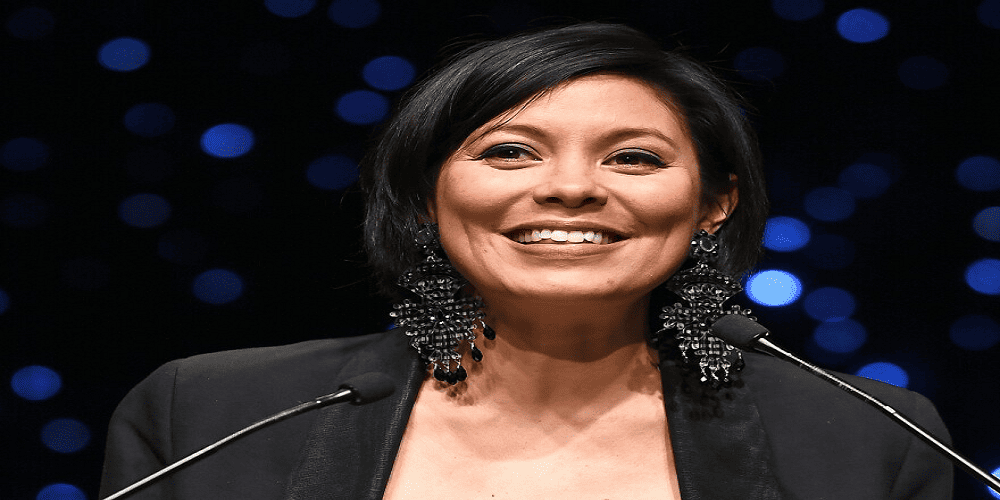
In the evolving landscape of American journalism, few names stand out as clearly as Alex Wagner. Known for her intellect, charisma, and unapologetic approach to political and cultural analysis, Alex Wagner has carved out a distinct place in the world of media. From her work on MSNBC to her role as a contributing editor for The Atlantic, Wagner has continuously proven herself to be a voice of both insight and authenticity.
This comprehensive article explores Alex Wagner’s life, career, political views, personal background, and her impact on contemporary journalism. We will also look into her family life, achievements, and what makes her such a compelling figure in the American media landscape today.
Early Life and Background
Alexandra Swe Wagner was born on December 4, 1977, in Washington, D.C. Her background is a fascinating blend of cultures and ideologies that would later shape her worldview as a journalist.
Her mother, Tin Swe Thant, is originally from Myanmar (formerly Burma) and immigrated to the United States, where she became a naturalized citizen. Her father, Carl Wagner, was of Irish descent and a well-known figure in Democratic politics, having served as a consultant for prominent politicians such as Bill Clinton.
Growing up in a politically active and culturally diverse family, Wagner developed a keen awareness of both domestic and international issues from an early age. She often credits her parents’ influence—her mother’s immigrant experience and her father’s political insight—for shaping her understanding of identity, opportunity, and justice in America.
Wagner attended Woodrow Wilson High School (now Jackson-Reed High School) in Washington, D.C., and later graduated from Brown University in 1999 with a degree in art history and literature. Her liberal arts education provided her with a deep appreciation for storytelling, critical thought, and cultural exploration.
Career Beginnings
Before stepping into the limelight of television journalism, Alex Wagner’s early career was rooted in print and digital media. She began as a cultural correspondent for The Fader, a magazine that focuses on music, culture, and global issues.
Her time at The Fader allowed her to explore the intersections of art, music, and politics—an interest that would continue to define her career. Wagner’s writing captured the essence of cultural movements, providing readers with both depth and context.
She then went on to work for Center for American Progress, a public policy research organization, where she honed her understanding of policy and governance. Her role in the think tank gave her valuable experience in analyzing political narratives and crafting fact-based commentary.
From there, she joined Not On Our Watch Project, an advocacy organization founded by actors George Clooney, Matt Damon, Brad Pitt, and Don Cheadle to prevent mass atrocities. Wagner served as the executive director, deepening her engagement with humanitarian issues and international affairs.
Rise to Prominence: MSNBC and Broadcast Journalism
Alex Wagner’s transition to television came when she joined MSNBC as a political analyst and guest host. Her articulate commentary and sharp perspective quickly made her a favorite among viewers.
In 2011, MSNBC gave her a major platform: her own show, “Now with Alex Wagner.” The show focused on political analysis, current events, and social issues, offering a blend of rigorous journalism and accessible discussion. Wagner’s tone was both conversational and intellectual—never shying away from tough questions or complex topics.
“Now with Alex Wagner” ran from 2011 to 2015 and was widely appreciated for its fresh take on progressive politics. During this time, she became known for her ability to dissect policy debates and highlight the human stories behind political decisions.
Following the show’s cancellation in 2015, Wagner continued her collaboration with MSNBC as a political commentator and guest anchor, maintaining her reputation as one of the most respected journalists in the network’s lineup.
Work Beyond MSNBC
While MSNBC remains a key part of her professional identity, Alex Wagner’s career extends far beyond cable news.
After leaving her daily show, she joined The Atlantic as a contributing editor. At The Atlantic, she explored complex socio-political topics such as immigration, identity, and democracy. Her essays demonstrated her ability to combine narrative storytelling with factual depth—a hallmark of great journalism.
In 2016, she became a co-anchor on CBS This Morning Saturday, where she expanded her reach into mainstream broadcast news. The move showcased her versatility—being equally comfortable discussing policy in Washington as she was talking about cultural trends or global issues.
Wagner also hosted The Circus on Showtime, a behind-the-scenes documentary series that covers American politics. The show offered an unfiltered look into political campaigns and governance, and Wagner’s contributions brought credibility, empathy, and insight to the series.
Her presence on The Circus helped bridge the gap between political journalism and real-time storytelling, allowing viewers to see how political decisions take shape behind closed doors.
The Return to MSNBC: “Alex Wagner Tonight”
In 2022, Alex Wagner returned to MSNBC to host “Alex Wagner Tonight”, which aired four nights a week, Tuesday through Friday. The show replaced Rachel Maddow’s time slot on those nights, cementing Wagner’s status as one of the network’s prime-time anchors.
“Alex Wagner Tonight” is known for its thoughtful discussions, investigative segments, and nuanced takes on politics. Unlike many cable news programs that focus on confrontation or spectacle, Wagner’s show emphasizes clarity, fact-based analysis, and meaningful conversation.
Her style—calm yet incisive—sets her apart. She often dives deep into issues like democracy, voting rights, inequality, and media polarization. Wagner’s focus on truth and accountability resonates with audiences seeking an alternative to sensationalism in modern news coverage.
Through this program, she has become one of the leading journalistic voices in prime-time television, representing a generation of journalists who value integrity over ratings.
Writing Career and Publications
Beyond television, Alex Wagner is a talented writer. In 2018, she published her memoir “Futureface: A Family Mystery, an Epic Quest, and the Secret to Belonging.”
The book explores her personal journey to understand her identity and ancestry. It weaves together her Burmese heritage and Irish roots while exploring themes of immigration, belonging, and American identity.
“Futureface” received critical acclaim for its honesty and introspection. It was more than a memoir—it was a meditation on what it means to be American in a nation constantly redefining itself.
In interviews, Wagner has said that writing the book allowed her to reconcile her multicultural background and understand her place in a world that often demands simplicity in identity. Her storytelling in “Futureface” mirrors her journalistic voice—curious, compassionate, and deeply analytical.
Personal Life
Alex Wagner is married to Sam Kass, a former White House chef and nutrition policy advisor who worked for President Barack Obama. The couple married in 2014, and their wedding was attended by notable figures, including the Obama family.
Together, Wagner and Kass have two children. Despite both being public figures, they maintain a relatively private family life, balancing their demanding careers with parenthood.
Their marriage represents a blend of journalism, politics, and policy—a reflection of their shared commitment to public service and social progress.
Wagner has often spoken about how motherhood changed her perspective, making her more conscious of the future she’s helping to shape through her reporting and commentary.
Political Views and Journalism Philosophy
Alex Wagner identifies as a progressive journalist but resists being pigeonholed into partisan labels. Her journalism focuses on the interplay between power, policy, and the people affected by them.
She has consistently emphasized the importance of fact-based journalism in a time of misinformation and polarization. Wagner’s reporting style values context and depth over quick headlines.
She has been a vocal critic of extremist movements and misinformation campaigns that threaten democratic institutions. Her shows often discuss issues like voter suppression, immigration reform, racial justice, and the preservation of democratic norms.
Unlike many television hosts who rely on confrontation, Wagner’s approach is to engage, not inflame. She encourages viewers to think critically rather than emotionally react.
This journalistic philosophy—rooted in empathy, intelligence, and factual clarity—has helped her build a loyal following among viewers who value substance in media.
Impact on Media and Representation
Alex Wagner’s prominence in the media is also significant from a representation standpoint. As a woman of color and the daughter of an immigrant, her visibility challenges long-standing norms in American broadcast journalism.
She has spoken about the need for more diversity in media—not just in terms of race or gender but also in perspective and lived experience. Wagner’s presence on prime-time television helps broaden the spectrum of who gets to shape national conversations.
Her work also encourages young journalists—especially women and minorities—to pursue careers in media without compromising authenticity.
In interviews, Wagner has noted that her multicultural background gives her a unique vantage point: the ability to understand America both as an insider and as someone who recognizes its contradictions.
Awards and Recognition
While Alex Wagner’s career has been defined more by integrity than accolades, she has received widespread recognition for her contributions to journalism.
Her work with The Circus was praised for its authentic portrayal of American politics. Her show on MSNBC continues to draw praise for its depth and honesty in a media landscape often criticized for bias and sensationalism.
Her book Futureface earned her critical acclaim as a writer capable of merging personal narrative with national reflection—a rare balance in modern nonfiction.
Alex Wagner’s Legacy and Future
As of now, Alex Wagner stands as one of the most influential voices in American journalism. Her career demonstrates how one can combine intellect, empathy, and courage to create journalism that matters.
She has shown that media can inform without dividing and that journalists can pursue truth without losing their humanity.
Looking forward, Wagner’s continued work on MSNBC and in literary journalism will likely influence future generations of reporters and broadcasters.
Her ability to balance analysis with compassion and her commitment to storytelling rooted in truth ensure that her legacy in media will endure for decades.
FAQs
Q1. Who is Alex Wagner?
Alex Wagner is an American journalist, author, and television host best known for her work on MSNBC and Showtime’s The Circus. She currently hosts Alex Wagner Tonight on MSNBC and is also a contributing editor for The Atlantic.
Q2. What is Alex Wagner’s background?
She was born in Washington, D.C., to an Irish-American father, Carl Wagner, and a Burmese mother, Tin Swe Thant. This diverse background has deeply influenced her worldview and journalism style.
Q3. What is Alex Wagner’s educational qualification?
She graduated from Brown University in 1999 with a degree in art history and literature.
Q4. Who is Alex Wagner married to?
Alex Wagner is married to Sam Kass, a former White House chef and senior nutrition policy advisor under President Barack Obama.
Q5. What book did Alex Wagner write?
She authored Futureface: A Family Mystery, an Epic Quest, and the Secret to Belonging, a memoir exploring her multicultural heritage and American identity.
Q6. What is “Alex Wagner Tonight” about?
It’s a prime-time news program on MSNBC that covers politics, culture, and current affairs with a focus on truth, democracy, and social justice.
Q7. Where else has Alex Wagner worked?
Besides MSNBC, Wagner has worked for The Atlantic, CBS News, and Showtime’s The Circus, as well as for advocacy groups like the Not On Our Watch Project.
Q8. Is Alex Wagner considered a liberal journalist?
While she often aligns with progressive viewpoints, Wagner prefers to define herself as an independent journalist focused on facts and accountability rather than partisan ideology.
Q9. Has Alex Wagner won any major awards?
Though she hasn’t focused on awards, she’s earned widespread respect and recognition for her integrity and contribution to broadcast journalism.
Q10. What makes Alex Wagner an influential journalist?
Her ability to combine analytical depth with compassion, her multicultural perspective, and her dedication to factual, non-sensational journalism make her one of the most respected voices in modern media.
Leave A Comment
0 Comment