
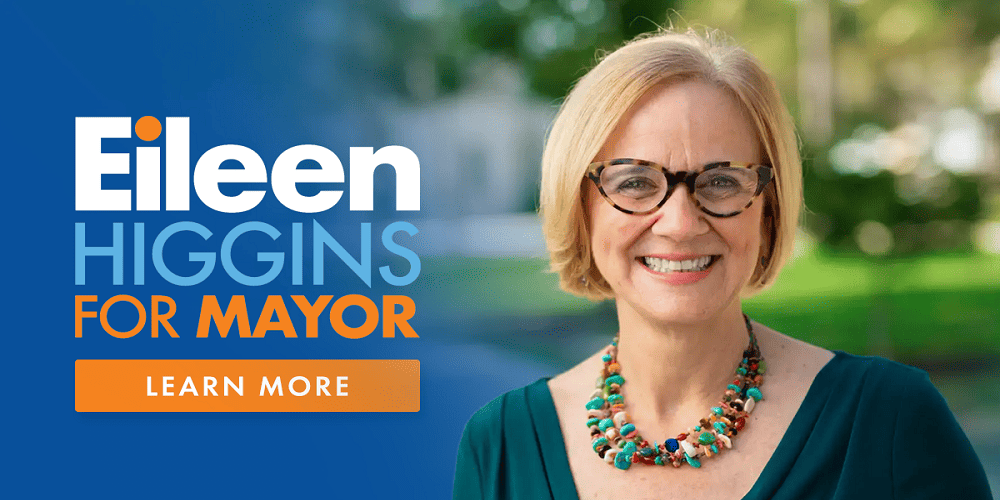
Eileen Higgins was born in Dayton, Ohio, and raised in Albuquerque, New Mexico. (The Economic Times) She earned a Bachelor of Science degree in mechanical engineering from the University of New Mexico, and later went on to complete an MBA at Cornell University. (The Economic Times)
Her education — an engineering degree combined with a business graduate degree — equipped her with strong analytical, technical, and managerial skills. Later, she worked in various international development and infrastructure roles, including as a Country Director in the Peace Corps (in Belize) and in diplomatic / foreign-service roles with the U.S. Department of State. (Hindustan Times)
This multi-faceted background — engineering, business, international development, diplomacy — gave Higgins a broad worldview and a diverse skill set, potentially well-suited to tackling complex urban issues.
At some point in the early 2000s, Higgins moved to Miami, where she eventually became involved in community advocacy and local civic issues. (The Economic Times)
Her transition from a technical / diplomatic career to community advocacy and then to local politics demonstrates a shift in interest: from global or structural-level work to grassroots, local-level impact.
Entry into Local Politics — County Commissioner (2018–2025)
Election to County Commission
Higgins’ formal entry into elected politics came in 2018 when she was elected to represent District 5 on the Miami-Dade County Commission. (Wikipedia) District 5 encompasses parts of Miami and Miami Beach — diverse neighborhoods with varying socioeconomic, racial/ethnic, and housing realities. (National Association of Counties)
She was re-elected in 2022, and again in 2024 — the latter time reportedly without opposition. (Wikipedia)
Her tenure spanned over six years, making her, at the time of her departure, the longest-serving commissioner in her district. (Wikipedia)
Focus Areas and Initatives
During her time as commissioner, Higgins focused on several core issues:
- Affordable housing: She played a key role in delivering nearly 7,000 affordable or workforce housing units for Miami-Dade. (The Economic Times)
- Support for small businesses: Through her program “Elevate District 5,” she promoted local small businesses. Over 350 businesses participated, and more than $580,000 in grants were awarded. (wwwx.miamidade.gov)
- Transit and infrastructure: She championed expansion and redesign of public transit — including bus network redesigns, enhancements to trolley and metro systems, and improvements to pedestrian and cycling infrastructure. (The Economic Times)
- Digital equity and technology/AI forward-looking governance: In 2021, she supported legislation under the Florida Association of Counties (FAC)’s Access 67 initiative to promote affordable and reliable high-speed internet across Florida. (wwwx.miamidade.gov) She also directed legislation on ethical application of Artificial Intelligence in county services, and under her Elevate D5 program, planned to launch free courses on AI for marketing and professional services. (wwwx.miamidade.gov)
- Environmental and sustainability measures: Higgins advocated for environmental protection measures — for example, backing tough fertilizer ordinances (to protect water bodies), initiatives like the “Million Trees Miami-Dade” plan to increase green cover, and promoting green spaces. (The Economic Times)
- Equity, social justice, vulnerable populations: She positioned herself as a voice for closing inequality gaps, supporting low-wage workers, seniors, LGBTQ communities, and minority-owned small businesses. (National Association of Counties)
Her background as an engineer and diplomat likely informed a data-driven and systems-based approach to governance: tackling structural problems (housing, transit, digital access, environment) rather than mere band-aid solutions.
Thus, over her years in County Commission, she built a record as a commissioner concerned with long-term infrastructure, community equity, and modern governance.
Bid for Mayorship — 2025 Campaign
Decision to Run & Resignation from Commission
In 2025, Higgins filed to run for Mayor of the city of Miami. (Miami Daily Tribune) To comply with Florida’s “resign-to-run” law, she submitted her resignation from the County Commission effective November 5, 2025. (politicalcortadito.com)
Her resignation removed her from a “safe seat” and took a political risk — but the move was a clear signal of her ambition and commitment: she was willing to leave a secure seat to pursue the top elected office in the city. (politicalcortadito.com)
Campaign messaging emphasized “results-driven governance,” restoring public trust in City Hall, accountability, streamlining bureaucracy, expanding services to underserved communities, and using her record of achievement (housing, transit, environment, equity) as a foundation. (Eileen Higgins for Mayor —)
Campaign Platform Highlights
Her campaign promised to:
- Continue and expand support for affordable housing and workforce housing. (The South FL 100)
- Support small businesses, reduce red tape, expedite permitting for homeowners and businesses, and offer support to entrepreneurs — especially minority-owned small businesses. (Eileen Higgins for Mayor —)
- Improve public transit, cycling, pedestrian infrastructure, expanded trolley and on-demand transit options — to make Miami more connected and accessible. (Eileen Higgins for Mayor —)
- Invest in green spaces, climate resilience, environmental protection, protect water bodies, mitigate flooding, and overall city resilience. (Eileen Higgins for Mayor —)
- Prioritize public safety, including addressing gun violence and supporting community-based violence prevention and youth programs. (GIFFORDS)
- Enhance social equity and inclusion, ensuring that immigrants, low-income families, seniors, LGBTQ residents, and minority communities have access to housing, transit, economic opportunities, and representation. (National Association of Counties)
Her campaign narrative was built around pragmatic governance and a track record — not rhetoric — showcasing past results as evidence that she could deliver as Mayor. (Eileen Higgins for Mayor —)
2025 Mayoral Election and Historic Victory
On December 9, 2025, Eileen Higgins won the mayoral runoff election for Miami, defeating Republican candidate Emilio González. She secured around 59% of the vote vs. 41% for González. (The Economic Times)
Her victory is historic on multiple fronts:
- She becomes the first woman mayor of Miami. (The Times of India)
- She is the first Democrat to hold the office in nearly 30 years, marking a dramatic political shift in a city that had been under Republican dominance. (The Guardian)
- Her win is seen as a significant indicator of changing political dynamics in Florida, potentially signaling broader shifts ahead of upcoming state and national elections. (The Guardian)
Following her victory, she committed to being a full-time mayor and to not holding outside employment — addressing ethical concerns raised about prior mayors who held outside jobs while in office. (The Economic Times)
Her campaign promises signal a shift toward progressive policies on housing, transit, environmental sustainability, social equity, and community-focused governance — with the intention of reshaping Miami’s urban trajectory.
Significance and Impact: What Does Her Mayorship Mean?
The election of Eileen Higgins as mayor is significant not only for the symbolic “first woman” and “first Democrat in decades” aspects — but because of what it signals for policy, governance style, and the future direction of Miami.
Breaking Longstanding Political Patterns
With nearly 30 years of Republican control in the mayor’s office, Miami has had a certain political and policy continuity. Higgins’ victory breaks that continuity — reflecting changing demographics, shifting voter priorities (housing, affordability, environmental challenges, immigrant communities), and possibly a growing appetite for progressive governance. The change could lead to different priorities: more investment in social services, infrastructure for the broader public good, and enhanced inclusion. Her victory may encourage more diverse candidates and representation for historically underrepresented communities (women, immigrants, minorities).
Policy Shift Toward Equity, Sustainability, and Practical Governance
Given her track record, Higgins’ mayorship could focus heavily on:
- Expanding affordable housing, addressing one of Miami’s acute pain points (housing cost, displacement, inequality).
- Investing in public transit, cycling and pedestrian infrastructure, digital equity, green and resilient infrastructure, potentially transforming Miami’s urban fabric and accessibility.
- Supporting small businesses and inclusive economic development, particularly for communities that have historically been marginalized economically.
- Promoting environmental sustainability and climate resilience, crucial for a coastal city like Miami vulnerable to sea-level rise, hurricanes, and climate impacts.
- Building community safety, violence prevention, and inclusive community services, rather than purely punitive or enforcement-based models.
Her hands-on, results-based approach may stand in contrast to ideological or partisan politics — offering a pragmatist’s pathway to solving urban problems, grounded in data, community input, and existing experience.
Broader Symbolic and Political Ramifications
On a broader scale, Higgins’ victory may resonate beyond Miami:
- It may signal increased electoral viability for Democrats in traditionally Republican-held local seats in Florida, potentially affecting statewide and national political dynamics.
- It may embolden proponents of progressive, equity-focused urban governance, especially in cities with diverse, immigrant-heavy populations, housing and inequality pressures.
- It could inspire more women and non-traditional candidates to run for major political offices — both in local government and beyond — especially in jurisdictions that have been historically male-dominated.
- On urban policy discourse, her election may highlight the importance of holistic urban development — balancing housing, transit, economic opportunity, environment, and social equity — rather than narrow, single-issue or growth-focused governance.
Thus, Eileen Higgins’ mayorship stands to transform not only how Miami is governed — but also how future political leadership emerges in similar American cities.
Challenges, Criticisms, and Risks
No political win is without challenges. Several potential obstacles and criticisms face Higgins as she takes office.
High Expectations & Delivering Promises
Her campaign set high expectations: affordable housing, better transit, small business support, social equity, environmental protection, and more. Delivering on all these fronts in a city with structural inequalities, budget constraints, entrenched interests, and systemic challenges will be far from easy.
Balancing growth and affordability — especially in a city with rising real estate values and development pressures — is historically difficult. There can be conflicts between development interests and affordable housing, between business-centered growth and community equity, between infrastructure upgrades and budget limitations.
Transit expansion and infrastructure projects often run into bureaucratic delays, cost overruns, community pushback, and political inertia. Implementing meaningful environmental protections (for example, against flooding, rising sea levels, environmental degradation) while supporting economic growth will require careful planning and resources.
Political Pushback and Institutional Resistance
Given that Miami’s long history has been shaped by different political leadership, there may be entrenched stakeholders resistant to major policy shifts — developers, business interests, real estate lobbies, property owners, donors, etc. These groups may push back against aggressive affordable housing policies, zoning changes, or transit expansion.
Institutional inertia — in bureaucracy, city/county governance systems, red tape — may slow down efforts. Even with a mayor committed to results, city governance is complex and involves navigating multiple stakeholders.
Higgins’ exit from her County Commission seat — while necessary for mayoral candidacy — removes her from existing power structures, meaning she’ll have to build new alliances in city government, which may strain influence in initial phases.
Managing Diverse Constituencies & Social Tensions
Miami is a diverse city — racially, ethnically, economically, culturally. It includes immigrant communities (Latino, Caribbean, Haitian, others), long-time residents, affluent neighborhoods, low-income housing zones, varied languages and cultures. Crafting policies that serve this diversity while avoiding favoritism or social tensions is a complex balancing act.
Especially on issues like housing, immigration, policing, policing reforms, small business support — any policy shift will affect different communities differently, possibly causing friction.
Given that her campaign touched on immigrant issues (including pushing back on heavy-handed immigration enforcement), there may be political and social resistance from groups with opposing views.
Economic Constraints & Fiscal Realities
Building affordable housing, expanding transit, enhancing green infrastructure — these are capital-intensive undertakings. Florida (and Miami) also have to contend with climate change, sea-level rise, hurricanes, insurance costs, environmental regulations. Funding these projects sustainably, without placing undue burden on taxpayers or encouraging unsustainable growth, will be a challenge.
Small business support programs and grants — while valuable — need sustainable funding, monitoring, accountability; there's a risk of mismanagement, favoritism, or failing to scale across the city.
In summary: while the vision is ambitious, and the potential high, the path ahead is fraught with political, economic, institutional, and social challenges. How Higgins — and her allies — navigate these will shape whether her tenure becomes transformative or symbolic.
What Makes Eileen Higgins’ Story Compelling — Analysis
From a broader perspective, several aspects make Higgins’ journey compelling and emblematic of evolving urban politics in 21st-century America:
- A non-traditional politician background: She isn’t a long-time political insider; instead her background is in engineering, policy, diplomacy, international development — bringing a more technocratic, problem-solving mindset than an ideological or partisan one. This hints at a trend: citizens stepping into public office with real-world professional expertise rather than purely political careerism.
- Focus on equity, inclusion, sustainability, technology: Her agenda isn’t limited to traditional “growth” or “economic development” clichés; instead it attempts to blend housing equity, environmental sustainability, digital equity, small business support, and transit — reflecting modern urban challenges and holistic governance strategies.
- Symbolic breakthrough — representation and political shift: As the first woman mayor, first Democrat in decades, a candidate appealing to immigrant and multicultural communities — she represents demographic and political changes in American cities. Her win could inspire under-represented groups to seek leadership roles, reshaping the political landscape.
- Realistic governance through track record: Her tenure at the County Commission offered tangible results (housing units, grants, transit redesign, environmental legislation) — providing evidence of competence rather than mere promises. This record-based politics may appeal to voters disillusioned with rhetoric-heavy but result-poor administrations.
In many ways, Eileen Higgins’ rise signals a shift in what electorate values: not just charisma, identity or rhetoric, but competence, inclusivity, systemic vision, and trustworthy governance. If she succeeds, her mayoralty could be a model for other U.S. cities grappling with inequality, growth pressures, climate challenges, and population diversity.
What’s Next — Outlook & Expectations
As she prepares to take office, several expectations and possibilities emerge for the coming years under Higgins’ leadership:
Short to Medium Term (First 1–2 Years)
- Fast-track affordable housing and zoning reforms: Expect proposals to re-zone underused or city-owned lands for mixed or affordable housing; possible introduction of incentives for developers who commit to workforce housing; partnerships with non-profits to build or rehabilitate housing.
- Initiatives to streamline bureaucracy: Red tape for small business licensing, housing permits, construction permits may be revisited — with the aim of making it easier for entrepreneurs, homeowners, and small developers.
- Transit and infrastructure improvements: Likely efforts to enhance bus routes, trolley systems, pedestrian and bike infrastructure; pilot programs for on-demand transit or improved connectivity; perhaps pushing legislative and funding efforts at city and county level for larger projects.
- Environmental actions and climate resiliency efforts: Begin tree-planting drives, flood mitigation projects, stronger environmental regulations (fertilizer, plastics), protection of waterways; integrate climate resilience into planning and zoning decisions.
- Community outreach and equity-focused programs: Engage immigrant communities, marginalized neighborhoods, low-income residents, seniors, minority business owners — aiming to make governance more inclusive, build trust, ensure voices in policy decisions.
Long Term (3–5 Years and Beyond)
- Urban transformation and density management: If affordable housing, transit, and sustainable development are successfully combined, Miami could become a model for dense — yet livable and inclusive — coastal cities balancing growth, equity, and sustainability.
- Economic diversification and small business growth: With support for small businesses and equitable economic policies, there might be a growth of local, minority-owned businesses, contributing to economic diversification beyond tourism and real estate.
- Improved quality of life & social services: Greater access to affordable housing, better transit, safer neighborhoods, green spaces — could lead to improved social mobility, better public health, community resilience, and long-term stability for residents.
- Setting a precedent for progressive local governance in Florida and U.S. cities: If successful, her governance model might inspire similar candidates and policies elsewhere — shifting the political narrative toward equity, sustainability, and pragmatic urban problem-solving.
Of course — much depends on political will, coalition-building, funding, community cooperation, and continuous accountability. But the foundation is promising.
Critiques, Risks, and What Could Go Wrong
While optimism abounds, there are realistic risks:
- Implementation challenges: Good ideas falter without proper execution. Budget constraints, administrative inertia, opposition from powerful developers or entrenched interests, legal/regulatory hurdles, and political resistance could block or delay reforms.
- Balance between growth and affordability: Rapid development to address housing demand might risk gentrification, displacement of vulnerable communities, or rising rents — ironically undermining the goal of affordability.
- Political backlash and polarization: Policies favoring immigrants, minorities, small businesses, environmental regulations — may trigger pushback from more conservative or affluent constituencies, leading to social or political polarization.
- Economic and fiscal constraints: Miami (and Florida) face climate risks, insurance costs, insurance market challenges, potential federal and state regulatory changes. Financing large-scale infrastructure, housing, climate resiliency — may be difficult, especially if economic conditions worsen
- Sustainability beyond first term: Urban transformations require long-term commitment. Success may depend on future elections, continuity of vision, and ability to deliver tangible results. If delivery lags, public support may erode quickly.
Thus, while the ambitions are laudable, the governance will be tested hard in the coming years.
Why Eileen Higgins Matters — Broader Relevance and Symbolism
The rise and victory of Eileen Higgins matter not only for Miami but for urban governance and politics more broadly. Here’s why:
- Representation matters: As a woman, a non-Hispanic in a diverse city, with immigrant-heavy population, her leadership breaks stereotypes and opens the door for more inclusive representation. It sends a signal to communities often under-represented that political power is accessible, and voices like theirs can lead.
- Changing profile of urban leadership: Her background diverges from traditional political careerists — she brings technical expertise, international experience, and a results-oriented mindset. This signals a shift toward technocratic, data-driven, policy-oriented urban leadership rather than patronage, rhetoric, or old-school politics.
- Policy paradigm shift: Rather than focusing solely on growth, development, and economic returns, her agenda emphasizes equity, environment, inclusion, and community welfare — aligning more with modern challenges (climate, inequality, immigrant communities, sustainability). Her success could represent a paradigm shift in how cities plan and govern.
- A test for progressive, inclusive policies in conservative contexts: Florida — and particularly South Florida — has had conservative leanings. Her victory — and potentially successful governance — could challenge narratives that progressive, equity-centered policies are unworkable in such contexts. It could show that with community backing, inclusive governance can thrive anywhere.
- Inspiration for future candidates and activism: For those interested in public service, activism, urban policy, or civic engagement — her story provides a blueprint: real-world professional experience; focus on community issues; building a cross-sectional coalition; grassroots organizing; and running on competence and results.
In sum: Eileen Higgins is not just a new mayor; she might represent a changing era in urban American politics — one where diversity, inclusion, equity, sustainability, and competence gain ground.
Frequently Asked Questions (FAQs)
Q: Who is Eileen Higgins?
A: Eileen Higgins is a politician who, in December 2025, became the mayor-elect of Miami. Prior to that, she served as County Commissioner for District 5 in Miami-Dade County from 2018 until her resignation in November 2025. She has a background in mechanical engineering (University of New Mexico) and an MBA (Cornell University), and has worked in international development and diplomacy before entering local politics. (The Economic Times)
Q: What makes her mayoral win significant?
A: Her victory is historic for multiple reasons: she is the first woman ever to be mayor of Miami; she is the first Democrat elected to that office in nearly 30 years; and she represents a shift in political control from long-term Republican dominance to Democratic leadership, signaling potential broader political changes in the city and region. (The Guardian)
Q: What were the main issues she focused on as County Commissioner and during her campaign?
A: As County Commissioner, she prioritized affordable housing (delivering ~7,000 workforce/affordable housing units), small-business support through grants, public transit expansion and redesign, digital-equity initiatives (broadband access, AI training), environmental sustainability (green spaces, stricter ordinances), and social equity — focusing on underserved communities including low-income residents, minorities, seniors, LGBTQ individuals. (wwwx.miamidade.gov)
During her mayoral campaign, she pledged to bring those policies to the city level: affordable housing, streamlined bureaucracy for small businesses and homeowners, improved transit, expanded green and resilient infrastructure, enhanced public safety, focus on equity and inclusion. (Eileen Higgins for Mayor —)
Q: What kind of background does she have outside local politics?
A: Before entering local politics, Higgins worked internationally — including as a Country Director for the Peace Corps in Belize, and as a foreign service officer for the U.S. State Department, with an infrastructure and economic-development focus. (Hindustan Times) Her academic background in engineering and business gives her a technical and managerial perspective, which is somewhat uncommon in traditional political leadership. (The Economic Times)
Q: What challenges will she face as mayor?
A: She will need to deliver on ambitious promises: building affordable housing in a city with housing-market pressures; expanding transit and infrastructure with budget and bureaucratic constraints; balancing economic growth, development interests, and community equity; navigating powerful stakeholders (developers, business interests), potential political pushback, and institutional inertia. Social tensions and economic disparities among Miami’s diverse population add complexity. Also climate change and environmental vulnerabilities (sea-level rise, hurricanes) pose long-term risks that will require careful policy and funding.
Q: Why is her election relevant beyond Miami?
A: Her election could signal a broader shift in urban governance across the U.S.: toward inclusivity, equity, sustainability, data-driven policymaking, representation of marginalized communities, and leadership grounded in competence rather than political patronage. It could inspire more women, immigrants, and people with non-traditional political backgrounds to seek public office. Additionally, it might influence political dynamics in Florida — a key state — and show that progressive urban policies can resonate even in politically mixed or formerly conservative strongholds.
Q: What should we watch for in her first term?
A: Key indicators will include whether she initiates affordable housing and zoning reforms; whether transit and infrastructure projects are proposed and implemented; what kind of support small businesses receive; how environmental resilience plans (green spaces, flood mitigation, water-body protection) develop; how inclusive governance is — especially outreach to immigrant, minority, low-income communities; and whether she successfully balances growth, development, equity, and fiscal responsibility.
Concluding Thoughts
Eileen Higgins’ ascent — from engineer and diplomat to community advocate, county commissioner, and now mayor of one of America’s major cities — embodies a new kind of urban leadership. Her victory is not merely a demographic milestone (first woman, first Democrat in decades) but may mark the opening of a new chapter in how cities like Miami address 21st-century challenges: housing, inequality, climate change, sustainability, social justice, and inclusive governance.
Her journey highlights the potential of competent, issue-focused, values-driven public service to break long-standing political patterns, and — perhaps — to reshape urban America. For those interested in urban policy, civic leadership, social equity, and inclusive development, her mayorship offers a living case study of what’s possible.
At the same time, the road ahead is steep. Promises must translate into concrete results. Deep-rooted structural issues — economic inequality, housing pressures, climate vulnerability, social divisions — require long-term commitment, political will, and community engagement. Whether Eileen Higgins’ mayorship becomes a turning point for Miami depends on her ability to deliver, build coalitions, balance competing interests, and sustain momentum beyond electoral victory.
Leave A Comment
0 Comment