
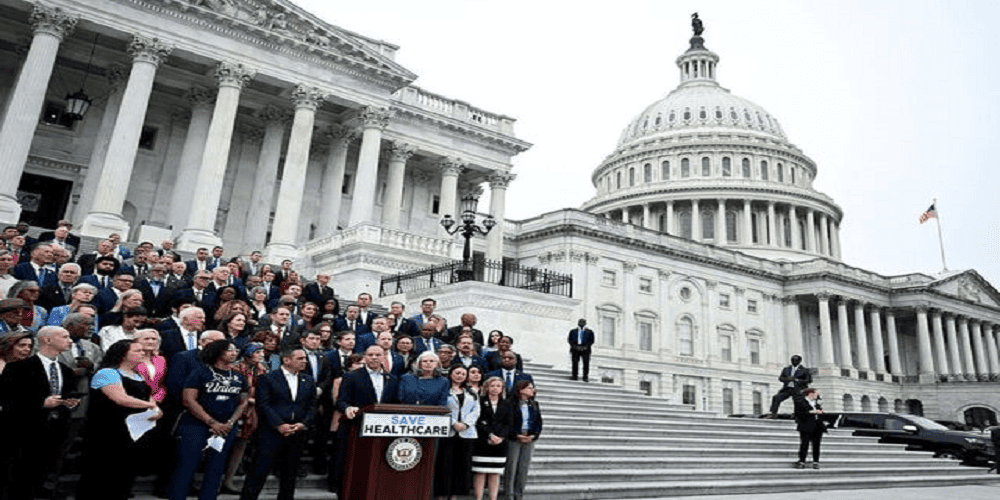
As of October 21, 2025, the United States finds itself in the midst of one of the most prolonged government shutdowns in its history. Initiated on October 1, 2025, the shutdown has now entered its fourth week, with no immediate resolution in sight. This situation has led to significant disruptions across various sectors, affecting federal employees, government services, and the broader economy.
Origins of the Shutdown
The shutdown commenced due to a failure in Congress to pass appropriations legislation for the 2026 fiscal year. The deadlock primarily stems from partisan disagreements over federal spending levels, foreign aid rescissions, and health insurance subsidies under the Affordable Care Act (ACA). Democrats have demanded the extension of ACA subsidies, set to expire at the end of 2025, as a condition for agreeing to any funding measures. Conversely, Republicans have insisted on a continuing resolution without policy additions, leading to a stalemate in negotiations (The Guardian).
Impact on Federal Employees
Approximately 900,000 federal employees have been furloughed, with an additional 700,000 working without pay. This includes personnel from critical agencies such as the National Nuclear Security Administration (NNSA), which has furloughed 1,400 employees, leaving fewer than 400 on duty to maintain national nuclear security (The Times of India). Similarly, the federal judiciary has begun furloughing its 1,250 employees, marking the first time in nearly 30 years that the judiciary has had to send workers home without pay due to a funding lapse (Reuters).
Disruption of Government Services
The shutdown has led to the suspension of numerous government services and programs. For instance, the National Institutes of Health (NIH) and the Centers for Disease Control and Prevention (CDC) have faced partial or full suspensions of operations. Additionally, the Women, Infants, and Children (WIC) program, which provides nutritional assistance to low-income pregnant women and children, has been significantly impacted (Wikipedia).
Moreover, the Supplemental Nutrition Assistance Program (SNAP) benefits have been halted in several states, including Pennsylvania, affecting nearly 2 million recipients. The uncertainty surrounding the resumption of these benefits has left many low-income families in a precarious situation (The Sun).
Economic Repercussions
The economic ramifications of the shutdown are becoming increasingly evident. The uncertainty surrounding federal funding has led to delays in business activities. For example, Unilever has postponed the demerger of its Magnum ice cream unit due to the inability of the U.S. Securities and Exchange Commission to process necessary filings during the shutdown (Reuters).
Furthermore, the shutdown has disrupted federally funded research activities at institutions like Georgia Tech, leading to concerns about the long-term financial health and research continuity of such institutions (Georgia Institute of Technology).
Political Impasse and Congressional Actions
Despite repeated attempts, the Senate has failed 11 times to advance a funding bill, with each vote falling short of the 60 votes needed to proceed. The House of Representatives remains largely inactive, with Speaker Mike Johnson keeping the chamber on an extended recess, advocating for a continuing resolution without policy additions. This approach has further deepened the partisan divide, with Democrats insisting on the inclusion of ACA subsidy extensions before agreeing to any funding measures (The Guardian).
In response to the ongoing impasse, some Republicans are considering a longer stopgap spending bill to avoid the looming November 21 deadline. However, internal divisions within the GOP over the duration of such an extension have complicated efforts to reach a consensus (Politico).
Broader Societal Impacts
The shutdown's effects extend beyond federal operations. Programs like Head Start, which provides preschool education to low-income children, are facing severe funding crises. With many centers operating on dwindling reserves, closures are imminent if funding remains suspended past November 1 (AP News).
Additionally, the shutdown has led to the suspension of various federal grants, including those for libraries and museums, impacting cultural and educational institutions across the country (Wikipedia).
Conclusion
The ongoing government shutdown of 2025 stands as a testament to the deepening political divisions within the United States. Its far-reaching impacts on federal employees, government services, the economy, and society underscore the urgent need for bipartisan cooperation to resolve the deadlock. As the nation approaches the three-week mark, the imperative for Congress to find common ground and restore federal operations becomes increasingly critical.
Frequently Asked Questions (FAQs)
- What caused the 2025 government shutdown?
The shutdown resulted from a failure in Congress to pass appropriations legislation for the 2026 fiscal year. The deadlock primarily stems from disagreements over federal spending levels, foreign aid rescissions, and health insurance subsidies under the Affordable Care Act (ACA) (The Guardian).
- How many federal employees have been affected?
Approximately 900,000 federal employees have been furloughed, with an additional 700,000 working without pay. This includes personnel from critical agencies such as the National Nuclear Security Administration (NNSA) and the federal judiciary (Wikipedia).
- Which government services have been suspended?
Services such as the National Institutes of Health (NIH), the Centers for Disease Control and Prevention (CDC), and the Women, Infants, and Children (WIC) program have faced partial or full suspensions of operations (Wikipedia).
- What is the economic impact of the shutdown?
The shutdown has led to delays in business activities, including the postponement of Unilever's demerger of its Magnum ice cream unit. Additionally, federally funded research activities at institutions like Georgia Tech have been disrupted (Reuters).
When is the shutdown expected to end?
The shutdown's duration remains uncertain, with repeated failures in the Senate to advance a funding bill. Internal divisions within the GOP over the duration of a potential stopgap spending bill have further complicated efforts to reach a consensus (Politico).
Leave A Comment
0 Comment