
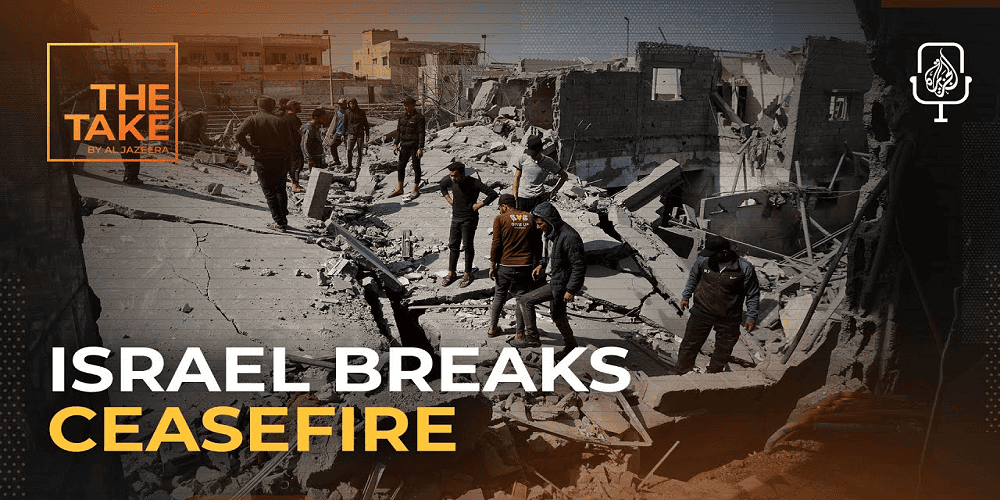
The phrase “Israel breaks ceasefire” carries enormous weight in the fraught politics of the Middle East, especially in the context of the long conflict between Israel and Hamas in Gaza (and, at times, other actors). Ceasefires in that milieu are often brittle, negotiated under duress, mediated by intermediaries, and layered with conditions and mutual distrust. When one side—here, Israel—is accused of breaking the ceasefire, the accusations are not just about tactical military violations; they go to legitimacy, morality, humanitarian suffering, and the broader political narrative.
In 2025, observers have seen multiple instances (or allegations) of ceasefire violations by Israel, particularly in the Gaza war. According to the documentation, Israel has conducted airstrikes, restricted humanitarian access, delayed prisoner exchanges, and refused to withdraw from certain buffer zones, all of which raise the question: is Israel breaking the ceasefire in letter, in spirit, or both? Wikipedia+2Wikipedia+2
In what follows, I discuss (1) the broader framework of ceasefires in the Israel–Gaza conflict; (2) the mechanisms and motives by which Israel might break a ceasefire; (3) specific documented cases in 2025; (4) consequences of such breaks; (5) responses and counterclaims; and (6) reflections on whether ceasefires in this conflict can ever be durable.
Ceasefires in the Israel–Gaza Conflict: General Features and Fragility
Ceasefires between Israel and Hamas (or other Palestinian factions) are usually partial, time-limited, geographically constrained, and heavy with conditions (troop withdrawal lines, release of hostages/prisoners, humanitarian access, disarmament, buffer zones, oversight mechanisms). Because each side sees the ceasefire as an interlude, not a permanent state, violations are frequent.
Key factors that make ceasefires fragile:
- Asymmetry of power and military capability: Israel holds overwhelming military strength; Hamas and allied factions have limited but locally important capabilities. This disparity creates a temptation for the stronger party to “test the water” or exploit loopholes.
- Ambiguity in terms: The lines of demarcation, timing of withdrawal, rules of engagement, and definitions of violations are often contested.
- Mutual suspicion and lack of trust: Each side often accuses the other of hiding arms, preparing new attacks, or using hostages/propaganda.
- Third-party mediation pressure: Ceasefires are typically brokered by external actors (Egypt, Qatar, UN, US) who try to enforce them, but their leverage may be limited.
- Domestic political pressure and spoilers: Within Israel (or within Hamas), factions may oppose pauses or concessions, and may push for resumption of fighting.
- Humanitarian & civic pressures: Civilians in Gaza suffer enormously, and failures to deliver aid or maintain basic services create tensions that can be framed as violations.
Thus, even before considering deliberate breakage, the structural features of ceasefires in this conflict make violations almost inevitable.
Mechanisms & Motives for Israel Breaking Ceasefire
When Israel is said to “break the ceasefire,” this can occur via several mechanisms and for varied motives:
Mechanisms / Modes of Violation
- Airstrikes / shelling / targeted raids
Even limited or supposed “precision” strikes may hit civilian areas, or cross agreed demarcation lines. In practice, Israel has conducted air and ground attacks during periods when a ceasefire was nominally in force. Al Jazeera+3Wikipedia+3Wikipedia+3
- Delaying or refusing to implement terms
For instance, Israel might delay the release of prisoners, refuse to withdraw from certain zones (buffer corridors, corridors like the Philadelphi corridor), or delay opening of crossings. In 2025, Israel delayed the release of over 600 Palestinian prisoners, arguing issues about ceremonial handover and hostages release procedures. Wikipedia+3Wikipedia+3Wikipedia+3
- Restrictions on humanitarian access
Even if military operations pause, denying entry of food, fuel, medical supplies, temporary shelters, or impeding reconstruction violates humanitarian mandates and can amount to de facto breaches. Gaza’s authorities have accused Israel of restricting supplies of tents and heavy machinery, and limiting patients leaving for treatment. Wikipedia
- Blackouts / cutting water / power
Israel has at times shut off electricity to Gaza, including to essential infrastructure (like water desalination plants) during purported ceasefire periods. Such actions have been characterized by critics as deprivations that amount to a violation of the ceasefire’s humanitarian spirit. Wikipedia+1
- Backdoor operations / raids / commando actions
Israel may conduct small-scale incursions or covert operations in border zones or underground tunnels, justified for intelligence or counterterrorism reasons, but which breach agreed boundaries.
- Refusing to withdraw from agreed positions
Even when a ceasefire calls for withdrawal or repositioning, Israel may refuse to comply fully, citing security or other reasons. For example, Israel has resisted withdrawing from the Philadelphi corridor despite commitments. Wikipedia
Motives & Justifications
Why might Israel elect to break (or be accused of breaking) a ceasefire?
- Military leverage and bargaining
Violations can be used as pressure tactics to extract more concessions (e.g. further prisoner exchanges, disarmament demands, stricter terms). - Deterrence / dominance signaling
Demonstrating that Israel is ready to resume force can deter Hamas from escalation or encourage compliance. - Countering violations by Hamas
Israel often claims that Hamas has breached or prepared to breach first (e.g. smuggling weapons, refusing to release hostages, launching rockets) and so Israel responds—even preemptively. - Domestic political imperatives
Hardline factions in Israel may demand aggressive posture, and leaders may fear appearing weak if they allow Hamas to exploit the ceasefire. - Intelligence or counterterror operations
Israel may assert necessity for targeted incursions to neutralize threats, which it argues override ceasefire constraints. - Ambiguity exploitation
Israel may exploit vague wording or loopholes in ceasefire agreements (e.g. “imminent threat” exceptions) to justify operations.
Documented Alleged Violations in 2025
Let’s look at some specific instances or credible accusations in 2025, which illustrate how ceasefire violations play out.
March 2025: Resumption of Airstrikes
In March 2025, after a period of relative calm, Israel renewed strikes on the Gaza Strip, which many saw as breaking the ceasefire agreement. Al Jazeera+3Wikipedia+3AP News+3 The strikes killed over 100 people (according to Palestinian accounts) on the grounds that Hamas had refused new terms or extensions. Wikipedia Israel argued that Hamas’ refusal to release additional hostages or negotiate undermined the ceasefire’s continuation.
These strikes were widely criticized by humanitarian organizations and observers, who said they violated the spirit if not the letter of the truce. Wikipedia+1 The timing coincided with Hamas’s push to hold Israel to original terms rather than new demands. Wikipedia
May 2025: Wehda Street Airstrike
On 7 May 2025, Israel struck a crowded restaurant and market area in Wehda Street in Gaza City, killing at least 33 civilians and wounding many more. Wikipedia Because this came after the earlier March resumption, participants see it as part of Israel’s broader rollback of any ceasefire. Critics assert that the attack targeted civilian infrastructure and thus breached the “protected status” of noncombatant zones that ceasefires are supposed to guarantee.
Ceasefire Violations by Numbers
According to Gaza’s Government Media Office, by 12 February 2025, Israel had committed 265 violations after the ceasefire had gone into effect on 19 January 2025. At least 118 Palestinians were killed during that period. Wikipedia Moreover, after the first release of hostages per the agreement, Israel delayed releasing 620 Palestinian prisoners, citing procedural disagreements. Wikipedia In another instance, Israel refused to withdraw from the Philadelphi corridor despite earlier commitment to do so. Wikipedia These episodes are widely seen by Palestinian authorities as breaches of the ceasefire.
Denial and Justification
Israel has accused Hamas of violating the ceasefire by using tunnels, smuggling arms, seizing aid, or preparing offensive operations. Wikipedia+2Al Jazeera+2 Israel’s foreign minister Gideon Sa’ar, for instance, claimed without presenting clear evidence that Hamas had violated the agreement by seizing aid. Wikipedia+1 Thus Israel presents its actions as defensive responses, not unprovoked breaks.
Consequences of Broken Ceasefires
When a ceasefire is broken, especially by Israel, the consequences ripple across humanitarian, military, political, and diplomatic domains. Below I unpack these consequences.
Humanitarian and Civilian Impact
- Loss of life, injury, destruction
Renewed attacks invariably produce civilian casualties, displacement, damage to homes, and destruction of basic infrastructure (water, electricity, hospitals). - Disruption of aid and reconstruction
Humanitarian convoys, reconstruction work, and medical evacuations may be blocked or delayed, worsening the crisis. - Psychological trauma and despair
Populations subject to repeated cycles of violence suffer deep psychological stress, loss of hope, and decline in social order. - Exacerbated public health crisis
Damage to sanitation systems, health infrastructure, and access to clean water triggers epidemics and increased mortality.
Political and Legitimacy Effects
- Erosion of trust in agreements
When Israel breaks a ceasefire, Hamas and other actors see future agreements as less credible and may be less willing to negotiate. - Domestic polarization
Within Israel, militants or right-wing parties may use violations to claim that leadership is too soft. Among Palestinians, the government may lose legitimacy if it is seen as dependent on fickle ceasefires. - Propaganda and narrative warfare
Each side uses ceasefire violations to frame the other as an aggressor, appealing to domestic and international opinion. - Empowerment of “spoilers”
Factions opposed to peace may use ceasefire violations as proof that peace is impossible, justifying renewed militancy.
Diplomatic & Strategic Repercussions
- Strained mediation efforts
Breakdowns make mediators (Egypt, Qatar, US, UN) less effective, as credibility erodes. - International condemnation & pressure
Israel may face criticism in UN bodies, human rights institutions, and among states. Ceasefire violations become a diplomatic burden. - Shifting alignments and intervention
Other regional actors may increase involvement (providing arms, diplomatic support) or push countermeasures. - Cycle of escalation
A violation often triggers retaliatory strikes by Hamas or allied factions, leading to a spiral of violence.
Legal and Moral Implications
- Violation of international law
If civilian areas or protected objects are attacked, or if humanitarian access is blocked, Israel can be accused of breaching obligations under the laws of armed conflict and humanitarian law. - Accountability and war crimes allegations
Recurrent violations can fuel claims in international fora of war crimes or crimes against humanity. - Moral backlash
Global public opinion, civil society, and media may amplify the suffering of Palestinians and portray Israel as irresponsible or oppressive.
Counterarguments & Israel’s Perspective
It is vital to understand Israel’s position, both in terms of its justifications and counterclaims.
- Self-defense prerogative
Israel argues that it must act to defend its citizens, particularly against rocket attacks, tunnel infiltrations, or hostage situations—actions permissible under international law’s self-defense doctrine. - Preemptive necessity
Israel sometimes claims operations are necessary to neutralize imminent threats before they materialize. - Ceasefire violations by Hamas first
Israel insists Hamas repeatedly breaches agreements by smuggling weapons, engaging in tunnel construction, firing rockets, or refusing to release hostages. Thus Israel’s operations are retaliatory or preventive. - Ambiguity & necessity exceptions
Terms of ceasefires often include exceptions, such as "if imminent threat arises" or “security exceptions,” which Israel cites as legal cover. - Operational constraints & precision
Israel often claims high precision, warnings, and efforts to minimize civilian harm. It may argue collateral damage is unavoidable in urban warfare. - Verification difficulties
Israel may argue that some Palestinian or Gaza claims of violation are exaggerated or unverified, and that media / local sources are biased or part of propaganda.
These counterarguments, however, face scrutiny—particularly when violations are repeated, large-scale, or when timing suggests strategic motives rather than immediate response.
Can Ceasefires Ever Be Lasting?
Given the recurring pattern of ceasefire violations and resumption of hostilities, many observers ask: can a durable ceasefire ever hold between Israel and Hamas? Some key reflections:
- Mutual security guarantees
Any lasting ceasefire would require robust monitoring, credible deterrents for violations, and neutral enforcement mechanisms (ideally international or multilateral). - Addressing root causes
Ceasefires are often temporary because the underlying issues—territory, sovereignty, governance, demilitarization, reconstruction, the status of hostages/prisoners—are unresolved. Unless those are addressed, pauses are just breathing spaces. - Disarmament and enforcement infrastructure
Without effective systems to dismantle rocket, tunnel, or arms networks and enforce compliance, parties may rebuild and resume hostilities. - Inclusive political settlement
A lasting pause must include political processes that grant legitimacy to all sides, not just military arrangements. - Third-party guarantors with real leverage
Mediators must have the capacity to punish or enforce, or at least threaten credible consequences for violations. - Internal political buy-in
All factions within Israel and Hamas (and their allied groups) must accept the terms; spoilers must be neutralized or included in the process. - Humanitarian normalization
Unhindered aid, rebuilding, and civilian recovery can create peace dividends that reduce pressure to resume fighting.
Until these conditions are substantially met, ceasefires in this conflict are exceedingly fragile.
Summary & Assessment
The allegation that “Israel breaks ceasefire” is often grounded in concrete actions: resumption of strikes, refusal to implement agreed terms, restrictions on aid, or nonwithdrawal from zones. In 2025, multiple episodes underscore the volatility of ceasefire periods in Gaza, with documented violations by Israel in March and May, and delays or refusals to comply with key terms.
From Israel’s perspective, some violations are defensively justified, and some are responses to alleged Hamas infractions. Yet critics point out that repeated or large-scale violations erode trust, legitimacy, and humanitarian safety.
Longer-term, ceasefires alone are insufficient unless tied to political solutions, disarmament, credible enforcement, and rebuilding. The pattern of break–pause–break has become familiar, unless structural changes alter the dynamics.
If you like, I can turn this into a news-style article, or simplify it for a general audience. Let me know.
Frequently Asked Questions (FAQs)
1. What does it mean that “Israel breaks ceasefire”?
It means Israel is accused of violating terms of a temporary truce—by launching military attacks, refusing to withdraw from agreed zones, hindering humanitarian access, delaying prisoner exchanges, or otherwise not adhering to the agreed conditions.
2. How frequent are Israel’s ceasefire violations?
Quite frequent. For example, the Gaza Government Media Office reported 265 violations by Israel during a recent ceasefire period. Wikipedia The March 2025 resumption of strikes is another example of a breach after relative calm. Wikipedia+1
3. Does Israel admit to breaking ceasefires?
Israel typically does not frame its actions as “breaking ceasefires.” Instead, it claims its operations are defensive or responses to Hamas violations, or justified under “security exceptions” in the ceasefire agreements.
4. What kinds of civilian impacts occur from such violations?
Loss of life, displacement, damage to homes and infrastructure, interruption of medical services and aid, water and power cuts, psychological trauma, and deterioration of public health.
5. Are these violations illegal under international law?
Potentially yes. If civilian areas or protected objects are attacked without rigorous distinction and proportionality, if humanitarian access is blocked, or if essential services are cut, those actions could violate international humanitarian law and potentially amount to war crimes. Whether a specific act is illegal depends on context, evidence, and proportionality.
6. How do ceasefire negotiations occur?
They are mediated by external actors (Egypt, Qatar, UN, the U.S.), often via indirect talks. Terms are negotiated for withdrawal lines, prisoner exchanges, access routes, monitoring, and timelines.
7. Can Hamas also break ceasefires?
Yes. Hamas is frequently accused of launching rockets, digging tunnels, smuggling arms, or refusing to release hostages, which Israel cites as justifications for resuming military operations. Wikipedia+1
8. How are violations verified or documented?
Through local media, government offices (Gaza’s media office), NGOs, UN monitoring agencies, satellite imagery, independent journalists, and International Humanitarian bodies. Discrepancies in reports are common.
9. What makes a ceasefire durable?
Credible enforcement and monitoring, political agreement on root issues, disarmament mechanisms, third-party guarantors, inclusion of all factions, and visible peace dividends for civilians.
10. Does breaking a ceasefire end chances for peace?
Not necessarily, but it weakens trust, complicates negotiations, empowers spoilers, and may push both sides toward escalation. Rebuilding credibility after violations is extremely challenging.
Leave A Comment
0 Comment