
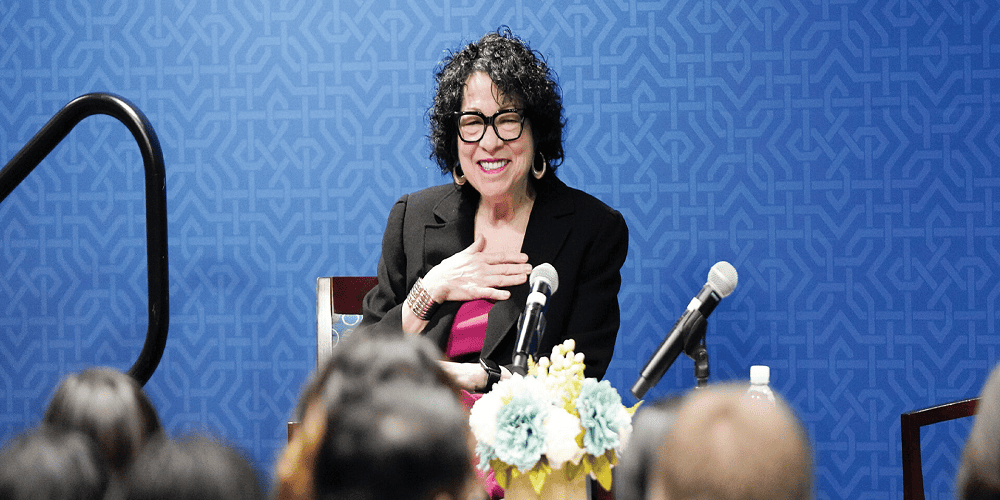
Sonia Sotomayor, born on June 25, 1954, in the Bronx, New York, is a name synonymous with perseverance, excellence, and historic achievement. She is widely recognized for her role as an Associate Justice of the Supreme Court of the United States, a position she has held since her historic appointment in 2009 by President Barack Obama. Sotomayor’s journey is emblematic of the American Dream—a story of a Puerto Rican girl from the Bronx rising to the pinnacle of the U.S. judiciary.
Early Life and Family Background
Sonia Maria Sotomayor was born to Juan and Celina Sotomayor, Puerto Rican immigrants who settled in the South Bronx. Her father, a tool-and-die worker, died when she was nine years old, leaving her mother to raise Sonia and her younger brother. Growing up in a working-class neighborhood exposed Sotomayor to numerous social and economic challenges, but it also instilled in her a profound sense of resilience and determination.
From a young age, Sotomayor excelled academically, showing an early aptitude for reading, writing, and analytical thinking. Despite financial hardships, her mother emphasized the importance of education, ensuring that Sotomayor could attend reputable schools and pursue her dreams. This strong foundation helped her gain admission to Princeton University, where she would eventually graduate summa cum laude in 1976.
Education: Building the Foundation
Sotomayor’s educational trajectory is a testament to her brilliance and commitment. At Princeton University, she studied history and focused on the interplay between law, government, and society. Her senior thesis, which examined Puerto Rican leaders’ attitudes toward the United States, reflected her deep interest in social justice and civic engagement. She graduated with high honors, earning the prestigious Pyne Prize, the university's highest academic honor.
After Princeton, Sotomayor attended Yale Law School, one of the most prestigious law schools in the nation. At Yale, she distinguished herself as an editor of the Yale Law Journal, where she honed her analytical and writing skills. Her education at Yale prepared her for the rigorous demands of legal practice and laid the groundwork for her eventual ascent to the federal judiciary.
Early Legal Career
Upon graduating from Yale Law School in 1979, Sonia Sotomayor began her career as an assistant district attorney in New York, where she prosecuted criminal cases and gained firsthand experience in the complexities of the legal system. Her work in the Manhattan District Attorney’s Office exposed her to issues such as organized crime, drug trafficking, and social inequality, further fueling her commitment to justice.
In 1984, Sotomayor transitioned to private practice, joining the firm Pavia & Harcourt, where she specialized in commercial litigation. Her time in private practice broadened her legal expertise and allowed her to navigate complex civil cases, further establishing her reputation as a meticulous and insightful attorney.
Federal Judicial Service
Sotomayor’s judicial career began in 1991 when President George H.W. Bush nominated her to the U.S. District Court for the Southern District of New York. She was confirmed by the Senate, becoming a federal judge at the age of 37. During her tenure as a district court judge, she presided over a wide array of cases, including civil rights disputes, criminal trials, and high-profile corporate litigation. Her decisions were widely regarded as fair, well-reasoned, and reflective of a deep understanding of both the law and its human impact.
In 1998, President Bill Clinton nominated Sotomayor to the U.S. Court of Appeals for the Second Circuit. She quickly earned a reputation as a thoughtful and independent jurist. Her rulings often emphasized the real-world implications of the law, highlighting her belief that justice should be accessible and equitable for all individuals, regardless of social or economic status.
Supreme Court Appointment
Sonia Sotomayor’s nomination to the Supreme Court in 2009 marked a historic milestone. She became the first Latina and the third woman ever to serve on the highest court in the United States. President Barack Obama described her as a brilliant jurist with a proven commitment to fairness and equality, and the Senate confirmed her with broad bipartisan support.
Her appointment was significant not only for its historical context but also for what it represented in terms of diversity and inclusion in the U.S. judiciary. Sotomayor’s presence on the Supreme Court brought a unique perspective shaped by her heritage, upbringing, and experiences navigating a society marked by economic and social disparities.
Judicial Philosophy
Sotomayor is widely recognized for her pragmatic and empathetic approach to the law. While she is often described as part of the liberal wing of the Supreme Court, she emphasizes careful reasoning and a commitment to justice over ideology. Her decisions frequently reflect a deep concern for the human consequences of legal rulings, particularly in cases involving civil rights, discrimination, and criminal justice.
She is also known for her powerful dissents, which articulate a strong defense of individual rights and social justice. Sotomayor’s legal philosophy demonstrates that the law should serve as a tool for fairness, equality, and societal progress.
Landmark Cases and Opinions
Throughout her tenure on the Supreme Court, Sotomayor has contributed to numerous landmark decisions. Some of the most notable include:
- Ricci v. DeStefano (2009): Sotomayor dissented in this controversial case involving race-based employment decisions, highlighting the nuanced tension between anti-discrimination laws and organizational practices.
- Shelby County v. Holder (2013): In her dissent, Sotomayor warned of the implications of weakening the Voting Rights Act, emphasizing the historical and ongoing challenges faced by marginalized communities in accessing their rights.
- Utah v. Strieff (2016): She strongly criticized the majority opinion, expressing concern about the expansion of police powers at the expense of civil liberties.
- Trump v. Hawaii (2018): Sotomayor dissented from the decision upholding the travel ban, stressing the discriminatory impact on Muslim communities.
These opinions underscore her commitment to defending civil rights, upholding equality, and addressing systemic inequities within American society.
Advocacy and Public Engagement
Beyond her judicial work, Sotomayor is a vocal advocate for education, literacy, and civic engagement. She frequently speaks to students, emphasizing the importance of perseverance, hard work, and embracing one’s cultural heritage. Her memoir, My Beloved World, chronicles her personal journey and offers inspiration to aspiring lawyers, judges, and young people seeking to overcome obstacles.
She also participates in lectures, panels, and conferences, engaging with the public on topics ranging from constitutional law to social justice. Through these efforts, Sotomayor has become a role model not only for Latinas but for all individuals striving to make a difference in society.
Challenges and Criticism
Like any public figure, Sotomayor has faced her share of criticism and controversy. Critics have occasionally accused her of judicial activism or claimed that her empathy for certain groups may influence her objectivity. Some conservative commentators have scrutinized her dissents, particularly in cases related to criminal justice and immigration.
However, her supporters argue that Sotomayor’s ability to incorporate real-world context into her decisions strengthens the judicial process and ensures that the law remains relevant and just.
Legacy and Impact
Sonia Sotomayor’s legacy extends far beyond her legal rulings. She has shattered barriers for women and minorities in the legal profession, providing a powerful example of what can be achieved through determination and excellence. Her journey from the Bronx to the Supreme Court exemplifies resilience, ambition, and the transformative power of education.
Her impact is also cultural and symbolic. For many, Sotomayor represents hope, empowerment, and the promise of a more inclusive and equitable society. Her presence on the Supreme Court has inspired countless young people, particularly from underrepresented communities, to pursue careers in law and public service.
Personal Life
Sotomayor is known for her humility, warmth, and dedication to family. She has been open about her Puerto Rican heritage and the influence of her mother on her personal and professional development. Despite her high-profile career, she maintains a strong connection to her roots and often highlights the importance of community, mentorship, and service.
She enjoys reading, exploring cultural institutions, and engaging in educational outreach. These personal pursuits reflect her lifelong commitment to learning and civic responsibility.
Sonia Sotomayor in Context
Sotomayor’s career must also be understood within the broader context of American society and the judiciary. Her experiences reflect the evolving landscape of civil rights, social justice, and representation in positions of power. By breaking barriers and advocating for equity, she contributes to a judiciary that is more reflective of the nation’s diverse population.
Her influence extends globally, as she is recognized internationally for her legal acumen, commitment to human rights, and advocacy for marginalized communities. Sotomayor exemplifies how the law can be a force for justice, inclusion, and positive societal change.
FAQs about Sonia Sotomayor
1. Who is Sonia Sotomayor?
Sonia Sotomayor is an Associate Justice of the Supreme Court of the United States and the first Latina to hold this position. She has served on the court since 2009 and is known for her commitment to civil rights and social justice.
2. What is Sonia Sotomayor’s educational background?
She graduated summa cum laude from Princeton University with a degree in history and earned her law degree from Yale Law School, where she was an editor of the Yale Law Journal.
3. What notable cases has Sonia Sotomayor presided over?
Some of her significant cases include Ricci v. DeStefano, Shelby County v. Holder, Utah v. Strieff, and Trump v. Hawaii. She is known for her influential dissents and civil rights advocacy.
4. What is Sonia Sotomayor’s judicial philosophy?
Her judicial philosophy emphasizes pragmatism, empathy, and fairness. She focuses on the human impact of legal decisions and supports protecting individual rights and equality.
5. How did Sonia Sotomayor make history?
Sotomayor became the first Latina and the third woman to serve on the U.S. Supreme Court. Her appointment marked a significant step forward for diversity and representation in the judiciary.
6. What books has Sonia Sotomayor written?
Her memoir, My Beloved World, details her life journey, challenges, and achievements. She has also authored books aimed at inspiring young readers and aspiring professionals.
7. What challenges has Sonia Sotomayor faced?
She grew up in a working-class neighborhood and faced financial hardships. Professionally, she has encountered criticism from opponents who view her dissents as judicial activism.
8. How has Sonia Sotomayor influenced young people?
Through public speaking, writing, and mentorship, Sotomayor encourages young people, especially women and minorities, to pursue education and leadership roles, inspiring generations to follow her example.
9. Is Sonia Sotomayor married?
Sotomayor is married to Kevin Noonan, a patent attorney. She balances her professional commitments with a strong dedication to family and community engagement.
10. What makes Sonia Sotomayor’s story significant?
Her story is significant because it represents the triumph over adversity, the breaking of barriers in the judiciary, and the advocacy for justice, equality, and inclusivity at the highest levels of government.
Sonia Sotomayor’s life and career continue to be a source of inspiration and learning. Her journey illustrates the importance of perseverance, integrity, and the pursuit of justice in the face of challenges. From the streets of the Bronx to the chambers of the Supreme Court, Sotomayor embodies the values of determination, resilience, and hope, making her one of the most influential figures in contemporary American history.
Leave A Comment
0 Comment