
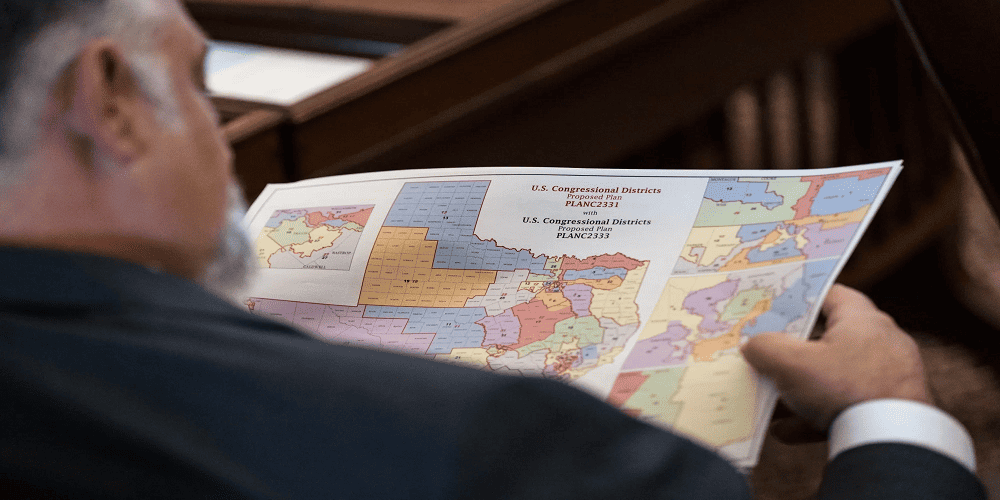
The phrase supreme court texas redistricting has become one of the most discussed topics in modern American politics. Redistricting in Texas has repeatedly reached the United States Supreme Court, leading to major rulings that shape how voting districts are drawn, how elections are conducted, and how political representation is distributed across the state. Understanding the issue requires a deep look into the legal landscape, political arguments, historical battles, demographic influences, and ongoing legal disputes. This comprehensive guide covers everything you need to know about the supreme court texas redistricting debate.
Introduction to Redistricting in Texas
Redistricting refers to the process of redrawing electoral district boundaries after every ten-year census. The purpose is to ensure equal representation as population numbers change. However, in Texas, redistricting has never been just a routine administrative process. It has been a battlefield of political power, racial representation, party dominance, and judicial interventions. The repeated involvement of the United States Supreme Court shows how complicated and contentious the supreme court texas redistricting issue truly is.
Texas is one of the fastest-growing states in the country, and its demographic shifts have major political implications. Political parties often fight fiercely over maps because even small changes in boundaries can influence the balance of power in Congress and the state legislature. Because of this political tension, courts are frequently asked to evaluate whether Texas follows the Constitution and the Voting Rights Act when drawing its maps.
Why the Supreme Court Texas Redistricting Issue Matters
The supreme court texas redistricting saga matters because it directly affects who gets elected. District maps determine how communities are grouped, who gets political influence, and how fairly votes convert into representation. The Supreme Court has repeatedly reviewed claims that Texas maps discriminate against minority voters or give unfair advantages to certain political parties.
Some of the reasons the supreme court texas redistricting issue remains important include:
- Demographic Changes
Texas has seen a huge rise in Hispanic, African American, and Asian populations. Redistricting influences whether these communities receive fair political representation. - Partisan Control
Texas has been controlled by one party for decades. Changes in maps can either preserve or challenge that dominance. - Voting Rights Act Enforcement
Many cases reviewed under the supreme court texas redistricting lens involve claims of racial discrimination, intentional dilution of minority votes, or violations of Section 2 of the Voting Rights Act. - Precedents for Other States
Texas redistricting cases often set national precedents used by other states facing similar disputes.
Historical Background of Supreme Court Texas Redistricting Battles
Texas has been involved in redistricting lawsuits for decades. Some key phases include:
1. Early Court Challenges
In the 1960s, the Supreme Court established the principle of “one person, one vote,” requiring districts to have roughly equal populations. Texas quickly became involved in lawsuits over unequal districts and discrepancies between rural and urban representation.
2. Voting Rights Act Era
The Voting Rights Act of 1965 brought federal oversight to Texas redistricting. Until 2013, Texas was required to get federal approval before implementing new district maps because of past discrimination practices.
3. Rise of Partisan Gerrymandering Claims
After the 2000 and 2010 censuses, Texas drew maps that critics said favored one political party. Many of these maps were challenged before the Supreme Court.
4. The 2013 Shelby County Decision
In 2013, the Supreme Court removed the preapproval requirement for states like Texas. After this decision, new maps could be implemented immediately without federal clearance. The supreme court texas redistricting issue intensified after this ruling, as many argued that minority communities were now more vulnerable to discriminatory maps.
Major Supreme Court Cases on Texas Redistricting
1. League of United Latin American Citizens v. Perry (2006)
This case challenged Texas’s mid-decade redistricting plan. While the court allowed most of the map, it struck down one district for violating Hispanic voting rights.
2. Abbott v. Perez (2018)
One of the most significant supreme court texas redistricting decisions, this ruling upheld most of Texas’s maps. Critics said the decision made it harder to prove racial discrimination in redistricting cases. The Court held that legislatures are presumed to act in good faith unless strong evidence shows otherwise.
3. Ongoing Litigation After 2020 Census
Multiple lawsuits argue that Texas’s latest maps disadvantage minority voters. Some plaintiffs claim the maps reduce the influence of communities that fueled Texas’s population growth. These cases may eventually reach the Supreme Court, continuing the long history of supreme court texas redistricting battles.
Key Legal Concepts in the Supreme Court Texas Redistricting Debate
1. Gerrymandering
Gerrymandering refers to drawing districts to favor a political party or group. Two main types influence supreme court texas redistricting cases:
- Racial gerrymandering: When race is used improperly or illegally to draw district lines
- Partisan gerrymandering: When maps are drawn to help one political party retain power
The Supreme Court has ruled that racial gerrymandering can be unconstitutional, while partisan gerrymandering is mostly a political question that courts cannot decide.
2. The Voting Rights Act
Most supreme court texas redistricting disputes involve allegations that maps:
- Dilute minority voting power
- Reduce opportunities for minority candidates
- Crack or pack minority communities to weaken their influence
Section 2 of the Voting Rights Act prohibits practices that deny equal voting rights based on race or ethnicity.
3. Equal Protection Clause
Some cases argue that maps violate the Fourteenth Amendment by treating voters unequally or targeting certain groups unfairly.
Political Implications of Redistricting in Texas
1. Representation of Minority Communities
Demographic data shows that much of Texas’s population growth comes from minority groups. However, critics argue that these communities do not receive fair representation in the current maps. The supreme court texas redistricting cases often highlight concerns about vote dilution.
2. Impact on Congressional Seats
Texas regularly gains new congressional seats due to population growth. How these seats are drawn has significant national political consequences. The dominant party often aims to protect incumbents and maximize safe districts.
3. Urban vs Rural Divide
Large cities like Houston, Dallas, Austin, and San Antonio lean politically different from rural areas. Map-drawing choices influence whether urban voices are represented proportionally.
Supreme Court’s Role in Texas Redistricting
The Supreme Court has the final say on whether Texas maps comply with constitutional standards. Over time, the court’s decisions have shifted based on the composition of the justices. The modern Supreme Court generally takes a more limited role in redistricting cases, especially regarding partisan gerrymandering.
However, racial discrimination claims remain relevant, and the court continues to evaluate arguments brought forward by civil rights groups. The supreme court texas redistricting cases serve as a reminder that judicial review still plays a crucial role, especially when political battles escalate.
Current Challenges After the 2020 Census
Several groups, including voting rights organizations, minority advocacy groups, and civil rights coalitions, have filed lawsuits arguing that Texas’s new maps violate federal law. These cases claim that:
- Minority populations grew significantly, but representation did not
- New districts were designed to protect incumbents, not communities
- Maps reduce competitive districts
- Districts split minority communities into separate political areas
These arguments are central to the modern supreme court texas redistricting challenges.
The Future of Supreme Court Texas Redistricting
The future of redistricting in Texas depends on several factors:
1. Supreme Court Rulings
Upcoming cases may define new standards on how discrimination is evaluated. Depending on how the Court rules, states may gain more freedom or face more restrictions.
2. Population Growth
Texas continues to grow rapidly. Demographic changes will make redistricting even more complex in future decades.
3. Voting Rights Legislation
If Congress passes new voting rights protections, Texas could once again face federal oversight.
4. Technology and Data
Advanced mapping software allows for extremely precise district designs. This may lead to more legal challenges if maps appear too engineered or discriminatory.
Conclusion
The debate over supreme court texas redistricting represents one of the most important political and legal issues in the United States. Redistricting determines political power, representation, and the fairness of elections. Texas, with its large population and rapid growth, stands at the center of these disputes. Over many decades, the Supreme Court has shaped the boundaries of Texas politics, ruling on issues ranging from racial discrimination to partisan manipulation. As new cases emerge, the supreme court texas redistricting issue will continue to influence both state and national politics.
FAQs on Supreme Court Texas Redistricting
1. What is the main issue in the supreme court texas redistricting debate?
The main issue is whether Texas’s district maps violate constitutional rights or the Voting Rights Act by diluting minority voting power or unfairly favoring one political party.
2. Why does Texas frequently face redistricting lawsuits?
Texas has fast population growth and a complex political landscape. Demographic changes often trigger legal challenges regarding representation and fairness.
3. Has the Supreme Court struck down Texas maps before?
Yes, the Supreme Court has struck down or modified Texas maps several times, especially in cases involving racial discrimination.
4. What was significant about Abbott v. Perez?
This ruling upheld most Texas maps and strengthened the presumption that legislatures act in good faith, making it harder to prove intentional discrimination.
5. Can redistricting cases still reach the Supreme Court in the future?
Absolutely. Ongoing lawsuits after the 2020 Census may be reviewed by the Supreme Court in the coming years.
Leave A Comment
0 Comment