
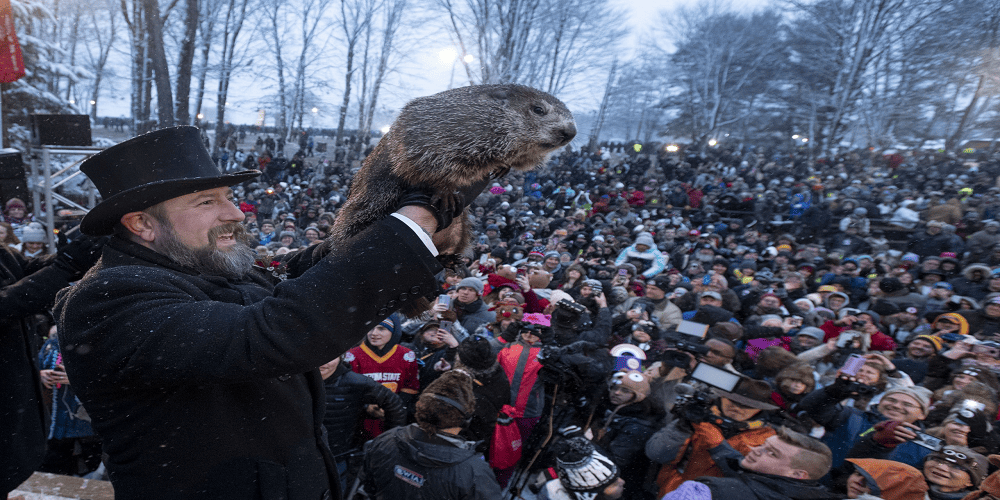
Groundhog Day is one of the most unique and widely recognized cultural traditions in North America. Celebrated every year on February 2, Groundhog Day blends folklore, seasonal change, and community celebration into a single event that captures public imagination. While some people view Groundhog Day as a fun superstition and others treat it as a serious weather prediction ritual, its roots and influence go far beyond a simple shadow check.
This article explores the history, origins, traditions, cultural impact, and modern meaning of Groundhog Day, along with why this annual event continues to fascinate millions.
What Is Groundhog Day?
Groundhog Day is an annual tradition held on February 2, centered around the belief that a groundhog can predict the arrival of spring. According to folklore, if the groundhog sees its shadow due to clear weather, winter will continue for six more weeks. If the groundhog does not see its shadow because of cloudy skies, spring will arrive early.
Though Groundhog Day may sound like a simple weather superstition, it has evolved into a cultural celebration with festivals, media coverage, and tourism. The most famous Groundhog Day celebration takes place in Punxsutawney, Pennsylvania, where Punxsutawney Phil makes his prediction each year.
The Historical Origins of Groundhog Day
The roots of Groundhog Day trace back to ancient European traditions. Long before the groundhog became a weather forecaster, people relied on seasonal markers and animal behavior to predict changing weather.
Candlemas and Early Traditions
Groundhog Day has strong ties to Candlemas, a Christian holiday observed on February 2. Candlemas marked the midpoint between the winter solstice and the spring equinox. European folklore suggested that clear weather on Candlemas meant more winter was coming.
A common belief stated:
If Candlemas be fair and bright,
Winter will have another flight.
If Candlemas brings cloud and rain,
Winter is gone and will not come again.
When German immigrants came to North America, they brought these traditions with them. In Germany, a hedgehog was used as the weather-predicting animal. However, since hedgehogs were not native to North America, settlers chose the groundhog as a substitute. This adaptation eventually formed the basis of modern Groundhog Day.
Why February 2 Matters
February 2 sits roughly halfway between the winter solstice in December and the spring equinox in March. Historically, people relied on seasonal markers like this to guide agricultural planning and survival.
Groundhog Day became a symbolic checkpoint — a way to judge how long winter might last. While modern meteorology provides accurate forecasts, Groundhog Day remains a cultural and symbolic reminder of the transition from winter to spring.
The Legend of the Groundhog
The central figure of Groundhog Day is the groundhog itself, also known as a woodchuck. Groundhogs are hibernating animals, and in early February, they begin to stir as winter slowly fades.
Folklore suggests:
- Shadow seen = Six more weeks of winter
- No shadow = Early spring
Scientifically, a groundhog emerging on a sunny day would cast a shadow and might retreat back into its burrow. Cloudy conditions would reduce shadows, giving the impression of a more welcoming environment. Over time, this natural behavior transformed into the symbolic prediction associated with Groundhog Day.
Punxsutawney Phil and the Rise of Groundhog Day Fame
While many towns celebrate Groundhog Day, Punxsutawney, Pennsylvania, is the most famous location. The town’s groundhog, Punxsutawney Phil, is considered the official weather-predicting groundhog.
The Punxsutawney Tradition
Each year on Groundhog Day, members of the Punxsutawney Groundhog Club gather at Gobbler’s Knob before sunrise. Phil is removed from his burrow and presented to the crowd. A proclamation is read declaring whether Phil saw his shadow.
The event is broadcast nationally and draws thousands of visitors. Over time, this local tradition became the face of Groundhog Day celebrations worldwide.
Accuracy of Groundhog Day Predictions
Many people wonder how accurate Groundhog Day predictions really are. Studies have shown that the groundhog’s predictions are correct less than half the time. However, accuracy is not the main purpose of Groundhog Day.
The real value of Groundhog Day lies in tradition, entertainment, and seasonal symbolism rather than meteorological reliability. Groundhog Day serves as a lighthearted reminder that winter will eventually end.
Groundhog Day in Popular Culture
Groundhog Day reached global fame thanks to the 1993 movie Groundhog Day starring Bill Murray. In the film, the main character relives the same day over and over again, turning Groundhog Day into a metaphor for repetition and self-improvement.
Since then, the term “Groundhog Day” has become shorthand for feeling stuck in a repetitive cycle. This cultural reference has expanded the meaning of Groundhog Day beyond weather folklore.
Modern Groundhog Day Celebrations
Today, Groundhog Day is celebrated in schools, towns, and communities across North America. Activities often include:
- Parades
- Festivals
- Educational programs
- Themed decorations
- Weather-related lessons
Groundhog Day has also become an opportunity for tourism, especially in towns that host official groundhog ceremonies.
Educational Importance of Groundhog Day
Teachers often use Groundhog Day as a learning opportunity. It provides a fun way to introduce students to:
- Animal behavior
- Seasonal changes
- Folklore and traditions
- Cultural history
Groundhog Day helps children understand how traditions evolve over time and how science and folklore can intersect.
Groundhog Day and Seasonal Psychology
Groundhog Day occurs at a time when many people feel tired of winter. Short days and cold weather can affect mood. Groundhog Day offers a hopeful message that spring is on the horizon.
This psychological boost is one reason Groundhog Day remains popular. Even if the prediction is just symbolic, it gives people something to look forward to.
Regional Variations of Groundhog Day
While Punxsutawney Phil is the most famous groundhog, other regions have their own versions of Groundhog Day:
- Wiarton Willie in Canada
- Staten Island Chuck in New York
- General Beauregard Lee in Georgia
These regional celebrations show how Groundhog Day has spread and adapted across different communities.
The Science Behind Groundhog Behavior
Groundhogs are true hibernators. During winter, their body temperature drops and their heart rate slows. By early February, they begin to wake and search for food.
Groundhog Day coincides with this natural emergence period. Though the animal cannot truly predict weather, its behavior signals that seasonal change is approaching.
Groundhog Day as a Symbol of Renewal
Groundhog Day represents more than a weather forecast. It symbolizes transition, hope, and the gradual shift from winter to spring. This symbolic meaning keeps Groundhog Day relevant even in the age of modern science.
People celebrate Groundhog Day not because they believe in perfect predictions, but because it connects them to tradition and the natural world.
Media Coverage and Commercial Impact
Groundhog Day generates significant media attention every year. News stations broadcast predictions live, and businesses use the event for promotions and themed marketing.
From souvenirs to themed events, Groundhog Day contributes to local economies and tourism industries.
Why Groundhog Day Still Matters Today
In a fast-paced digital world, traditions like Groundhog Day provide continuity and shared cultural experiences. Groundhog Day reminds people of seasonal cycles, community gatherings, and simple joys.
The charm of Groundhog Day lies in its mix of folklore, celebration, and humor. It is one of the few traditions where a small animal becomes the star of a national event.
Fun Facts About Groundhog Day
- The first official Groundhog Day celebration in Punxsutawney took place in 1887.
- Groundhogs can live up to 6 years in the wild.
- The Punxsutawney Groundhog Club claims Phil has been predicting for over a century thanks to a secret “elixir of life.”
- Groundhog Day is celebrated at dawn to match the animal’s natural behavior.
The Future of Groundhog Day
Despite advances in weather forecasting, Groundhog Day shows no signs of fading away. Instead, it continues to grow as a cultural and entertainment event.
Groundhog Day has adapted to modern times through live streaming, social media coverage, and global media attention. Younger generations are introduced to Groundhog Day through schools, movies, and online platforms.
Conclusion
Groundhog Day is far more than a quirky tradition about an animal seeing its shadow. It is a celebration rooted in history, shaped by folklore, and kept alive through community spirit. Groundhog Day connects past and present, science and superstition, winter and spring.
Whether taken seriously or enjoyed for fun, Groundhog Day continues to bring people together each February 2, reminding everyone that brighter, warmer days are ahead.
FAQs About Groundhog Day
1. What is the purpose of Groundhog Day?
Groundhog Day is a traditional event that predicts the arrival of spring based on whether a groundhog sees its shadow.
2. When is Groundhog Day celebrated?
Groundhog Day is celebrated every year on February 2.
3. Who is Punxsutawney Phil?
Punxsutawney Phil is the most famous groundhog associated with Groundhog Day and makes an annual weather prediction in Pennsylvania.
4. Is Groundhog Day scientifically accurate?
Groundhog Day predictions are not scientifically reliable, but the tradition is meant for fun and cultural celebration.
5. Where did Groundhog Day originate?
Groundhog Day originated from European seasonal traditions and was brought to North America by German settlers.
6. Why does the groundhog see its shadow?
If the weather is sunny, the groundhog casts a shadow, which folklore says means more winter.
7. Is Groundhog Day celebrated outside the United States?
Yes, Groundhog Day is also celebrated in parts of Canada and has gained global attention through media and film.
8. What movie made Groundhog Day famous worldwide?
The 1993 film Groundhog Day starring Bill Murray popularized the term and gave the day broader cultural meaning.
9. How long has Groundhog Day been celebrated?
Groundhog Day has been officially celebrated in Punxsutawney since 1887.
10. Why is Groundhog Day still popular today?
Groundhog Day remains popular because of its mix of tradition, humor, seasonal symbolism, and community celebration.
Leave A Comment
0 Comment