
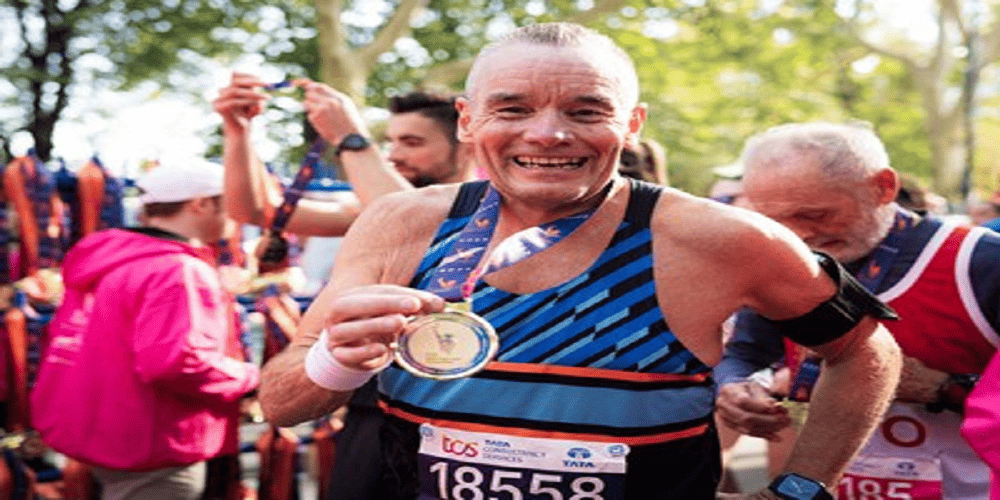
The TCS New York City Marathon (commonly referred to as the “NYC Marathon”) is one of the most iconic road-racing events in the world. Held annually in New York City across all five boroughs, it culminates a season of global marathon competition. In this article, we’ll explore the latest results, historical context, how to interpret the data, trends, and what the results mean for elite runners, everyday finishers and the sport as a whole. We’ll also answer frequently asked questions.
1. What are the Latest Results?
2025 Highlights
The 54th edition of the NYC Marathon delivered plenty of excitement and record-breaking performances:
- On the men’s side: Benson Kipruto of Kenya won in 2:08:09. He edged out compatriot Alexander Mutiso by just a fraction of a second — the closest finish in race history. (Wikipedia)
- On the women’s side: Hellen Obiri of Kenya won in 2:19:51, setting a new course record (previous: 2:22:31). (ESPN.com)
- Wheelchair divisions: Men’s wheelchair winner was Marcel Hug in 1:30:16, and the women’s wheelchair winner was Susannah Scaroni in 1:42:10. (Wikipedia)
- Notably, Kenya swept the podium in both men’s and women’s open divisions in 2025. (ESPN.com)
2024 Recap
For context, the 2024 race (53rd edition) had different winners with strong performances:
- Men’s winner: Abdi Nageeye (Netherlands) in 2:07:39. (Runner's World)
- Women’s winner: Sheila Chepkirui (Kenya) in 2:24:35. (ESPN.com)
- The 2024 race also saw an all‐Kenyan women’s podium. (ESPN.com)
Where to Find Detailed Results
For full finisher lists, age‐group breakdowns and official timings, the event organiser provides data: the New York Road Runners (NYRR) site lists all results. (New York Road Runners)
2. Why These Results Matter
Status of the Event
The NYC Marathon is among the elite “World Marathon Majors” and is widely regarded as one of the toughest and most prestigious marathons in the world. (Wikipedia)
Record Setting & Competitive Depth
- The women’s 2025 result by Obiri broke a 22-year old record. (ESPN.com)
- The men’s 2025 race produced perhaps the closest finish ever recorded in the event's history. (The Independent)
- Having all three podium finishers in both the men’s and women’s divisions from one country (Kenya) underscores the dominance of certain nations in the sport.
Significance for Finishers
While elite results capture headlines, the event is also a major social, cultural and achievement marker for tens of thousands of runners who finish the 42.195 km course. The result data (finisher time, age group placement) matters for personal milestones, qualification for other races, sponsorship, and endurance credibility.
3. Interpreting the Results: What They Say
Winning Times: What’s “Fast” in NYC
Because of the course profile and environment (bridges, boroughs, variable weather), winning times in NYC often are slower than “flat‐and‐fast” marathons. For example, the 2025 men’s winner clocked 2:08:09—not far off—but the women’s record was 2:19:51, which is very fast for this course.
Podium Depth
In 2025 all top three in each open division beat previous benchmarks (women) and narrowly edged each other (men). This suggests high competitive depth.
Wheelchair Divisions
These divisions often have dramatically faster speeds / different finish time profiles. The result times (e.g., 1:30:16 in men’s 2025) reflect the extraordinary physical performance and specialized equipment.
National & International Trends
Kenya’s dominance continues. But the fact a Dutch athlete (Nageeye) won in 2024 shows the international spread of elite marathon success.
Finishers & Age Groups
While top elites are heavily covered, for many the key result is finishing the course, achieving a personal best, or placing well in an age group. The full result lists (NYRR) show thousands of finishers across multiple age groups.
4. Trends from Recent Years
Course Record Breaks
- The women’s record broke in 2025 with Obiri’s 2:19:51.
- Though the men’s 2023 result of 2:04:58 (by Tamirat Tola) set a very low mark, NYC’s course makes it difficult to match times at the fastest flat courses. (Wikipedia)
Sweeps by One Country
- The all‐Kenyan podium in 2025 (men’s and women’s open divisions) reflects the breadth and depth of Kenya’s elite marathon programme.
- Similar dominance was seen in 2024 women’s podium (all Kenyan) though men’s winner was Dutch.
American Runners
While Americans are less dominant in the open elite divisions relative to some nations, there have been strong performances. For example, in 2024 Americans finished in the top 10 in both male and female categories. (ESPN.com)
Participation & Finisher Growth
The event continues to attract tens of thousands of finishers each year; in 2023 it was reported to be “the world’s largest marathon” at some point in terms of applications/finishers. (Wikipedia)
5. What the Results Mean for Various Stakeholders
For Elite Athletes
- Winning (or placing) in NYC elevates an athlete’s status, increases sponsorship, and contributes to career legacy.
- Course records and narrow finishes add to the event’s prestige and challenge.
- Strategic racing matters: pacing, final‐mile speed, course knowledge — as seen in winning surges (e.g., Obiri’s pull-away).
For Amateur Runners / Age-Group Athletes
- Finish time is often a key personal milestone.
- Age‐group result data allows athletes to compare themselves globally, qualify for future events, or find pacing goals.
- The event’s prestige adds to the personal achievement of finishing.
For Spectators, Media & Event Organisers
- High-profile results generate media coverage and global attention (e.g., photo-finish, course record).
- Broad participation reinforces the event’s brand.
- The data supports historical comparisons, sponsorship deals, and future organisational planning.
For Marathon Culture & the Running Community
- The results reflect broader trends in distance running (e.g., dominance of East African athletes, equipment and training advances).
- They provide benchmarks that motivate runners at all levels.
- They help highlight the challenges of different courses — NYC’s course is known for its bridges, boroughs and finishing in Central Park, which affects times.
6. Key Context: The NYC Marathon Course & Conditions
The Route
The NYC Marathon starts in Staten Island and moves through Brooklyn, Queens, the Bronx, and finishes in Manhattan’s Central Park. (Wikipedia)
The terrain, bridges (notably the Verrazzano-Narrows Bridge at the start) and elevation changes mean the course is more demanding than some flatter city marathons. (bild.de)
Weather & Conditions
Weather plays a big role. Winds, temperature, precipitation and humidity can all impact times. The 2025 results were achieved under favorable conditions which allowed the women’s course record.
Field Strength
As one of the final World Marathon Majors events of the year, the NYC Marathon often gathers a very deep elite field — though some athletes may have already raced major marathons earlier in the year. For example, the 2024 race followed the Paris Olympics. (The Guardian)
7. How to Use the Results Data
For Comparison
You can compare your own finish time (or goal time) to top elites, age-group winners, your country’s results, and global rankings. For example, checking how an American runner placed relative to elite winners can be motivating.
For Setting Goals
If you’re aiming to run NYC (or have finished), checking the results of a previous year can help set realistic targets:
- What time did the top age-group in your category achieve?
- How many finishers achieved a certain split time?
- How did conditions impact finishing times?
For Historical Tracking
Results over multiple years allow you to see:
- How winning times have improved (or not)
- How national representation has shifted
- Whether course changes or technological advances (shoes, training) are influencing performance
For Media or Reporting
If you’re writing about the marathon, you can highlight notable results (photo-finishes, record breaking, sweeps) and put them in context of previous years.
8. Limitations & Considerations
When interpreting results, keep these caveats in mind:
- Winning times don’t always reflect the “best possible” run for the course—changes in weather or pacing strategy can slow or speed the field.
- Finisher data beyond the elite tier may be less commonly reported in mainstream media; you may need to dig into full result databases.
- Comparing times across courses isn’t always apples-to-apples due to different elevation profiles, climate and course layouts.
- The “all-Kenyan” podiums reflect dominance by one nationality, but this may not represent the full diversity of competitors or fields in non-elite waves.
9. What to Look Out for in Future Results
- Will the women’s course record of 2:19:51 (2025) be beaten, and when?
- Will there be another photo-finish like 2025’s men’s race?
- Will other nationalities break into the elite podium or sweep the ranks?
- How will technological advances (shoe tech, pacing strategy) impact finishing times?
- Will participation continue to grow, and will the race maintain its status as the “largest marathon” in any sense?
- How will the environmental conditions (weather, start times, wave management) continue to shape results?
10. Frequently Asked Questions
Q 1. Where can I find the full results list of the NYC Marathon?
A: The official organiser, NYRR, maintains the result listings. You can visit the “Race Results” section for the TCS NYC Marathon. (New York Road Runners)
Q 2. What was the winning time in the most recent NYC Marathon?
A: In 2025, men’s winner was Benson Kipruto in 2:08:09 and women’s winner was Hellen Obiri in 2:19:51 (course record). (CBS News)
Q 3. Why are the winning times in NYC sometimes slower than world records?
A: The course is more demanding than some “flat” marathons — it includes multiple bridges, elevation changes and traverses all five boroughs. Weather and race strategy also matter. Thus, while still elite, times are often a bit slower than flatter, cooler venue marathons. (bild.de)
Q 4. How dominant are certain countries in the NYC Marathon?
A: Quite dominant. For example in 2025, Kenya swept the top three positions in both the men’s and women’s open divisions. (ESPN.com) Also historically, winners have represented 23 countries, but a few nations dominate in frequency. (Wikipedia)
Q 5. Does the wheelchair division result significantly differ from the open division?
A: Yes. Wheelchair athletes finish in significantly shorter times (for the same distance) due to speed of the chairs and specialist training. For example, women’s wheelchair winner in 2025 recorded 1:42:10. (CBS News)
Q 6. How should a non-elite finisher interpret the result data?
A: Use it as a benchmark. Compare your time to age-group winners, see average finish times, look at whether you achieved your target relative to conditions. It’s less about beating elites, more about personal progress and placement within your group.
Q 7. How often does the marathon produce a course record?
A: It varies. Some years conditions lend themselves to record runs; others the nature of the field or weather doesn’t. The 2025 women’s course record is a recent example. But note that the terrain and conditions of NYC make frequent record‐breaking less common than at faster courses.
Q 8. How can I check my own result or see how others did?
A: Go to the official results page (NYRR). You can search by name, bib number, age group, finish time, etc. It is the definitive source for full finishing lists.
Q 9. What is the significance of the “podium sweep” by one country?
A: It reflects that, for that year, athletes from the same country (Kenya in 2025) were the top three finishers — indicating depth of talent, high performance levels and perhaps well-organized national programmes. For example, Kenya’s sweep in 2025 men’s and women’s open divisions. (ESPN.com)
Q 10. Are times from previous years comparable?
A: Yes and no. You can compare winning and top-10 times across years to see trends, but you must adjust your expectations given different weather, competition, course conditions and technological change. The context matters.
11. Conclusion
The results of the NYC Marathon tell a story far beyond just finish times. They reflect competitive excellence, national and global trends in endurance sport, the remarkable achievements of both elites and everyday runners, and the unique challenge of running 42.195 km through one of the world’s great cities. Whether you’re following the elite winners, tracking age-group finishes, or simply planning your first time, the result data is rich with insight.
As we’ve seen in the 2025 edition, fresh records and incredibly tight finishes continue to raise the bar. For future editions, attentiveness to conditions, competitor field strength, and evolving training and technology will make understanding the results even more interesting.
If you like, I can pull together an extensive archive of past NYC Marathon results (e.g., top 25 finishers each year since 2015) and highlight performance trends. Would you like me to do that?
Leave A Comment
0 Comment