
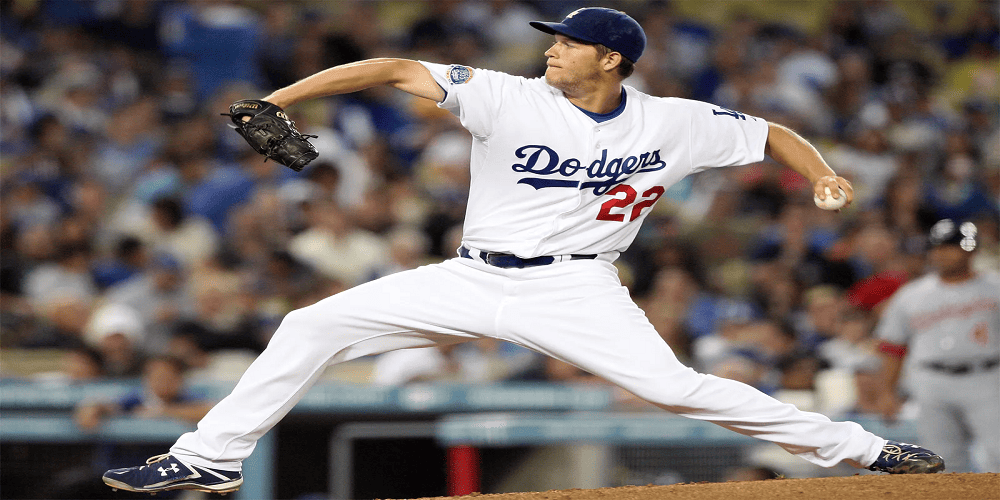
Clayton Kershaw is one of the most dominant pitchers in the history of Major League Baseball (MLB). Known for his devastating curveball, impeccable control, and fierce competitiveness, Kershaw has spent his entire career with the Los Angeles Dodgers, etching his name among the sport’s greats. From his debut as a young phenom to becoming a World Series champion, Kershaw’s journey is a story of talent, perseverance, and excellence. This comprehensive look into his life and career explores his background, achievements, struggles, and enduring influence on baseball.
Early Life and Background
Clayton Edward Kershaw was born on March 19, 1988, in Dallas, Texas. Growing up, Kershaw displayed an early aptitude for sports, particularly baseball. His parents divorced when he was young, and he was raised by his mother, Marianne Tombaugh, in the Dallas suburb of Highland Park. Despite personal challenges, Kershaw excelled academically and athletically, demonstrating a strong sense of discipline that would later define his career.
During his time at Highland Park High School, Kershaw’s talent was undeniable. He threw a no-hitter with 15 strikeouts in a six-inning game shortened by the mercy rule and posted an astonishing 13–0 record with a 0.77 ERA during his senior season. His fastball regularly touched 94 mph, and his curveball baffled hitters even then. Baseball scouts quickly took notice, projecting him as one of the top prospects in the country.
MLB Draft and Early Career
In the 2006 MLB Draft, the Los Angeles Dodgers selected Kershaw seventh overall. The team saw in him the potential to become a cornerstone of their pitching staff for years to come. Kershaw quickly advanced through the minor leagues, showcasing dominance at every level. By 2008, at the age of 20, he made his MLB debut with the Dodgers.
In his first season, Kershaw showed flashes of brilliance but also the inconsistency typical of young pitchers. However, his raw talent and work ethic made it clear that greatness was only a matter of time. The Dodgers organization and fans alike began to see him as the future face of the franchise.
Rise to Stardom
By 2011, Kershaw had firmly established himself as one of the best pitchers in baseball. That year, he won his first National League (NL) Cy Young Award, leading the league in ERA (2.28), strikeouts (248), and wins (21). He became the youngest pitcher to win the Triple Crown since Dwight Gooden in 1985. His performances were not just dominant; they were historically efficient.
Kershaw’s pitching repertoire was anchored by his four-seam fastball, which consistently sat in the mid-90s, and his legendary 12–6 curveball that dropped sharply out of the strike zone. Later in his career, he added a slider that became equally devastating to both left- and right-handed batters. His command and pitch sequencing made him nearly unhittable on his best days.
From 2011 to 2017, Kershaw was in a league of his own. He won three Cy Young Awards (2011, 2013, 2014), an NL MVP Award (2014), and was selected to seven consecutive All-Star Games. During this period, his ERA never rose above 2.91 in any full season—a remarkable feat in the modern era of baseball.
Signature Performances and Achievements
Kershaw’s career is filled with defining moments that have cemented his status as a baseball legend. One of the most memorable came on June 18, 2014, when he threw a no-hitter against the Colorado Rockies at Dodger Stadium. In that game, he struck out 15 batters and didn’t allow a single walk, though a fielding error by Hanley Ramirez prevented it from being a perfect game. It was one of the most dominant pitching performances in MLB history.
In 2014, Kershaw also had one of the best seasons ever recorded by a pitcher. He went 21–3 with a 1.77 ERA, earning both the NL Cy Young Award and the MVP Award—a rare double honor that underscored his dominance. He led the league in ERA for four consecutive years (2011–2014), a feat that only a few pitchers in history have achieved.
Challenges and Playoff Struggles
Despite his regular-season dominance, Kershaw faced criticism early in his career for his postseason performances. The Dodgers often made deep playoff runs, but Kershaw struggled in key games. Opponents often cited his drop in velocity and command during October as signs of fatigue or pressure. However, these narratives oversimplified the reality—many of his postseason starts were excellent, but bullpen collapses and defensive errors contributed to the losses.
Still, Kershaw took the criticism to heart. His determination to succeed in the postseason became one of his defining motivations. Over time, he learned to adjust his approach, pacing himself throughout the season to maintain peak performance during October.
Redemption and World Series Victory
The ultimate redemption came in 2020, a year marked by the COVID-19 pandemic. The MLB season was shortened to 60 games, but the Dodgers were determined to break their 32-year championship drought. Kershaw delivered exceptional performances throughout the playoffs, including in the World Series against the Tampa Bay Rays.
In Game 1 of the World Series, Kershaw struck out eight batters over six innings, allowing just one run. He followed that up with another strong outing in Game 5, helping the Dodgers secure the championship. The victory not only brought joy to Dodgers fans but also validated Kershaw’s career. His long journey to a title was finally complete, silencing critics who had questioned his postseason legacy.
Style of Play and Pitching Arsenal
Kershaw’s success stems from a combination of elite mechanics, mental toughness, and a deep understanding of hitters. His delivery is smooth and repeatable, allowing him to maintain pinpoint control. His curveball—often called “Public Enemy No. 1”—is among the most recognizable pitches in baseball due to its sharp, looping break.
His slider, introduced later in his career, became his go-to strikeout pitch. Unlike many pitchers who rely on velocity, Kershaw mastered the art of deception and control. Even as his fastball velocity declined with age, he continued to dominate by changing speeds and mixing locations effectively.
Injuries and Adaptation
Like many elite pitchers, Kershaw has dealt with injuries, particularly back issues that began to surface around 2016. These injuries forced him to miss significant time and required him to adapt his approach. Instead of overpowering hitters, Kershaw focused more on command and pitch selection.
Despite these physical challenges, he has remained remarkably consistent. His ability to reinvent himself as a veteran pitcher has been key to his longevity. Even in his mid-30s, Kershaw continues to post impressive numbers, maintaining an ERA among the best in the league.
Off the Field: Philanthropy and Family
Beyond the diamond, Clayton Kershaw is known for his humility and charitable work. Along with his wife, Ellen, he founded Kershaw’s Challenge, a faith-based organization that supports vulnerable children and families in Los Angeles, Dallas, Zambia, and the Dominican Republic. The foundation’s mission is to transform lives through compassion and service.
The couple’s humanitarian work has earned widespread recognition, and Kershaw’s off-field reputation is as sterling as his on-field achievements. He’s also a devoted husband and father, often emphasizing the importance of family and faith in interviews.
Legacy and Impact on Baseball
Clayton Kershaw’s impact on baseball transcends statistics. He has become a model of professionalism, consistency, and integrity. For over a decade, he has been the face of the Dodgers and one of the sport’s most respected ambassadors. His name often appears alongside legends such as Sandy Koufax, Greg Maddux, and Pedro Martínez when discussing the greatest pitchers of all time.
In an era dominated by home runs and power hitters, Kershaw proved that precision and intelligence could still prevail. His approach to pitching influenced a generation of younger players who study his mechanics and mental preparation.
Comparisons to Past Legends
Comparisons between Kershaw and Dodgers legend Sandy Koufax are inevitable. Both are left-handers with extraordinary careers anchored by dominant stretches. While Koufax’s career was shorter, his peak was historically great. Kershaw, on the other hand, has combined longevity with excellence, maintaining elite performance for more than a decade.
Statistically, Kershaw’s career ERA, WHIP, and strikeout-to-walk ratio rank among the best in modern baseball history. Analysts often note that if Kershaw had played in earlier eras, his numbers might look even more dominant given the current offensive environment in MLB.
Awards and Career Highlights
Throughout his illustrious career, Kershaw has accumulated numerous accolades:
- 3× NL Cy Young Award winner (2011, 2013, 2014)
- 1× NL MVP (2014)
- 10× MLB All-Star
- 5× ERA title winner
- 2011 Triple Crown winner
- 2020 World Series Champion
- 3× Pitching Triple Crown leader (ERA, strikeouts, wins)
- Gold Glove Award (2011)
His combination of awards and statistical dominance places him in the upper echelon of MLB pitchers.
Kershaw’s Role as a Mentor
As the Dodgers have developed a new generation of pitchers, Kershaw has embraced the role of mentor. He’s often seen guiding young arms like Walker Buehler, Julio Urías, and Dustin May. His leadership and example have shaped the team’s culture, emphasizing preparation, humility, and teamwork.
Teammates and coaches frequently highlight Kershaw’s competitiveness in practice. His intensity is legendary—he treats every bullpen session as seriously as a game. That mindset has helped set a standard within the Dodgers organization.
Recent Seasons and Continuing Success
Even as he moves deeper into his 30s, Kershaw continues to defy age-related decline. While injuries have limited his innings in recent years, he remains one of the most effective pitchers in the game. The Dodgers have managed his workload carefully, focusing on keeping him healthy for the postseason.
In recent seasons, Kershaw has also achieved personal milestones, including surpassing 2,800 career strikeouts and 200 career wins—benchmarks that further strengthen his Hall of Fame case. Fans and analysts alike recognize that every inning he pitches adds to an already remarkable legacy.
Hall of Fame Outlook
Few doubt that Clayton Kershaw will be a first-ballot Hall of Famer. His career statistics, awards, and consistency make him one of the most accomplished pitchers of the 21st century. The Hall of Fame rewards both dominance and longevity, and Kershaw possesses both in abundance.
Beyond numbers, Kershaw represents the ideals of the sport—dedication, sportsmanship, and excellence. His induction into Cooperstown will be a celebration not only of his career but also of an era in Dodgers baseball defined by sustained success.
Conclusion
Clayton Kershaw’s story is one of remarkable talent, relentless work ethic, and enduring impact. From his teenage years as a Texas prodigy to his status as an MLB icon, he has faced both triumph and adversity with grace. His World Series victory in 2020 served as a fitting capstone to a career filled with records, awards, and unforgettable performances.
More than a pitcher, Kershaw is a symbol of perseverance and professionalism. His influence will continue long after he throws his final pitch, inspiring future generations to pursue greatness with humility and heart.
FAQs
1. Who is Clayton Kershaw?
Clayton Kershaw is a professional baseball pitcher for the Los Angeles Dodgers, widely regarded as one of the best pitchers in MLB history.
2. How many Cy Young Awards has Kershaw won?
Kershaw has won three National League Cy Young Awards, in 2011, 2013, and 2014.
3. What team does Clayton Kershaw play for?
He has played his entire Major League career with the Los Angeles Dodgers.
4. Did Clayton Kershaw win a World Series?
Yes, Kershaw won his first World Series title with the Dodgers in 2020.
5. What makes Kershaw’s curveball special?
His 12–6 curveball has a sharp downward break and exceptional spin rate, making it one of the most effective pitches in baseball.
6. What is Kershaw’s career ERA?
As of recent seasons, his career ERA remains below 2.50, one of the best marks in modern MLB history.
7. Is Clayton Kershaw in the Hall of Fame?
Not yet, but he is expected to be a first-ballot Hall of Famer once eligible.
8. Has Kershaw dealt with injuries?
Yes, he has struggled with back injuries in recent years but continues to pitch effectively.
9. What is Kershaw’s Challenge?
It’s a charity founded by Clayton and Ellen Kershaw that supports children and families in need around the world.
10. What is Kershaw known for outside baseball?
He is known for his philanthropy, humility, and strong faith, as well as his leadership within the Dodgers organization.
Meta Title:
Clayton Kershaw: Career, Achievements, Stats & MLB Legacy
Meta Description:
Discover the full story of Clayton Kershaw—his career, awards, pitching mastery, and impact on MLB. Learn about his journey, stats, and Hall of Fame legacy.
Leave A Comment
0 Comment