
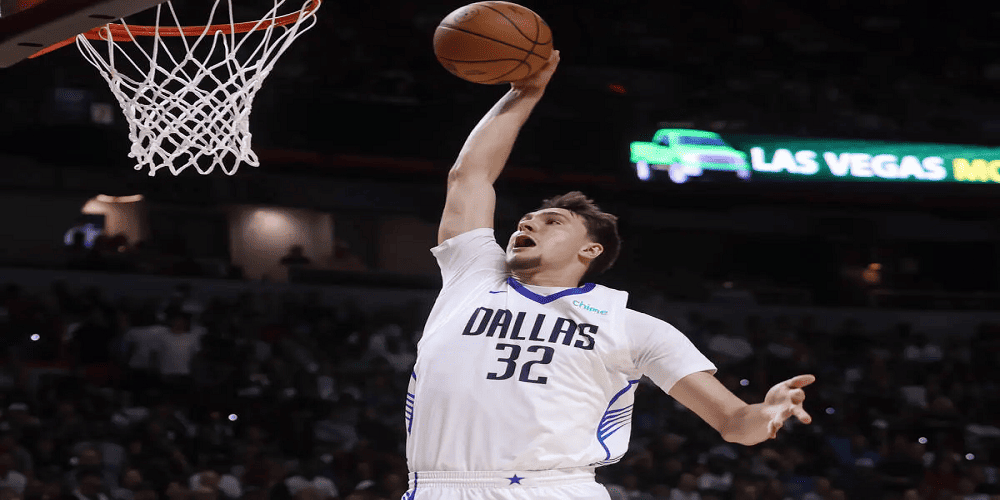
Few names in recent basketball discourse have generated as much early buzz as Cooper Flagg. From Maine to Montverde to Duke, and now entering into the NBA as the No. 1 overall pick, his journey has been closely watched. His combination of skills, physical profile, and basketball IQ have positioned him as one of the most intriguing young prospects to follow. Yet hype is one thing; delivering on it over a long career is another. In this profile I aim to map out who Cooper Flagg is, how he got here, what he brings (and what he must improve), how his transition to the professional game might go, what expectations are reasonable, and what his long-term ceiling could look like.
Early Life and High School
Maine beginnings, family and roots
Cooper Flagg was born December 21, 2006, in Newport, Maine. Wikipedia+2The Ringer+2 His early years in Maine offered a kind of underdog narrative: far from hotbeds of basketball talent, but full of raw opportunity to stand out. His mother, Kelly, played college basketball at Maine, serving as a captain in her senior year. Wikipedia+1 His father, Ralph, played at the NJCAA level. Wikipedia+2NBA+2 Cooper has a twin brother, Ace, who also plays competitively, and an older brother Hunter who played in Maine. Wikipedia+1 The Flagg family relocated to Florida when Cooper and Ace transferred to Montverde Academy. Wikipedia+1
From early on, Cooper was already drawing attention. Even in middle school, he showed dominance: by the time he was in the eighth grade, he was “posterizing peers” and being tested in training sessions against older players. NBA+1 In Newport and Maine, local media and observers began to speak of “the myth” of Cooper Flagg, wondering how far he could go. The Ringer
High school — Nokomis to Montverde
Flagg began his high school career at Nokomis Regional High School in Newport, Maine. Wikipedia+2The Ringer+2 In his freshman year, he made history — he became the first freshman in Maine to be named the Maine Gatorade Player of the Year — putting up averages of roughly 20.5 points, 10 rebounds, 6.2 assists, 3.7 steals, and 3.7 blocks per game. Wikipedia+2The Ringer+2 Nokomis captured the Class A state championship with Flagg scoring 22 and grabbing 16 in the final. Wikipedia+1
After that season, Flagg transferred to Montverde Academy (in Florida), a nationally renowned basketball prep program, seeking higher competition and exposure. Athlon Sports+3Wikipedia+3The Ringer+3 At Montverde, he joined the Florida Eagles (AAU), competing in circuits like the Nike EYBL. USA Basketball+3Wikipedia+3Athlon Sports+3
At Montverde, he continued to shine. He was named MVP of the 2023 Hoophall Classic after posting 21 points, 5 steals, 5 rebounds, and 3 assists in Montverde’s 85-63 win over La Lumiere Academy. Sports Reference+3Wikipedia+3Athlon Sports+3 His growth was exponential: by his final high school season he was universally viewed as a generational prep talent.
College Career at Duke (2024–25)
Decision and arrival
In June 2024, Flagg enrolled at Duke University and joined their summer practices before the season’s start. Wikipedia+2NBA+2 Expectations were high: from scouts, analysts, and fans alike, many expected him to make an immediate impact.
Debut and early performances
He made his Duke debut on November 4, 2024, against Maine, scoring 18 points, grabbing seven rebounds, dishing out five assists, and adding three steals in a 96–62 win. Wikipedia+2NBA+2 Early in the season, he earned ACC Rookie of the Week honors. Wikipedia+2Duke University+2
By December 31, he scored 24 points with six assists and four steals in a win vs. Virginia Tech. Wikipedia+2Duke University+2 On January 4, he posted a double-double (24 points, 11 rebounds) vs. SMU. Wikipedia+2Duke University+2
His breakout showing came January 11, 2025, vs. Notre Dame: Flagg exploded for 42 points, six rebounds, and seven assists, going 11-of-14 from the floor, 4-of-6 from three, and 16-of-17 from the line. That performance set a new freshman scoring record at Duke, and also set an ACC freshman record. NBA+3Wikipedia+3Duke University+3
Season totals, awards, and recognition
Across 37 games, he averaged 19.2 points, 7.5 rebounds, 4.2 assists, 1.4 steals, and 1.4 blocks in 30.6 minutes per game. NBA+5NBA+5Wikipedia+5 His shooting splits were efficient: 48% overall, with solid contributions from three and free-throws. Sports Reference+3NBA+3Duke University+3
Flagg collected a trove of awards:
- National Player of the Year (USBWA Oscar Robertson Trophy) Duke University+1
- Wayman Tisdale Award (National Freshman of the Year) Duke University+1
- Consensus First Team All-American Wikipedia+1
- ACC Player of the Year Wikipedia+1
- ACC Rookie of Year, ACC All-Defensive Team, ACC All-Freshman, and ACC Male Athlete of the Year Wikipedia+1
- He became just the fourth freshman ever to sweep USBWA Player of Year + Freshman of Year honors (joining Zion Williamson, Anthony Davis, and Kevin Durant) Duke University+2Wikipedia+2
At the Final Four, although Duke’s run ended, the season cemented him as the likely top pick in the 2025 NBA Draft. ESPN.com+4NBA+4NBA+4
Entering the NBA — Draft and Early Stage
Draft night and introduction
In June 2025, the Dallas Mavericks selected Cooper Flagg with the No. 1 overall pick in the NBA Draft. The Ringer+6Wikipedia+6NBA+6 The Mavericks, recovering from a lottery miracle (they held low odds), landed the top pick and chose for upside and future building. ESPN.com+2SI+2 Flagg’s introductory press conference showed him comfortable, confident, and aware of the expectation. NBA+1
Summer League and early testing
As part of his adjustment, Flagg made his Summer League debut. The Ringer+3CBSSports.com+3NBA+3 In his second Summer League appearance, Flagg erupted for 31 points in 31 minutes against No. 2 pick Dylan Harper’s team (the Spurs), nearly scoring half of his team’s points. He shot 10-of-21, and added rebounds, an assist, and a block. CBSSports.com+2Bolavip+2 That 31-point tally became the most by a No. 1 pick in a Summer League game since John Wall in 2010. CBSSports.com
During games, the Mavericks sometimes used him as a ball initiator, turning toward a “point-forward” usage — a role that has loaded both opportunity and challenge. NBA+3Mavs Moneyball+3Ball Durham+3 After one game, Flagg said “I’m exhausted” reflecting how taxing initiating offense can be at the pro level. Bleacher Report Coaches and observers see this dual usage — forward + ball handler — as both exciting and a potential path to unlocking mismatches. The Ringer+3Ball Durham+3Mavs Moneyball+3
However, not all was perfect. With the jump in competition, limitations and weaknesses surfaced — which are to be expected in rookie transitions. We will explore those in the next section.
Strengths, Weaknesses, and Style of Play
Strengths and unique advantages
- Versatility and multi-positional capacity
Flagg’s ability to play multiple positions — forward, wing, ball-handler — gives coaches flexibility. The Mavericks are experimenting with him as a point-forward in some sets. ESPN.com+4Mavs Moneyball+4Ball Durham+4
- Size + athleticism + length
At 6'8" (or 6'9") and roughly 205 lbs, with long arms and mobility, Flagg has the physical tools to switch defensively, guard multiple positions, and attack mismatches. Wikipedia+2NBA+2 His defensive instincts (steals, blocks) in college also hint at potential as a two-way wing. Duke University+2NBA+2
- Basketball IQ and passing instincts
His assist numbers, vision, and occasional use as a creator suggest he has more than just scoring ability. His comfort initiating offense in Summer League indicates willingness and potential in that direction. SI+3Mavs Moneyball+3Bleacher Report+3
- Scoring touch and shot-making
In college, his shooting efficiency and ability to hit threes and free throws, especially in big games, showed he has serious scoring upside. The Ringer+4NBA+4Duke University+4 His 42-point game is a prime example of his shooting acumen under pressure. Wikipedia+2Duke University+2
- Comfort under pressure & mental makeup
Throughout media reports and coach comments, Flagg is portrayed as composed, unflappable, grounded — traits essential at the NBA level. ESPN.com+5The Ringer+5NBA+5
Weaknesses, challenges, and areas for growth
- Consistency and shot selection under duress
Against elite defenders in the NBA, Flagg must refine decision-making, shot selection, and balance aggressiveness with patience. Summer League glimpses show promise but also moments of forcing plays. - Physical strength and finishing through contact
At 205 lbs, adding muscle and strength will be important to withstand physical defenders, finish inside, absorb contact, and guard larger players. - Three-point volume and range expansion
While he showed capacity as a shooter, increasing volume and range will be vital. Sustaining 3-point percentages against NBA defenses is a different challenge. SI+5Duke Basketball Report+5Duke University+5 - Defensive discipline and rotation awareness
Versatility is great, but it also demands strong defensive instincts, ability to read help, recover, navigate switches, and maintain balance. Mistakes in rotation or over-commitment must be minimized. - Workload and stamina
As he remarked, initiating offense and handling responsibilities can be exhausting. Balancing usage, rest, and conditioning is critical. Bleacher Report - Expectations and pressure
Being a No. 1 pick brings intense scrutiny. Media, fan, and internal pressure to perform immediately can weigh heavily; managing that is part of the journey.
Style of play and comparisons
Analysts have drawn comparisons to several contemporary or former players. Some project his ultimate ceiling similar to Jayson Tatum in terms of scoring wing potential under a balanced frame. SI Others see his “low-end” outcome as akin to Andre Iguodala — a high-IQ, two-way, versatile wing who does many things well but is not necessarily a dominant star. SI
His style is often described as a modern, positionless wing: able to handle the ball, defend multiple positions, initiate offense, and score from different levels. This hybrid skill set is prized in today’s NBA architecture. ESPN.com+4The Ringer+4SI+4
When reading media previews, you’ll also see talk of “point Flagg” — a notion that in certain sets, he could function as a creator. Ball Durham+3The Ringer+3Mavs Moneyball+3
Transition, Fit, and Team Context
Mavericks roster context and fit
The Dallas Mavericks, heading into the 2025–26 season, are a team balancing win-now aspirations with a long-term rebuild. Flagg joins a roster that features veteran names, and the front office is trying to integrate youth without compromising competitiveness. Wikipedia+3ESPN.com+3SI+3
In many projections, he is expected to start alongside players such as D’Angelo Russell, Klay Thompson, Anthony Davis, and young big Dereck Lively II. SI Some suggest that in time he may transition to a power forward role, due to his frame, positional versatility, and the presence of other forwards. SI+2Duke University+2
However, the coaching staff seems willing to experiment — Jason Kidd has openly stated interest in using Flagg as a point-forward and putting the ball in his hands more often. ESPN.com+3Ball Durham+3SI+3 The idea is to challenge him, see how he handles it, and adapt roles dynamically. NBA+3Ball Durham+3Mavs Moneyball+3
Early predictions and expectations
Analysts have varied in forecasting what Flagg can do in his rookie season. Some believe he can immediately contribute, slot into the rotation, and potentially help the Mavericks reach the Play-In Tournament or playoffs. ESPN.com+2SI+2 Others are more cautious, emphasizing slower growth and limiting expectations for All-Star status in Year 1. ESPN.com+1
The most conservative prediction is that he will not be an All-Star in his rookie year — in recent decades few have pulled that off. ESPN.com But the upside is tantalizing: if he adapts, grows, and stays healthy, multiple All-Star nods, MVP contention, and deep playoff runs are on the table.
Risks and mitigating factors
- Injury risk — as with any young athlete undergoing physical transition, injury management is key.
- Usage management — burning him out early by overplaying or using him in too many roles might hamper development.
- Fit conflicts — balancing his role with veteran stars, and carving out a consistent niche could be tricky.
- Adjustment to speed, strength, defenses — NBA defenses, rotations, and schemes are steeper learning curves.
- Mental adaptation — managing media, expectations, and adversities will test his maturity and mindset.
What to Watch in 2025–26
If you’re following Cooper Flagg’s rookie year, here are indicators and benchmarks to monitor:
- Minutes and usage trajectory — how many minutes does he get early vs later in the season? Does his usage rate rise?
- Efficiency metrics — true shooting percentage, assist-to-turnover ratio, defensive metrics per 36 minutes.
- Shooting splits and volume — especially his three-point attempts, percentage, catch-and-shoot vs off-dribble attempts.
- Turnover, fouls, mistakes per game — as a creator and playmaker, how he handles pressure is crucial.
- Defensive versatility — ability to guard multiple positions, how many switches he does, how well he recovers on help.
- Injury durability and stamina — can he maintain performance levels over long stretches?
- Clutch and big-game moments — how he performs under pressure in close games or high-stakes matchups.
If he can clear the early part of that threshold and become at least a reliable starter by midseason, that would already be a success.
Long-Term Projection and Legacy Potential
It is too early to pin down exactly how far Cooper Flagg will go, but based on his trajectory, surrounding context, and profile, here is a reasoned projection:
- Ceiling: Frontrunner candidate for multiple All-Star and All-NBA selections, potentially MVP conversations, and being a foundational piece for championship-orbit teams. If he evolves into a player who can create, defend, and carry a team, he could be among the top wings of his era.
- Likely trajectory: First two seasons involving adjustment, growth, ups and downs. By years 3–5, expecting him to become a consistent star, likely averaging 20+ points, 6–8 rebounds, 4–6 assists while anchoring defense.
- Comparative peers: If he reaches a Tatum-type or “superstar wing” category, that is one outcome. If he maps closer to a high-IQ 2nd option (Iguodala-type), that's still a strong, impactful career.
- Longevity factors: Health, adaptability, commitment to improvement, and the ability to evolve his game as athleticism declines will be key.
- Hall of Fame potential: With sustained performance, team success, and individual honors, he could be a Hall of Famer.
Challenges and Wild Cards
- Regression risk — notwithstanding all the promise, there is always risk of plateauing or failing to adapt.
- Team context shifting — trades, coaching shifts, roster changes may affect how Flagg is used.
- Defensive or offensive stagnation — if one side of his game fails to keep pace.
- Injury or wear & tear — early career injuries can derail trajectories.
- Competition and era shifts — the NBA is always evolving; new archetypes may emerge shifting expectations.
Conclusion
Cooper Flagg is one of the most hyped young players in basketball right now. His journey from Maine to Montverde to Duke, then to the NBA as the No. 1 overall pick, is a powerful narrative of talent meeting opportunity. His strengths — versatility, size, IQ, shooting touch, fearless demeanor — make him a compelling bet. Yet expectations must be tempered: growth, adjustments, failures, and adaptation are part of any successful NBA career.
If he navigates the early years well, remains healthy, and continues to add facets to his game, the ceiling is very high. Many fans, analysts, and stakeholders will be watching to see if he becomes a generational talent or a star on the cusp.
Frequently Asked Questions (FAQs)
Q1: Who is Cooper Flagg?
Cooper Flagg is an American basketball player, born in 2006, who played one season of college basketball at Duke (2024–25) and was selected as the No. 1 overall pick in the 2025 NBA Draft by the Dallas Mavericks. Duke University+3Wikipedia+3NBA+3
Q2: What are his physical measurements and position?
He is listed around 6’8″ to 6’9″ and roughly 205 lbs. Duke Basketball Report+4Sports Reference+4Wikipedia+4 He is a forward by position but has shown capacity to play on the wing, handle the ball, and initiate offense in hybrid roles. ESPN.com+3Mavs Moneyball+3SI+3
Q3: How did he perform in college?
In 37 games at Duke, he averaged 19.2 points, 7.5 rebounds, 4.2 assists, 1.4 steals, and 1.4 blocks per game, with roughly 30.6 minutes per game. NBA+2Duke University+2 He had several standout games, including a 42-point performance vs. Notre Dame, and won multiple national and ACC awards. SI+4Duke University+4Wikipedia+4
Q4: What awards did he earn in college?
He won USBWA’s Oscar Robertson Trophy (National Player of Year), the Wayman Tisdale Award (National Freshman of the Year), was ACC Player of the Year, ACC Rookie of the Year, ACC All-Defensive, ACC All-Freshman, ACC Male Athlete of the Year, consensus All-American, among others. Duke University+1
Q5: What is his playing style?
Flagg is a versatile wing-forward hybrid. He can handle the ball, initiate offense (in some sets), pass, shoot, defend multiple positions, and attack mismatches. Some coaches even deploy him in a “point-forward” role. ESPN.com+4Ball Durham+4Mavs Moneyball+4
Q6: How has he started in the NBA / Summer League?
He had a strong showing in the Summer League, including a 31-point game, demonstrating his scoring and playmaking potential. CBSSports.com+3CBSSports.com+3Bolavip+3 He’s being tested in roles such as ball-initiator, and showing both promise and the typical rookie adjustment pains. SI+3Bleacher Report+3Mavs Moneyball+3
Q7: What are his biggest challenges?
He needs to add physical strength, improve consistency and shot selection, adapt to faster, stronger defenders, maintain defensive discipline, manage workload and stamina, and navigate expectations.
Q8: What is a realistic ceiling for Flagg?
A realistic ceiling is that he becomes a perennial All-Star, an All-NBA-level wing, and a foundational piece of a contender. Some see MVP or championship potential if all goes well.
Q9: Should fans expect All-Star honors in his rookie year?
It’s unlikely; historically, very few rookies reach All-Star level. Most projections see his All-Star potential coming in years 2–4. ESPN.com
Q10: How can he best be supported in his rookie transition?
Key supports include load management, coaching who partners with him (giving freedom but structure), veteran mentorship, strength and conditioning, and a stable role that allows gradual growth without overwhelming pressure.
Leave A Comment
0 Comment