
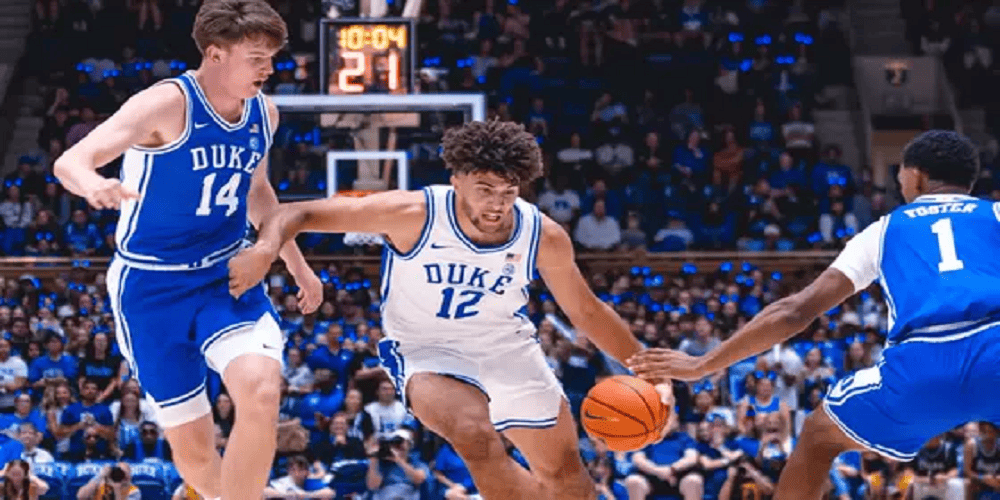
Duke Basketball is one of the most iconic and successful programs in the history of college basketball. Known for its championship pedigree, legendary coaches, and passionate fan base, Duke University’s basketball team has built a reputation that extends far beyond Durham, North Carolina. Whether you’re a casual sports follower or a die-hard Blue Devils fan, the story of Duke Basketball is one of perseverance, excellence, and tradition.
Since its inception, the Duke Blue Devils men’s basketball program has consistently ranked among the nation’s elite. From the early days of humble beginnings to the modern dominance under head coach Mike Krzyzewski—fondly known as Coach K—Duke has become synonymous with success in the NCAA. This article explores Duke Basketball’s history, major achievements, legendary players, rivalries, and what the future holds for one of the most prestigious programs in college sports.
The Early History of Duke Basketball
The story of Duke Basketball began in 1905 when the school—then known as Trinity College—formed its first men’s basketball team. The early years were far from glamorous. Facilities were modest, and the team’s resources were limited. However, these formative years laid the foundation for the culture of hard work and discipline that would come to define Duke athletics.
In the 1920s, the school changed its name to Duke University, and its athletic programs began to grow in prominence. The basketball team started to gain attention regionally, competing against schools like North Carolina and Wake Forest. By the mid-20th century, Duke had become a recognized force in the Southern Conference before joining the Atlantic Coast Conference (ACC) in 1953, a move that would shape its competitive destiny.
The Birth of a Basketball Powerhouse
The real transformation of Duke Basketball began in the late 1950s and early 1960s. Under head coach Vic Bubas, the Blue Devils began to emerge as a national contender. Bubas revolutionized recruiting by targeting high school players across the country rather than just in the South, a strategy that gave Duke a competitive edge. His teams were known for their athleticism, discipline, and strategic play.
By the 1960s, Duke had become a consistent presence in the NCAA Tournament. The Blue Devils made their first Final Four appearance in 1963 and reached the national championship game in 1964, where they lost to UCLA, beginning what would become one of college basketball’s most legendary programs. Though they fell short of a national title in that era, Duke had established itself as a basketball power.
The Arrival of Mike Krzyzewski (Coach K)
When Duke hired Mike Krzyzewski in 1980, few could have predicted that he would become one of the most successful coaches in basketball history. A graduate of the U.S. Military Academy at West Point, Krzyzewski brought with him a unique coaching philosophy grounded in discipline, teamwork, and character development.
The early years under Coach K were challenging. His first three seasons were marked by losing records and growing skepticism among fans and alumni. But Duke’s administration, led by athletic director Tom Butters, showed remarkable patience and faith in Krzyzewski’s vision. That patience paid off.
By the mid-1980s, Duke had become a dominant force in college basketball. The Blue Devils’ first Final Four appearance under Coach K came in 1986, and it was clear that a new era of excellence had begun.
Duke’s Golden Era: 1990s Championships
The early 1990s marked the golden age of Duke Basketball. With a roster featuring legendary players such as Christian Laettner, Grant Hill, and Bobby Hurley, Duke captured back-to-back NCAA Championships in 1991 and 1992. The 1992 team, in particular, is considered one of the greatest in college basketball history.
One of the most memorable moments in NCAA history occurred during the 1992 East Regional Final when Christian Laettner hit a buzzer-beating shot against Kentucky. The play, known simply as “The Shot,” remains an iconic moment that symbolizes Duke’s poise and determination under pressure.
During this period, Duke became the face of college basketball. Their success, style of play, and national television exposure turned them into both a beloved and polarizing program. Fans admired their excellence, while rivals often viewed them as the team to beat.
Sustained Success Through the 2000s
Following their early ’90s dominance, Duke continued to thrive through the 2000s. Coach K maintained the program’s elite status by recruiting top-tier talent and adapting his coaching to the evolving landscape of college basketball.
The Blue Devils won another national championship in 2001, led by players like Shane Battier, Jason Williams, and Carlos Boozer. This team was known for its defensive intensity, offensive balance, and leadership—hallmarks of Krzyzewski’s system.
Throughout the decade, Duke remained a fixture in the NCAA Tournament, consistently producing All-Americans and NBA-caliber players. Their home court, Cameron Indoor Stadium, became one of the most feared venues in college sports, with the Cameron Crazies—the student fan section—creating an electrifying atmosphere for every home game.
The 2010 Championship and Modern Era
After nearly a decade without a national title, Duke returned to the top in 2010. Led by Jon Scheyer, Kyle Singler, and Nolan Smith, the Blue Devils defeated Butler in an intense championship game to claim their fourth national title. This victory further cemented Coach K’s legacy as one of the greatest coaches of all time.
Duke added another title in 2015 with a team that blended veteran leadership and freshman talent. The roster featured future NBA stars like Jahlil Okafor, Tyus Jones, and Justise Winslow. The 2015 team showcased Krzyzewski’s adaptability—successfully managing the “one-and-done” era, where players leave for the NBA after just one season.
Legendary Players Who Defined Duke Basketball
Duke’s success has always been built on the foundation of great players who embody the school’s values of discipline, teamwork, and excellence. Some of the most iconic Duke players include:
- Christian Laettner – A clutch performer and NCAA legend, Laettner is the only player to start in four consecutive Final Fours.
- Grant Hill – Known for his versatility and leadership, Hill went on to have a successful NBA career.
- Bobby Hurley – Duke’s floor general in the early ’90s, Hurley remains the NCAA’s all-time leader in assists.
- Shane Battier – A defensive mastermind and 2001 National Player of the Year.
- J.J.Redick – One of the greatest shooters in college basketball history, Redick became a symbol of Duke’s offensive evolution.
- Zion Williamson – The face of modern Duke Basketball, Williamson’s 2018–19 season drew global attention for his athleticism and charisma.
Each of these players contributed to Duke’s rich basketball heritage, helping build a legacy of excellence that continues to inspire new generations.
The Duke vs. North Carolina Rivalry
No discussion of Duke Basketball is complete without mentioning its fierce rivalry with the University of North Carolina (UNC). Separated by just 10 miles, the two programs have created one of the most intense rivalries in sports. Every meeting between Duke and UNC is a national event, drawing millions of viewers and endless debates among fans.
The rivalry is fueled by more than proximity. Both programs have been consistently elite, with multiple national championships, legendary coaches, and a history of unforgettable games. From buzzer-beaters to overtime thrillers, Duke-UNC games often define the college basketball season.
For players, fans, and coaches alike, beating North Carolina is about more than just a win—it’s a matter of pride, tradition, and identity.
The Coach K Legacy
Mike Krzyzewski’s influence on Duke Basketball cannot be overstated. Over 42 seasons, he led the program to five national championships, 13 Final Four appearances, and over 1,200 career wins. Beyond the statistics, Coach K transformed Duke into a model program that emphasized academics, character, and leadership alongside athletic excellence.
His coaching philosophy was simple yet profound: develop players not just as athletes but as leaders. Many of his former players have gone on to successful careers in the NBA, coaching, and business, citing the lessons learned under Krzyzewski as foundational to their success.
When Coach K retired after the 2021–22 season, it marked the end of an era. His farewell season was emotional, culminating in a Final Four appearance against North Carolina—a fitting end to one of the greatest coaching careers in history.
The Jon Scheyer Era: A New Beginning
Following Coach K’s retirement, former Duke player Jon Scheyer took over as head coach. Scheyer, a member of the 2010 championship team, represents both continuity and innovation. His coaching philosophy blends Krzyzewski’s principles with modern basketball strategies focused on spacing, pace, and versatility.
Under Scheyer’s leadership, Duke remains one of the most competitive programs in the country. His first recruiting classes have included some of the top high school prospects, ensuring that Duke continues to attract elite talent.
While comparisons to Coach K are inevitable, Scheyer’s focus has been on building his own legacy while preserving the traditions that define Duke Basketball.
Duke’s Impact on College Basketball
Beyond wins and championships, Duke has had a profound influence on the culture of college basketball. The program set a standard for excellence both on and off the court. Duke’s emphasis on education, sportsmanship, and community engagement has inspired countless other programs to follow suit.
The Blue Devils’ consistent national relevance has also elevated the popularity of college basketball as a whole. ESPN’s “College GameDay” often features Duke games, and the team’s players regularly become household names even before reaching the NBA.
Furthermore, Duke’s success has shaped recruiting trends, media coverage, and fan engagement, making it a cornerstone of the modern college basketball landscape.
The Cameron Crazies: A Unique Fan Culture
One of the most distinctive aspects of Duke Basketball is its passionate student fan base, known as the Cameron Crazies. These fans bring unparalleled energy and creativity to every home game at Cameron Indoor Stadium. Their chants, coordinated cheers, and even costumes contribute to the intimidating atmosphere that opponents face.
Cameron Indoor Stadium itself is a historic venue. With a seating capacity of just over 9,000, it offers an intimate setting where fans are practically on top of the court. The electric environment makes it one of the toughest arenas for visiting teams and one of the most exciting places to watch college basketball.
Duke Basketball and the NBA
Duke’s influence extends far beyond college basketball. Over the decades, the program has produced numerous NBA stars who have carried the Blue Devil legacy into professional basketball. Players like Kyrie Irving, Jayson Tatum, Brandon Ingram, RJ Barrett, and Zion Williamson have all represented Duke at the highest level.
Coach K’s emphasis on developing complete players—athletically, mentally, and emotionally—has prepared many of his players for successful transitions to the NBA. As a result, Duke consistently ranks among the top schools in producing NBA talent.
The Future of Duke Basketball
As Duke Basketball moves forward under Jon Scheyer, the future looks promising. The program continues to recruit at an elite level, blending experienced upperclassmen with talented freshmen. Scheyer’s leadership aims to balance tradition with innovation, ensuring that Duke remains competitive in an era of rapid change in college sports, including name, image, and likeness (NIL) opportunities and transfer portal dynamics.
Duke’s commitment to excellence, academic integrity, and player development ensures that it will remain a national powerhouse for years to come. The program’s legacy continues to grow with each passing season.
Conclusion
Duke Basketball is more than just a sports program—it is a symbol of excellence, resilience, and unity. From its humble beginnings to its modern dominance, the Blue Devils’ journey is one of passion and perseverance. The combination of legendary coaches, extraordinary players, and dedicated fans has made Duke Basketball a pillar of college athletics.
The story of Duke Basketball is still being written. As new players don the blue and white, they carry forward a tradition that has inspired millions. Whether it’s the roar of the Cameron Crazies, the brilliance of a future NBA star, or the memory of Coach K pacing the sidelines, Duke Basketball remains a defining force in the heart of college sports.
Frequently Asked Questions (FAQs)
Q1: When was Duke Basketball founded?
Duke Basketball was founded in 1905 when the school was known as Trinity College. The program has since evolved into one of the most successful in NCAA history.
Q2: How many national championships has Duke won?
As of now, Duke has won five NCAA men’s basketball championships—1991, 1992, 2001, 2010, and 2015.
Q3: Who is the most famous Duke basketball coach?
Mike Krzyzewski, known as Coach K, is the most famous and successful coach in Duke’s history, leading the team from 1980 to 2022.
Q4: Who are some of Duke’s greatest players?
Notable Duke players include Christian Laettner, Grant Hill, Bobby Hurley, Shane Battier, J.J. Redick, Zion Williamson, and Kyrie Irving.
Q5: What is the Duke vs. UNC rivalry?
The rivalry between Duke University and the University of North Carolina (UNC) is one of the fiercest in sports, defined by intense matchups, close scores, and passionate fans on both sides.
Q6: Where does Duke play its home games?
Duke plays its home games at Cameron Indoor Stadium, located on the university’s campus in Durham, North Carolina.
Q7: Who is Duke’s current head coach?
Jon Scheyer, a former Duke player and assistant coach, took over as head coach in 2022 following Coach K’s retirement.
Q8: How does Duke perform in recruiting?
Duke consistently ranks among the top programs in recruiting, regularly signing elite high school prospects who often go on to play in the NBA.
Q9: What makes Duke Basketball unique?
Duke’s combination of academic excellence, consistent success, strong leadership, and fan engagement make it one of the most respected programs in college basketball.
Q10: What is the future outlook for Duke Basketball?
Under Jon Scheyer’s leadership, Duke Basketball continues to evolve while maintaining its legacy of excellence, ensuring that the Blue Devils remain a dominant force in college basketball.
Leave A Comment
0 Comment