
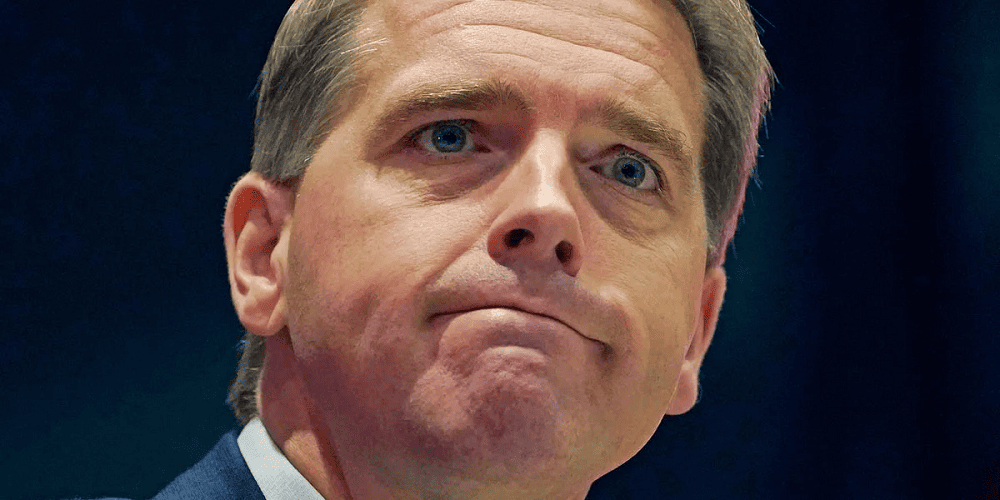
Scott Jennings is a well-known figure in American politics: a conservative strategist, commentator, writer, and public‐relations professional. Born on October 26, 1977, in Kentucky, he has worked at the highest levels of political campaigning and government, including serving as Special Assistant to the President and Deputy Director of Political Affairs under George W. Bush. (Wikipedia)
Over the years, Jennings has built a multifaceted career: from campaign operative, to White House staffer, to media commentator on outlets such as CNN, and to founding partner of a major PR firm in Kentucky. This article takes a deep dive into his background, his political and media career, his business ventures, influence and controversies, and the themes that recur in his public life. It concludes with frequently asked questions about him.
Early Life and Education
Scott Jennings was born in Princeton, Kentucky, but grew up in Dawson Springs, Kentucky. (Wikipedia) He earned a bachelor’s degree in political science from the University of Louisville in 2000, where he was also part of the McConnell Center for Political Leadership. (runswitchpr.com)
While at college, Jennings worked as a news anchor and reporter for WHAS (AM) radio in Louisville, and he won an Associated Press Broadcasters Association of Kentucky award for reporting on the plight of the homeless. (Wikipedia) These early experiences in journalism and local community issues provided a base for his later roles in communications and strategy.
Key points:
- From rural Kentucky roots, which has shaped his “fly-over country” persona and connection to local/regional politics.
- Formal education in political science, combined with early media experience.
- Early recognition in journalism shows his communication strength.
Campaign & Government Career
Jennings’s political trajectory began in campaign work. He served in various roles for Republican campaigns including:
- Working on the Bush-Cheney presidential campaign in Kentucky in 2000. (Wikipedia)
- Executive Director of the Bush-Cheney 2004 campaign in New Mexico. (Wikipedia)
- Political and communications director for the Republican Party of Kentucky and worked for Senate campaigns of Mitch McConnell (2002, 2008, 2014) among others. (Wikipedia)
In 2005/2006 he moved into the White House, serving as Special Assistant to the President for Political Affairs. (Wikipedia) In this role, he dealt with political appointments, liaised with state and local leaders, and helped in crafting domestic political strategy.
A few things to highlight:
- The jump from campaign operations to White House staffer signals significant trust from national GOP leadership.
- His work in New Mexico in 2004 is notable because that state flipped from blue to red in that cycle, reflecting his involvement in a high-stakes effort. (Wikipedia)
- His alignment with Mitch McConnell and other top Republicans ties him to influential networks in the GOP.
This campaign and government foundation laid the groundwork for his transition into media and strategic communications.
Media & Commentary Work
After his government career, Scott Jennings moved into commentary and media. Some of his key roles include:
- Writing a regular conservative column for the Louisville Courier-Journal starting in 2013, which is sometimes republished by USA Today. (Wikipedia)
- Joining CNN as an on-air political contributor in June 2017. (Wikipedia)
- Serving as a contributing columnist for the Los Angeles Times beginning in 2019. (Wikipedia)
- Teaching and fellowships: He was a resident fellow at the Harvard Kennedy School Institute of Politics in Spring 2018, and adjunct lecturer in public policy. (runswitchpr.com)
In the media sphere, Jennings is known for:
- Strong conservative commentary, often appearing in televised debates and panel discussions.
- Blending his experience as a political insider with media savviness, offering analysis on campaigns, elections, and strategy.
- His recurring theme of “fly-over country” and the Middle America viewpoint, which he uses to distinguish his voice from urban, coastal pundits.
His commentary role gives him a public platform and shapes how his political and strategic background is communicated to a wider audience.
Business & Strategic Communications: RunSwitch PR
In parallel with his media work, Jennings co-founded the communications and public affairs firm RunSwitch Public Relations (often “RunSwitch PR”) in Louisville, Kentucky. (runswitchpr.com) The firm is described as Kentucky’s largest public-relations and public-affairs company, providing services including media relations, crisis communications, corporate and political strategy. (runswitchpr.com)
Key aspects of this venture:
- Allows Jennings to leverage his campaign, government, and media background into strategic communications.
- Serves both corporate and political clients, giving him a dual role in policy/strategy and business.
- Enhances his credibility and presence in both Kentucky and national politics.
For someone interested in the intersection of politics, media, and strategic communications, RunSwitch PR is a notable illustration of how campaign/traditional political operatives transition into business.
Political Influence & Networks
Jennings’s career reflects a web of political influence and networks. Some highlights:
Association with Mitch McConnell
Jennings has been closely associated with Senator Mitch McConnell, having advised his campaigns and been described as a confidant. (iop.harvard.edu) This connection signals deep access to high-level GOP leadership.
Campaign Director for Major Races
Beyond McConnell, his portfolio includes advising senate, gubernatorial, congressional races, and presidential campaigns—giving him a broad view of American politics from local to national levels.
Media and Academic Reach
His media presence (CNN, Los Angeles Times, columns) and academic roles (Harvard, Chicago) enhance his reach: he is not just a behind-the‐scenes strategist but a public voice. (iop.harvard.edu)
“Flyover Country” Branding
Jennings often emphasizes his regional roots (Kentucky, rural America) and uses that to position himself as speaking for parts of America he views as underrepresented in the pundit class. This gives him a distinctive brand identity.
Key Themes in Jennings’s Work
Throughout his public life, a few recurring themes emerge:
Messaging and Political Strategy
Given his campaign and PR background, Jennings often focuses on themes such as how to win elections, how to craft effective media strategy, and how to frame messages to resonate with particular constituencies.
Media-savvy Engagement
He leverages media appearances, columns, and teaching engagements to not just analyse but also shape discourse. His background as a reporter and anchor informs his comfort in the media arena.
Conservative Perspective with Insider Access
Jennings’s alignment with Republican strategy and leadership gives him a conservative viewpoint combined with bona fides as an insider, which sets him apart from ideological pundits without campaign experience.
Focus on American Institutions
In his teaching and commentary, Jennings often reflects on the state of American political institutions, elections, media, and the evolving nature of party politics.
Regional America & Cultural Framing
He positions himself as a voice from Middle America, often referencing rural or non-coastal viewpoints. This framing helps him talk about America outside major media centres.
Controversies & Criticisms
Like many political operatives and commentators, Jennings has been involved in controversies:
Dismissal of U.S. Attorneys (2007)
While in the White House, Jennings was involved in what came to be known as the “dismissal of U.S. attorneys” controversy. He testified before the Senate Judiciary Committee in August 2007 and invoked executive privilege—refusing to answer most questions. (Wikipedia) Emails released later showed Jennings communicating that the White House should “move forward with getting rid of the NM U.S. ATTY.” (Wikipedia) This episode underscored the blur between partisan strategy and official government roles.
Media Debate Style and Polarization
As a frequent participant in televised debates, Jennings has drawn criticism from liberal commentators and activists who view his style as partisan rather than purely analytical. For instance, discussions of his commentary on the Gaza conflict and the “Free Palestine” movement have raised questions about how he frames certain issues. (Wikipedia)
Potential Political Candidacy
More recently, Jennings’s name has surfaced as a potential candidate for the Senate from Kentucky. Although he has not formally declared, reports in 2025 suggest he is being encouraged to run—a move that could shift him from commentator and strategist to elected politician. (New York Post) The implications of this shift raise questions about conflict of interest, media role, and the transition from behind-the-scenes to public office.
Current Role and Recent Activities
As of 2025:
- Jennings remains a Senior Political Contributor on CNN, appearing regularly on shows and providing conservative commentary. (Institute of Politics and Public Service)
- He continues to lead RunSwitch PR, advising political and corporate clients.
- He teaches and lectures: his academic engagements (Harvard, Chicago) continue to give him educational credibility.
- He hosts a podcast (“Flyover Country with Scott Jennings”) that features interviews and commentary on politics and culture. (runswitchpr.com)
- He is publicly rumored to consider running for the U.S. Senate in Kentucky, though he has stated he would only run if asked/tapped by former President Donald Trump. (New York Post)
From media commentary to business to possible political office, Jennings remains active in multiple domains.
Why Scott Jennings Matters
Why should we pay attention to Scott Jennings? Several reasons:
- Bridge between Campaigns & Media
Jennings exemplifies the type of figure who moves between campaign strategy, government service, media commentary, and business communications. He helps illustrate how political operatives shape public discourse. - Insight into Modern Conservative Strategy
His experiences offer insights into how the Republican Party approaches campaigns, messaging, candidate recruitment, and policy positioning in the 21st century. - Regional Voice in National Politics
As someone from Kentucky rather than a coastal location, Jennings provides a viewpoint rooted in what he calls “fly-over country” — which resonates with many Middle America voters and strategists seeking to address those constituencies. - Media Persona & Influence
Through his columns, commentary, and lectures, Jennings influences how politics is narrated in the mainstream. He also serves as a node in the ecosystem of strategist-turned-pundit. - Possible Shift to Elected Office
His potential candidacy for the Senate illustrates the trend of media personalities and stratgists becoming actual political office-seekers — raising questions about the blurring lines between commentary and politics.
Key Milestones in Jennings’s Timeline
- 2000 – Graduated from University of Louisville; worked on Bush-Cheney campaign in Kentucky.
- 2002 – Managed McConnell’s re-election campaign in Kentucky.
- 2004 – Executive Director of Bush-Cheney campaign in New Mexico, helping a key state flip.
- 2005-2007 – Special Assistant to the President, and Deputy Director for Political Affairs at the White House.
- 2012 – Co-founding of RunSwitch Public Relations.
- 2013 – Begins regular column in Louisville Courier-Journal.
- 2017 – Joins CNN as on-air political contributor.
- 2018 – Resident Fellow at Harvard Kennedy School Institute of Politics.
- 2019 onwards – Contributing columnist for Los Angeles Times, teaching roles, podcast host.
- 2025 – Public speculation about a run for U.S. Senate; continues active media, buiness, and academic roles.
Thematic Analysis: Strategy, Media & Institutional Commentary
Strategy
Jennings’s early work in campaigns and the White House emphasizes the importance of message discipline, local organization, and candidate positioning. He often speaks about the mechanics of winning rather than just ideology.
Media
His transition into media underscores the increasing overlap between strategist and commentator. The role of media-trained strategists in shaping both campaigns and public narratives is something he embodies.
Institutions
Jennings frequently reflects on American political institutions, the health of democracy, and the interplay of federal, state, and local power. His classroom teaching and seminars often center on those themes. (iop)
Cultural Framing
By positioning himself as from “Middle America,” he addresses the sense that many political and media voices are concentrated on coasts and urban centres. His branding helps him resonate with voters and audiences who feel under-represented.
Impact and Legacy
While his legacy is still in formation, it is worth noting areas of his impact:
- He has helped define how modern campaigns integrate media, communications and analytics (though lesser known for academic innovation, he brings practitioner experience).
- His columns and commentary contribute to conservative discourse on elections, governance, and media.
- Through RunSwitch PR, he influences how corporations and political actors navigate public affairs and reputation management.
- If he runs (or does run) for office, his legacy may shift from strategist/commentator to elected official — representing a more direct form of public service.
The legacy question: Will Jennings be primarily remembered as a behind-the-scenes strategist, a media figure, a business leader, or as an elected politician (if he makes that transition)? Time will tell.
Strengths and Criticisms
Strengths
- Deep experience: campaign, White House, media.
- Communication skills: early journalism background, strong media presence.
- Networked access: ties to GOP leadership and national commentary platforms.
- Brand identity: relatable regional roots, “insider but grounded” persona.
Criticisms
- Partisan alignment: As a conservative commentator, his analysis may be viewed by some as biased rather than neutral.
- Media style: High-profile debates can attract criticism about tone, adversarial approach, or lack of nuance.
- Transition risks: If he moves into direct politics, there could be questions about objectivity as a media figure.
- Institutional controversies: His involvement in the 2007 U.S. attorneys’ dismissal process raises questions about mixing partisan strategy and official roles.
What to Watch: Future Prospects
Several possible trajectories for Jennings include:
- Senate run: As of 2025, he is reportedly being encouraged to run for the U.S. Senate in Kentucky, though he states he will only do so if asked by Donald Trump. (New York Post)
- Expanded media platform: He may deepen his media engagement (podcast, books, teaching) and become a more prominent national conservative voice.
- Business growth: RunSwitch PR may expand into larger national/international communications projects, leveraging his profile.
- Academic engagement: Jennings may take on more frequent roles in teaching, fellowships or institutional commentary about elections and governance.
Which path he chooses will shape how he is viewed in the coming decade.
Key Takeaways
- Scott Jennings blends campaign strategy, government experience, media commentary, and business communications in one profile.
- His regional roots and broadcaster background give him a distinct voice among conservative commentators.
- He operates at the intersection of politics, media and business — making him useful to study for those interested in how modern political communication works.
- His career reflects broader trends: strategists becoming media voices, regional voices gaining national prominence, and campaign experience translating into business and academic opportunities.
- The possibility of his running for office adds another dimension: commentator-strategist-candidate, which is emblematic of a blurring of roles in modern politics.
Frequently Asked Questions (FAQs)
Q: Who is Scott Jennings?
A: Scott Jennings is a conservative political strategist, commentator and writer from Kentucky. He served in the White House under George W. Bush, advised major campaigns (including for Mitch McConnell), founded a public-relations firm, and is a frequent media contributor. (runswitchpr.com)
Q: What roles did Jennings have in the Bush administration?
A: He served as Special Assistant to the President for Political Affairs (beginning in 2005/2006) and Deputy Director of the Office of Political Affairs. Before that he worked on the Bush-Cheney campaigns in 2000 and 2004. (Wikipedia)
Q: What is RunSwitch PR?
A: RunSwitch Public Relations is a strategic communications and public-affairs firm based in Kentucky, co-founded by Scott Jennings. The firm handles media relations, political and corporate consulting, crisis management, and public affairs. (runswitchpr.com)
Q: What is Jennings’s media role?
A: He is a senior political contributor for CNN, a columnist for major publications (including the Los Angeles Times and Gannett’s USA Today network), and hosts a podcast “Flyover Country.” He also lectures and teaches at institutions like Harvard Kennedy School. (Institute of Politics and Public Service)
Q: Has Scott Jennings run for political office?
A: As of 2025, he has not formally declared candidacy. However, he has been publicly speculated to possibly run for the U.S. Senate in Kentucky, and has stated he would consider a run if asked by former President Donald Trump. (New York Post)
Q: What controversies has Jennings been involved in?
A: One major controversy was his involvement in the U.S. Attorneys dismissal issue in 2007: he testified before the Senate Judiciary Committee, asserted executive privilege, and emails revealed his involvement in pushing for removal of a U.S. attorney. (Wikipedia) He has also drawn criticism for his style of commentary and partisan alignment in media debates.
Q: What is his educational background?
A: He holds a bachelor’s degree in political science from the University of Louisville (2000). He also completed fellowships and teaching roles at Harvard Kennedy School and the University of Chicago Institute of Politics. (iop.harvard.edu)
Q: What segments of politics does he focus on?
A: Jennings focuses on conservative politics, campaign strategy, communications, media influence, elections, and institutional analysis. While his roots are in Kentucky and regional politics, his scope extends to national campaigns and media commentary.
Q: Why is he described as “fly-over country” voice?
A: Because he originates from Kentucky (a part of America often labelled “fly-over” by coastal elites), Jennings uses that background to position himself as speaking for communities outside the major urban, coastal centers. This, he argues, gives him a different viewpoint than many mainstream media pundits.
Conclusion
Scott Jennings represents a modern archetype in American political life: the campaign operative turned media commentator and business strategist. His blend of practical experience in campaigns and government, together with his media and academic engagements, make him a figure worth knowing for anyone interested in how politics, communication and media interact today.
From his early journalism roots in Kentucky to his role advising high-level campaigns, to his public face on CNN and in columns, Jennings has built a career at the nexus of messaging, strategy and public discourse. Whether he transitions into elected office or remains behind the microphone and the strategy table, his trajectory offers insight into the evolving nature of political influence in the 21st century.
Leave A Comment
0 Comment