
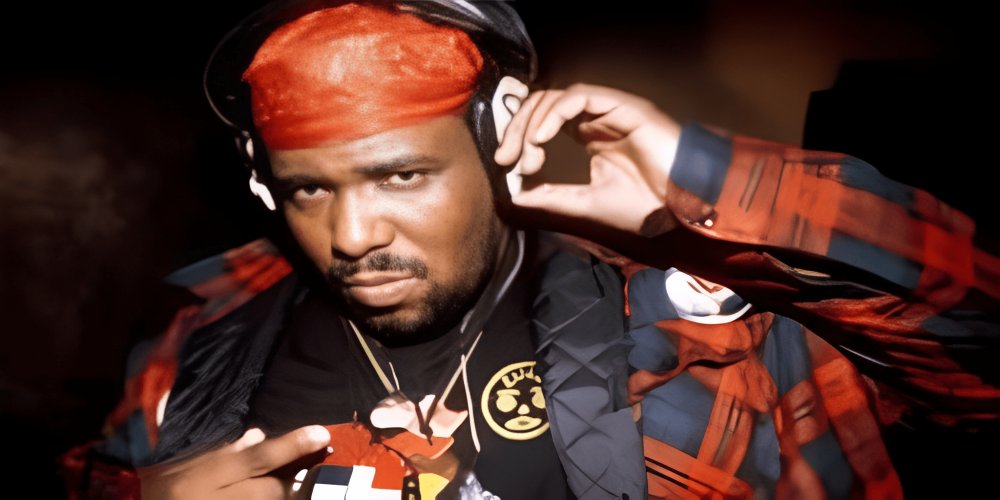
The story of Afrika Bambaataa begins in the burning borough of the South Bronx, New York City, during the early 1970s. Born Lance Taylor on April 17, 1957, this young man rose through the ranks of the Black Spades, one of the most feared street gangs of that era. The South Bronx at that time was a landscape of abandoned buildings, trash fires, and constant violence. Poverty was everywhere. Young people had few options for expression or advancement. Many joined gangs simply to survive. Afrika Bambaataa was no exception. He became a warlord, a title that meant he commanded respect through fear and force.
But something changed inside Afrika Bambaataa after a transformative trip to Africa. He witnessed communities where people lived together peacefully, sharing resources and celebrating their heritage. He saw drum circles, dance rituals, and art that told stories of ancestors. This experience shook him to his core. When he returned to New York, he decided to use his organizational genius for creation instead of destruction. In 1973, Afrika Bambaataa founded the Universal Zulu Nation. This organization took its name from the Zulu people of southern Africa, who were known for their warrior spirit and rich culture. The Zulu Nation replaced gang warfare with something entirely new. Instead of fighting with fists and knives, young people would compete through DJ battles, rap cyphers, breakdance contests, and graffiti murals. Afrika Bambaataa preached a simple but powerful message. Peace. Unity. Love. And having fun. This four-pillar philosophy became the spiritual backbone of what we now call hip-hop culture.
The Musical Vision of Afrika Bambaataa
Afrika Bambaataa was not a traditional musician in the sense of playing guitar or piano. He was a selector, a curator, and a master of the turntables. His DJ sets at the Bronx River Community Center became legendary for one simple reason. He played music that no one else dared to play. While other DJs stuck to the safe sounds of disco or soul, Afrika Bambaataa reached across genres and decades. He mixed the raw rock of the Beatles with the electronic pulses of German band Kraftwerk. He blended obscure film soundtracks with forgotten funk records from the 1960s. He understood something that few others did at the time. The dance floor did not care about genre labels. The dance floor only cared about rhythm.
The signature technique of Afrika Bambaataa was the breakbeat. A breakbeat is the section of a song where the vocals drop out and the drums take over. Usually, this section lasts only a few seconds. But Afrika Bambaataa discovered that by using two turntables and a mixer, he could loop that breakbeat indefinitely. He could extend a four-second drum solo into a four-minute rhythmic foundation. This allowed dancers, who were called breakers or b-boys, to perform their most athletic and inventive moves. The longer the break, the more creative the dancing became. This simple technical innovation changed music forever. Every modern DJ who loops a beat, every producer who samples a drum fill, owes a debt to the early experiments of Afrika Bambaataa.
Planet Rock and the Birth of Electro
The year 1982 marks the single most important release in the career of Afrika Bambaataa. That was the year he entered the studio with Arthur Baker, John Robie, and his group Soulsonic Force to record a track called Planet Rock. The creation story of this song is almost mythical. Afrika Bambaataa had been playing a bootleg cassette of Kraftwerk’s Trans-Europe Express at his parties. The crowd went wild every time he dropped that cold, robotic synth line. He wanted to capture that energy on vinyl. But he did not want to simply copy Kraftwerk. He wanted to fuse their European electronic sound with the raw funk of American street music.
The result was a masterpiece. Planet Rock opens with a digitized voice counting down. Then comes the unmistakable synth melody, borrowed but transformed. Underneath that melody, Afrika Bambaataa placed the drum pattern from another Kraftwerk track called Numbers. He added the electronic handclaps from Japan’s Yellow Magic Orchestra. The entire song was driven by the Roland TR-808 drum machine, a piece of equipment that most musicians had dismissed as a cheap practice tool. Afrika Bambaataa saw its potential immediately. The 808 produced a kick drum so deep and booming that it could shake car windows. The snare drum cut through any speaker system. Over this futuristic bed of sound, Afrika Bambaataa and his crew delivered rhymes about space travel, African pride, and the joy of the dance floor.
Planet Rock became an underground sensation. It climbed the Billboard dance charts and reached the top five. More importantly, it created an entirely new genre called electro. Electro was hip-hop’s robotic cousin. It traded live drummers for machines. It replaced soulful singing with cold synthesizers and vocoder effects. Every artist who later used the TR-808 as their primary instrument, from Marvin Gaye to Kanye West, stands in the shadow of Afrika Bambaataa. The song also directly inspired the birth of Detroit techno. Young producers like Juan Atkins, Derrick May, and Kevin Saunderson heard Planet Rock and decided to make their own electronic music. Without Afrika Bambaataa, there would be no techno. Without Afrika Bambaataa, there would be no modern EDM.
The Four Elements and the Zulu Nation Philosophy
Beyond the music, Afrika Bambaataa built a complete cultural system. He codified what he called the four elements of hip-hop. The first element was DJing, the art of selecting and mixing records. The second element was MCing, the art of rhythmic speech over those beats. The third element was breakdancing, the athletic and acrobatic dance style that accompanied the breaks. The fourth element was graffiti art, the visual expression of names and images on subway cars and walls. Afrika Bambaataa insisted that all four elements were equally important. A true hip-hop head could not just be a rapper. They had to respect the DJ, understand the dance, and appreciate the graffiti.
The Zulu Nation expanded rapidly throughout the late 1970s and 1980s. Afrika Bambaataa sent ambassadors to Europe, Japan, and Africa. Chapters opened in London, Paris, Tokyo, and Cape Town. The organization hosted educational workshops on African history, mathematics, and astronomy. It promoted vegan diets and meditation. It organized anti-apartheid concerts and spoke at the United Nations. For thousands of young people, Afrika Bambaataa was not just a musician. He was a father figure, a mentor, and a spiritual guide. He gave them a sense of purpose and belonging that the streets could not provide. Many former gang members credit Afrika Bambaataa with saving their lives. They traded their weapons for turntables. They replaced violence with dance battles.
The Shadow That Fell on Afrika Bambaataa
The legacy of Afrika Bambaataa changed forever in April 2016. On that date, a man named Ronald Savage held a press conference in New York City. Savage alleged that Afrika Bambaataa had sexually abused him in 1980, when Savage was only fifteen years old. According to the allegations, the abuse occurred at the Zulu Nation headquarters, a place where young people trusted Bambaataa completely. In the weeks that followed, more men came forward. One accuser said he was twelve years old at the time of the abuse. Another said the abuse happened repeatedly over several years. All the accusers described a pattern of grooming, isolation, and coercion. They said Afrika Bambaataa used his authority as a community leader to gain access to vulnerable minors.
Afrika Bambaataa initially denied everything through his lawyers. He called the allegations lies and attempted extortion. But the Zulu Nation leadership launched its own internal investigation. After interviewing multiple accusers and witnesses, the organization released a stunning public statement. The statement confirmed that the allegations against Afrika Bambaataa were credible. It announced that Bambaataa had been removed from all leadership positions within the Zulu Nation. This was a catastrophic blow to his reputation. Museums, universities, and music festivals that had planned to honor Afrika Bambaataa quickly canceled those events. Radio stations pulled his music from rotation. Fellow hip-hop pioneers like Grandmaster Caz and KRS-One publicly distanced themselves from him.
To this day, Afrika Bambaataa has never faced criminal charges. The statutes of limitations for the alleged crimes have expired in New York. However, the civil and social consequences have been total. He lives in seclusion. He does not give interviews. He does not attend hip-hop anniversary events. His name is rarely spoken at award ceremonies. Some streaming services still carry his catalog, but algorithmic playlists have largely abandoned him. The hip-hop community remains divided. A small group of old-school figures still defend Afrika Bambaataa, insisting that the allegations are part of a conspiracy. But the overwhelming majority of the culture has moved on. They have chosen to honor the victims rather than the alleged abuser.
Technical Innovations That Shaped Modern Production
The production techniques of Afrika Bambaataa deserve serious study. He was one of the first musicians to program entire songs using the Roland MC-8 microcomposer. This device was a primitive computer that required users to enter commands in hexadecimal code. It had no graphical interface. One wrong number could erase hours of work. Yet Afrika Bambaataa mastered this machine and used it to sequence his most famous tracks. He understood that the future of music lay in the intersection of human rhythm and machine precision. He treated the computer as a collaborator, not a replacement for musicians.
Another signature technique of Afrika Bambaataa was the layered clap. On Planet Rock, the handclap sound is actually two different claps played simultaneously. One is a real handclap recorded in the studio. The other is an electronic clap triggered by the TR-808. By blending these two sounds, Afrika Bambaataa created a clap that felt both organic and mechanical. It was warm enough to feel human but sharp enough to cut through a loud speaker system. This technique has been copied endlessly in hip-hop and pop production. Listen to any trap beat made in the last decade. You will hear the same layered clap, the same combination of real and synthetic sounds.
Afrika Bambaataa also pioneered the extended twelve-inch remix. Before him, most remixes were simply longer versions of the same song. They added a verse or repeated a chorus. But Afrika Bambaataa treated the remix as a chance to completely reimagine the track. His twelve-inch versions of his own songs often featured entirely new synth lines, different drum patterns, and extended breakdowns where the beat would drop away completely. These sections were designed for dancers. They gave breakers a moment to rest before launching into another explosive sequence. The extended remix became a standard format in dance music, from disco to house to drum and bass.
The Ongoing Debate About Legacy and Art
How should we remember Afrika Bambaataa today? This question has no easy answer. On one side of the debate are those who argue that his artistic contributions belong to the culture, not to the man. They point out that Planet Rock has been sampled hundreds of times by artists who had no idea about Bambaataa’s personal life. They note that the Zulu Nation’s peace treaties saved lives and built communities. They argue that erasing his name from history also erases the positive work of thousands of volunteers and members who never committed any crime. From this perspective, we can acknowledge the good that Afrika Bambaataa created while condemning his alleged actions.
On the other side of the debate are those who say that celebration of his work is impossible. They argue that every stream of his music generates pennies that could go into his pocket. They note that every article that calls him a pioneer without mentioning the allegations does a disservice to his victims. They point out that Afrika Bambaataa used the Zulu Nation as a hunting ground. His alleged crimes were not separate from his work. They were enabled by the very authority and trust that his artistic and community leadership gave him. From this perspective, the only ethical choice is total rejection. No airplay. No awards. No historical rehabilitation.
Music journalists have developed a standard practice for writing about Afrika Bambaataa. Most publications now include a detailed trigger warning or content note at the beginning of any article. They state clearly that the subject has been credibly accused of child sexual abuse. They provide links to resources for survivors. They avoid any language that could be read as nostalgic or celebratory. This approach allows for historical documentation without glorification. It acknowledges that Afrika Bambaataa existed and made important records while making clear that his personal conduct was abhorrent. Whether this compromise satisfies anyone is another question entirely.
Frequently Asked Questions about Afrika Bambaataa
Question 1: What is the single most important song by Afrika Bambaataa?
Planet Rock from 1982 is without question the most important recording by Afrika Bambaataa. This track invented the electro genre, popularized the Roland TR-808 drum machine, and directly inspired the birth of Detroit techno. It reached number four on the Billboard Dance charts and has been sampled or referenced by hundreds of subsequent artists.
Question 2: Did Afrika Bambaataa actually play instruments or just use machines?
Afrika Bambaataa was primarily a DJ and producer rather than a traditional instrumentalist. He did not play guitar, piano, or drums in a conventional sense. Instead, he mastered the turntable, the mixer, the drum machine, and early music sequencers. He is considered a producer and arranger who manipulated sounds created by other musicians and machines.
Question 3: What is the current status of the Universal Zulu Nation?
The Universal Zulu Nation still exists but in a greatly reduced form. After the 2016 allegations against Afrika Bambaataa, the organization restructured itself as a decentralized collective. It no longer elevates any single leader. Membership has dropped significantly, and many local chapters have closed. The organization continues to promote hip-hop culture but without the influence it once had.
Question 4: Has Afrika Bambaataa ever apologized for the alleged abuse?
No, Afrika Bambaataa has never apologized for any of the alleged abuse. He has consistently denied all accusations through his lawyers and through occasional written statements posted online. He maintains that the allegations are part of a conspiracy against him. He has never participated in any restorative justice process or victim reconciliation program.
Question 5: Why is Afrika Bambaataa called the Godfather of Hip Hop?
The title Godfather of Hip Hop was given to Afrika Bambaataa because he transformed hip-hop from a series of local block parties into a global cultural movement with a defined philosophy. While DJ Kool Herc invented the breakbeat technique, Afrika Bambaataa created the organizational structure, the code of conduct, and the international network that spread hip-hop worldwide.
Question 6: Are there any museums or institutions that still honor Afrika Bambaataa?
Most major museums and institutions have removed or revised their exhibits about Afrika Bambaataa following the 2016 allegations. The Smithsonian National Museum of African American History and Culture has rewritten its hip-hop labels to balance his musical importance with detailed information about the abuse allegations. Very few institutions have completely removed his name, but none currently celebrate him without extensive context.
Question 7: What was the relationship between Afrika Bambaataa and Kraftwerk?
Afrika Bambaataa was a huge fan of Kraftwerk. He played their records at his parties and directly sampled Trans-Europe Express and Numbers to create Planet Rock. The members of Kraftwerk have given mixed responses over the years. Some have expressed appreciation for the homage. Others have been less enthusiastic about the unauthorized sampling. The two acts never formally collaborated.
Question 8: Can young people today listen to the music of Afrika Bambaataa without supporting him?
This depends on the platform. Streaming services pay tiny fractions of a penny per stream, so financial support through listening is minimal. However, some people argue that any engagement with his catalog keeps his name alive in algorithms and public consciousness. Others separate the art from the artist completely. There is no universal consensus. Each listener must decide for themselves based on their own values and comfort level.
Leave A Comment
0 Comment