
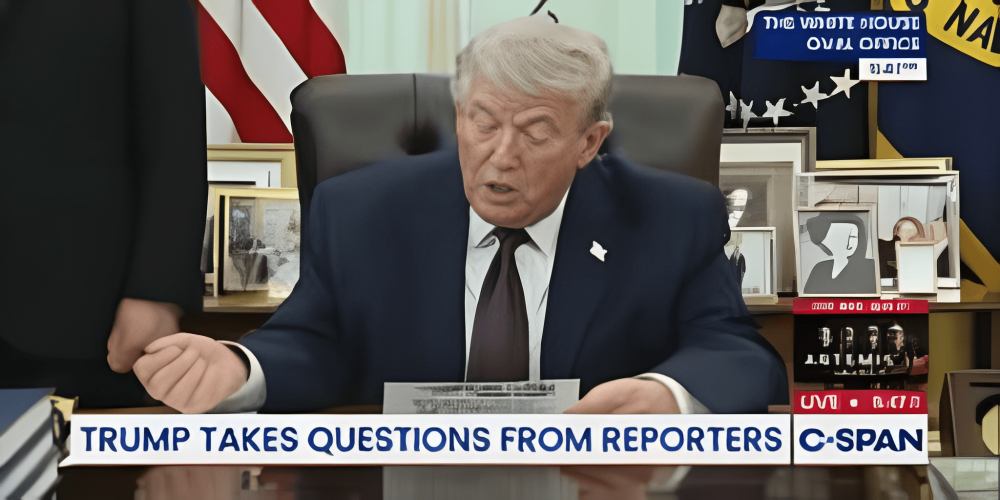
A series of judicial decisions by United States District Judge Richard Leon of the District of Columbia, in which the judge rejected executive branch claims that national security concerns justified otherwise unlawful or unauthorized government actions. The term most commonly refers to two specific rulings: the 2013 decision in Klayman v. Obama concerning National Security Agency surveillance, and the 2026 decisions concerning the proposed White House ballroom project under President Donald Trump.
Key Citation
Klayman v. Obama, 957 F. Supp. 2d 1 (D.D.C. 2013); National Trust for Historic Preservation v. Trump, No. 1:25-cv-01234 (D.D.C. Mar. 2026) and subsequent clarification order (Apr. 2026)
Core Legal Principle
National security necessity does not operate as a blank check exempting the executive branch from compliance with statutory requirements, congressional appropriations, or constitutional protections. A court may scrutinize national security claims and require evidentiary support before deferring to executive assertions.
First Ruling: NSA Metadata Collection (2013)
The government argued that the NSA’s bulk collection of telephone metadata from millions of Americans was authorized under Section 215 of the USA Patriot Act and was essential to preventing terrorist attacks. Judge Leon granted a preliminary injunction, holding that the program likely violated the Fourth Amendment’s prohibition on unreasonable searches. He noted that the government had failed to identify a single instance in which the bulk metadata program had stopped an imminent terrorist attack. He described the surveillance technology as almost-Orwellian and stated that James Madison would be aghast. He stayed his own order pending appeal. Congress later ended the program through the USA Freedom Act of 2015.
Second Ruling: White House Ballroom Construction (2026)
The Trump administration sought to demolish the historic East Wing of the White House and construct a ninety-thousand-square-foot ballroom costing more than four hundred million dollars. The National Trust for Historic Preservation sued, arguing that the project lacked congressional appropriation and violated historic preservation laws. Judge Leon ordered a halt to construction, holding that the president is a steward of the White House, not its owner. When the administration appealed, it argued that the ballroom was necessary for national security because it would serve as above-ground cover for a new underground bunker. The government asked Judge Leon to clarify that the security exception to his order allowed the entire ballroom project to proceed. Judge Leon rejected this as brazen and disingenuous. He ruled that below-ground construction of bunkers, bomb shelters, and medical facilities could continue, but above-ground construction of the ballroom could not. He wrote that national security is not a blank check to proceed with otherwise unlawful activity and noted that a simple at-grade slab would provide cover without a seventy-foot ballroom.
Procedural History and Status
In the NSA case, the ruling was stayed pending appeal, and the Supreme Court ultimately declined to review the matter. Congress resolved the issue legislatively. In the ballroom case, Judge Leon stayed his order for one week to allow the administration to seek review from the appeals court and potentially the Supreme Court. As of April 2026, the case remains ongoing.
Significance
The judge leon national security ruling stands for the proposition that federal courts can and should review executive branch national security claims with meaningful scrutiny. The rulings demonstrate that neither the classification of evidence nor the invocation of emergency authority immunizes government action from judicial review. The phrase has become shorthand for judicial skepticism toward unsubstantiated claims of security necessity.
Common Misconceptions
Some believe Judge Leon’s NSA ruling immediately shut down the surveillance program. It did not. He stayed his order. Some believe the ballroom ruling stopped all security work at the White House. It did not. Below-ground construction was explicitly permitted. Some believe Judge Leon is a liberal activist judge. He was appointed by President George W. Bush, a Republican.
Short FAQs
What did Judge Leon actually say in the 2013 NSA ruling?
He said the government failed to show the bulk phone records program had stopped any terrorist attack, and he believed it likely violated the Fourth Amendment.
Did that ruling end the NSA program?
No. He stayed his ruling. Congress ended the program later with the USA Freedom Act.
What was the 2026 ballroom case about?
The Trump administration wanted to build a large ballroom on the White House grounds. A preservation group sued. The administration said the ballroom was needed for national security to cover a bunker.
Why did Judge Leon reject the national security argument?
He said the government did not explain why a seventy-foot ballroom was necessary instead of a simple concrete slab. He called the argument brazen and disingenuous.
What work did Judge Leon allow to continue?
He allowed all below-ground construction including bunkers, bomb shelters, and medical facilities. He only blocked the above-ground ballroom.
What does national security is not a blank check mean?
It means the government cannot say national security and then ignore the law. Security claims must be supported by evidence. The president still has to follow congressional spending rules and the Constitution.
How did President Trump react to the ballroom ruling?
He called Judge Leon highly political, out of control, and a Trump hating judge on Truth Social. He said the ballroom was deeply important to national security.
Is the ballroom case finished?
No. Judge Leon stayed his order for one week to let the administration appeal to a higher court.
What do both rulings have in common?
In both cases, Judge Leon refused to accept the government’s national security claims without evidence. He demanded proof and insisted that security concerns do not override the law.
Was Judge Leon appointed by a Democrat or a Republican?
He was appointed by President George W. Bush, a Republican.
Leave A Comment
0 Comment