
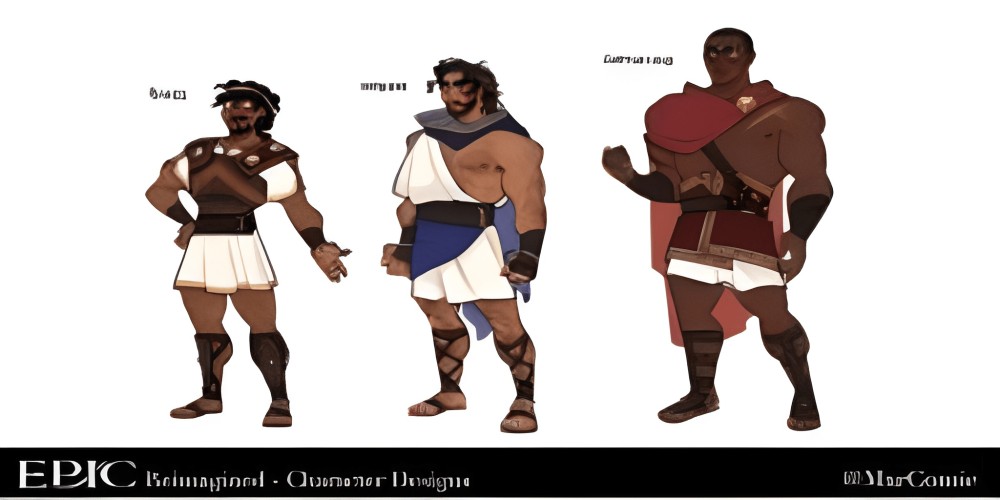
One Line Question: How does a minor character from Homer's "The Odyssey" become the philosophical linchpin and emotional catalyst in "Epic the Musical," Jorge Rivera-Herrans' groundbreaking reimagining of the ancient Greek classic?
One Line Answer: In "Epic the Musical," Polites transforms from a nearly invisible Homeric figure into the narrative's moral compass whose "open arms" philosophy directly triggers Odysseus's tragic journey and whose death serves as the crucible for the king's transformation from man to monster.
Introduction: The Unexpected Hero of "Epic the Musical"
In the sprawling landscape of contemporary musical theater, few phenomena have captured audience imagination quite like Jorge Rivera-Herrans' "Epic the Musical." This sung-through adaptation of Homer's "The Odyssey" began as a senior thesis project at the University of Notre Dame in 2019 and has since exploded into an internet sensation, amassing over three million monthly listeners and building a devoted global community around its innovative storytelling . Among the pantheon of gods, monsters, and heroes populating this musical universe, one seemingly minor figure has emerged as perhaps the most consequential character in the entire narrative: Polites, the cheerful childhood friend of Odysseus whose philosophy of kindness sets in motion a chain of events that defines the entire musical .
Polites in "Epic the Musical" represents a fascinating case study in narrative adaptation. In Homer's original text, Polites receives only two mentions—a brief reference as Odysseus's "dearest friend" who perishes at some point during the journey home from Troy . Rivera-Herrans, however, recognized in this shadowy figure the potential for something far more significant: a philosophical foil, an emotional anchor, and a narrative catalyst whose influence reverberates through every saga of the musical. The character, voiced by Steven Dookie, appears primarily in the early sections of "Epic the Musical," but his impact extends across all nine sagas, from the opening "Troy Saga" through the climactic "Ithaca Saga" .
This article examines the multifaceted role of Polites within "Epic the Musical," exploring how this reinvented character functions as both philosophical touchstone and tragic sacrifice. We will analyze his signature song "Open Arms," trace the catastrophic consequences of his worldview on Odysseus's journey, examine his haunting reappearance in the "Underworld Saga," and consider how his legacy ultimately shapes the musical's resolution. Through this exploration, we will demonstrate that Polites of "Epic the Musical" is not merely a supporting character but the philosophical heartbeat of Rivera-Herrans' entire creative vision.
From Homeric Obscurity to Musical Prominence
The transformation of Polites from Homeric footnote to musical centerpiece exemplifies Rivera-Herrans' adaptive genius. In "The Odyssey," Polites exists on the periphery—a name without a face, a friend without a philosophy. Classical sources provide minimal characterization; Strabo's retellings sometimes identify Polites as the ghost who haunts Temesa, but even this represents a minor mythological tradition . Rivera-Herrans faced the challenge of transforming this blank slate into a character worthy of audience investment while remaining faithful to the spirit of the original epic.
The solution arrived through musical characterization. In "Epic the Musical," Rivera-Herrans developed a sophisticated system of instrumental motifs, assigning each character a distinct sonic signature that telegraphs their presence and personality. For Polites, the creator chose instruments with higher pitches, particularly the marimba, creating an auditory association with lightness, optimism, and warmth . This stands in deliberate contrast to the darker orchestration surrounding Odysseus, who is accompanied by guitar whose tone shifts with his emotional state, and the imposing trumpet blasts that announce Poseidon's violent interventions .
This sonic strategy proves essential to Polites' function within "Epic the Musical." As a concept album that has never been staged, Rivera-Herrans cannot rely on visual cues to distinguish characters. The instrumental motifs provide what the stage cannot—immediate recognition of who is speaking, thinking, or influencing each scene. Polites' marimba theme becomes a shorthand for hope, for mercy, for the possibility that the world might be greeted with something other than a sword .
"Open Arms": The Philosophy of Polites in "Epic the Musical"
The philosophical core of Polites in "Epic the Musical" crystallizes in his signature song, "Open Arms," which appears during the "Cyclops Saga." Here, in the aftermath of the Trojan War's brutality, Polites attempts to redirect his king's traumatized psyche toward a more hopeful horizon. "This life is amazing when you greet it with open arms," he sings, urging Odysseus to embrace vulnerability rather than vigilant hostility .
The song represents more than mere sentimentality; it embodies a coherent philosophical position that directly challenges the "ruthlessness" that gods like Poseidon and, initially, Athena advocate. When Polites encourages Odysseus to "greet the world with open arms," he proposes that mercy is not weakness but strength, that trust is not naivety but courage, and that the cycle of violence perpetuated by the Trojan War might be broken through deliberate acts of compassion .
Significantly, "Open Arms" occurs at a critical juncture in Odysseus's psychological journey. Having just been forced by Zeus to kill an infant—the son of Hector—Odysseus confronts the moral consequences of his wartime actions in "Just a Man." Polites offers an alternative path forward, a way of being that might redeem the bloodshed rather than compound it. This is not pollyannaish optimism but hard-won hope, born from shared trauma and genuine friendship .
The winions (mischievous forest spirits) who direct the crew toward the cyclops's cave add layers of ironic complication to Polites' philosophy. His trusting nature leads him to accept their directions without suspicion, demonstrating both the strength and vulnerability of his worldview. Polites believes in the fundamental goodness of others, even when evidence suggests caution might be warranted. This trusting disposition, so endearing in peacetime, proves catastrophic in the monster-filled world of "Epic the Musical" .
The Death of Polites: "Epic the Musical's" Turning Point
The death of Polites in "Survive," the second song of the "Cyclops Saga," represents the narrative fulcrum upon which the entire musical turns. After following the winions' directions and entering Polyphemus's cave, Odysseus's crew kills the cyclops's favorite sheep. When the monstrous owner returns and begins slaughtering the intruders, Polites becomes the first casualty—his optimism literally beaten to death by the club of a creature who embodies pure, unreasoning violence .
Rivera-Herrans structures this death for maximum emotional and philosophical impact. Polites has just finished convincing Odysseus to try diplomacy, to seek a peaceful resolution, to "greet the world with open arms." The cyclops's response to this outstretched hand is not gratitude but murder. The message, hammered home with each percussive beat of Polyphemus's club, seems unmistakable: mercy invites exploitation, kindness courts destruction, and the open arms that greet the world will be the first limbs severed .
The death scene's musical construction amplifies its devastating effect. The percussive elements mirror the cyclops's blows, each strike eliminating another voice from the ensemble. The crew's desperate cries of "Captain!" underscore Odysseus's helplessness—he can hear his men dying but cannot save them. And at the center of this carnage lies Polites, whose marimba theme fades into silence as proof that optimism has no place in this cruel cosmos .
Yet even in death, Polites of "Epic the Musical" refuses to release his grip on the narrative. His corpse becomes a burden Odysseus carries throughout the remaining sagas—a reminder of what was lost, what was tried, and what failed. The philosophy of "open arms" does not die with Polites; it becomes a ghost that haunts every subsequent decision, a tempting alternative that circumstances render increasingly impossible .
The Ripple Effects: How Polites Destroys Everything
Perhaps the most controversial interpretation of Polites in "Epic the Musical" emerges from fan analyses suggesting that this beloved character inadvertently causes most of the suffering that follows. A detailed Reddit analysis, representative of broader fan discussions, argues that "Polites kind of screws everything up in the narrative," tracing a causal chain from his "open arms" philosophy through every major catastrophe Odysseus endures .
The argument proceeds methodically. First, Polites' influence leads Odysseus to spare Polyphemus rather than kill him when Athena demands. This mercy, born from Polites' teachings, allows the cyclops to pray to his father Poseidon for vengeance. Second, Odysseus's decision to reveal his true name to the blinded cyclops—an act of pride that Polites' philosophy might have moderated rather than prevented—gives Poseidon the information needed to target the Ithacan fleet. Third, the divine storm Poseidon sends forces Odysseus to seek aid from Aeolus, whose wind bag causes further disaster when suspicious crew members open it .
The lyrics explicitly acknowledge this causal chain. In "Keep Your Friends Close," Odysseus sings that "everything's changed since Polites," explicitly linking the current crisis to his friend's influence and death . The song "Monster" finds Odysseus cataloging his losses: "I lost my best friend, I lost my mentor, my mom, 600 hundred men gone" . Each item on this grim inventory traces back, in some manner, to the decision to embrace rather than destroy, to spare rather than slaughter.
This reading transforms Polites from sympathetic victim into tragic catalyst. His kindness does not merely fail to prevent tragedy; it actively generates tragedy. The "open arms" that might have worked in peacetime Ithaca become instruments of destruction in the monstrous Mediterranean, where every creature from cyclops to sirens to Scylla interprets mercy as weakness and responds with predation .
The Underworld Reunion: Polites as Haunting Presence
The "Underworld Saga" represents the emotional climax of Polites' influence in "Epic the Musical." As Odysseus descends into the realm of the dead seeking guidance from the prophet Tiresias, he encounters the ghosts of everyone he has lost—and none haunts him more profoundly than Polites .
Rivera-Herrans crafts this reunion with devastating delicacy. The ghost of Polites reprises "Open Arms," his marimba theme now filtered through spectral reverb, the cheerful optimism transformed into something elegiac and aching. Steven Dookie's vocal performance shifts from the bright confidence of the living Polites to the gentle sorrow of the shade who watches his best friend destroy himself trying to honor a dead man's philosophy .
The encounter forces Odysseus to confront the central contradiction of his journey. Polites died because he greeted the world with open arms, and yet Odysseus cannot abandon that greeting without betraying his friend's memory. The prophet Tiresias's warning that Odysseus is "a different man" than the one who left Ithaca finds its emotional ground here—the king who will return home is neither the ruthless warrior of Troy nor the merciful friend of Polites, but something caught between, a monster who has learned when to embrace and when to destroy .
The song "Monster," which immediately follows the Underworld sequence, represents Odysseus's attempt to resolve this contradiction. "Ruthlessness is mercy upon ourselves," he concludes, adopting Poseidon's philosophy while still honoring Polites' memory. The resolution is unstable, paradoxical, and deeply human—a man trying to hold two incompatible truths in his hands without dropping either .
Musical Motifs and Character Construction
The sophistication of Rivera-Herrans' characterization becomes apparent when analyzing how Polites' musical motifs evolve throughout "Epic the Musical." Unlike characters who maintain consistent instrumental signatures, Polites' themes appear and reappear in transformed states, marking his transition from living presence to haunting memory.
During "Open Arms," the marimba motif sounds in major keys, bright and unshadowed. The orchestration includes playful percussion elements that suggest spontaneity and joy. This is Polites as he wants to be seen—carefree, trusting, open .
After his death, the motif fragments. In "Keep Your Friends Close," the melody appears in minor keys, played by strings rather than percussion, transformed from celebration to lament. In "The Underworld," the motif echoes as if heard through water, distant and distorted. In "Monster," fragments of the melody compete with Athena's piano and Poseidon's trumpet, representing Odysseus's internal struggle between competing philosophies .
This musical fragmentation mirrors Odysseus's psychological fragmentation. Without Polites physically present to advocate for mercy, the king must reconstruct his friend's arguments from memory, summoning the "open arms" philosophy even as experience teaches its dangers. The motif that once accompanied confident optimism now sounds alongside hesitation and doubt .
Polites and the Problem of Adaptation
The elevation of Polites within "Epic the Musical" illuminates broader questions about how contemporary adaptations transform classical source material. Rivera-Herrans inherited a text in which most characters serve primarily plot functions—they exist to be obstacles, allies, or victims, rarely achieving psychological depth. The musical's innovation lies in identifying which minor figures could bear additional weight and developing them accordingly .
Polites proves particularly suited to this expansion because his canonical emptiness allows maximum creative freedom. Unlike Penelope or Telemachus, whose roles are relatively fixed by tradition, Polites exists as a blank slate onto which Rivera-Herrans can project whatever thematic concerns he wishes. The "open arms" philosophy, the instrumental motifs, the friendship with Odysseus—none of this contradicts Homer because Homer provided so little to contradict .
This freedom comes with responsibility. By making Polites so central to the narrative's emotional and philosophical architecture, Rivera-Herrans commits to resolving his themes rather than abandoning them. The musical cannot simply kill Polites and declare mercy impossible; it must grapple with whether the "open arms" philosophy has any validity in a world of monsters. The "Ithaca Saga," released in December 2024, attempts precisely this resolution, suggesting that Odysseus's final reunion with Penelope requires the very vulnerability Polites advocated .
Fan Reception and Interpretive Communities
The Polites of "Epic the Musical" has generated extraordinary engagement from the musical's fan community. Online forums, Reddit discussions, and social media platforms host ongoing debates about whether Polites' philosophy represents wisdom or naivety, whether his influence ultimately helps or harms Odysseus, and whether his death serves as warning or inspiration .
This interpretive activity demonstrates the character's success as a narrative device. Polites provokes disagreement because he embodies genuine ambiguity. The musical refuses to definitively endorse or condemn his worldview, instead allowing audiences to wrestle with the same questions that torment Odysseus. Is mercy always weakness? Is kindness ever strategic? Can one greet the world with open arms without having those arms torn off?
Fan creators have expanded Polites' role through animatics, cover songs, fan fiction, and critical analysis. The character's relatively brief appearance in the official recording paradoxically increases his creative utility—because the musical provides so little concrete detail about Polites' life before the narrative begins, fans feel empowered to imagine those details themselves .
Conclusion: The Legacy of Polites in "Epic the Musical"
As "Epic the Musical" concludes with the "Ithaca Saga," the legacy of Polites achieves final resolution. Odysseus returns home not as the ruthless monster Poseidon demanded nor as the innocent optimist Polites advocated, but as something more complex—a man who has learned when to embrace and when to destroy, when to trust and when to wound. This synthesis, this impossible balance, represents the true inheritance of Polites .
FAQs
1. Who is Polites in EPIC: The Musical?
Polites is Odysseus' best friend and the kindest member of his crew. He's the one who sings "Open Arms" and believes in greeting the world with kindness rather than violence. He's voiced by Steven Dookie and serves as the moral compass of the entire musical .
2. What is Polites' main song in the musical?
His main song is called "Open Arms" from the Troy Saga. In it, Polites tries to convince Odysseus to relax, let go of his guilt from the Trojan War, and trust people instead of always gripping his sword. It's a hopeful, bittersweet duet that breaks fans' hearts once you know what happens next .
3. How does Polites die in EPIC: The Musical?
Polites is the first man killed by Polyphemus the Cyclops. After Odysseus and his crew enter the cave looking for food, the Cyclops wakes up, accuses them of killing his sheep, and smashes Polites with his club. His death happens in the song "Survive" and completely changes Odysseus .
4. Why is Polites so important to the story even after he dies?
Because his influence never goes away. Odysseus keeps hearing Polites' voice in his head throughout the musical. In the Underworld Saga, Polites' ghost appears to Odysseus not as an accusation but as comfort. His philosophy of "open arms" haunts Odysseus and shapes every major decision he makes afterward .
5. What does "greet the world with open arms" mean?
It's Polites' entire life philosophy. He believes that kindness is brave, that you don't need to solve everything with violence, and that lowering your guard can actually be a strength. He sings: "Why should we take when we could give?" It's beautiful, idealistic, and tragically gets him killed .
6. Is Polites based on a real character from The Odyssey?
Yes, but he's a very minor character in Homer's original epic. Homer only mentions Polites twice as Odysseus' friend. The musical expands him into a major figure, gives him the "open arms" philosophy, and makes his death the emotional turning point of the entire story .
7. What instrument represents Polites in the musical?
Polites is associated with higher-pitched, bouncy instruments like the marimba. Creator Jorge Rivera-Herrans gave every character a signature instrument. Polites' sound is light and hopeful, which makes it hit even harder when his music stops after he dies .
8. Did Polites actually cause all the problems in EPIC?
There's a fun fan theory that Polites kind of ruined everything. His "open arms" mentality led Odysseus to spare the Cyclops instead of killing him, which led to Poseidon's wrath, which led to the storm, the wind bag, and hundreds of deaths. But fans mostly say this with love—Polites meant well, the world just didn't deserve him .
9. What's the relationship between Polites and Eurylochus?
They're foils. Polites is the optimist who trusts everyone; Eurylochus is the cautious realist who questions everything. After Polites dies, Eurylochus becomes Odysseus' second-in-command, but he never fills the emotional void Polites left. The crew even sings "everything's changed since Polites" in "Keep Your Friends Close" .
10. Why do EPIC fans love Polites so much?
Because he represents hope in a brutal story. He's the friend who sees you're hurting and tells you to relax. He believes people are good. And then he dies first. Fans love him because his kindness is so rare in the world of EPIC, and his death marks the moment Odysseus starts becoming a monster. Plus, "Open Arms" is just a beautiful song .
Leave A Comment
0 Comment