
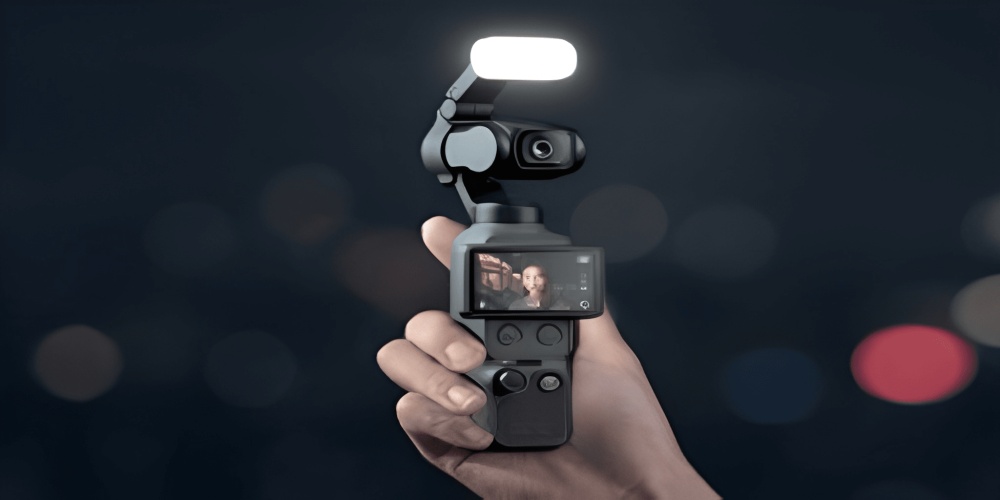
It has been a long wait. Three years is a lifetime in the world of consumer electronics. When DJI dropped the Osmo Pocket 3 back in 2023, everyone thought they had cracked the code. A 1-inch sensor on a mechanical gimbal that fits in your jeans? It was magic. But like any first draft of a great idea, there were cracks. The battery could have been better. The slow motion was stuck at 1080p. And that touchscreen? You either loved it or hated it.
Then came the announcement in mid-April 2026. The DJI Osmo Pocket 4 is finally here. I have been testing one for the last ten days, and I want to share what actually matters. Forget the press releases. Let us talk about what it feels like to use this thing when you are standing on a busy street corner trying to get a shot before your coffee gets cold.
First Impressions: It Looks the Same, But It Is Not
When you pull the DJI Osmo Pocket 4 out of the box, your first reaction might be disappointment. It looks almost identical to the Pocket 3. Same size. Same rotating screen. Same overall vibe. But hold it for a minute. Pick it up. The weight distribution is slightly different. It feels denser, more solid in your palm. DJI did not try to reinvent the wheel here. They just made the wheel spin better.
The biggest surprise for me was turning it off. On the old Pocket 3, when you powered down, the gimbal head would just go limp. It would flop around like a fish out of water. You had to be careful putting it in a bag. The DJI Osmo Pocket 4 solves this with something called Auto Axis Lock. When you hit the power button, the gimbal automatically folds itself into a locked, flat position. It is such a small thing, but it changes everything. You can throw this camera into a crowded backpack or a tight pocket without a second thought.
That New Screen and Those Buttons Finally
Let me be honest about the touchscreen on the old model. It drove me nuts. Swiping through menus while trying to hold the camera steady was a nightmare. The DJI Osmo Pocket 4 keeps the same lovely 2-inch OLED display that rotates for horizontal or vertical shooting. But now, thank goodness, there are physical buttons.
Below the screen, DJI added a proper 5D joystick. It is not a digital stick on a touchscreen. It is an actual little nub you can push with your thumb. Push it softly and the camera pans slowly. Push it hard and it whips around. This is how professional gimbals work. There are also two dedicated buttons now. One for zooming in and out, and one you can program to do whatever you want. I set mine to switch between photo and video mode instantly. The DJI Osmo Pocket 4 finally feels like a real tool instead of a smartphone accessory.
The 107GB Storage Thing Is a Big Deal
Here is something nobody talks about enough. When you buy a camera, you usually have to spend another forty or fifty bucks on a memory card before you can even turn it on. DJI decided to fix that. The DJI Osmo Pocket 4 comes with 107 gigabytes of internal storage built right in.
I am not talking about a tiny amount for photos. This is real usable space. You can record about three and a half hours of 4K video on the internal drive before it fills up. The transfer speeds are also crazy fast. I plugged the DJI Osmo Pocket 4 directly into my laptop via USB C and started editing footage straight from the camera. No lag. No waiting for files to copy. For travel vloggers who forget their memory cards at home, this feature alone is worth the price. You can still add a microSD card if you want more space, but you do not have to buy one on day one.
Let Us Talk About That 4K Slow Motion
Okay, this is the part where the DJI Osmo Pocket 4 gets really interesting. The old Pocket 3 could do slow motion at 240 frames per second, but only at 1080p resolution. That is fine for social media, but it looks soft on a big screen. The new model changes the game.
The DJI Osmo Pocket 4 can shoot 4K video at 240 frames per second. Let that sink in. That is eight times slower than real time at full ultra high definition. I took it to a local fountain and filmed water splashing. I filmed my friend pouring honey onto a spoon. I filmed a dog shaking off water after a bath. The detail is stunning. You can see every individual droplet. Every tiny ripple. This is the kind of footage that makes people stop scrolling and ask what camera you used. It is power hungry and the camera gets warm after a few minutes of this, but the fact that it works at all in a device this small is impressive.
How Good Is the Image Quality Really
You can throw around specs all day. A 1 inch sensor. An f/2.0 lens. 37 megapixel still photos. But what does that actually look like on a Tuesday afternoon?
I took the DJI Osmo Pocket 4 out during golden hour. The sun was low, casting long shadows. One side of the street was bright orange, the other side was deep blue in the shade. The camera handled the contrast beautifully. The shadows had detail. The highlights were not blown out. It records in 10 bit D Log which gives you a lot of room to play with colors later. But honestly, the standard color mode looks great right out of the camera. There is a new "Film Tone" setting that mimics the look of old analog film stock. It is a little soft, a little warm, and very pleasing to the eye.
Low light is where small cameras usually die. The DJI Osmo Pocket 4 does not magically turn night into day, but it is usable. I shot some clips in a dimly lit bar. There was noise, sure, but it was fine grain noise, not the ugly blocky mess you get from a phone. If you are shooting a candlelit dinner or a night market, you will be happy with the results. Just do not expect full frame mirrorless performance.
ActiveTrack 7.0 Actually Works Now
The mechanical tracking on the Osmo series has always been good, but it had limits. If someone walked between you and your subject, the camera would get confused and jump to the new person. The DJI Osmo Pocket 4 fixes this with ActiveTrack 7.0.
You can now lock onto a specific person, and the camera will ignore everyone else. It is like the camera knows who the star of the show is. I tested this at a busy farmers market. I locked onto my friend, then walked through a crowd of people crossing in front of the lens. The DJI Osmo Pocket 4 stayed glued to my friend every single time. It can also track animals now, which is great if you are a pet content creator. And there is a new gesture control feature. Hold up your palm to start tracking. Make a peace sign to start recording. You can set the camera on a table, walk ten feet away, and control it with your hands. No remote needed. No phone needed.
Battery Life That Lasts All Day
One of my biggest gripes with the Pocket 3 was battery anxiety. I would be out shooting for two hours and the low battery warning would start flashing. The DJI Osmo Pocket 4 has a larger battery now. 1545 milliamps instead of 1300.
In real world testing, I got about two hours and fifteen minutes of mixed shooting. That is 4K at 60fps, some slow motion, some standby time. If you drop down to 1080p, you can push it closer to four hours. When the battery does finally die, the fast charging is a lifesaver. I plugged it into a 30 watt power bank, and it went from empty to eighty percent in about eighteen minutes. A full charge took just over half an hour. There is also an optional battery grip that attaches to the bottom of the DJI Osmo Pocket 4. That adds another two and a half hours. You could literally film an entire wedding day with that setup.
Audio That Does Not Embarrass You
Bad audio ruins good video faster than anything else. The DJI Osmo Pocket 4 has three built in microphones that record in surround sound. The new Audio Zoom feature is actually useful. As you zoom the camera in on a subject, the audio zooms in too. The camera turns up the volume of whatever is in front of you and turns down the noise behind you. It is not magic, but it works well enough for vlogging.
If you need professional audio, the DJI Osmo Pocket 4 pairs instantly with the DJI Mic 3. There is no cable required. Just turn on the mic and the camera finds it. You can record up to four audio channels at once. That means two wireless mics plus the internal stereo mics all recording simultaneously. For interviews, this is a dream. You never have to worry about syncing audio in post anymore.
What About the Accessories
DJI learned from the Pocket 3 that people want to customize their setup. The DJI Osmo Pocket 4 has a magnetic mount on the top. You can attach a small fill light that draws power directly from the camera. No batteries to charge separately. The light has three brightness levels and three color temperatures. It makes a huge difference when you are filming yourself in a dark room.
The Creator Combo is the bundle to buy if you are serious. It comes with the DJI Mic 3 transmitter, a wide angle lens, a mini tripod, and the fill light. You also get a set of ND filters. These are essential if you want to shoot video outdoors in bright sunlight without cranking your shutter speed too high. Everything attaches magnetically. You can swap lenses in about two seconds.
Pricing and Where to Buy
The DJI Osmo Pocket 4 launched on April 16, 2026. The Standard Combo costs around 2999 RMB. That translates to roughly 415 US dollars or 445 British pounds. The Creator Combo is about 3799 RMB, which is around 525 US dollars or 549 British pounds.
There is a catch. Just like the Avata 2 before it, the DJI Osmo Pocket 4 is not available in the United States right now. The authorization is still pending. If you live in the US, you will have to wait or buy from an international seller and deal with shipping. In Europe, the UK, Australia, and across Asia, it is widely available at most electronics retailers.
Should You Actually Buy One
Here is my honest take. If you already own the Osmo Pocket 3, the decision to upgrade comes down to two things. Do you need 4K slow motion? Do you hate the touchscreen interface? If you answered yes to either of those, sell your old one and get the DJI Osmo Pocket 4. The physical joystick alone changed how I shoot.
If you are new to the Osmo series, this is an easy recommendation. Nothing else on the market gives you this level of stabilization in such a small package. A smartphone with image stabilization still crops your frame and fails in low light. A mirrorless camera with a gimbal is heavy and takes five minutes to set up. The DJI Osmo Pocket 4 lives in your pocket and starts recording in two seconds. It is not perfect. The battery could still be bigger. The low light could still be better. But for a device this small, it is the best thing you can buy in 2026.
Frequently Asked Questions
Q1: When did the DJI Osmo Pocket 4 actually come out?
The DJI Osmo Pocket 4 was released on April 16, 2026. Pre orders opened the same day, and the first units started shipping around April 22.
Q2: How much storage is built into the DJI Osmo Pocket 4?
The DJI Osmo Pocket 4 comes with 107 gigabytes of internal storage. That is enough for about three and a half hours of 4K video. You can also add a microSD card if you need more space.
Q3: Can the DJI Osmo Pocket 4 really do 4K at 240 frames per second?
Yes, that is one of the main selling points. The DJI Osmo Pocket 4 can shoot slow motion video in full 4K resolution at 240 frames per second. The old model could only do 1080p at that frame rate.
Q4: Is the DJI Osmo Pocket 4 waterproof at all?
No, it is not waterproof. The mechanical gimbal is sensitive to water and dust. If you plan to shoot in the rain or near a pool, you need to buy a separate waterproof housing.
Q5: Does the DJI Osmo Pocket 4 have ActiveTrack 7.0?
Yes, it comes with ActiveTrack 7.0. The new version can track people, animals, and vehicles. It also ignores other people who walk in front of your subject, which was a problem on older models.
Q6: How long does the battery last on the DJI Osmo Pocket 4?
You can get about four hours of recording time if you shoot 1080p video at 24 frames per second. If you shoot 4K at 60 frames per second, expect around two hours and fifteen minutes.
Q7: Can I buy the DJI Osmo Pocket 4 in the United States?
Right now, no. DJI is still waiting for authorization to sell the DJI Osmo Pocket 4 in the US. It is available in Europe, the UK, Australia, and most of Asia.
Q8: Does the DJI Osmo Pocket 4 work with the DJI Mic 3?
Yes, it works perfectly with the DJI Mic 3. It also works with the Mic 2 and the Mic Mini. The connection is wireless, so you do not need any cables.
Leave A Comment
0 Comment