
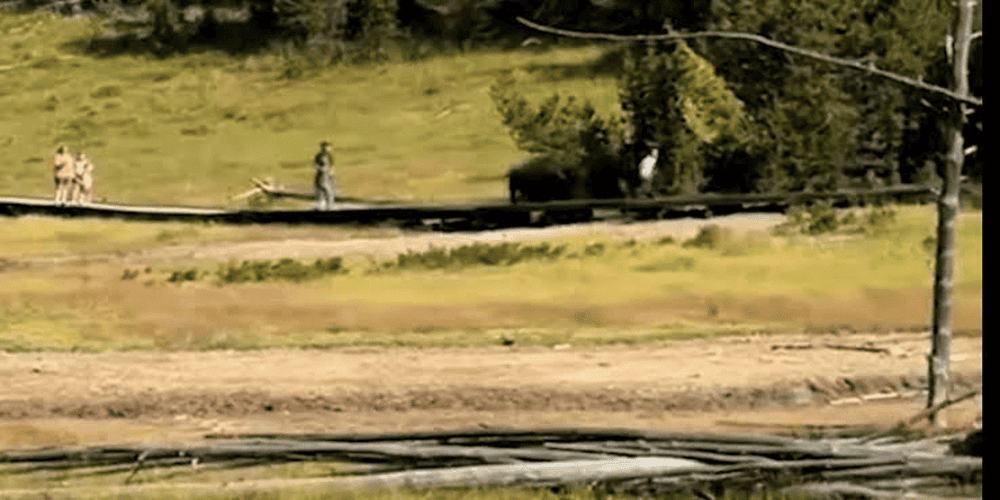
Yellowstone National Park is one of the best places in the United States to see wildlife in its natural environment. Visitors can see elk, bears, wolves, deer, moose, and one of the park’s most recognizable animals, the American bison. For many families, seeing a bison during a Yellowstone trip is an exciting and unforgettable experience.
However, wildlife encounters can become dangerous when visitors get too close. A recent child bison encounter Yellowstone incident brought attention to the importance of keeping children and families at a safe distance from wild animals.
On June 26, 2026, a 12-year-old visitor was injured by a bison near Mud Volcano, just north of Fishing Bridge in Yellowstone National Park. According to the National Park Service, the child sustained injuries and was transported to a nearby hospital. The incident remains under investigation.
The incident is an important reminder that bison may look calm and slow, but they are powerful wild animals capable of moving extremely quickly. Families visiting Yellowstone should understand how to recognize risky situations and teach children how to behave around wildlife.
What Happened in the Yellowstone Child Bison Encounter?
The recent child bison encounter Yellowstone incident happened near the Mud Volcano area, north of Fishing Bridge. The National Park Service reported that a 12-year-old visitor was injured by a bison at approximately 9:15 a.m. on June 26, 2026.
Emergency medical personnel responded and transported the child to a nearby hospital. The National Park Service stated that the incident remained under investigation at the time of its announcement.
The incident does not mean visitors should avoid Yellowstone or bison viewing altogether. Instead, it demonstrates why visitors must follow wildlife safety rules.
Bison are wild animals. Even when one appears relaxed, grazing, or simply standing beside a road, it can react suddenly if it feels threatened or if a person enters its personal space.
The National Park Service specifically warns that bison have injured more people in Yellowstone than any other animal. They can also run about three times faster than humans.
For children, the risk can be even greater because they may not recognize subtle warning signs or understand how quickly a large animal can move.
Why Are Bison Dangerous to Children?
Bison can weigh well over 1,000 pounds and have enormous bodies, strong legs, horns, and surprising speed. Their size can make them look slow, particularly when they are calmly grazing.
That appearance can be misleading.
A bison does not need to be actively chasing someone to create a dangerous situation. A person may accidentally walk too close while trying to take a photograph, watch the animal, or get a better view.
Children are naturally curious. When they see a bison in the wild, they may want to get closer, take a picture, or see what the animal does next. This is why parents and guardians should establish clear rules before entering areas where wildlife is commonly seen.
The safest approach is simple: children should never approach a bison.
Parents should also avoid allowing children to wander ahead of the family near wildlife. A child running toward an animal can create a dangerous situation within seconds.
The 25-Yard Rule in Yellowstone
One of the most important rules for anyone visiting Yellowstone is maintaining a safe distance from wildlife.
The National Park Service requires visitors to stay at least 25 yards, or about 23 meters, away from bison and other large animals such as elk, deer, moose, bighorn sheep, and coyotes. Bears, wolves, and cougars require a much greater distance of at least 100 yards, or about 91 meters.
For families, the 25-yard rule should be treated as a minimum rather than an invitation to stand exactly 25 yards away.
If a bison is moving toward your group, you should increase the distance.
This is especially important when the animal is walking near a trail, road, parking area, boardwalk, or other location where people are present. Visitors should never assume that an animal will move around them.
If necessary, turn around and choose another route.
Why a Calm Bison Can Still Be Dangerous
One of the biggest mistakes visitors make is assuming that a calm-looking bison is harmless.
A bison may be standing quietly while still being aware of people nearby. If someone enters its space, the animal may suddenly change its behavior.
The National Park Service explains that warning signs can include head bobbing, staring, pawing at the ground, bellowing, snorting, and raising the tail. These behaviors can indicate that the animal is becoming uncomfortable or preparing to charge.
Parents should teach children that an animal does not need to look angry before they move away.
If the bison changes its behavior because of your presence, increase the distance immediately.
What Should Parents Teach Children Before Visiting Yellowstone?
A family trip to Yellowstone can become much safer when children know the basic wildlife rules before they arrive.
Parents can explain these simple lessons:
Never touch a wild animal
Even if a bison appears friendly or curious, it should never be touched.
Children sometimes believe that animals are safe because they see people nearby taking photographs. Parents should explain that wild animals are not pets.
Never feed wildlife
Feeding animals can change their natural behavior and make them associate humans with food. Yellowstone specifically prohibits feeding wildlife.
Children should understand that even throwing a small piece of food toward an animal can create problems.
Never run toward a bison
If children see a bison, they should stay beside their parents or guardians and observe it from a safe distance.
Running toward a bison can cause the animal to feel threatened.
Never try to take a selfie with a bison
A photograph is not worth risking an injury.
Families can use binoculars or cameras with zoom lenses to see wildlife clearly without getting closer.
Listen to adults immediately
If a parent says, “Move back,” the child should move back without arguing or stopping to take another photograph.
Wildlife situations can change quickly.
What If a Bison Walks Toward You?
This is an important question because visitors cannot always control where a wild animal goes.
A bison may naturally walk toward a road, trail, parking area, or group of visitors.
If a bison comes closer than the recommended distance, do not wait for it to pass.
Move away and create more space.
The National Park Service advises visitors to move away if wildlife approaches them so they can maintain the required distance.
Parents should keep children close and move together rather than allowing children to scatter.
If the animal continues moving toward the group, keep increasing the distance and look for a safe route away from it.
What If a Bison Charges?
A charging bison is an extremely serious situation.
Visitors should never assume that a bison is only pretending to charge. The National Park Service warns that bison can bluff charge and may show warning behaviors before becoming more aggressive.
If a bison begins approaching aggressively, immediately move away.
Do not stand close to the animal simply to get a better photograph or video.
If there is a vehicle, building, or other substantial barrier nearby, move toward safety.
Parents should take control of the situation and keep children moving with them.
The most important point is to avoid creating the situation in the first place. Keeping a large distance from bison gives families much more time to respond if the animal changes direction.
Why Bison Encounters Happen in Yellowstone
Yellowstone is different from a traditional zoo.
There are no large barriers separating visitors from most wildlife. Bison can walk across roads, grasslands, trails, and developed areas.
That is part of what makes Yellowstone special.
It also means visitors have to take responsibility for maintaining a safe distance.
Bison may be seen in many parts of the park, particularly in areas where large herds travel or graze. A visitor may unexpectedly encounter one near a road or other public area.
A bison standing beside a road does not mean people should get out of their vehicles and walk toward it.
In fact, the National Park Service says the safest and often best way to view wildlife is from inside a vehicle.
Why Getting Out of the Car Can Be Risky
A common Yellowstone scene is a “bison jam,” when vehicles slow down or stop because bison are crossing or walking along a road.
This can be exciting for families, especially children seeing bison for the first time.
However, visitors should remain patient and follow park rules.
The National Park Service advises drivers to stay in their vehicles when bison are on the road, drive slowly, and wait for the animals to move. Drivers should not honk or aggressively attempt to make bison move.
Getting out of the vehicle to photograph a bison can turn a safe viewing experience into a dangerous encounter.
A camera with a good zoom can provide excellent photographs without requiring visitors to approach the animal.
A Previous Bison Incident Shows the Risk
The recent child bison encounter was not the first serious wildlife incident in Yellowstone.
In May 2025, a 47-year-old man was injured after approaching a bison too closely in the Lake Village area. The National Park Service reported that the man was gored and received medical treatment.
Another incident occurred in June 2025, when a 30-year-old man was injured by a bison in the Upper Geyser Basin near Old Faithful after a large group of visitors approached the animal too closely.
These incidents show why the distance requirement is not simply a suggestion.
Bison may tolerate people being visible from a distance, but that does not mean they want people approaching them.
How Families Can Safely Watch Bison
Watching bison can be one of the best experiences of a Yellowstone vacation if it is done correctly.
Families should consider using binoculars rather than walking closer.
A spotting scope can also be useful in areas where wildlife viewing is popular.
Parents should explain to children that seeing an animal from far away is part of the experience. The goal is not to get the closest photograph. The goal is to observe the animal without disturbing it.
Children can also learn to watch the animal's behavior.
From a safe distance, they can observe how bison graze, walk, interact with other bison, and respond to their surroundings.
This creates a much better wildlife experience than trying to get a close-up picture.
What Should You Do If You See a Bison on a Trail?
If a bison is blocking a trail, do not try to squeeze past it.
Do not walk around the animal while assuming it will ignore you.
Instead, stop at a safe distance and assess the situation.
If the bison is too close, turn around and find another route.
The National Park Service specifically recommends turning around and going another way when a bison comes within the required distance.
This may add several minutes to a hike, but that is a small price compared with risking an injury.
Parents Should Also Watch for Crowds
Sometimes the danger is not only the bison.
Large groups of tourists can gather around wildlife, particularly when a bison appears close to a road.
A crowd can make it difficult for an animal to move freely.
Visitors should never surround a bison or block its path.
If a group begins moving closer to an animal, families should consider moving away instead of joining the crowd.
A large number of people standing close to a bison does not mean the situation is safe.
Why Wildlife Respect Matters
Wildlife safety works both ways.
Visitors need protection from wild animals, but wild animals also need protection from people.
Approaching or disturbing wildlife can affect animal behavior. In some cases, animals that become accustomed to human food or human interaction can become dangerous.
The National Park Service advises visitors not to feed wildlife and not to approach or disturb animals.
Respecting wildlife helps preserve Yellowstone as a place where animals can continue living naturally.
For children, this can become an important educational lesson. A Yellowstone trip is not only about seeing animals. It is also about learning how humans can share natural spaces responsibly.
What Parents Should Remember About a Child Bison Encounter in Yellowstone
The recent child bison encounter Yellowstone incident is a strong reminder that even experienced travelers should never become too comfortable around wildlife.
The most important lessons are straightforward:
Stay at least 25 yards away from bison.
Never approach a bison for a photograph.
Keep children close when wildlife is nearby.
Do not touch or feed wild animals.
If a bison approaches, move away.
Never block a bison's path.
Stay inside the vehicle when appropriate.
Pay attention to warning signs and changes in animal behavior.
If necessary, turn around and choose another route.
Following these rules can dramatically reduce the chance of a dangerous encounter.
Is Yellowstone Safe for Families With Children?
Yes, Yellowstone can be an excellent destination for families with children.
Millions of people visit the park to enjoy its scenery, wildlife, geysers, waterfalls, forests, and hiking opportunities.
The key is understanding that Yellowstone is a wild environment.
Children should not be allowed to approach animals, wander away from adults, or run around near wildlife.
Parents should also teach children to follow signs, remain on designated trails and boardwalks, and listen to park staff.
The National Park Service specifically advises visitors to keep children close in areas such as thermal features, where additional hazards exist.
With proper preparation, families can enjoy Yellowstone while respecting the animals that make the park unique.
Final Thoughts on the Child Bison Encounter Yellowstone Incident
The child bison encounter Yellowstone incident is a serious reminder that wild animals should always be treated with respect.
Bison may look peaceful while grazing in a field or walking beside a road, but they are powerful, unpredictable animals. The National Park Service states that bison have injured more people in Yellowstone than any other animal and can run approximately three times faster than humans.
The best way to enjoy a bison encounter is from a safe distance.
For families, the message is particularly important: teach children before the trip, keep them close when wildlife is nearby, and never allow curiosity to turn into an attempt to approach an animal.
A great Yellowstone wildlife experience does not require getting close.
Sometimes the best memories come from sitting safely in a vehicle, watching a bison herd move across the landscape, and realizing that you are witnessing an animal living freely in one of America's most remarkable national parks.
Respect the distance, respect the animal, and let Yellowstone's wildlife remain wild.
FAQs About Child Bison Encounters in Yellowstone
What happened in the child bison encounter Yellowstone incident?
A 12-year-old visitor was injured by a bison near Mud Volcano, just north of Fishing Bridge, on June 26, 2026. Emergency personnel transported the child to a nearby hospital, according to the National Park Service.
How far should children stay from bison in Yellowstone?
Children, like all visitors, should remain at least 25 yards, or about 23 meters, away from bison. If a bison moves closer, the family should move away to maintain the required distance.
Can children take pictures of bison in Yellowstone?
Yes, children can photograph bison, but they should do so from a safe distance. A zoom lens or binoculars can help children see and photograph animals without approaching them.
Can you touch a bison in Yellowstone?
No. Visitors should never touch a bison. Bison are wild animals and can react unpredictably when people enter their space.
Can bison run faster than humans?
Yes. The National Park Service states that bison can run about three times faster than humans.
What should you do if a bison approaches your child?
Move away immediately and increase the distance between your child and the bison. Keep the child with you and avoid approaching, touching, or attempting to photograph the animal from close range.
Are bison aggressive animals?
Bison are not necessarily aggressive by nature, but they can become defensive when they feel threatened or when people enter their space. They are unpredictable and extremely powerful.
What are signs that a bison may charge?
Warning behaviors can include head bobbing, staring, pawing, bellowing, snorting, and raising the tail. If a bison displays concerning behavior, increase your distance immediately.
Is it safe to get out of the car to see a bison?
Not if getting out would bring you within the required wildlife distance. The National Park Service says the safest and often best way to view wildlife is from inside a vehicle.
What is the most important rule for families around Yellowstone bison?
The most important rule is to maintain at least 25 yards of distance and never approach a bison. Parents should also keep children close and move away if the animal comes closer.
Leave A Comment
0 Comment