
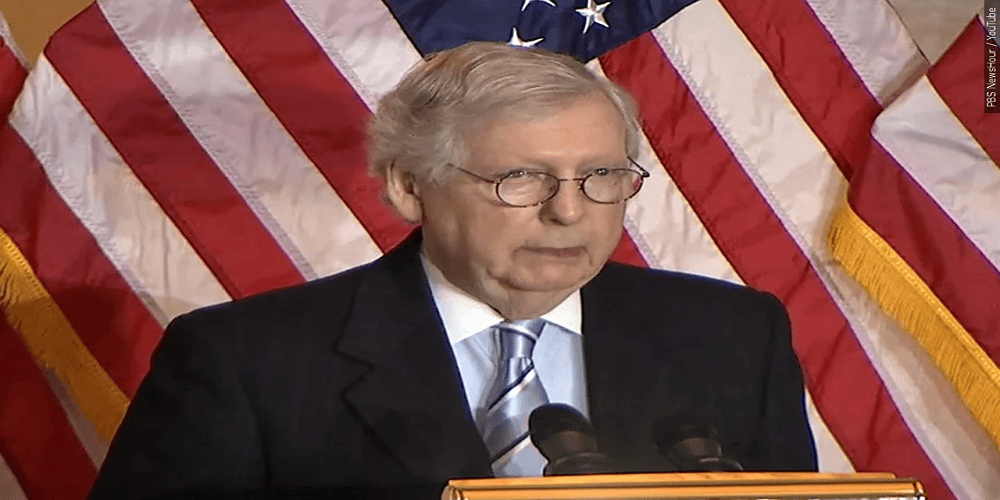
Hospitalized in early February 2026, Kentucky Senator Mitch McConnell becaame a national headline across U.S. and international media. The Republican Senate leader stepped himself into a hospital after feeling flu-like symptoms over the weekend, according to a statement from his office. This development has attracted widespread attention and discussion given his role in U.S. politics and his medical history over the past number of years. In this deep dive piece, we look at what has happened, what officials say, the broader context of McConnell’s health, effects on Senate operations, public reaction, common questions about Mueller’s Ads.
What Happened: The Initial Report
Early in the week of February 2–4, 2026, news broke that Mitch McConnell hospitalized after feeling unwell and exhibiting flu-like symptoms over the preceding weekend. His spokesperson, David Popp, issued a statement saying the 83-year-old senator decided to check himself into a local hospital “out of an abundance of caution.” The move was described not as an emergency crisis but as a precautionary measure to be evaluated by medical professionals. (ABC7 New York)
McConnell’s office emphasized that his prognosis was positive, that he was grateful for the care he was receiving, and that he remained in communication with his staff while recuperating. He anticipates returning to Senate business once medically cleared. (ABC7 New York)
This hospitalization came at a time when the Senate was in session and McConnell missed key votes on February 2 and 3 due to his illness, underscoring the immediate practical impact of his health situation on Senate operations. (106.1 BLI)
Who Is Mitch McConnell?
To understand why Mitch McConnell hospitalized drew significant media and public interest, it helps to provide context about who he is. McConnell has been one of the most prominent figures in American politics for decades. First elected to the United States Senate in 1984, he has represented Kentucky for more than 40 years and held major leadership roles for much of that time. (Wikipedia)
From 2007 to 2025, McConnell led the Senate Republican Conference, making him the longest-serving party leader in the chamber’s history. His leadership reshaped Senate Republican strategy and played a central role in confirming conservative judicial nominees, including multiple Supreme Court justices. (Wikipedia)
Though he stepped down from his leadership post in January 2025, McConnell remained a powerful and influential figure in the Senate and Republican politics. In February 2025, he announced he would not seek reelection in 2026, choosing instead to complete his current term, which runs through January 2027. (Louisville Public Media)
What Prompted the Hospitalization?
According to official statements and reporting, the trigger for Mitch McConnell hospitalized was flu-like symptoms that emerged over a weekend. These symptoms prompted McConnell to voluntarily check into a local hospital for monitoring and evaluation on Monday night. (Louisville Public Media)
The decision was described as precautionary, not the result of a medical emergency. McConnell’s team framed the hospitalization as an appropriate response given his age and recent health history. They also emphasized that he expected to return to his duties once he recovered. (ABC7 New York)
McConnell’s Health History and Background
The news that Mitch McConnell hospitalized did not come as a complete surprise to those familiar with his health history. Over the past few years, McConnell has experienced several public health episodes that have raised concerns among constituents, the press, and observers.
One of the more significant incidents occurred in March 2023, when McConnell was hospitalized for five days after a fall at a Washington, D.C. hotel that resulted in a concussion and a minor rib fracture. He required physical therapy and was absent from the Senate for several weeks. (ABC7 Los Angeles)
In December 2024, another fall during a Senate Republican luncheon led to a sprained wrist and a minor cut to his face. (Good Morning America)
In October 2025, McConnell tripped and fell while being questioned by an activist at the U.S. Capitol. That fall was widely shared in video clips and contributed to broader public conversation about his mobility. (Wikipedia)
Additionally, McConnell has had moments in which he froze or became non-responsive during press interactions, which some commentators and observers noted in broader discussions about his health. (The Guardian)
McConnell survived polio as a young child, which resulted in some long-term effects on his mobility. These underlying issues have contributed to periodic concerns about his ability to travel, walk long distances, or navigate stairs. (Wikipedia)
Public and Political Reactions
The news that Mitch McConnell hospitalized sparked reactions across the political spectrum. Supporters emphasized well-wishes for his recovery and respect for his decades of public service. Some political allies characterized the hospitalization as a responsible decision that underscored McConnell’s commitment to fulfilling his duties safely. Outside commentators on social platforms and news talk shows expressed a mixture of concern, criticism, and debate about the implications for Senate leadership dynamics. ﹡
The topic also fed into larger conversations about the health and age of senior lawmakers in the U.S. Congress, particularly as McConnell is among the oldest members of the Senate. These discussions have included broader questions about succession planning, the demands of legislative work, and how the public perceives leaders’ fitness for office. Nevertheless, McConnell’s office and medical team have not indicated any major long-term health crisis stemming from this latest hospitalization. (Louisville Public Media)
What This Means for the Senate
The immediate effect of Mitch McConnell hospitalized was his absence from several votes. McConnell’s absence highlighted how even a brief health issue for a single senator can affect the legislative process, especially in a closely divided chamber.
However, given his announced decision not to seek reelection and his reduced leadership role, the broader implications for Senate power dynamics appear limited in the short term. Majority leaders and committee chairs continue to carry day-to-day responsibilities, and McConnell’s temporary absence is not expected to shift major legislative outcomes. (Louisville Public Media)
Still, the event reinforces ongoing debates about age, health, and continuity of leadership in the Senate—issues that are likely to recur as senior lawmakers continue to serve in advanced years.
Health Outlook and Medical Information
Officials have been clear that Mitch McConnell hospitalized due to flu-like symptoms should not be interpreted as an immediate crisis. His prognosis is widely described as positive, and he is reported to be in regular contact with his staff and optimistic about resuming work as soon as possible. (ABC7 New York)
Flu-like symptoms can encompass a range of manifestations, including fever, body aches, fatigue, congestion, cough, and more. For older adults, particularly those with a history of health issues, such symptoms are often taken seriously to rule out complications such as pneumonia or other secondary conditions. Thus, McConnell’s choice to seek medical evaluation aligns with common medical advice for seniors experiencing significant illness symptoms.
There is no public indication that the hospitalization involves anything beyond temporary illness-related care and monitoring. Further updates may emerge as McConnell’s team releases additional statements or as he exits the hospital and returns to public life.
FAQs: Mitch McConnell Hospitalized
1. Why was Mitch McConnell hospitalized?
Sen. Mitch McConnell was hospitalized after experiencing flu-like symptoms over a weekend. His office said he checked himself into a local hospital out of “an abundance of caution” for evaluation. (ABC7 New York)
2. Is Mitch McConnell’s condition serious?
His prognosis has been described as positive by his spokesperson. There is no indication of a life-threatening condition at this time; the hospitalization is a precaution during recovery from illness. (ABC7 New York)
3. What symptoms led to Mitch McConnell being hospitalized?
McConnell reportedly experienced flu-like symptoms, which can include fever, body aches, fatigue, and other common signs of viral illness. (ABC7 New York)
4. Where was Mitch McConnell hospitalized?
Details about the specific hospital have not been publicly disclosed; reports say he checked himself into a local hospital for evaluation. (ABC7 New York)
5. Has Mitch McConnell been hospitalized before?
Yes. McConnell was previously hospitalized in March 2023 after a fall that caused a concussion and broken rib. He also experienced other health issues, including falls and minor injuries in subsequent years. (Louisville Public Media)
6. How long will Mitch McConnell remain in the hospital?
At the time of reporting, no specific timeline has been provided. His medical team and spokesperson will issue updates as appropriate. (ABC7 New York)
7. Will Mitch McConnell return to the Senate soon?
Officials have indicated he looks forward to returning to Senate business once medically cleared. (ABC7 New York)
8. Does this affect McConnell’s retirement plans?
There is no indication that this hospitalization will change McConnell’s earlier announced plan to retire at the end of his Senate term in January 2027. (Louisville Public Media)
9. How did political leaders respond to the news?
Reactions have varied, with many offering well-wishes and emphasizes the need to support leaders’ health. (Louisville Public Media)
10. What broader conversations has this sparked?
The incident has contributed to ongoing dialogue about health, age, and leadership continuity in American political institutions, especially among senior lawmakers. (Louisville Public Media)
Conclusion
The story of Mitch McConnell hospitalized has become a topic of national conversation, reflecting both immediate concern for his health and larger questions about aging leadership in political office. While the hospitalization was prompted by flu-like symptoms and undertaken as a precaution, it naturally draws scrutiny given McConnell’s long tenure, influence, and previous health history.
For now, the emphasis is on his recovery and anticipated return to Senate duties, even as observers debate the implications for legislative dynamics and leadership succession. Whether one views McConnell’s hospitalization as a momentary health check or a symbol of broader trends in governance, it underscores how the personal health of elected officials can intersect with public life, policy, and political continuity.
Leave A Comment
0 Comment