
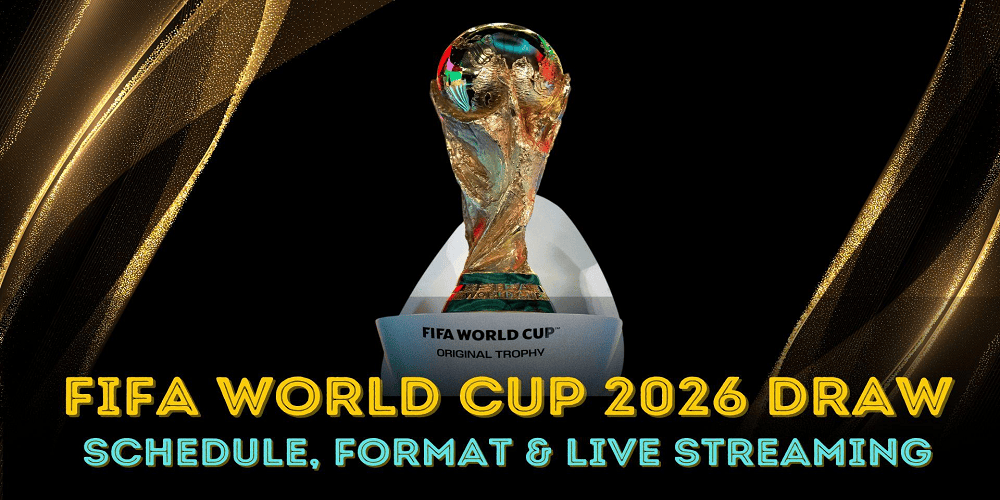
The world cup draw 2026 is one of the most anticipated events in global football. As the 2026 FIFA World Cup approaches, excitement continues to rise among fans, analysts, and national teams. The tournament will be hosted by the United States, Canada, and Mexico, making it the first World Cup in history to be jointly hosted by three countries. The world cup draw 2026 will determine how the expanded 48-team tournament will be arranged and which nations will face each other in the group stage. This draw is not just a ceremonial moment for football lovers; it plays a crucial role in shaping the future path of every team competing in the World Cup.
In this detailed gluster, we will explore every aspect of the world cup draw 2026, including the format, seeding rules, qualifying teams, possible group scenarios, hosting advantages, and expert expectations. Whether you are a casual football follower or a serious analyst, this article will give you a complete understanding of how the world cup draw 2026 shapes the entire tournament.
Understanding the 48-Team Format for World Cup 2026
The 2026 World Cup introduces a major structural change. For the first time in history, the number of teams has increased from 32 to 48 national teams. This expansion has also changed the group stage format, knockout structure, and seeding rules that influence the world cup draw 2026.
Instead of eight groups of four, the new system will have twelve groups of four teams each. The top two teams from every group will automatically advance to the Round of 32. Additionally, the eight best third-placed teams will also qualify, making the knockout stage larger than ever before.
This expanded format means the world cup draw 2026 carries greater importance. Each group’s strength will directly influence tournament momentum, tiredness, progression difficulty, and the path toward the final. In short, seeding and grouping play a bigger role than in any past World Cup.
How the Seeding Works in the World Cup Draw 2026
Seeding determines which teams enter which pots before the world cup draw 2026 takes place. Teams are placed in four pots based on their FIFA ranking. Pot 1 includes the highest-ranked nations along with the three host countries. This ensures that each host will be placed in different groups and automatically avoids playing against another host in the group stage.
The world cup draw 2026 will follow these seeding principles:
- Pot 1: Hosts and top-ranked teams
- Pot 2: Next highest-ranked teams
- Pot 3: Mid-level ranked teams
- Pot 4: Lowest-ranked but qualified teams
This system is designed to distribute strong and weak teams fairly across all groups. However, football history shows that groups of death are still possible. In fact, with more teams competing, the possibility of shocking group results increases.
Regional Slot Allocation and Impact on the Draw
The expansion to 48 teams also increased qualifying spots. This had a direct influence on the world cup draw 2026 because more nations from Africa, Asia, and North America will participate. Europe remains the strongest continent in terms of representation, but teams from Africa and CONMEBOL have gained more weight in the seeding process.
Continental allocations for World Cup 2026 are:
- UEFA (Europe): 16 spots
- CAF (Africa): 9 spots
- AFC (Asia): 8 spots
- CONMEBOL (South America): 6 spots
- ONCACAF (North America): 6 spots (including 3 hosts)
- OC (Oceania): 1 guaranteed spot
- Intercontinental Playoffs: 2 teams
These numbers guarantee that the world cup draw 2026 will be more diverse than any previous edition. It also increases the chance for new nations to appear on the global stage.
Expected Big Names in the World Cup Draw 2026
While qualification is still ongoing, most football followers expect many top-tier nations to feature in the world cup draw 2026. Traditional football giants such as Brazil, France, Germany, Argentina, Spain, England, and Portugal are expected to secure strong seedings. Their FIFA rankings will keep them in Pot 1 or Pot 2, ensuring favorable early matchups.
Meanwhile, rising teams such as Morocco, Croatia, Japan, and the United States are expected to bring additional excitement. These teams have shown tremendous performance in recent international tournaments and will be among the most-watched sides at the world cup draw 2026.
Additionally, football-loving countries like Nigeria, Mexico, South Korea, and Australia will also bring strong squads. Their placement in pots will determine how balanced each group becomes.
Challenges and Opportunities Created by the Draw
The world cup draw 2026 will create opportunities for underdogs and challenges for established teams. A favorable draw might give a team an easier route to the knockout stage, while a tough group can eliminate even top-performing nations early.
For example:
- A group with one European giant and two mid-ranked teams is considered balanced.
- A group containing two giants such as Brazil and France becomes a group of death.
- A group where all teams are close in ranking creates unpredictable results.
The knockout rounds are also affected by the world cup draw 2026. Since third-placed teams can advance, a team that finishes third in a relatively tough group might still make a deep run, similar to past performances by strong underdog nations.
Role of Host Nations in the World Cup Draw 2026
The hosts, the USA, Mexico, and Canada, will each be placed in different groups as top seeds. Hosting advantages include:
- Playing on home soil
- Huge crowd support
- No long-distance travel
- Familiar climate and conditions
This gives hosts a strong chance to advance from the group stage. The world cup draw 2026 will place each host in a different pot 1 position, ensuring geographically efficient scheduling.
The United States is expected to utilize large stadiums and modern facilities. Mexico brings a rich football culture and iconic venues. Canada adds a fresh dimension as a developing football nation with a growing fan base.
Each host team’s group will be analyzed heavily once the world cup draw 2026 is complete.
Fan Reactions and Global Excitement
Football fans worldwide eagerly wait for the world cup draw 2026 because it marks the official countdown to the biggest sporting event in history. Fans create predictions, mock draws, analysis videos, and debates across social media well before the draw. Once the actual draw happens, attention shifts to match predictions, rivalries, and possible upsets.
Countries with football superstars like Lionel Messi, Kylian Mbappe, Cristiano Ronaldo, and rising talents often generate the greatest buzz. Whether these players participate in the 2026 tournament or not, the world cup draw 2026 will still be a globally celebrated moment.
Broadcasting and Digital Coverage
The world cup draw 2026 will be broadcast live worldwide. Millions of viewers will tune in to see how the groups are formed. Online sports platforms, including digital apps and social media channels, will also stream the event. Highlights, expert opinions, and group reactions will spread instantly.
This makes the world cup draw 2026 one of the most influential broadcasts in modern sports. Once groups are announced, ticket sales, travel plans, marketing campaigns, sponsor advertisements, and team preparations will accelerate dramatically.
Predictions for Possible Groups of Death
Every World Cup sees difficult groups that challenge even the best teams. The world cup draw 2026 may create groups of death such as:
- A group including two European giants and one strong South American team
- A group where strong African and Asian teams face powerful seeded teams
- A group featuring high-ranked nations that usually reach quarterfinals or semifinals
Fans always watch carefully to see which teams get unlucky or lucky in the world cup draw 2026.
Importance of the Draw for Coaches and Players
Coaches study the world cup draw 2026 to finalize tactics, training, and travel plans. The opponents in the group stage determine:
- Defensive or attacking strategies
- Player rotation
- Squad selection
- Pre-tournament friendlies
- Trvel distances
- Rest days
The physical and mental preparation of a team is shaped by the draw. A favorable draw reduces pressure, while a difficult group forces teams to raise their game early.
Players also study opponents to understand key matchups. For some players, the world cup draw 2026 will determine whether they face familiar rivals or new challenges.
Economic Impact of the 2026 World Cup
Hosting a World Cup always boosts the regional economy. With three countries hosting, the 2026 tournament will generate record-breaking revenue. The world cup draw 2026 will influence:
- Match ticket demand
- International tourist movement
- Hotel bookings
- Local businesses
- Stadium attendance
- Regional marketing
Cities that host teams with large fan followings will benefit the most.
FAQs About the World Cup Draw 2026
1. What is the world cup draw 2026?
The world cup draw 2026 is the official event where FIFA randomly assigns the 48 qualified teams into twelve groups of four teams each for the 2026 World Cup.
2. When will the world cup draw 2026 take place?
The exact date will be announced by FIFA, usually after all qualifying matches are completed.
3. How many teams will participate in the 2026 World Cup?
A total of 48 national teams will participate, making it the largest World Cup ever held.
4. How are teams seeded for the world cup draw 2026?
Teams are divided into four pots based on FIFA rankings. Hosts automatically enter Pot 1.
5. Which countries are hosting the 2026 World Cup?
The USA, Canada, and Mexico are jointly hosting the event.
6. What is the format of the 2026 World Cup?
There will be twelve groups of four teams each. The top two from each group plus eight best third-placed teams will advance to the Round of 32.
7. Can third-placed teams qualify for the knockouts?
Yes, the eight best third-placed teams will also advance due to the expanded 48-team format.
8. Will there be a group of death in the world cup draw 2026?
It is highly possible. With many strong teams across all pots, tough groups can occur.
9. Why is the world cup draw important?
It determines each team’s path, difficulty level, strategy planning, and overall tournament performance.
10. How do fans watch the world cup draw 2026?
It will be broadcast live on global sports channels and streamed online.
Leave A Comment
0 Comment