
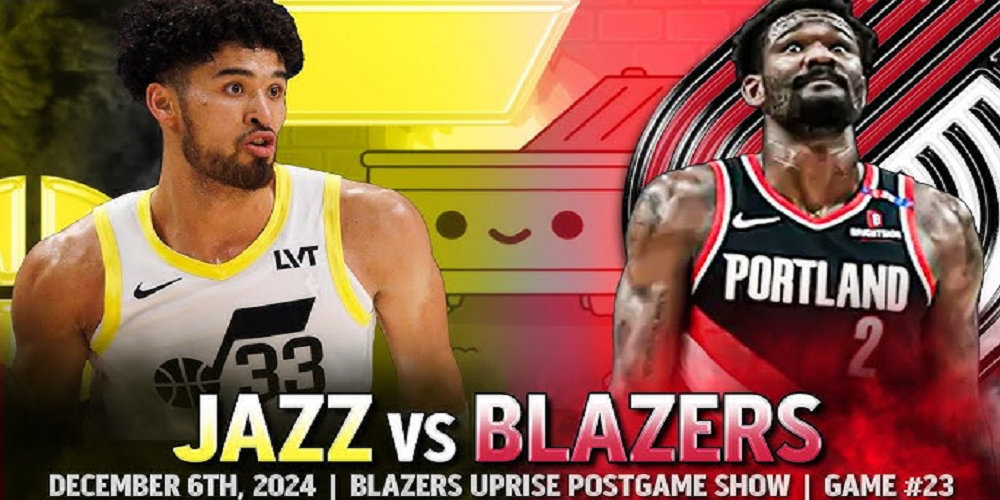
The matchup between the Portland Trail Blazers and the Utah Jazz has long been one of the most intriguing fixtures in the NBA’s Western Conference. Both teams have rich histories, passionate fan bases, and a legacy of producing some of the most exciting basketball moments in the league. Whether it’s about playoff positioning, rebuilding rosters, or showcasing emerging stars, the Trail Blazers vs Jazz games always carry significance.
In this 2000-word gluster, we’ll dive into the history, current rosters, game strategies, statistics, and the evolving rivalry between these two iconic franchises. We’ll also cover recent performances, standout players, and the future outlook for both teams before concluding with some frequently asked questions.
1. The Historical Background
The Portland Trail Blazers were founded in 1970 and quickly became a beloved team in the Pacific Northwest. Known for their passionate fan support and intense home-court advantage at the Moda Center (formerly the Rose Garden), the Blazers made their mark by winning the 1977 NBA Championship.
The Utah Jazz, established in 1974 (originally in New Orleans before relocating to Salt Lake City in 1979), developed their identity through grit, discipline, and a strong emphasis on team play. Under the legendary duo John Stockton and Karl Malone, the Jazz became perennial playoff contenders in the 1990s, even making two consecutive trips to the NBA Finals in 1997 and 1998.
When the Blazers and Jazz meet, it’s more than just a regular game—it’s a clash of two storied franchises that share similar basketball philosophies: teamwork, resilience, and a deep connection with their communities.
2. The Rivalry Through the Years
While not considered a classic rivalry like Lakers–Celtics or Bulls–Pistons, the Trail Blazers vs Jazz rivalry has grown naturally due to geography, divisional matchups, and competitive parity. Both teams have shared the Northwest Division, facing each other four times per season (barring schedule changes), which has intensified their competition.
In the late 1990s and early 2000s, both teams were strong playoff contenders. Games often featured physical battles and tactical coaching duels. Players like Rasheed Wallace, Scottie Pippen, and Damon Stoudamire clashed with Utah’s Karl Malone, Jeff Hornacek, and John Stockton in memorable matchups.
In recent years, the rivalry has been renewed through new stars such as Damian Lillard for Portland and Donovan Mitchell (formerly of the Jazz). Their scoring duels and clutch performances reignited the excitement for fans of both teams.
3. Recent Matchups and Game Trends
In the last few seasons, the Jazz have often held the upper hand in head-to-head matchups due to their consistency and strong defensive schemes. Utah’s system under Quin Snyder was built around ball movement, spacing, and defensive discipline led by Rudy Gobert, who won multiple Defensive Player of the Year awards.
The Trail Blazers, under the leadership of Damian Lillard, have focused on offensive firepower. Lillard’s deep shooting range and clutch heroics have produced several iconic moments against the Jazz.
Typical games between these teams showcase contrasting styles:
- Utah Jazz emphasize ball sharing, three-point shooting, and rim protection.
- Portland Trail Blazers rely on high pick-and-rolls, isolation plays, and perimeter scoring.
This contrast often leads to tightly contested games where momentum swings can happen instantly.
4. Key Players: Then and Now
Portland Trail Blazers
- Damian Lillard (2012–2023): Known for his leadership and clutch performances, Lillard carried Portland through numerous playoff runs. His rivalry with Donovan Mitchell was particularly entertaining.
- Jerami Grant: A versatile forward capable of defending multiple positions while providing scoring support.
- Anfernee Simons: One of the most improved young guards, stepping up as a consistent scorer.
- Scoot Henderson: The future of the franchise, expected to bring athleticism and playmaking as Portland rebuilds.
Utah Jazz
- Lauri Markkanen: Since joining the Jazz, Markkanen has developed into an All-Star forward with elite shooting ability.
- Jordan Clarkson: A dynamic scorer and Sixth Man of the Year winner known for his offensive spark.
- Walker Kessler: A rising star in the frontcourt, following the defensive tradition of Gobert with elite shot-blocking ability.
- Collin Sexton: Provides energy, scoring, and speed at the guard position.
The player matchups, especially between guards and wings, often determine the game’s outcome. When Portland’s backcourt finds rhythm, they can dominate offensively. Conversely, when Utah’s defense locks in, they can stifle even elite scorers.
5. Tactical Breakdown
Utah Jazz Strategy
The Jazz have long been known for their structured play. Their offensive system revolves around spacing and pick-and-roll actions designed to create open shots for shooters. Defensively, they emphasize rim protection and disciplined rotations.
Under coaches like Quin Snyder and now Will Hardy, Utah focuses on:
- Ball Movement: Sharing the ball to find high-quality shots.
- Transition Defense: Preventing fast breaks and forcing half-court offense.
- Switchable Defenders: Versatile players who can guard multiple positions.
Portland Trail Blazers Strategy
Portland’s style centers on freedom and creativity. When Damian Lillard led the team, the offense often flowed through him and CJ McCollum, relying on isolation plays and deep three-pointers.
In the post-Lillard era, the Blazers are transitioning toward a faster, more team-oriented system emphasizing:
- Pace and Transition Play
- Young Core Development
- Ball Pressure Defense
- Multiple Scoring Options
Games between these two teams are chess matches—Utah’s structured precision against Portland’s fluid creativity.
6. Home Court Advantage
The Moda Center in Portland and the Delta Center (formerly Vivint Arena) in Salt Lake City are two of the loudest arenas in the NBA. Both fan bases are known for their loyalty and passion.
Utah’s altitude gives the Jazz a natural home-court advantage, often affecting visiting teams’ stamina. Portland’s crowd energy, on the other hand, fuels the team’s momentum—especially when games get tight in the fourth quarter.
Statistically, both teams have strong home records, and the winner of their series often performs better in home games.
7. Notable Games and Moments
- Damian Lillard’s 51-point Game (2020): Lillard exploded against Utah, showcasing his ability to dominate from deep and attack relentlessly.
- Jazz Comeback Victory (2021): Utah erased a double-digit deficit, highlighting their resilience and shooting depth.
- Play-In and Playoff Clashes: While they haven’t met frequently in the postseason, every regular-season battle carries playoff intensity.
These memorable moments contribute to the growing lore of the Trail Blazers vs Jazz rivalry.
8. Team Rebuilds and Future Outlook
Portland Trail Blazers
After trading Damian Lillard to the Milwaukee Bucks, the Blazers entered a rebuilding phase focused on developing young talent. Players like Scoot Henderson, Shaedon Sharpe, and Anfernee Simons form the core of their future. The organization’s goal is to build around youth, athleticism, and defense while maintaining offensive versatility.
Utah Jazz
The Jazz also began a new chapter after trading Donovan Mitchell and Rudy Gobert in 2022. However, they quickly retooled with promising players and multiple draft assets. Under Will Hardy, the Jazz are building an identity centered on player development and system basketball.
Both franchises are on similar timelines, which makes their matchups even more intriguing. Each game is a glimpse into how these young squads evolve.
9. Statistical Comparisons
Historically, the Jazz have had a slight edge in head-to-head matchups, particularly during their consistent playoff years. However, the Trail Blazers’ explosive backcourt play often turns the tide in individual games.
Key statistical differences often include:
- Three-point efficiency: Jazz typically lead due to their spacing-heavy offense.
- Rebounding: Utah’s big men dominate the boards.
- Turnovers: Portland tends to play faster, leading to more turnovers but also more scoring chances.
Such contrasts make every game tactically diverse and unpredictable.
10. Coaching Influence
Coaching philosophies play a major role in this rivalry.
- Will Hardy (Utah Jazz): Emphasizes discipline, structure, and team-first mentality. His approach draws from the Gregg Popovich coaching tree, focusing on development and adaptability.
- Chauncey Billups (Portland Trail Blazers): A former NBA Finals MVP, Billups brings a player’s perspective to coaching. His strategy combines toughness with creativity, empowering young players to take initiative.
Both coaches represent a new generation of leadership in the NBA—focused on culture building and adaptability over star dependency.
11. Fan Culture and Community Impact
Both franchises are deeply tied to their local communities.
- Portland Trail Blazers fans have created one of the most loyal followings in sports, with decades-long season ticket holders and a history of selling out home games.
- Utah Jazz fans are equally passionate, often creating one of the most intimidating atmospheres for visiting teams.
Beyond basketball, both organizations engage heavily in community programs—ranging from youth development to social causes—which strengthens their regional importance.
12. Media Coverage and Popularity
Games between the Trail Blazers and Jazz often attract regional broadcast attention and national coverage when playoff implications are involved. Networks highlight matchups between rising stars and tactical contrasts.
Social media buzz surrounding these games focuses on individual performances, highlight plays, and fan reactions—especially when Lillard or Markkanen goes off for big scoring nights.
With both teams rebuilding, media narratives now emphasize growth, future potential, and young star development.
13. Predictions for Future Seasons
Looking ahead, both teams have promising futures.
- The Trail Blazers are expected to become a dynamic, athletic team centered on Scoot Henderson’s leadership.
- The Jazz, with Lauri Markkanen and Walker Kessler, could develop into a playoff contender once their young roster matures.
Their future battles will likely define new Western Conference storylines—one built on youth, potential, and competitive balance.
The Trail Blazers vs Jazz rivalry fits into the larger narrative of the NBA’s Western Conference transformation. With powerhouse teams like Denver, Golden State, and Phoenix dominating recent years, both Portland and Utah aim to reclaim relevance through smart drafting, strong culture, and player development.
Their head-to-head games often act as benchmarks for measuring progress and team chemistry.
15. Conclusion
The Trail Blazers vs Jazz matchup represents everything fans love about NBA basketball: contrasting styles, passionate fan bases, and rising stars. From historic battles in the 1990s to modern showdowns between young talents, these games deliver intensity and unpredictability.
As both teams evolve, their rivalry promises to stay relevant—offering thrilling moments, developing storylines, and a glimpse into the future of Western Conference basketball.
FAQs
Q1. Who currently leads the head-to-head record between the Trail Blazers and Jazz?
Historically, the Utah Jazz have a slight edge in overall wins against the Portland Trail Blazers, thanks to their consistent success during the Stockton-Malone and Gobert-Mitchell eras.
Q2. Which players are key to watch in upcoming Trail Blazers vs Jazz games?
For Portland, Scoot Henderson, Anfernee Simons, and Shaedon Sharpe are the main attractions. For Utah, Lauri Markkanen, Jordan Clarkson, and Walker Kessler are key contributors.
Q3. When did the Trail Blazers and Jazz first play each other?
Their first matchup occurred in the mid-1970s after both teams joined the NBA. The rivalry has grown steadily since then, especially after they became division rivals.
Q4. Have the Trail Blazers and Jazz ever met in the NBA Playoffs?
Yes, though not frequently. Their postseason meetings have been competitive, with both teams having claimed victories in different eras.
Q5. What makes the Trail Blazers vs Jazz rivalry unique?
Unlike some historic rivalries built on animosity, this one thrives on mutual respect and regional proximity. It’s a battle between two hardworking, small-market franchises with loyal fans and a shared commitment to team-first basketball.
Leave A Comment
0 Comment