
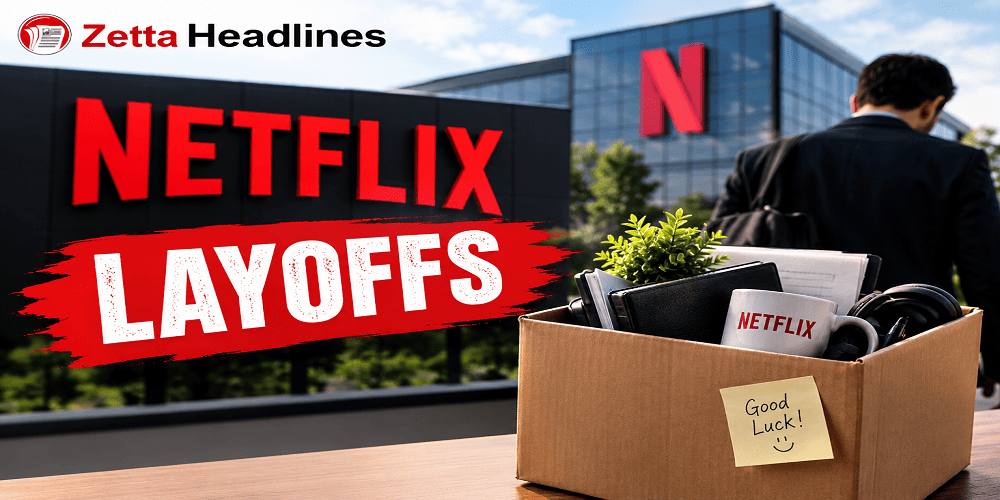
Netflix layoffs have become a major business news story in October 2026, as the streaming giant announces a significant reduction in its global workforce. The company plans to eliminate approximately 1,000 jobs, representing around 6% of its employees, in its largest round of layoffs since 2022. The decision comes at a time when Netflix continues to generate substantial revenue but faces increasing competition, changing viewing habits, and pressure to maintain its growth.
According to reports published on October 14, 2026, Netflix co-CEOs Ted Sarandos and Greg Peters informed employees about the organizational changes in an internal memo. The cuts are expected to affect several departments, particularly product development, technology, legal services, and human resources. Company leadership says Netflix will continue investing in areas that can improve its service and support future growth.
The announcement has raised questions about the company's business strategy, the future of streaming industry jobs, and whether additional restructuring could follow. It also highlights an important reality in the technology and entertainment industries: even successful companies may change their workforce when business priorities evolve.
This article explains the latest Netflix layoffs news, the main reasons behind the decision, the departments affected, the company's financial position, and what the changes could mean for employees and the streaming industry.
What Are the Latest Netflix Layoffs News?
The latest Netflix layoffs announcement involves approximately 1,000 employees worldwide, or roughly 6% of the company's workforce. The decision was communicated internally on Wednesday, October 14, 2026, as part of broader organizational changes.
Netflix had approximately 16,000 full-time employees at the end of 2025, according to company filings. The latest job cuts represent a substantial reduction for a business that has spent years expanding its streaming platform, technology infrastructure, advertising capabilities, and entertainment offerings.
The announcement is particularly notable because Netflix is not reporting a collapse in its overall business. Instead, management says the company remains financially strong and is on track to meet its full-year forecast. The layoffs appear to reflect a decision to reorganize resources and focus on areas considered important for future growth.
According to reporting by Reuters and The Associated Press, the majority of the reductions are expected in product, technology, legal, and human resources teams.
Netflix has said it will prioritize supporting departing employees during the transition. The precise process may vary by country, meaning that individual arrangements and employment procedures will depend on local requirements.
For employees, investors, and industry observers, the announcement demonstrates how corporate restructuring can occur even when a company continues to report significant revenue and profits.
Why Is Netflix Laying Off Employees?
Several factors help explain the latest Netflix layoffs. These include competition for viewers, concerns about audience engagement, changing revenue opportunities, and the company's need to prioritize spending.
1. Increasing Competition in the Streaming Industry
The streaming market has become increasingly competitive. Netflix competes with Amazon Prime Video, Disney+, HBO Max, Paramount+, YouTube, and other platforms for viewers' attention and entertainment spending.
Consumers now have many choices, including subscription services, free video platforms, social media, and traditional television. As a result, streaming companies must work harder to attract new customers and encourage existing subscribers to remain active.
Netflix continues to be one of the world's leading streaming platforms, but its competitors are investing in original programming, live sports, films, television series, and advertising-supported services.
This environment puts pressure on companies to use their budgets efficiently. When leadership believes certain teams or activities need to be reorganized, workforce reductions can become part of a broader cost and resource strategy.
2. Slower Audience Engagement Growth
Another important factor behind the Netflix layoffs discussion is audience engagement. Streaming companies do not only want people to subscribe; they also want subscribers to spend time watching their content.
Platforms such as YouTube and TikTok compete for the same limited resource: people's attention. Their large libraries of user-generated videos and short-form content provide alternatives to professionally produced television shows and films.
Netflix must therefore continue offering content that encourages people to open the app, discover something interesting, and return regularly.
Investors are watching engagement trends because viewing activity can influence subscription retention, advertising opportunities, and the long-term value of content investments.
When audience growth becomes more difficult, management may reassess which projects, departments, and investments offer the greatest potential returns.
3. Pressure to Maintain Financial Performance
Netflix remains a profitable company, but investors generally expect large entertainment businesses to demonstrate sustainable growth.
The Associated Press reported that Netflix generated approximately $12.56 billion in revenue and $3.4 billion in profit during the second quarter of 2026. However, the company's third-quarter revenue forecast fell below Wall Street expectations.
These figures illustrate the difference between financial strength and growth expectations. A company can earn billions of dollars while still facing pressure to improve its performance relative to forecasts and investor expectations.
Workforce restructuring may help Netflix redirect resources toward business priorities. However, layoffs alone do not guarantee stronger results. The longer-term impact will depend on whether the company can improve efficiency without weakening its products, technology, or creative operations.
4. Changing Business Priorities
Netflix is no longer focused exclusively on expanding its traditional subscription business. It has also been investing in advertising, live programming, gaming, and other ways to strengthen its entertainment platform.
These initiatives require different skills, technology, partnerships, and operating structures. As priorities change, a company may decide that some roles are less essential while other capabilities deserve greater investment.
The latest Netflix layoffs announcement fits into this broader picture of organizational adjustment. Management has emphasized that the company intends to continue investing in high-impact areas.
The important question is whether these changes will make Netflix more effective at serving subscribers and developing new revenue opportunities.
5. A More Competitive Media Landscape
The wider entertainment industry is also changing through mergers, acquisitions, and the consolidation of streaming services.
Large media companies are seeking ways to combine content libraries, attract larger audiences, and compete more effectively with digital platforms. These changes create new challenges for established streaming businesses.
Netflix previously pursued Warner Bros. Discovery's studio and streaming assets but withdrew from the deal in February 2026. The subsequent consolidation of major entertainment assets has added another dimension to competition across the industry.
Netflix must continue strengthening its own content, technology, and customer experience while responding to changes in the broader media market.
Which Departments Will Be Affected by Netflix Layoffs?
The October 2026 announcement identifies four main areas expected to experience the greatest impact. The exact number of positions being eliminated in each department has not been publicly detailed in the reporting cited here.
Product Development
Product teams help determine how users interact with Netflix, including how they browse titles, receive recommendations, and navigate the streaming platform.
Changes to these teams may reflect a reassessment of priorities, responsibilities, and product development processes. However, the company has not announced that any particular product feature will be discontinued because of the layoffs.
Technology
Netflix relies on technology to deliver video content, personalize recommendations, manage streaming quality, and support millions of users across different devices.
Technology employees work on infrastructure, software, data systems, security, and platform reliability. Reducing positions in this area may raise questions about how Netflix plans to balance operational efficiency with continued technical development.
The company has indicated that it intends to keep investing in important areas. Therefore, the layoffs should not automatically be interpreted as a decision to stop developing its technology platform.
Legal Services
Legal teams support licensing agreements, intellectual property rights, employment matters, regulatory compliance, and international business operations.
Netflix operates across numerous markets and works with studios, producers, actors, advertisers, and distribution partners. These activities create complex legal requirements.
Although legal teams are among the departments expected to be affected, the company has not publicly specified which legal functions will experience the largest reductions.
Human Resources
Human resources teams manage recruitment, employee relations, workplace policies, benefits, and organizational development.
A major workforce reduction can itself require considerable HR support. The decision to reduce positions in this department may indicate a change in the company's staffing structure or internal processes, but the exact reasoning has not been disclosed.
Employees should avoid assuming that every office or country will experience identical changes. Workforce decisions and employment procedures can differ across locations.
How Do Netflix Layoffs Compare With the 2022 Job Cuts?
The latest Netflix layoffs are particularly significant because the company's previous major round of cuts occurred in 2022.
In 2022, Netflix experienced a rare subscriber decline after years of growth. The company eliminated approximately 450 jobs across two rounds as it responded to changing business conditions.
The 2026 announcement involves approximately 1,000 positions, making it the largest single round of cuts since that period, according to Reuters and other news organizations.
The circumstances are not identical. In 2022, subscriber losses were a major concern. In 2026, Netflix is still generating substantial revenue and profit, but the company faces questions about audience engagement, future growth, and competition.
This comparison shows that layoffs can happen for different reasons. Sometimes a company is responding to declining business performance; in other cases, it is reorganizing to prepare for a more competitive environment.
For employees, both situations create uncertainty. For investors, the key issue is whether restructuring leads to better long-term performance.
Is Netflix in Financial Trouble?
The latest Netflix layoffs have raised concerns about the company's financial condition. However, job cuts alone do not prove that a business is facing financial distress.
Netflix reported strong second-quarter financial results in 2026, with approximately $12.56 billion in revenue and $3.4 billion in profit. Those results suggest that the company remains a major and profitable participant in the entertainment industry.
At the same time, financial markets often evaluate companies based on expected future growth rather than current profits alone.
If revenue increases more slowly than analysts anticipate, investors may become concerned even when a company continues earning billions of dollars. This can encourage management to review spending, improve productivity, and adjust its organizational structure.
Netflix is also investing in advertising, live events, gaming, and content production. These opportunities could support future growth, but their long-term contribution depends on execution, consumer demand, and the ability to generate sustainable returns.
The most reasonable conclusion is that the latest job cuts reflect business and organizational pressures, not conclusive evidence that Netflix is close to bankruptcy.
What Do Netflix Layoffs Mean for Employees?
For employees affected by the announcement, the immediate concerns are likely to include income, benefits, job searches, and future career opportunities.
Netflix leadership has said that supporting departing workers is a priority. However, individual severance arrangements, notice periods, and other benefits may vary according to employment agreements and local laws.
Employees who receive an official notification should carefully review their documents before signing any agreements. They may also wish to confirm the treatment of unused leave, health benefits where applicable, equity awards, and any applicable severance payments.
Career Opportunities After a Layoff
Employees with experience in software engineering, product management, data analysis, legal services, human resources, and entertainment operations may be able to transfer their skills to other industries.
Technology companies, media businesses, advertising agencies, gaming companies, and digital platforms often require similar capabilities.
Workers can strengthen their job searches by updating their résumés, documenting measurable achievements, reconnecting with professional contacts, and exploring relevant openings.
A layoff should not automatically be treated as a reflection of an individual's performance. Organizational restructuring can eliminate positions even when employees have valuable experience and strong professional records.
It is also important to distinguish confirmed information from speculation. Employees should rely on official communications and applicable employment documentation rather than unverified social media posts.
Could Netflix Layoffs Affect the Future of Streaming?
The latest Netflix layoffs could have implications beyond the company itself. They highlight several changes affecting the streaming industry.
First, streaming platforms are under increasing pressure to demonstrate that their investments generate sustainable business results. Producing popular shows and acquiring valuable content remain important, but companies must also manage distribution, technology, marketing, and operating costs.
Second, competition is expanding beyond traditional subscription services. Free video platforms and social media compete for users' time, while advertising-supported streaming models create additional opportunities to reach audiences.
Third, entertainment businesses are increasingly combining technology and media strategies. Recommendation systems, audience analytics, advertising technology, and personalized experiences can influence how viewers discover content.
Finally, restructuring may become a recurring feature of the industry as companies adjust to changes in consumer demand and business models.
However, it would be premature to conclude that every streaming company will make similar cuts. Different businesses have different financial positions, staffing requirements, and strategic priorities.
For Netflix, the long-term challenge is to maintain its reputation for entertainment while operating efficiently and finding new ways to grow.
What Happens Next for Netflix?
Several developments will help observers understand the consequences of the latest Netflix layoffs.
Upcoming Financial Results
Netflix is scheduled to report its third-quarter 2026 earnings on October 20, according to industry reporting. Those results should provide additional information about revenue, profitability, and management's outlook.
Investors will likely pay attention to whether the company can meet its financial guidance and explain its priorities for the coming quarters.
Investment in New Revenue Sources
Netflix's advertising business, live programming, and gaming initiatives will remain important areas to watch. Their success could help the company diversify beyond traditional subscriptions.
The question is not simply whether Netflix introduces new services, but whether those services attract customers and generate meaningful financial returns.
Employee and Organizational Changes
The effects of the restructuring may become clearer as the company communicates with affected workers and adjusts responsibilities across departments.
There is currently insufficient confirmed information to predict another major round of layoffs or determine precisely how the cuts will affect every team.
Competition for Viewer Attention
Netflix will continue competing with streaming rivals and free online video platforms. Its ability to produce appealing content, improve the viewing experience, and retain subscribers will remain central to its future performance.
The outcome will depend on several factors rather than workforce reductions alone.
Conclusion
The latest Netflix layoffs announcement marks a major workforce restructuring for the streaming company in October 2026. Approximately 1,000 employees, or around 6% of its workforce, are expected to be affected, with product, technology, legal, and human resources teams facing the greatest impact.
The decision comes despite strong recent revenue and profits, highlighting the pressure on Netflix to maintain growth, respond to competition, and allocate resources carefully.
The company continues to invest in its streaming service while exploring advertising, live programming, gaming, and other opportunities. Whether the restructuring improves efficiency without affecting service quality remains to be seen.
For employees, the announcement creates uncertainty but may also encourage new career opportunities across technology and entertainment. For investors, the coming financial results and the company's ability to sustain audience engagement will be important indicators of future performance.
Ultimately, the significance of Netflix layoffs will depend on what happens next. The central question is whether the company can turn organizational changes into stronger long-term growth while continuing to deliver the entertainment its subscribers expect.
Frequently Asked Questions (FAQs)
1. Why is Netflix laying off employees in 2026?
Netflix is reducing its workforce as part of broader organizational changes. The company faces increasing competition for viewers, concerns about audience engagement, and pressure to prioritize resources for future growth. Management says the business remains strong and that investment will continue in high-impact areas.
2. How many employees are affected by Netflix layoffs?
Netflix announced plans to cut approximately 1,000 jobs, representing around 6% of its global workforce. The largest effects are expected in product, technology, legal, and human resources departments.
3. Are the Netflix layoffs happening because the company is losing money?
The available reporting does not indicate that Netflix is losing money. The company reported approximately $12.56 billion in second-quarter 2026 revenue and $3.4 billion in profit. The restructuring comes amid concerns about growth expectations, competition, and resource allocation.
4. When were the latest Netflix layoffs announced?
The latest major announcement was reported on October 14, 2026. Netflix's co-CEOs, Ted Sarandos and Greg Peters, communicated the organizational changes to employees in an internal memo.
5. Will Netflix announce more layoffs in the future?
There is no confirmed information establishing that another major round of layoffs will take place. Future staffing decisions will depend on Netflix's business priorities, financial performance, and organizational needs. Employees and investors should follow official company announcements for verified updates.
Leave A Comment
0 Comment