
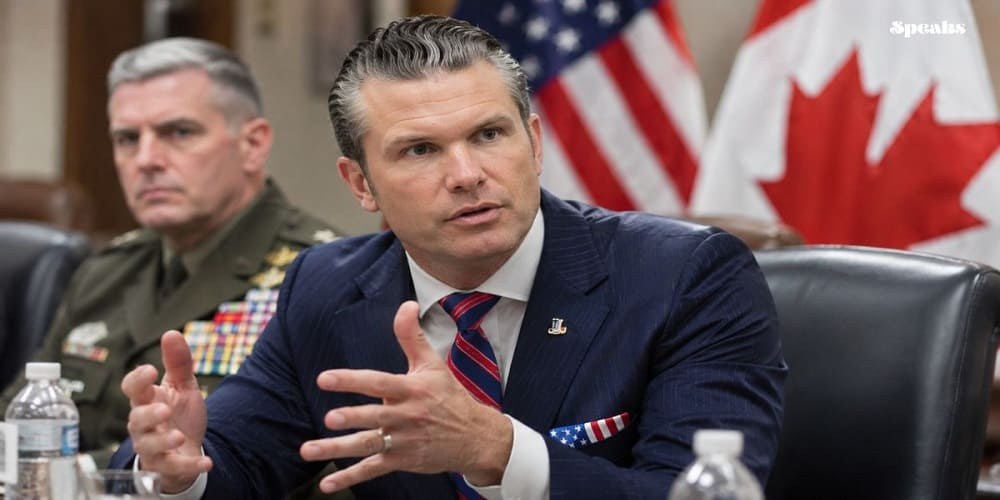
The Canada US defense memo response has become an important topic in international politics and North American security. Relations between Canada and the United States have faced increasing pressure over defence spending, military cooperation, trade disagreements, and questions about Canada's role in protecting the continent. A recent Pentagon memo issued under US Defense Secretary Pete Hegseth has added another layer of tension between the two neighbouring countries.
The memo reportedly introduces restrictions on certain military interactions between American and Canadian officials. Although it does not appear to change major military operations, intelligence sharing, or formal cooperation through NATO and NORAD, it has raised questions about the future of the long-standing defence partnership.
Canada's response has been firm. Canadian Defence Minister David McGuinty has emphasized that Canada is a sovereign country and does not report to Washington. He has also maintained that cooperation between the two countries continues as usual.
The situation has attracted attention from political leaders, defence experts, military officials, and international observers. Understanding the background of the memo, Canada's response, and its possible consequences is important for understanding the future of North American security.
In this article, we explore the Canada US defense memo response, the reasons behind the Pentagon's concerns, Canada's defence strategy, and what this disagreement could mean for the relationship between the two countries.
What Is the Canada US Defense Memo?
The Canada US defense memo refers to classified guidance reportedly issued by US Defense Secretary Pete Hegseth concerning military engagement between the United States and Canada.
According to reporting published by The Washington Post on November 20, 2026, the Pentagon introduced new restrictions intended to make military engagements with Canada more closely aligned with American defence objectives.
The classified document reportedly discourages certain informal interactions between American and Canadian military personnel. These activities may include attending conferences, participating in think-tank events, and taking part in academic or social gatherings without appropriate authorization.
The exact contents of the memo have not been made public. The Washington Post also reported that it had not independently reviewed the classified document.
However, American officials have indicated that the guidance does not eliminate important military cooperation between the two countries.
The Pentagon has clarified that defence intelligence sharing, NORAD operations, and cooperation through NATO will continue.
This distinction is important because Canada and the United States have worked together for decades to protect their shared borders, monitor potential security threats, and maintain stability across North America.
The memo therefore appears to focus more on controlling certain military engagements than ending the broader defence partnership.
The Washington Post+2
Canada's Response to the US Defense Memo
Canada's response has focused on national sovereignty, continued military cooperation, and the country's right to make independent defence decisions.
Canadian Defence Minister David McGuinty addressed the issue while attending the Halifax International Security Forum in November 2026.
McGuinty said he had not received or reviewed the classified memo and was not aware of its detailed contents. However, he reassured Canadians that cooperation between the two countries remained active.
He also emphasized that Canada is an independent and sovereign nation.
His response became particularly significant when he rejected the suggestion that Canada should answer to American political or military expectations.
Canada's position is that cooperation with the United States is valuable, but it does not mean Ottawa must accept every demand coming from Washington.
The Canadian government has also highlighted its recent investments in military capabilities, Arctic security, defence infrastructure, and military readiness.
This response reflects Canada's broader strategy of strengthening its defence capabilities while maintaining relationships with international partners.
Rather than treating the memo as the end of bilateral military cooperation, Canadian officials have attempted to separate the reported restrictions from the everyday work carried out by their armed forces.
The Canada US defense memo response therefore demonstrates two important priorities: protecting Canadian sovereignty and preserving practical cooperation with the United States.
The Guardian+2
Why Did the Pentagon Issue the Memo?
The disagreement did not develop overnight. Several defence and political issues have contributed to increasing tensions between Washington and Ottawa.
Understanding these factors helps explain why the Pentagon has become more critical of Canada's defence policies.
1. Concerns About Canadian Defence Spending
One of the biggest disagreements involves military spending.
For many years, the United States has encouraged NATO members to increase their defence budgets. American officials have argued that countries benefiting from collective security should contribute more to military readiness and shared defence responsibilities.
Canada reached NATO's previous target of spending 2% of its gross domestic product on defence in 2025.
However, the United States has continued to question whether Canada's spending plans are sufficient to address future security requirements.
Canada has committed to increasing defence and security-related spending further, including working toward NATO's new investment commitments.
The Pentagon has argued that announcing higher spending targets is not enough. It wants a detailed plan explaining how Canada will improve its military capabilities and contribute to continental security.
This disagreement has become a major part of the Canada US defense memo response.
2. Military Readiness and Operational Capabilities
Another concern involves Canada's military readiness.
The Pentagon has raised questions about Canada's ability to contribute effectively to air, land, and maritime defence operations.
Military readiness involves more than having a large defence budget. It also requires trained personnel, modern equipment, operational aircraft, naval vessels, surveillance systems, and reliable infrastructure.
The United States wants Canada to demonstrate how its defence investments will address these requirements.
On November 23, 2026, the Pentagon released a fact sheet criticizing Canada's defence spending and operational readiness.
The document highlighted concerns about military capabilities and Canada's progress toward its NATO commitments.
Canada, however, has pointed to its planned investments and efforts to strengthen its armed forces.
CityNews Toronto+1
3. Disagreements Over Fighter Jet Purchases
The purchase of fighter aircraft has also contributed to tensions.
Canada has been reviewing its planned acquisition of 88 American-made F-35 fighter jets.
The F-35 is a fifth-generation combat aircraft designed for advanced military operations, including air defence, surveillance, and coordinated missions.
However, Canada has also considered the Swedish-made Saab Gripen as an alternative.
This discussion has attracted attention because military aircraft purchases involve long-term relationships between governments, defence manufacturers, maintenance providers, and military organizations.
The Pentagon has expressed concern that changing Canada's fighter aircraft plans could create additional operational and personnel challenges.
Canada, meanwhile, wants to evaluate its options based on national requirements, affordability, industrial benefits, and long-term security interests.
The fighter jet decision is therefore more than a simple purchasing issue. It is connected to Canada's wider defence independence and its relationship with the United States.
4. Political Tensions Between Washington and Ottawa
Political disagreements have also affected the defence relationship.
US President Donald Trump has repeatedly criticized Canada's economic and defence policies. His comments about Canada potentially becoming the 51st American state have created concern among Canadian political leaders.
Canada has strongly rejected these suggestions and emphasized its independence.
Trade disagreements and tariffs have added further pressure to the relationship.
These political issues have made defence discussions more complicated because military cooperation depends not only on equipment and budgets but also on trust between governments.
The Pentagon memo has therefore emerged during a period of wider political and economic disagreements.
Does the Memo Affect NORAD and NATO Cooperation?
One of the biggest questions surrounding the Canada US defense memo response is whether the reported restrictions will affect important military operations.
So far, American officials have said that major defence cooperation arrangements will continue.
Two organizations are particularly important.
North American Aerospace Defense Command (NORAD)
North American Aerospace Defense Command (NORAD) is a joint military organization operated by Canada and the United States.
Its primary responsibility is protecting North American airspace through aerospace warning, aerospace control, and maritime warning activities.
Both countries depend on NORAD to monitor potential threats and coordinate responses.
The organization plays an important role in identifying aircraft movements, monitoring possible security risks, and supporting continental defence.
The Pentagon has indicated that the memo does not change the binational NORAD command.
This is reassuring because NORAD is one of the most important elements of the Canada-US security relationship.
North Atlantic Treaty Organization (NATO)
NATO is another important part of the relationship.
Canada and the United States are founding members of NATO, which brings together countries committed to collective defence.
Under Article 5, an armed attack against one member is treated as an attack against all members, subject to the treaty's provisions.
Both countries participate in NATO exercises, planning, intelligence coordination, and military missions.
According to the Pentagon's public clarification, cooperation through NATO will not be affected by the reported memo.
This suggests that the current disagreement is focused on certain forms of engagement rather than a complete breakdown of military cooperation.
The Washington Post+2
Canada's Defence Spending Plans and Future Investments
Canada has been working to strengthen its military capabilities and respond to growing security challenges.
The Canadian government recognizes that the international security environment is changing. Rising geopolitical tensions, Arctic security concerns, cyber threats, and military developments have increased the need for stronger defence capabilities.
Canada reached the previous NATO defence spending target of 2% of GDP in 2025, with defence spending reported at approximately $63.4 billion.
The government has also announced plans to increase defence and security investments over the coming years.
Its long-term objectives include improving military readiness, modernizing equipment, supporting domestic defence industries, and increasing its ability to protect Canadian territory.
Some major areas of investment include:
1. Arctic Security
The Arctic has become increasingly important for Canada because of its geographical position and natural resources.
Climate change is opening new shipping routes and increasing international interest in the region. Russia and other countries are also expanding their Arctic activities.
Canada wants to improve surveillance, military infrastructure, and its ability to respond to security threats in the northern region.
2. Modern Military Equipment
Canada needs modern aircraft, naval vessels, surveillance technology, and communication systems to maintain an effective military.
The government is reviewing major procurement decisions to ensure that military equipment meets its long-term requirements.
The fighter jet debate involving the F-35 and Gripen is one example of this process.
3. Domestic Defence Manufacturing
Canada is also interested in strengthening its domestic defence industry.
Producing more military equipment and technology within the country could reduce dependence on foreign suppliers.
It could also create employment opportunities, support Canadian businesses, and improve access to essential military equipment.
4. Military Personnel and Training
Modern military equipment is only useful when properly trained personnel are available to operate and maintain it.
Canada needs to address recruitment, retention, training, and personnel shortages.
Improving these areas will be essential to meeting its future defence commitments.
These investments demonstrate that Canada wants to become a stronger military partner while maintaining control over its national defence decisions.
How the United States Has Responded to Canada's Position
The United States has maintained that its objective is to strengthen North American security and ensure that Canada contributes effectively to shared defence responsibilities.
Pentagon spokesperson Sean Parnell explained that the department is prioritizing engagements that advance American defence objectives and support a stronger relationship.
The administration has also emphasized Canada's NATO obligations.
However, American officials have raised concerns about Canada's military spending, readiness, and procurement decisions.
On November 23, the Pentagon released a fact sheet publicly criticizing Canada's progress toward its defence commitments.
The document argued that Canada had not yet made sufficient decisions to address its military capability gaps.
This public criticism followed the earlier classified memo and further highlighted the disagreement between the two countries.
The United States appears to want more measurable commitments from Canada rather than general promises of increased spending.
Canada, on the other hand, wants its defence decisions to reflect its own national priorities.
The difference between these positions is central to understanding the ongoing dispute.
CityNews Toronto+1
What Does the Canada US Defense Memo Response Mean for North American Security?
The disagreement could have several consequences for the future of North American security.
Although officials have said that important military operations remain unchanged, political tension between the two countries could still affect their broader relationship.
1. More Independent Canadian Defence Policies
Canada may become more interested in developing independent defence capabilities.
This could include producing more military equipment domestically, purchasing technology from European suppliers, and strengthening relationships with other NATO members.
Reducing dependence on a single supplier could provide Canada with greater flexibility in future defence decisions.
2. Changes in Military Communication
The reported memo could reduce some informal interactions between military officials.
Conferences, academic events, professional gatherings, and other activities help military personnel exchange ideas and develop professional relationships.
If these interactions become more restricted, communication could become less flexible.
However, formal military channels and operational cooperation are expected to continue under the current public explanations.
3. Greater Attention to Arctic Defence
The Arctic will probably remain one of the most important areas of cooperation between Canada and the United States.
Both countries have an interest in protecting northern airspace, monitoring maritime activity, and responding to potential security threats.
Maintaining effective cooperation in this region will be important regardless of political disagreements.
4. Pressure on NATO Defence Commitments
The dispute may encourage Canada to provide clearer details about its future military spending.
Other NATO members are also reviewing their defence budgets and military capabilities.
Canada will need to demonstrate that its investment plans can produce practical improvements in military readiness.
5. Long-Term Effects on Diplomatic Relations
The relationship between Canada and the United States is based on decades of cooperation.
However, repeated disagreements over trade, sovereignty, military spending, and defence procurement could reduce political trust.
Both governments will need to manage these issues carefully to prevent temporary disagreements from becoming long-term strategic problems.
Will Canada and the United States Continue Working Together?
Despite the current disagreement, a complete breakdown in military cooperation appears unlikely based on the public statements available as of November 26, 2026.
The two countries share important geographical, economic, and security interests.
They also operate joint defence arrangements that would be difficult to replace.
NORAD is particularly important because protecting North American airspace requires coordination between both countries.
Similarly, NATO provides a broader framework for cooperation with other international allies.
Canadian officials have repeatedly emphasized that their country remains committed to working with the United States on defence and security.
American officials have also clarified that important operational arrangements remain unaffected by the memo.
However, the future relationship may involve more negotiations about spending, military capabilities, procurement, and the responsibilities of each country.
Canada wants to protect its sovereignty while maintaining international partnerships. The United States wants stronger contributions from its neighbour.
Finding a balance between these objectives will be essential.
What Happens Next?
The next stage of the disagreement will likely focus on defence spending, military readiness, and the practical implementation of the Pentagon's guidance.
Canada may continue presenting its investment plans and explaining how its military capabilities will improve over the coming years.
The United States may continue pressing Ottawa for clearer commitments and measurable progress.
Another important issue will be Canada's decision regarding its fighter jet procurement strategy.
The final decision could influence future military interoperability, defence manufacturing, maintenance arrangements, and the country's relationship with American defence suppliers.
Both governments will also need to maintain communication through established defence channels.
For Canadians, the main question is how to strengthen national security without becoming overly dependent on another country.
For the United States, the challenge is encouraging greater Canadian contributions without damaging a partnership that has supported North American security for generations.
The Canada US defense memo response is therefore about more than a classified military document. It reflects broader questions about national sovereignty, military responsibilities, political trust, and the changing nature of international security.
The coming months will help determine whether the disagreement remains largely symbolic or leads to more significant changes in the defence relationship.
Frequently Asked Questions (FAQs)
1. What is the Canada US defense memo response about?
The Canada US defense memo response concerns Canada's reaction to a classified Pentagon directive reportedly restricting certain informal military interactions between American and Canadian officials. Canada has defended its sovereignty while emphasizing that important defence cooperation continues.
2. Who issued the US defense memo?
The memo was reportedly issued by US Defense Secretary Pete Hegseth in November 2026. It focuses on making military engagements with Canada more closely aligned with American defence objectives.
3. Does the defense memo affect NORAD operations?
No major changes to NORAD operations have been announced. Pentagon spokesperson Sean Parnell has clarified that the guidance does not affect the binational NORAD command or formal defence intelligence cooperation.
4. Why is the United States criticizing Canada's defence spending?
The United States believes Canada needs to provide a more detailed plan for improving military readiness and meeting NATO defence commitments. American officials have raised concerns about Canada's military equipment, operational capabilities, and spending priorities.
5. Will the Canada-US military relationship end because of the memo?
There is currently no indication that the military relationship will end. Both countries continue cooperating through NORAD and NATO. However, disagreements over defence spending, fighter jet purchases, and political issues could create further challenges.
Conclusion
The Canada US defense memo response highlights growing disagreements between two countries that have shared a close military and diplomatic relationship for decades.
While the Pentagon wants Canada to demonstrate stronger defence commitments, Ottawa has emphasized its sovereignty and independent decision-making authority.
The reported memo has raised concerns about military communication, but major cooperation through NORAD, NATO, and defence intelligence arrangements remains in place according to American officials.
Moving forward, both countries will need to balance their national interests with their shared responsibility for North American security. Strong communication, transparent defence planning, and mutual respect will be important for maintaining this long-standing partnership.
Leave A Comment
0 Comment