
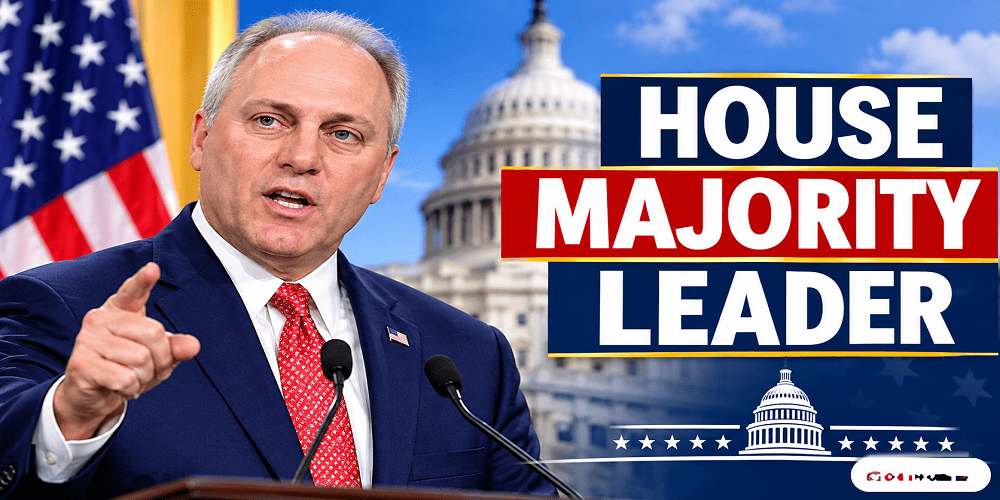
The House Majority Leader is one of the most influential political positions in the United States House of Representatives. This leadership role plays an important part in shaping the legislative agenda, managing congressional business, coordinating party members, and helping determine which bills receive attention on the House floor.
In American politics, the House of Representatives is responsible for introducing, debating, and voting on legislation that affects millions of people. With hundreds of representatives belonging to different political parties, strong leadership is necessary to organize legislative activities and maintain party unity. This is where the House Majority Leader becomes especially important.
The House Majority Leader works closely with the Speaker of the House, committee leaders, and other party members to advance the majority party's priorities. Although the Speaker holds the highest leadership position in the House, the Majority Leader has significant influence over daily legislative activities and political strategy.
Understanding the House Majority Leader's responsibilities helps explain how Congress operates, how legislation moves forward, and how political parties influence national decisions.
In this article, we will explore what the House Majority Leader is, how the position works, its major responsibilities, how someone becomes Majority Leader, and why this office matters in American government.
What Is the House Majority Leader?
The House Majority Leader is the second-highest leadership position in the majority party in the United States House of Representatives, generally following the Speaker of the House.
The majority party is the political party that controls more seats than any other party in the House. After congressional elections, representatives organize themselves into party groups and select their leadership teams.
The House Majority Leader helps coordinate the majority party's legislative priorities and works to ensure that important bills receive attention. This includes organizing discussions, communicating with representatives, and helping move legislation through the House.
The position is not specifically established by the United States Constitution. Instead, it developed through the internal organization and political practices of the House of Representatives.
The Majority Leader is usually an experienced member of Congress who has strong relationships with colleagues and understands the legislative process.
While the Speaker of the House manages the chamber and holds considerable authority, the Majority Leader focuses heavily on advancing the majority party's agenda.
History of the House Majority Leader
The position of House Majority Leader developed as political parties became more organized within Congress.
During the early years of the United States government, congressional leadership structures were less formal than they are today. Over time, political parties recognized the importance of having dedicated leaders who could coordinate legislative activities and maintain communication between representatives.
The Majority Leader position became more clearly established during the late nineteenth and early twentieth centuries.
As congressional responsibilities expanded, party leaders needed better systems for managing debates, scheduling legislation, and coordinating political priorities.
Today, the House Majority Leader is a central figure in congressional leadership. The position reflects the importance of party organization in the American legislative system.
The role has also evolved with modern politics. Television coverage, social media, national elections, and increasingly competitive party divisions have made congressional leadership more visible to the public.
How Is the House Majority Leader Selected?
The House Majority Leader is selected by members of the political party that controls the House of Representatives.
Unlike the Speaker of the House, who is formally elected by the full House membership, the Majority Leader is chosen through an internal party leadership election.
The process generally involves several steps.
1. Congressional Elections
The process begins with elections for the House of Representatives. Americans elect representatives from congressional districts across the country.
Each representative serves a two-year term.
After the election, political parties determine how many seats they have won. The party holding the majority of seats becomes the majority party.
2. Party Meetings
Once election results are established, members of the majority party meet to organize their leadership structure.
During these meetings, representatives discuss potential candidates for leadership positions.
3. Leadership Voting
Members of the majority party vote to select their preferred candidate for House Majority Leader.
Candidates may explain their priorities, leadership experience, and plans for managing legislative activities.
4. Official Leadership Appointment
After winning the internal party election, the selected representative officially becomes the House Majority Leader when the new Congress organizes.
The Majority Leader generally serves as long as their party maintains its confidence and they continue to hold the position.
Main Responsibilities of the House Majority Leader
The House Majority Leader performs several important duties that influence how Congress operates. The position requires political knowledge, communication skills, legislative experience, and the ability to work with different members of the majority party.
Here are the major responsibilities of the office.
1. Managing the Legislative Schedule
One of the most important responsibilities of the House Majority Leader is helping organize the legislative schedule.
The House considers many bills, resolutions, amendments, and other legislative proposals. However, there is limited time available for debates and voting.
The Majority Leader works with the Speaker and other party leaders to determine which legislative matters should receive priority.
This responsibility includes:
- Planning daily and weekly legislative activities.
- Helping determine when bills will be debated.
- Coordinating the timing of important votes.
- Communicating upcoming legislative business.
- Managing the majority party's legislative priorities.
The legislative schedule is important because it determines which proposals receive attention and when representatives have opportunities to vote.
2. Working With the Speaker of the House
The Speaker of the House is the highest-ranking leader in the chamber. The Majority Leader works closely with the Speaker to coordinate legislative activities and advance the majority party's objectives.
The Speaker may focus on broader institutional leadership, political negotiations, and overall congressional strategy, while the Majority Leader helps manage the day-to-day legislative agenda.
Their cooperation is essential for maintaining an organized legislative process.
For example, if the majority party wants to introduce a major economic reform bill, the Speaker and Majority Leader may work together to determine the appropriate schedule, build political support, and prepare for a House vote.
3. Building Support for Legislation
Passing legislation requires votes. Even when a political party controls the House, not every member necessarily agrees with every proposal.
The Majority Leader works to build support among party members before important votes.
This responsibility involves communicating with representatives, understanding their concerns, discussing possible compromises, and encouraging members to support the party's legislative priorities.
Building support becomes particularly important when the majority party has only a small number of seats above the opposition.
In such situations, even a few members voting against a bill can affect its chances of passing.
4. Coordinating With Party Whips
Party whips play an important role in congressional leadership.
The Majority Leader works closely with the majority party's whip to understand how representatives plan to vote on important legislation.
Whips communicate with members, track voting preferences, and report information to party leadership.
This helps the Majority Leader understand whether a bill has enough support to pass.
For example, before an important vote, the whip may contact representatives to determine who supports the proposal, who opposes it, and who remains undecided.
The Majority Leader can then use this information to develop an appropriate political strategy.
5. Communicating the Party's Political Agenda
The House Majority Leader also helps explain the majority party's policies and political priorities to the public.
This responsibility may include speaking to journalists, participating in interviews, attending political events, and discussing important legislative proposals.
The Majority Leader often explains why the party supports particular bills and how proposed policies could affect American citizens.
Public communication is especially important during major political debates involving taxes, healthcare, education, immigration, national security, and economic policy.
6. Monitoring Legislative Activities
Another important responsibility is monitoring activities taking place on the House floor.
The Majority Leader follows legislative discussions, voting procedures, and parliamentary developments that could affect the majority party's plans.
This requires a strong understanding of House rules and congressional procedures.
The Majority Leader also works with other leaders to respond to procedural challenges and keep legislative business moving.
7. Maintaining Party Unity
Political parties often include representatives with different priorities, opinions, and political interests.
Even members of the same party may disagree about taxes, government spending, foreign policy, healthcare, and other important issues.
The Majority Leader helps manage these disagreements and encourages members to work toward shared objectives.
Maintaining party unity is particularly important when the majority party wants to pass major legislation or defend its position during a difficult political debate.
These responsibilities demonstrate that the House Majority Leader is both a legislative organizer and an important political strategist.
History, Art & Archives+2
Difference Between the House Majority Leader and Speaker of the House
Many people confuse the House Majority Leader with the Speaker of the House because both positions are important in congressional leadership.
However, their responsibilities and authority are different.
The Speaker of the House is the presiding officer and the highest-ranking leader of the House of Representatives. The Speaker is elected by the full House membership.
The House Majority Leader is the second-ranking leader within the majority party and is selected by members of that party.
The Speaker has broader authority over House proceedings, including recognizing members to speak, referring legislation to committees under House rules, and exercising important procedural responsibilities.
The Majority Leader concentrates more heavily on legislative scheduling, party coordination, and advancing the majority party's priorities.
Both positions work together, but the Speaker has a higher institutional position.
House Majority Leader vs. House Minority Leader
The House Majority Leader and House Minority Leader represent opposing political parties in the House of Representatives.
Their positions are important because they help organize congressional debates and represent their respective parties.
The House Majority Leader works for the party controlling the House, while the House Minority Leader represents the party with fewer seats.
The Majority Leader focuses on advancing the majority party's legislative agenda. In comparison, the Minority Leader works to influence legislation, challenge majority party proposals, and communicate the minority party's positions.
The Minority Leader also helps organize opposition strategies and protect the interests of minority party members.
Both leaders participate in congressional discussions and political negotiations, but their objectives are often different.
What Is the Difference Between the House Majority Leader and Majority Whip?
The Majority Leader and Majority Whip are two separate leadership positions.
Although they work closely together, their responsibilities are not identical.
The Majority Leader focuses on organizing legislative activities, coordinating with the Speaker, and advancing the party's priorities.
The Majority Whip focuses more directly on tracking votes and communicating with representatives about upcoming legislation.
The Majority Whip helps leadership understand whether members support or oppose a particular bill.
In simple terms, the Majority Leader helps organize the legislative strategy, while the Majority Whip helps monitor and communicate voting support.
Both positions are essential for effective party management.
How Much Power Does the House Majority Leader Have?
The House Majority Leader has significant political influence, but the position does not provide unlimited authority.
The Majority Leader's power comes mainly from their leadership responsibilities, relationships with representatives, and ability to influence the legislative agenda.
One of the most important sources of influence is control over legislative scheduling.
Although scheduling is a collective leadership activity, the Majority Leader has considerable involvement in determining when and how legislation is considered.
The position also provides opportunities to influence political discussions, negotiate with representatives, and help build coalitions around important bills.
However, the Majority Leader cannot independently pass legislation.
A bill generally needs to move through the required legislative process and receive sufficient votes in the House. Depending on the proposal, it may also need approval from the Senate and the President.
The Speaker, committees, party members, and other congressional leaders all play important roles in determining legislative outcomes.
Therefore, the Majority Leader's influence depends on political circumstances, party unity, the Speaker's leadership, and the balance of power in Congress.
Who Was the First House Majority Leader?
Sereno E. Payne of New York is recognized as the first officially designated House Majority Leader.
He was selected for the position in 1899 by Republican Speaker David B. Henderson.
Payne was an experienced legislator who had also served as chairman of the House Ways and Means Committee.
His appointment helped establish a more identifiable leadership position within the majority party.
Initially, the Speaker selected the Majority Leader. However, the selection process changed over time.
In 1911, the Democratic Party began electing its Majority Leader through an internal party vote. Republicans adopted a similar practice in 1923.
Today, majority party members elect their leader every two years through secret balloting during organizational meetings before a new Congress begins.
History, Art & Archives+1
How Does the House Majority Leader Influence American Politics?
The House Majority Leader can influence American politics in several ways.
Because the House considers legislation involving national issues, the Majority Leader's decisions and political strategy can affect public policy.
Economic Policies
Economic legislation is an important part of congressional activity.
The Majority Leader may help coordinate discussions about taxation, government spending, business regulations, employment, and federal budgets.
By helping prioritize economic proposals, the Majority Leader can influence which issues receive attention in the House.
Healthcare Legislation
Healthcare is another major area of congressional debate.
Representatives regularly consider proposals related to healthcare costs, insurance coverage, medical services, and federal healthcare programs.
The Majority Leader helps coordinate the majority party's approach to these proposals and works to build support for legislation.
Education Policies
Education-related legislation can affect schools, universities, students, and educational institutions.
The Majority Leader may help advance the majority party's priorities concerning education funding, student assistance, and federal education programs.
Immigration Policies
Immigration remains an important political issue in the United States.
The House may consider legislation related to border security, immigration procedures, employment regulations, and citizenship policies.
The Majority Leader can influence the timing and political strategy surrounding these proposals.
National Security
National security legislation involves important questions about defense funding, international relations, and government security programs.
The Majority Leader works with other congressional leaders to coordinate the majority party's legislative priorities in these areas.
These examples show why the position matters beyond the walls of Congress. Decisions made during the legislative process can influence policies that affect Americans across the country.
Can the House Majority Leader Become Speaker of the House?
Yes. A House Majority Leader can become Speaker of the House if they receive sufficient support from members of the House during the Speaker election.
However, becoming Majority Leader does not automatically make someone the next Speaker.
When the Speaker's position becomes vacant, the House must elect a new Speaker. Representatives can nominate candidates, and members vote to select the person who will lead the chamber.
A Majority Leader may be a strong candidate because they already have leadership experience, political connections, and relationships with representatives.
For example, John Boehner served as House Majority Leader before becoming Speaker in 2007? No. He became Speaker in 2011 after serving as House Minority Leader. This distinction illustrates that congressional leadership paths can vary.
Similarly, Eric Cantor served as Majority Leader from 2011 to 2014 but did not become Speaker.
Therefore, the Majority Leader position can provide valuable experience for someone interested in becoming Speaker, but the two offices have separate selection processes.
What Happens When the Majority Party Loses Control of the House?
The majority party does not necessarily remain in control of the House permanently.
Members of the House are elected every two years, meaning voters regularly have an opportunity to change the balance of political power.
When the opposition party wins more seats and becomes the new majority party, it organizes its own leadership team.
The previous Majority Leader may become part of the minority party's leadership structure, depending on internal party elections.
The new majority party selects its own Speaker, Majority Leader, and other leaders.
This change can significantly affect the legislative agenda because the new majority party gains greater influence over congressional scheduling and legislative priorities.
A change in House leadership can also affect negotiations with the Senate and the White House.
Why Is the House Majority Leader Important?
The House Majority Leader is important because the position connects political leadership with the daily legislative work of Congress.
Without effective leadership, coordinating hundreds of representatives and managing legislative priorities would become more difficult.
The Majority Leader helps ensure that the majority party has a coordinated approach to important political issues.
The position also supports communication between the Speaker, party members, committee leadership, and other political institutions.
For American citizens, understanding this office provides a better picture of how government decisions are made.
It explains why some bills receive attention while others remain pending, why party negotiations matter, and how congressional leadership can influence national policies.
The House Majority Leader is therefore an important part of the American political system, even though the position does not have the same constitutional authority as the Speaker or the President.
Conclusion
The House Majority Leader plays a central role in managing the legislative priorities and political strategy of the majority party in the United States House of Representatives.
Working closely with the Speaker, Majority Whip, and other representatives, this leader helps organize legislative schedules, build support for bills, maintain party unity, and communicate political objectives.
Although the Speaker remains the highest-ranking leader in the House, the Majority Leader has considerable influence over the chamber's daily legislative activities.
From economic reforms and healthcare proposals to education and national security legislation, the Majority Leader helps shape discussions about issues that affect the United States.
Understanding the responsibilities of the House Majority Leader makes it easier to understand how Congress works and why leadership positions are important in American democracy.
Frequently Asked Questions (FAQs)
1. What does the House Majority Leader do?
The House Majority Leader helps organize the legislative schedule, coordinate the majority party's activities, build support for bills, and advance the party's political priorities. The leader works closely with the Speaker of the House and other congressional leaders.
2. Who is the second-highest-ranking leader in the House of Representatives?
The House Majority Leader is generally considered the second-highest-ranking leader in the majority party, following the Speaker of the House. The position has significant influence over legislative scheduling and party strategy.
3. How is the House Majority Leader elected?
Members of the majority party select their Majority Leader through an internal party election, generally conducted by secret ballot during organizational meetings before a new Congress begins. The election takes place every two years.
4. What is the difference between the House Majority Leader and the Speaker?
The Speaker of the House is the chamber's highest-ranking leader and presiding officer. The Majority Leader is the second-ranking leader within the majority party and focuses heavily on legislative scheduling, party coordination, and advancing political priorities.
5. Who was the first House Majority Leader in American history?
Sereno E. Payne of New York was the first officially designated House Majority Leader. He was selected by Speaker David B. Henderson in 1899. The position later developed into an internally elected party leadership office.
Leave A Comment
0 Comment