
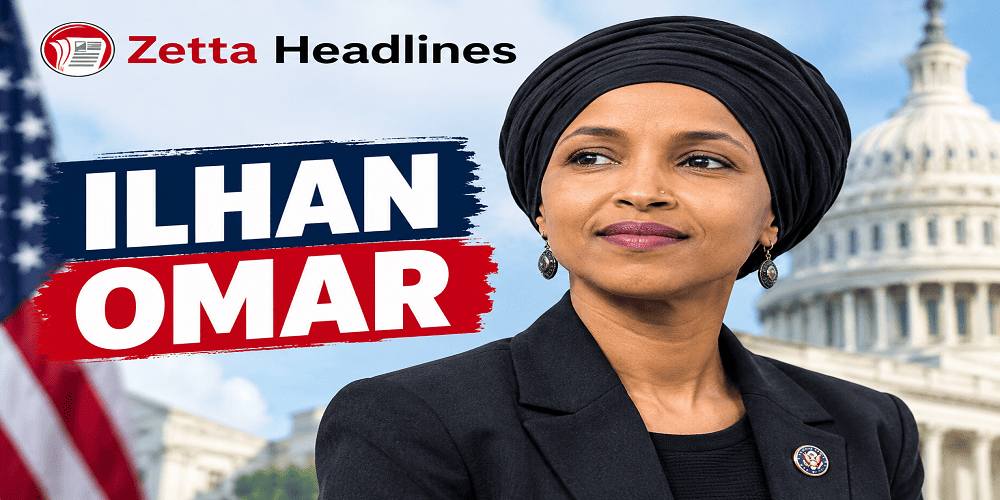
Ilhan Omar is an American politician known for her progressive political views, advocacy for immigrant communities, and role in national debates about healthcare, education, foreign policy, and civil rights. Representing Minnesota's 5th Congressional District in the U.S. House of Representatives, she has become one of the most recognizable Democratic lawmakers in the country.
Born in Somalia, Omar came to the United States as a refugee and later entered public service. Her personal background and political journey have attracted national attention, making her an influential figure in discussions about immigration, diversity, and representation in American politics.
Throughout her career, Ilhan Omar has supported policies aimed at reducing economic inequality, expanding access to healthcare, addressing climate change, and reforming the immigration system. At the same time, her statements on international affairs and domestic political issues have generated criticism and controversy.
In October 2026, she also became the subject of renewed national attention following a federal search of her Washington, D.C., residence as part of a criminal investigation. Officials have provided limited public details about the investigation, and the allegations discussed in connection with it should not be treated as established facts.
This article explores Ilhan Omar's background, political career, major policy positions, controversies, and latest developments.
Who Is Ilhan Omar?
Ilhan Omar is a Democratic member of the U.S. House of Representatives from Minnesota. She was born on October 4, 1982, in Mogadishu, Somalia, and became a U.S. citizen after arriving in the country as a refugee.
She entered Congress in January 2019 after previously serving in the Minnesota House of Representatives. Her election was historically significant because she became the first African refugee to serve in Congress and one of the first two Muslim-American women elected to the House.
Omar represents Minnesota's 5th Congressional District, which includes Minneapolis and surrounding communities. Her political priorities include economic opportunity, affordable healthcare, education, workers' rights, immigration reform, and civil liberties.
She is also associated with the progressive wing of the Democratic Party and has worked with lawmakers who support substantial changes to federal economic and social policies.
For official biographical information, readers can visit her U.S. House of Representatives profile.
Early Life and Background
Ilhan Omar spent her early childhood in Somalia during a period of political instability and civil conflict. When she was eight years old, her family fled the country and spent approximately four years in a refugee camp in Kenya.
Her family eventually moved to the United States during the 1990s, settling in Minnesota. In 1997, Omar moved to Minneapolis with her family, beginning a new chapter in a country with a different political system, language, and culture.
Growing up in Minnesota helped shape her understanding of immigration, community participation, and public services. Her experiences as a refugee later became an important part of her political identity.
Omar has spoken about the influence of her grandfather, who encouraged her interest in political participation. As a teenager, she attended Democratic political caucuses and became interested in how communities could influence public decisions.
Her early experiences helped establish the foundation for a career focused on community organizing and public service.
Education and Professional Career
Before entering elected office, Ilhan Omar pursued higher education and worked in several public service roles.
She graduated from Edison High School in Minneapolis in 2001. She later attended North Dakota State University, where she earned a bachelor's degree in political science and international studies in 2011.
After completing her education, Omar worked in roles connected to community engagement, education, policy development, and local government.
Her professional experience included working as a community educator at the University of Minnesota, serving as a policy fellow at the Humphrey School of Public Affairs, and working with the Minnesota Department of Education. She also served as a senior policy aide for the Minneapolis City Council.
These positions gave her experience with government administration, public policy, and the practical challenges facing local communities.
Rather than entering national politics immediately, Omar developed her career through community involvement and state-level public service. This background later helped her build a political platform centered on local concerns and broader national policy debates.
Ilhan Omar's Political Career
Minnesota House of Representatives
Ilhan Omar entered elected office in 2016 when she won a seat in the Minnesota House of Representatives. She began serving in January 2017.
Her election brought increased attention to her political work and her background as a Somali-American Muslim woman. During her time in the state legislature, she worked on issues involving education, economic fairness, workers' rights, and the needs of immigrant communities.
Her state-level experience helped prepare her for the responsibilities of federal office.
Omar's election also reflected the growing political participation of communities that had historically been underrepresented in American government.
Election to the U.S. Congress
In 2018, Omar won election to represent Minnesota's 5th Congressional District in the U.S. House of Representatives. She took office in January 2019.
Her election was widely covered because of her refugee background and the historical significance of her victory.
Omar joined Rashida Tlaib as one of the first two Muslim-American women elected to Congress. She also became the first African refugee to serve as a member of the House.
Since entering Congress, she has participated in legislative debates, committee work, oversight activities, and public discussions on domestic and international issues.
Her political career has included both legislative advocacy and frequent appearances in national news coverage.
Ilhan Omar's Political Party and Ideology
Ilhan Omar is a member of the Democratic Party and is generally identified with its progressive wing.
Progressive politicians typically advocate policies intended to reduce economic inequality, strengthen public services, protect civil rights, and expand access to essential resources.
Omar has supported several proposals associated with this political approach, including broader healthcare access, stronger worker protections, affordable higher education, and measures to address climate change.
She has also criticized policies she believes disproportionately affect low-income communities, immigrants, and marginalized groups.
Her political views have attracted support from progressive voters, labor advocates, immigrant communities, and civil rights organizations. However, some of her positions, especially those involving foreign policy and national security, have drawn strong opposition from political conservatives and other critics.
Understanding her ideology requires examining her individual policy positions rather than assuming that every Democratic politician shares the same views.
Major Policy Positions of Ilhan Omar
Healthcare Reform
Healthcare is an important issue in Omar's political agenda. She has supported expanding access to affordable medical services and reducing the financial pressure that healthcare expenses can place on families.
She has advocated Medicare for All, a proposal intended to establish a broader public healthcare system. Supporters argue that such a system could reduce the number of uninsured people and improve access to medical treatment.
Critics have raised questions about its cost, implementation, and potential effects on private insurance arrangements.
Omar's position reflects a broader progressive argument that access to healthcare should not depend primarily on a person's income or employment status.
Education and Student Debt
Omar has supported policies aimed at making higher education more affordable and reducing the financial burden of student loans.
Many American students rely on loans to pay for college, and repayment can affect their ability to purchase homes, start businesses, or save for retirement.
Omar has advocated measures to address student debt and strengthen access to educational opportunities.
She has also emphasized the importance of investing in public education and supporting students from lower-income backgrounds.
Her approach focuses on the idea that educational opportunities can improve economic mobility and help communities build long-term prosperity.
Immigration Reform
Because she arrived in the United States as a refugee, immigration is closely connected to Omar's public identity and political work.
She has supported changes to the immigration system, including efforts to create legal pathways for immigrants, protect refugees, and improve the treatment of people seeking asylum.
She has also criticized immigration enforcement policies that she believes undermine civil rights or cause unnecessary harm to families.
Her positions have frequently placed her at odds with politicians who support stricter enforcement measures.
The broader immigration debate involves questions about border security, legal immigration, asylum procedures, public resources, and humanitarian responsibilities.
Climate Change and Environmental Policy
Omar has supported policies addressing climate change and promoting environmental sustainability.
Her political agenda includes reducing pollution, investing in cleaner energy, and considering the effects of environmental problems on vulnerable communities.
Supporters of these policies argue that climate action can create economic opportunities while reducing long-term environmental risks.
Critics may disagree about the cost, speed, or practical consequences of particular proposals.
Environmental policy remains an important part of the broader progressive agenda that Omar supports.
Workers' Rights and Economic Opportunity
Omar has advocated stronger worker protections, fair wages, and policies designed to improve economic conditions for working families.
Her approach emphasizes the role of public policy in addressing wage inequality, workplace safety, and access to economic opportunities.
She has also supported efforts to strengthen protections for employees and improve conditions for people in lower-paid occupations.
These priorities are reflected in her congressional committee work involving education, workforce issues, and labor protections.
Ilhan Omar's Role in Congress
In Congress, Omar participates in legislative debates, committee hearings, and oversight activities.
According to her official congressional profile, she serves on the House Budget Committee and the House Education and Workforce Committee. She also serves in leadership roles within progressive congressional organizations.
Committee assignments allow lawmakers to examine legislation, question government officials, review federal spending, and contribute to policy development.
Omar's work has included issues related to immigration enforcement, labor standards, healthcare, international affairs, and government accountability.
Her supporters view her as a lawmaker who challenges established political practices and advocates for communities that they believe receive insufficient attention.
Her critics argue that some of her rhetoric and policy positions are divisive or misguided.
Like other members of Congress, her influence depends on legislation, committee activity, political alliances, and the broader balance of power in the House.
Ilhan Omar and Recent News in October 2026
Ilhan Omar attracted additional national attention on October 12, 2026, after federal agents searched her Washington, D.C., residence as part of a criminal investigation.
According to the Associated Press, the investigation may relate to immigration issues and allegations concerning immigration paperwork. Authorities have released limited information about the case, and publicly available reporting has not established that Omar committed a crime.
Omar condemned the search and characterized it as an attempt at political intimidation. Democratic lawmakers also criticized the timing, which came only weeks before the November 2026 midterm elections.
The investigation has drawn attention because Omar has been a frequent critic of President Donald Trump and his administration's immigration policies.
It is important to distinguish between allegations, political reactions, and verified legal findings. A search conducted under a warrant does not, by itself, establish wrongdoing or prove the allegations under investigation.
The case remains a developing story, and readers should consult reliable reporting and official statements for confirmed updates.
For current information, see the Associated Press report on the search and Omar's official congressional website.
Major Controversies Surrounding Ilhan Omar
Omar's career has included several controversies, particularly involving foreign policy, public statements, and disagreements with political opponents.
Foreign Policy and Israel
Some of Omar's statements about Israel, the Israel-Palestine conflict, and the influence of pro-Israel political organizations have generated criticism from both Republican lawmakers and some Democrats.
Critics have argued that particular remarks were inappropriate or relied on harmful stereotypes. Omar has faced pressure to clarify or apologize for certain statements, while supporters have defended her right to criticize governments and foreign policy decisions.
The debate reflects broader disagreements in American politics about Israel, Palestinian rights, antisemitism, free expression, and the boundaries of political criticism.
A balanced discussion should consider the specific statements involved, the context in which they were made, and the responses they received.
Disagreements With Donald Trump
Omar has been a vocal critic of Donald Trump, particularly regarding immigration, government accountability, and rhetoric about minority communities.
Trump and his allies have also repeatedly criticized Omar, making her a prominent figure in partisan political disputes.
These disagreements have contributed to her visibility in national media and intensified debate about immigration and political representation.
Supporters see her criticism as an important form of political accountability. Opponents argue that her approach can deepen partisan divisions.
Immigration-Related Allegations
Omar has faced public allegations and speculation about aspects of her personal and immigration history. She has denied allegations of wrongdoing connected to these claims.
In October 2026, renewed attention to immigration-related allegations followed the federal search of her Washington residence. Authorities have not publicly established that the allegations amount to proven misconduct by Omar.
It is essential to avoid presenting unverified claims as facts. The appropriate approach is to follow credible reporting, distinguish official statements from political accusations, and wait for reliable evidence or legal findings before drawing conclusions.
Why Is Ilhan Omar an Important Political Figure?
Ilhan Omar's significance extends beyond her individual election victories.
Her journey from Somalia to the United States and then to Congress has made her an important figure in discussions about immigration, refugee resettlement, religious diversity, and political representation.
She has helped bring issues affecting immigrant communities and progressive voters into national debates. Her work also demonstrates how local government experience can provide a path to federal office.
At the same time, her political career illustrates the challenges faced by public figures who take strong positions on divisive issues.
Her influence should be evaluated through her legislative record, committee work, public statements, and the policies she supports, rather than media attention alone.
Whether voters agree or disagree with her views, Omar remains a recognizable participant in debates about the direction of American domestic and foreign policy.
Conclusion
Ilhan Omar has built a distinctive political career through community involvement, service in the Minnesota legislature, and election to the U.S. House of Representatives.
Her background as a Somali refugee, her progressive policy positions, and her outspoken approach to political debates have made her a prominent figure in American public life.
She continues to advocate for healthcare reform, affordable education, immigration changes, workers' rights, and environmental policies. Her positions have earned support from progressive voters while also generating criticism and controversy.
Recent developments, including the October 2026 federal search of her residence, have brought renewed attention to her political and personal circumstances. However, allegations connected to an ongoing investigation should not be confused with established findings of wrongdoing.
Following reliable sources and examining her record in context provides a clearer understanding of Ilhan Omar, her political priorities, and her role in contemporary American politics.
Frequently Asked Questions (FAQs)
1. Who is Ilhan Omar?
Ilhan Omar is a Democratic politician representing Minnesota's 5th Congressional District in the U.S. House of Representatives. She is known for her progressive policy positions and advocacy on healthcare, education, immigration, and workers' rights.
2. How old is Ilhan Omar?
Ilhan Omar was born on October 4, 1982. As of October 2026, she is 44 years old.
3. Where was Ilhan Omar born?
Ilhan Omar was born in Mogadishu, Somalia. She came to the United States as a refugee with her family during the 1990s.
4. What political party does Ilhan Omar belong to?
Ilhan Omar is a member of the Democratic Party. She is generally associated with the progressive wing of the party.
5. When was Ilhan Omar elected to Congress?
Omar was elected to the U.S. House of Representatives in 2018 and began serving in January 2019. She previously served in the Minnesota House of Representatives from 2017 to 2019.
6. What are Ilhan Omar's main political priorities?
Her major priorities include expanding healthcare access, making education more affordable, reforming immigration policies, strengthening workers' rights, addressing climate change, and protecting civil liberties.
7. Why is Ilhan Omar frequently in the news?
Omar frequently attracts media attention because of her progressive policy positions, comments on foreign policy, disagreements with political opponents, and role in congressional oversight. In October 2026, a federal search of her Washington residence also became a major news story.
8. What happened at Ilhan Omar's home in October 2026?
Federal agents searched Omar's Washington, D.C., residence on October 12, 2026, as part of a criminal investigation that reporting has linked to possible immigration-related issues. Authorities have released limited details, and the search itself does not establish that she committed a crime.
9. Is Ilhan Omar still serving in Congress in 2026?
Yes. As of October 2026, official congressional records list Ilhan Omar as the Democratic representative for Minnesota's 5th Congressional District in the 119th Congress, which runs from 2025 through 2027.
10. Where can I find the latest news about Ilhan Omar?
For reliable updates, consult her official congressional website, the U.S. House of Representatives, and established news organizations such as the Associated Press and Reuters. For developing legal matters, distinguish confirmed information from allegations and political commentary.
Leave A Comment
0 Comment