
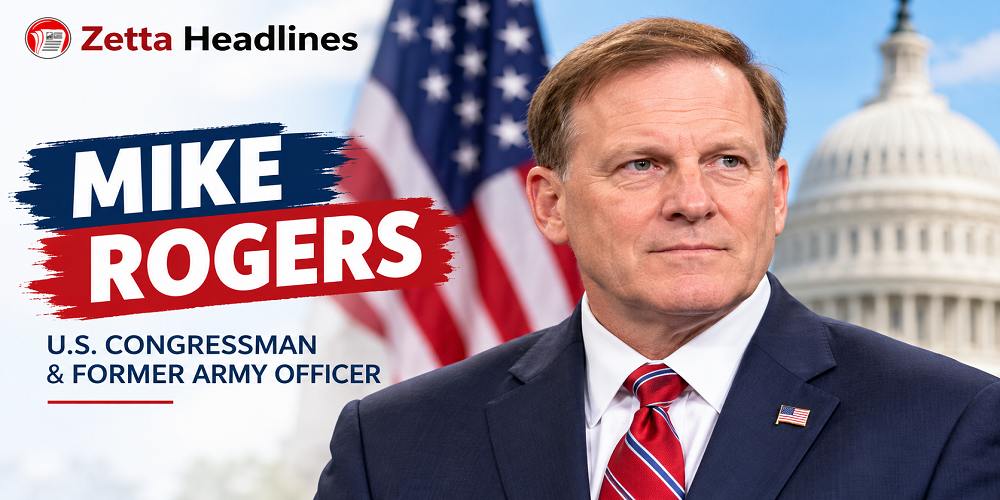
Mike Rogers is an American politician and former law enforcement officer known for his work in national security, intelligence, and public service. He represented Michigan's 8th congressional district in the United States House of Representatives from 2001 to 2015 and served as chairman of the House Permanent Select Committee on Intelligence from 2011 to 2015. His professional background includes service in the United States Army and work as an FBI special agent.
Over the years, Mike Rogers has become a recognizable figure in American politics because of his experience with intelligence operations, cybersecurity, counterterrorism, and national security policy. His career has included legislative responsibilities, political campaigns, and public discussions about the role of government in protecting American citizens.
Mike Rogers has also attracted attention through his involvement in Michigan politics and his campaigns for the United States Senate. His political positions and public statements have made him a subject of discussion among voters, journalists, and political analysts.
This article explores Mike Rogers' biography, early life, education, military service, law enforcement career, political journey, major responsibilities, and influence on American public policy.
Who Is Mike Rogers?
Mike Rogers, whose full name is Michael J. Rogers, is an American Republican politician who previously served as a member of the U.S. House of Representatives for Michigan. Born on June 2, 1963, in Livonia, Michigan, he grew up in the Livingston County area and later pursued a career involving military service, law enforcement, and politics.
Before entering Congress, Mike Rogers served in the United States Army and worked as a special agent with the Federal Bureau of Investigation. These experiences helped shape his professional focus on public safety, criminal investigations, intelligence, and national security.
His congressional career began in January 2001, when he took office as the representative for Michigan's 8th congressional district. He remained in the House until January 2015, serving several terms and developing a reputation for his involvement in intelligence and security matters.
One of the most important positions in his career was chairman of the House Intelligence Committee. This committee plays an important role in congressional oversight of American intelligence agencies and national intelligence activities.
Mike Rogers later returned to the political spotlight through his 2024 campaign for the U.S. Senate in Michigan. He lost that election to Democratic candidate Elissa Slotkin. His continued involvement in Michigan politics has kept his name relevant in discussions about elections, security policy, and the Republican Party.
Early Life and Education
Mike Rogers was born in Livonia, Michigan, on June 2, 1963. He spent much of his youth in Livingston County, where he attended school and developed an interest in public service.
His early experiences in Michigan helped establish the regional connections that later became important to his political career. Understanding the concerns of local communities, families, workers, and businesses became part of his public identity.
Mike Rogers attended Howell High School in Howell, Michigan, graduating in 1981. He subsequently enrolled at Adrian College, where he earned a bachelor's degree in 1985.
His educational background provided a foundation for his subsequent military and law enforcement service. After college, he entered the United States Army, beginning a professional journey that eventually led to federal law enforcement and national politics.
Education played an important role in preparing Mike Rogers for the responsibilities he later accepted. His career demonstrates how academic study, practical experience, and professional training can combine to support a path into public leadership.
Military Service and FBI Career
Before entering electoral politics, Mike Rogers gained experience in two important areas of public service: the military and federal law enforcement.
Service in the United States Army
After graduating from Adrian College in 1985, Mike Rogers served in the United States Army from 1985 to 1989. Military service introduced him to the responsibilities associated with discipline, teamwork, leadership, and national defense.
These experiences later became relevant to his work on intelligence and security issues in Congress. His background also helped him understand some of the challenges faced by military personnel and government organizations responsible for protecting national interests.
Working as an FBI Special Agent
Following his military service, Mike Rogers joined the Federal Bureau of Investigation in 1989. He worked as an FBI special agent until 1994.
During his law enforcement career, Rogers was involved in efforts to investigate organized crime and corruption, including work connected to Chicago. The FBI experience provided him with exposure to criminal investigations, intelligence gathering, and federal law enforcement procedures.
His time in the FBI became an important part of his public profile. Unlike politicians whose careers begin entirely within government or party organizations, Mike Rogers entered politics after working in institutions responsible for national security and criminal investigations.
These professional experiences helped establish his reputation as a politician with a background in intelligence and public safety.
Mike Rogers' Entry Into Politics
Mike Rogers entered electoral politics in the 1990s. His professional background in the military and FBI gave him experience that he later brought to discussions about law enforcement, government accountability, and security policy.
In 1994, he was elected to the Michigan State Senate, where he represented the state's 26th district. He served in the state legislature from 1995 until 2000 and became majority floor leader in 1999.
His state-level political career allowed him to develop legislative experience and build relationships with other elected officials. It also gave him an opportunity to understand how government decisions affect local communities.
During his time in the Michigan Senate, Mike Rogers participated in the legislative process and worked on issues connected to public policy and state government. His position as majority floor leader reflected his growing responsibilities within the legislature.
The experience proved valuable when he moved from state politics to the national stage.
Congressional Career in the United States House of Representatives
In 2000, Mike Rogers won election to represent Michigan's 8th congressional district in the U.S. House of Representatives. He took office on January 3, 2001, and continued serving until January 3, 2015.
His congressional tenure covered a significant period in American history. The United States experienced major changes in national security policy after the September 11, 2001, terrorist attacks. Intelligence operations, counterterrorism, cybersecurity, and international security became increasingly important subjects of public debate.
Mike Rogers became involved in congressional discussions about these issues because of his previous military and FBI experience.
As a member of Congress, he participated in the legislative process, worked on national policy, and represented the interests of his Michigan constituents. His responsibilities included considering legislation, participating in committee work, and reviewing government activities.
Rogers served as a Republican representative during seven consecutive Congresses. His years in office helped establish him as a prominent Republican voice on intelligence and security matters.
Rather than seeking reelection in 2014, he left the House when his congressional term ended in January 2015.
Chairman of the House Intelligence Committee
One of the defining periods of Mike Rogers' political career came when he became chairman of the House Permanent Select Committee on Intelligence in 2011.
The House Intelligence Committee oversees aspects of the United States intelligence community. Its work includes reviewing intelligence activities, examining national security threats, and conducting congressional oversight of intelligence programs.
As chairman, Mike Rogers held a significant leadership position within Congress. He helped guide committee discussions about international threats, intelligence operations, counterterrorism, and the security challenges facing the United States.
His tenure coincided with continuing debates about terrorism, intelligence sharing, cybersecurity, and the balance between national security and individual privacy.
The committee's work also involved evaluating threats from foreign governments and examining how intelligence agencies could respond to changing security conditions.
Mike Rogers frequently emphasized the importance of intelligence capabilities and national defense. Supporters viewed his professional background as an advantage in understanding complex security issues.
At the same time, government surveillance and intelligence collection have remained subjects of wider public debate. Discussions about these activities often involve competing concerns, including public safety, government authority, transparency, and civil liberties.
His leadership role placed him at the center of these broader policy questions.
Mike Rogers and National Security
National security has been one of the most prominent themes throughout Mike Rogers' career.
His military service, FBI experience, and congressional responsibilities gave him several opportunities to address threats facing the United States. His work involved issues such as counterterrorism, intelligence cooperation, cybersecurity, and the protection of sensitive information.
Counterterrorism
Counterterrorism became a major priority for the American government following the September 11 attacks. During his congressional career, Mike Rogers supported efforts to strengthen the country's ability to identify and respond to terrorist threats.
His experience in federal law enforcement informed his perspective on intelligence gathering and cooperation between government agencies.
Cybersecurity
Cybersecurity has become increasingly important as governments, businesses, and individuals rely on digital systems. Cyberattacks can affect public infrastructure, financial institutions, private companies, and government networks.
Mike Rogers became a prominent advocate for improving America's cybersecurity capabilities during his time in Congress. His work reflected growing concerns about cyber threats and the need to protect sensitive information.
Foreign Intelligence
Another major part of his public career involved understanding threats from foreign governments and international organizations.
As chairman of the House Intelligence Committee, Mike Rogers participated in oversight and policy discussions concerning intelligence capabilities and the changing international security environment.
His work highlighted the importance of intelligence agencies in helping policymakers understand potential risks and make informed decisions.
Mike Rogers' Political Positions and Public Debate
Mike Rogers is generally associated with conservative Republican politics. His public positions have included support for strong national security capabilities, law enforcement, and policies intended to protect American interests.
However, political issues often involve different interpretations of evidence, priorities, and government responsibilities. Rogers' positions have attracted both support and criticism, particularly regarding intelligence oversight and surveillance.
Supporters argue that strong intelligence capabilities are necessary to identify threats and protect national security. Critics have raised concerns about the potential effects of surveillance programs on personal privacy and civil liberties.
These disagreements reflect a wider debate in American politics about how governments should balance security and individual freedoms.
Mike Rogers' background in intelligence has made these questions particularly relevant to his public career. His work illustrates the challenges policymakers face when developing security policies in a democratic society.
Understanding his political career therefore requires looking beyond individual campaigns and considering the wider policy questions connected to his work.
Mike Rogers' 2024 Senate Campaign
After leaving Congress in 2015, Mike Rogers remained connected to national security and public policy discussions. He later returned to electoral politics through his campaign for the United States Senate in Michigan in 2024.
The election was closely watched because Michigan is an important battleground state in national politics. The Senate race attracted considerable attention from both major political parties.
Mike Rogers ran as the Republican candidate against Democrat Elissa Slotkin. His campaign emphasized his experience in national security, law enforcement, and government service.
The election also highlighted broader disagreements between Republicans and Democrats over the economy, healthcare, national security, and the direction of federal policy.
Despite his previous congressional experience and campaign efforts, Mike Rogers lost the election to Slotkin. The result marked another important point in his political journey.
His campaign nevertheless returned him to the center of Michigan's political conversation and demonstrated that he remained interested in seeking elected office.
Mike Rogers and Michigan Politics in 2026
Mike Rogers has continued to attract political attention in Michigan. In 2026, he is again running for the U.S. Senate as a Republican candidate, making his political activities relevant to voters following the upcoming midterm elections.
Michigan is an important state in national elections because its voters can influence the balance of power in Congress. Senate campaigns in the state often attract national attention, substantial campaign spending, and extensive media coverage.
Rogers' background in the Army, FBI, and House Intelligence Committee remains a central part of his public identity. His campaign has drawn attention to issues involving public safety, government policy, economic conditions, and national security.
The 2026 campaign has also involved disagreements over trade policy, surveillance, immigration, and foreign affairs. These issues demonstrate the range of subjects that can influence a modern Senate election.
For voters, evaluating Mike Rogers involves considering his previous record, current proposals, public statements, and the potential consequences of his policy positions.
Campaign statements and political advertisements should be assessed alongside reliable reporting, official records, and the candidates' own policy platforms.
The outcome of the election will depend on voters' preferences and the broader political environment in Michigan.
Personal Life and Public Image
Mike Rogers has generally maintained a public identity centered on his professional background and political responsibilities. His military and FBI service have been important parts of the way he presents his experience to voters.
His public image is closely associated with intelligence, law enforcement, national security, and conservative politics. These themes have influenced his campaigns and the way journalists and political observers discuss his career.
Although his public work receives considerable attention, it is important to distinguish verified biographical information from speculation or unsupported personal claims.
For readers researching Mike Rogers, official biographies, congressional records, election information, and reputable news organizations provide useful sources for understanding his background and activities.
His career offers an example of how experience in public institutions can lead to political leadership, while also illustrating how elected officials can face scrutiny over their decisions and policy positions.
Mike Rogers' Influence on American Politics
Mike Rogers' influence is most clearly connected to national security and intelligence policy. His years in Congress included leadership of a committee responsible for overseeing some of the country's most sensitive government activities.
His professional background gave him a distinctive perspective on questions involving intelligence agencies, law enforcement, cybersecurity, and national defense.
His career also demonstrates the importance of congressional oversight. Intelligence agencies possess specialized information and capabilities, making legislative review an important part of democratic governance.
At the same time, the policies supported by intelligence committees can generate difficult questions about privacy, transparency, and government power. These questions remain relevant regardless of which political party controls Congress.
Mike Rogers' return to electoral politics further illustrates how former lawmakers can remain influential after leaving office. Their experience, public recognition, and policy positions can continue to shape political debates and election campaigns.
His ongoing role in Michigan politics means his proposals and public statements remain relevant to people following American elections.
Conclusion
Mike Rogers has built a career that spans military service, federal law enforcement, state politics, and the United States Congress. His experience as an Army veteran and FBI special agent helped shape his public identity, while his congressional service brought him into national discussions about intelligence, cybersecurity, counterterrorism, and government oversight.
His leadership of the House Intelligence Committee from 2011 to 2015 was one of the most important milestones of his political career. Following his departure from Congress, he remained connected to public policy and returned to electoral politics through his Senate campaigns.
As the 2026 Michigan Senate race develops, Mike Rogers continues to be a figure of interest for voters and observers of American politics. His background and policy positions provide important context for understanding his role in current political debates.
For anyone researching Mike Rogers, examining his biography, professional experience, legislative record, and campaign positions offers a more complete picture of his career and influence.
Frequently Asked Questions (FAQs)
1. Who is Mike Rogers?
Mike Rogers is an American Republican politician and former FBI special agent who represented Michigan's 8th congressional district in the U.S. House of Representatives from 2001 to 2015. He also served as chairman of the House Intelligence Committee.
2. When was Mike Rogers born?
Mike Rogers was born on June 2, 1963, in Livonia, Michigan, United States.
3. What did Mike Rogers do before entering politics?
Before entering politics, Mike Rogers served in the United States Army from 1985 to 1989 and worked as an FBI special agent from 1989 to 1994. He subsequently served in the Michigan State Senate.
4. What was Mike Rogers' role in the House Intelligence Committee?
Mike Rogers served as chairman of the House Permanent Select Committee on Intelligence from 2011 to 2015. The committee oversees intelligence-related activities and examines national security issues.
5. Is Mike Rogers running for the Senate in 2026?
Yes. Mike Rogers is running as a Republican candidate in Michigan's 2026 U.S. Senate election. His campaign has brought renewed attention to his record, political positions, and views on national policy.
Leave A Comment
0 Comment