
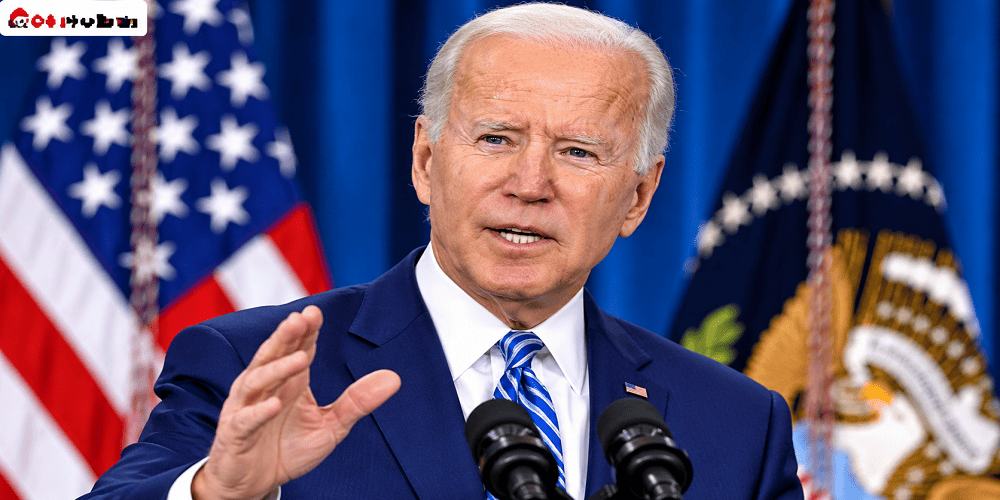
President Joe Biden is one of the most recognised political figures in modern American history. Over several decades, he built a career in public service, representing Delaware in the United States Senate, serving as Vice President under Barack Obama, and eventually becoming the 46th President of the United States. His political journey includes major achievements, difficult personal experiences, important policy decisions, and several challenges that shaped his leadership.
Known for his long experience in American politics, President Joe Biden entered the White House in January 2021 during a period of significant uncertainty. The United States was dealing with the COVID-19 pandemic, economic disruption, political divisions, and international tensions. His administration focused on economic recovery, infrastructure development, healthcare, climate change, and strengthening relationships with international allies.
Although his presidency ended in January 2025, his influence on American politics continues to attract public attention. His career, decisions, and presidential legacy remain important subjects of political discussion.
In this article, we explore President Joe Biden's early life, education, family, political career, presidential achievements, major challenges, and life after leaving the White House.
Who Is President Joe Biden?
Joseph Robinette Biden Jr., popularly known as Joe Biden, is an American politician and former president who served as the 46th President of the United States from January 20, 2021, to January 20, 2025.
Born on November 20, 1942, in Scranton, Pennsylvania, Biden spent most of his childhood in Delaware. He became involved in politics at a young age and was elected to the United States Senate in 1972. At just 29 years old, he became one of the youngest individuals elected to the Senate at that time.
Before becoming president, Biden served as Vice President of the United States from 2009 to 2017 under President Barack Obama. His experience in the Senate and White House helped him develop a long-standing reputation as an experienced political leader.
President Joe Biden belongs to the Democratic Party. His political career has focused on issues such as economic opportunity, healthcare, civil rights, infrastructure, foreign policy, and support for working families.
His personal journey has also attracted attention because of the family tragedies he experienced. Despite difficult moments, he continued his political career and eventually reached the highest elected office in the United States.
Early Life and Education of Joe Biden
Joe Biden was born into a working-class family in Scranton, Pennsylvania. He was the oldest of four children born to Catherine Eugenia Finnegan Biden and Joseph Robinette Biden Sr.
His family experienced financial difficulties during his childhood. In 1953, when Biden was approximately ten years old, the family moved to Claymont, Delaware, where he spent much of his teenage life.
Growing up, Biden experienced challenges related to confidence and communication. He reportedly struggled with stuttering, which made speaking in public difficult. However, he worked consistently to improve his communication skills.
Education played an important role in his development. He attended Archmere Academy, a private Catholic school in Delaware. Later, he enrolled at the University of Delaware, where he studied history and political science.
After completing his undergraduate education in 1965, Biden attended Syracuse University College of Law. He received his law degree in 1968.
Following graduation, he began practising law and later became involved in local politics. His early professional experiences helped him understand the concerns of ordinary Americans and encouraged him to pursue a career in public service.
Joe Biden's Family and Personal Life
Family has remained an important part of Joe Biden's personal identity and public image.
In 1966, Biden married Neilia Hunter. The couple had three children: Joseph R. Beau Biden III, Robert Hunter Biden, and Naomi Christina Biden.
However, his family experienced a devastating tragedy in December 1972. Neilia and their daughter Naomi died in a car accident, while their two sons, Beau and Hunter, survived with injuries.
The incident deeply affected Biden. Despite the tragedy, he decided to continue serving in the Senate. He was sworn into office in January 1973 while his sons were recovering in the hospital.
In 1977, Biden married Jill Jacobs, an educator who later became First Lady of the United States. Their daughter, Ashley Biden, was born in 1981.
Another major family tragedy occurred in 2015 when Biden's eldest son, Beau Biden, died from brain cancer at the age of 46.
These personal experiences influenced Biden's public discussions about family, grief, healthcare, and the importance of supporting people facing difficult circumstances.
Joe Biden's Political Career Before Becoming President
Joe Biden's political journey began at the local level before he entered national politics.
Entry Into Local Politics
In 1970, Biden was elected to the New Castle County Council in Delaware. During his time in local government, he focused on community concerns and public issues.
His work in local politics helped him build recognition among Delaware voters. In 1972, he decided to compete for a seat in the United States Senate.
Becoming a United States Senator
In November 1972, Biden defeated Republican incumbent J. Caleb Boggs and won election to the United States Senate.
At 29, he became one of the youngest people elected to the Senate in American history. He officially took office in January 1973 after turning 30.
President Joe Biden's Senate career lasted 36 years, making him an experienced figure in American legislative politics.
During this period, he worked on several important issues, including criminal justice, foreign relations, civil rights, and domestic policy.
He also chaired the Senate Judiciary Committee and the Senate Foreign Relations Committee at different points in his career.
One of his notable legislative contributions was his involvement in the Violence Against Women Act, which became law in 1994.
Presidential Campaigns
Biden first attempted to become president in 1987. However, his campaign ended after controversy surrounding speeches and allegations of plagiarism.
In 2007, he launched another presidential campaign but eventually withdrew from the Democratic primary race.
His political career took a major turn in 2008 when Barack Obama selected him as his running mate.
The Obama-Biden ticket won the presidential election, giving Biden an opportunity to serve in the White House as Vice President.
Joe Biden as Vice President Under Barack Obama
Joe Biden served as the 47th Vice President of the United States from January 2009 to January 2017.
During the Obama administration, he played an important role in domestic and international policy discussions.
One of his major responsibilities involved working with Congress to support legislative priorities and economic recovery initiatives.
The administration faced the effects of the 2008 financial crisis, and Biden participated in efforts to support economic recovery.
He also supported the Affordable Care Act, which expanded access to health insurance for millions of Americans.
In foreign policy, Biden worked on relationships with international partners and participated in diplomatic discussions involving several regions.
He also became associated with initiatives supporting military families, education, and community development.
His eight years as Vice President strengthened his national political profile and provided additional experience that later helped his presidential campaign.
President Joe Biden's 2020 Election Victory
The 2020 presidential election was one of the most significant political events in recent American history.
Joe Biden announced his presidential campaign in April 2019. His campaign focused on restoring national unity, protecting democratic institutions, improving healthcare, and rebuilding the American economy.
The election took place during the COVID-19 pandemic, which had affected businesses, employment, healthcare systems, and everyday life.
Biden selected Kamala Harris as his running mate. She became the first woman, first Black American, and first South Asian American elected Vice President of the United States.
On November 3, 2020, Biden defeated incumbent President Donald Trump.
He officially became the 46th President of the United States after taking the oath of office on January 20, 2021.
His inauguration marked the beginning of an administration that would face several major domestic and international challenges.
Major Achievements During Joe Biden's Presidency
During his four years in office, Biden signed several important laws and introduced policies covering different areas of American life.
Some of the major initiatives associated with his administration include infrastructure investment, manufacturing support, healthcare reforms, climate action, and economic recovery.
1. American Rescue Plan
One of the first major legislative achievements of the Biden administration was the American Rescue Plan Act of 2021.
The legislation provided approximately $1.9 trillion in economic support following the COVID-19 pandemic.
Its measures included financial assistance for eligible households, funding for vaccination programmes, support for schools, and assistance for state and local governments.
The objective was to help American families, workers, businesses, and communities recover from the economic effects of the pandemic.
2. Bipartisan Infrastructure Law
Infrastructure development was another important part of Biden's presidential agenda.
In November 2021, he signed the Infrastructure Investment and Jobs Act, commonly known as the Bipartisan Infrastructure Law.
The legislation provided significant funding for transportation, roads, bridges, public transit, broadband internet, and water infrastructure.
It aimed to modernise American infrastructure while creating employment opportunities.
The law also supported improvements to airports, ports, railway systems, and other essential public facilities.
3. CHIPS and Science Act
Technology and manufacturing became major priorities during Biden's presidency.
In August 2022, he signed the CHIPS and Science Act into law.
The legislation included approximately $52.7 billion in incentives and funding for semiconductor manufacturing, research, and development.
The objective was to strengthen domestic semiconductor production and reduce America's dependence on foreign supply chains.
The initiative also aimed to support scientific innovation and improve the country's competitiveness in advanced technology.
4. Inflation Reduction Act
Another significant legislative achievement was the Inflation Reduction Act of 2022.
The law included investments in clean energy, climate-related programmes, healthcare, and tax policy.
It also introduced measures to reduce certain prescription drug expenses for eligible Medicare beneficiaries.
One important provision capped insulin costs at $35 per month for Medicare beneficiaries.
The legislation represented a major federal investment in clean energy and climate-related initiatives.
5. Healthcare and Prescription Drug Costs
Healthcare remained an important issue throughout the Biden administration.
The administration worked to expand access to affordable healthcare and reduce certain prescription drug expenses.
One notable development involved allowing Medicare to negotiate prices for selected prescription medicines under provisions of the Inflation Reduction Act.
The administration also supported efforts to expand healthcare coverage and strengthen protections for patients.
These policies became important parts of Biden's domestic agenda.
Major Challenges During the Biden Administration
Although President Joe Biden introduced several important policies, his administration also faced criticism and difficult situations.
Understanding these challenges is essential when evaluating his presidency.
Inflation and the Cost of Living
Inflation became one of the biggest economic concerns during Biden's presidency.
American consumers experienced higher prices for groceries, housing, energy, transportation, and other essential expenses.
Although inflation later declined from its peak, many households continued to feel the effects of increased living costs.
Critics questioned the administration's economic policies, while supporters highlighted employment growth and the recovery following the pandemic.
The economy remained a major issue in political discussions throughout his term.
Afghanistan Withdrawal
The withdrawal of American military forces from Afghanistan in August 2021 became one of the most controversial events of Biden's presidency.
The withdrawal ended America's longest war, but the Taliban quickly regained control of the country.
The evacuation process at Kabul airport was chaotic and raised serious concerns about planning, security, and the safety of Afghan citizens who had supported American forces.
The event attracted criticism from both political opponents and some international observers.
Russia-Ukraine War
Russia launched its full-scale invasion of Ukraine in February 2022.
The Biden administration strongly supported Ukraine by providing military assistance, financial support, and diplomatic backing.
Biden also worked with European allies to coordinate sanctions against Russia.
His administration described support for Ukraine as an important part of defending national sovereignty and international security.
However, the conflict created additional international tensions and raised questions about the long-term costs of American involvement.
Israel-Hamas War
Another major international challenge emerged after the Hamas-led attacks on Israel on October 7, 2023.
The Biden administration expressed support for Israel's security while also calling attention to humanitarian conditions in Gaza.
The conflict created difficult diplomatic challenges for Washington.
Biden faced criticism from different political groups over American military assistance to Israel, the humanitarian crisis in Gaza, and efforts to achieve a ceasefire.
These developments became an important part of his foreign policy record.
Why Did Joe Biden Withdraw From the 2024 Presidential Election?
The 2024 presidential election became a turning point in Biden's political career.
Initially, Biden announced that he would seek another term as president. However, concerns about his age, public appearances, and performance during the June 2024 presidential debate against Donald Trump increased political pressure.
Several Democratic politicians and supporters questioned whether he could successfully campaign for another four-year term.
On July 21, 2024, Biden announced that he was withdrawing from the presidential race.
He subsequently endorsed Vice President Kamala Harris as the Democratic Party's presidential nominee.
His decision changed the direction of the Democratic campaign and became one of the most discussed political developments of the 2024 election cycle.
Donald Trump eventually defeated Kamala Harris in the November 2024 presidential election.
Biden completed his presidential term on January 20, 2025.
Joe Biden's Life After the Presidency
After leaving the White House, Biden returned to private life as a former president.
His political career had already spanned more than five decades, including service in the Senate, the Vice Presidency, and the presidency.
Following his departure from office, attention shifted toward his presidential legacy, public appearances, family life, and future activities.
In May 2025, Biden's office announced that he had been diagnosed with an aggressive form of prostate cancer that had spread to his bones.
His health became an important subject of public discussion. According to reporting published on November 8, 2026, Biden has said that his cancer treatment has affected his ability to participate in public appearances.
He is also preparing for the release of his memoir, Promise Me, America, scheduled for November 17, 2026. The book is expected to discuss his White House years, important political decisions, and experiences during his presidency.
These developments have kept President Joe Biden in the public conversation even after the end of his administration.
Joe Biden's Political Legacy and Influence on American Politics
Evaluating Joe Biden's political legacy requires considering both his achievements and the controversies surrounding his administration.
Supporters often highlight his infrastructure investments, economic recovery measures, manufacturing policies, climate initiatives, and efforts to strengthen international alliances.
His administration also appointed Ketanji Brown Jackson as the first Black woman to serve on the United States Supreme Court.
At the same time, critics point to inflation, immigration challenges, the Afghanistan withdrawal, and disagreements over foreign policy.
His decision to withdraw from the 2024 presidential race also became a defining moment in the final period of his presidency.
Biden's influence extends beyond the four years he spent in the White House. His 36 years in the Senate and eight years as Vice President made him one of the most experienced political figures in modern American history.
His presidency will continue to be evaluated through its economic results, legislative achievements, international decisions, and long-term impact on American institutions.
Conclusion
President Joe Biden's political journey represents decades of public service and several important moments in American history. From his early years in Delaware to his long Senate career, Vice Presidency, and eventual election as the 46th President, he experienced both significant achievements and personal challenges.
His administration introduced major legislation covering infrastructure, healthcare, manufacturing, climate change, and economic recovery. However, it also faced serious criticism over inflation, international conflicts, and the Afghanistan withdrawal.
Although his presidential term ended in January 2025, President Joe Biden remains an important figure in discussions about American politics and leadership.
His legacy will ultimately depend on how future generations assess his policies, decisions, achievements, and influence on the United States.
Frequently Asked Questions (FAQs)
1. Who is President Joe Biden?
Joe Biden is an American politician who served as the 46th President of the United States from January 20, 2021, to January 20, 2025. Before becoming president, he served as a US senator from Delaware for 36 years and as Vice President under Barack Obama.
2. How old is Joe Biden?
Joe Biden was born on November 20, 1942. He turned 83 years old on November 20, 2025, and will turn 84 in November 2026.
3. Who was the Vice President during Joe Biden's presidency?
Kamala Harris served as Vice President of the United States throughout Joe Biden's presidential term from 2021 to 2025. She was also the first woman to hold the office.
4. What were Joe Biden's biggest presidential achievements?
Some of the major legislative achievements associated with his administration include the American Rescue Plan Act, Bipartisan Infrastructure Law, CHIPS and Science Act, and Inflation Reduction Act. These laws addressed economic recovery, infrastructure, manufacturing, healthcare, and clean energy.
5. Is Joe Biden still the President of the United States?
No. Joe Biden completed his presidential term on January 20, 2025. Donald Trump became the 47th President of the United States on the same day. Biden is now a former president.
Leave A Comment
0 Comment