
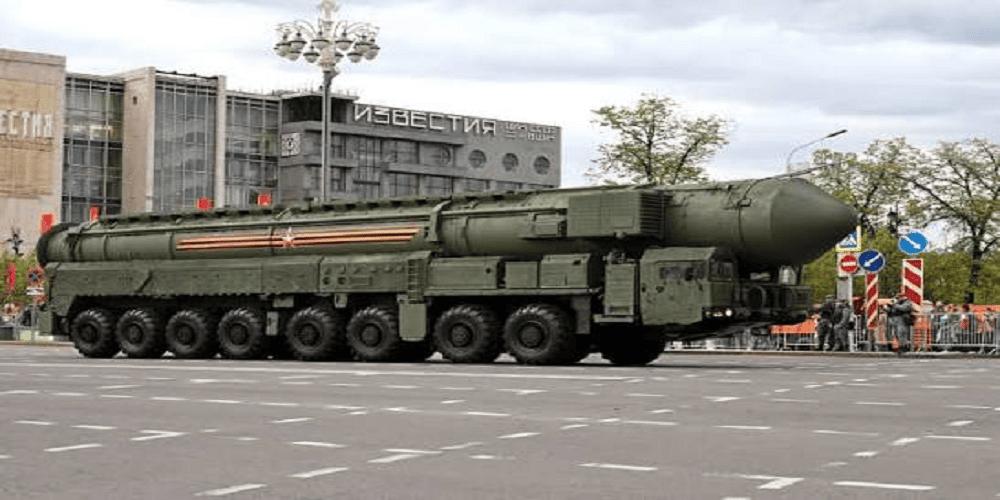
Russian nuclear weapons remain one of the most important subjects in international security and global politics. Russia possesses one of the world's largest nuclear arsenals, making its military capabilities a major concern for governments, security experts, and international organizations. These weapons play an important role in Russia's national defense strategy and influence its relationships with other major powers.
The topic of Russian nuclear weapons has attracted considerable attention because of ongoing geopolitical tensions, military developments, and discussions about nuclear deterrence. Understanding how Russia developed its nuclear capabilities, what types of weapons it maintains, and how its nuclear strategy works can help readers better understand the current international security environment.
Russia inherited a significant nuclear arsenal following the dissolution of the Soviet Union in 1991. Since then, it has maintained and modernized its nuclear forces while developing new delivery systems and updating its military policies.
This article explores the history, capabilities, strategic importance, and international implications of Russian nuclear weapons.
What Are Russian Nuclear Weapons?
Russian nuclear weapons are military weapons that use nuclear reactions to release enormous amounts of energy. They are designed primarily as strategic deterrents, although Russia also maintains non-strategic nuclear capabilities as part of its broader military planning.
Unlike conventional explosives, nuclear weapons can produce extremely destructive explosions, intense heat, radiation, and long-term environmental consequences. Their effects can extend far beyond the immediate target area.
Russia's nuclear arsenal includes different categories of weapons and delivery systems. These include land-based intercontinental ballistic missiles, submarine-launched ballistic missiles, and nuclear-capable aircraft.
The country's nuclear forces are generally organized into three major components, commonly known as the nuclear triad. This structure provides different ways to maintain a nuclear deterrent.
History of Russian Nuclear Weapons
The Soviet Union's Nuclear Development
The history of Russian nuclear weapons begins with the Soviet Union. After the Second World War, the Soviet government accelerated its nuclear research program because of growing tensions with the United States.
In August 1949, the Soviet Union successfully tested its first atomic bomb. This development ended the United States' nuclear monopoly and marked the beginning of a new phase in international military competition.
During the following decades, the Soviet Union invested heavily in nuclear research, missile technology, and military infrastructure. It developed increasingly powerful nuclear weapons and delivery systems.
The Cold War Nuclear Arms Race
During the Cold War, the United States and Soviet Union competed to develop more advanced nuclear capabilities. Both countries expanded their arsenals and introduced technologies designed to improve the range, accuracy, and reliability of their weapons.
The competition also encouraged the development of intercontinental ballistic missiles and nuclear-powered submarines.
The concept of mutually assured destruction became an important part of military strategy. It suggested that a nuclear attack by one major power could result in devastating retaliation from the other.
This balance of nuclear deterrence influenced international relations for decades.
Russia After the Dissolution of the Soviet Union
When the Soviet Union dissolved in 1991, Russia became the principal successor state to its nuclear arsenal.
Other former Soviet republics also inherited nuclear weapons temporarily, but the weapons located in Belarus, Kazakhstan, and Ukraine were subsequently transferred or removed under international arrangements.
Russia continued maintaining its nuclear forces while reducing and restructuring parts of its arsenal.
Over time, modernization became a major priority. The government invested in new missiles, submarine systems, aircraft, and command infrastructure.
Types of Russian Nuclear Weapons
Russia maintains several categories of nuclear weapons and delivery systems. Each serves a different purpose within the country's military strategy.
1. Intercontinental Ballistic Missiles
Intercontinental ballistic missiles, commonly called ICBMs, are long-range missiles designed to travel across continents.
Russia operates several types of land-based ballistic missiles. These systems form an important part of its strategic nuclear forces.
ICBMs provide Russia with the ability to maintain a long-range nuclear deterrent. Their role is particularly important because they can remain on alert and are integrated into established military command systems.
Examples of Russian ICBM systems include the Yars and older Sarmat-related programs.
2. Submarine-Launched Ballistic Missiles
Submarine-launched ballistic missiles are carried by specially designed submarines.
Russia operates nuclear-powered ballistic missile submarines that can remain underwater for extended periods. Their mobility makes them an important part of the country's nuclear deterrent.
The Bulava missile is associated with Russia's Borei-class ballistic missile submarines.
Submarine-based nuclear forces are particularly important because they provide a second-strike capability. Even if land-based military facilities are attacked, submarines operating at sea may preserve the ability to retaliate.
3. Strategic Nuclear Bombers
Russia also operates long-range strategic bombers capable of carrying nuclear weapons.
Aircraft such as the Tu-95MS and Tu-160 are important elements of its strategic aviation forces.
These aircraft provide flexibility because they can be deployed, recalled, or used for visible military signaling. They can also carry conventional weapons, depending on the mission and configuration.
Strategic bombers complement Russia's missile and submarine forces.
4. Non-Strategic Nuclear Weapons
Non-strategic nuclear weapons, sometimes called tactical nuclear weapons, are generally associated with regional or battlefield military scenarios rather than intercontinental strategic missions.
Russia maintains a range of non-strategic nuclear capabilities, although reliable public information about the exact number, deployment arrangements, and operational status of these weapons is limited.
These weapons are an important subject in international security discussions because their potential use could significantly increase the risk of a wider nuclear conflict.
Russia's Nuclear Arsenal: How Powerful Is It?
Russia possesses one of the largest nuclear arsenals in the world. It is generally considered to have a nuclear stockpile comparable in overall scale to that of the United States.
However, understanding the size of a nuclear arsenal requires looking beyond a single number.
Nuclear stockpiles can include several categories:
- Deployed nuclear warheads.
- Stored warheads that are not currently deployed.
- Retired warheads awaiting dismantlement.
These categories are different, and estimates may vary depending on the organization conducting the research.
The Federation of American Scientists and other independent research organizations regularly publish estimates of global nuclear stockpiles. Such estimates are particularly useful because governments do not disclose every detail of their nuclear forces.
Russia has continued investing in the modernization of its nuclear capabilities. However, modernization does not necessarily mean that every weapon is new. Older systems may remain operational while being upgraded or gradually replaced.
Russia's Nuclear Doctrine and Military Strategy
Russia's nuclear doctrine explains how the country officially approaches nuclear weapons and under what circumstances it considers their use possible.
Nuclear doctrine is important because it communicates military policy to other governments and helps establish expectations during international crises.
The Role of Nuclear Deterrence
Nuclear deterrence is based on the idea that the threat of devastating retaliation can discourage another country from launching a major attack.
Russia considers its nuclear forces an essential element of national security. They are intended to protect the country against major military threats and discourage attacks that could threaten its sovereignty or territorial integrity.
The purpose of deterrence is to prevent nuclear conflict rather than encourage its use.
Changes in Russia's Nuclear Policy
Russia's nuclear policy has evolved over time as its military environment and international relationships have changed.
In November 2024, President Vladimir Putin approved an updated version of Russia's nuclear deterrence policy.
The revised document expanded the situations described as potential circumstances for nuclear deterrence and outlined conditions under which Russia might consider using nuclear weapons.
These changes attracted international attention because they highlighted the role of nuclear deterrence in Russia's security strategy.
It is important to distinguish between an official policy document and an actual decision to launch nuclear weapons. A stated doctrine does not mean that nuclear weapons will automatically be used when a particular situation occurs.
Modernization of Russian Nuclear Weapons
Modernization is a central part of Russia's nuclear military planning.
Rather than relying entirely on older Soviet-era systems, Russia has invested in newer technologies intended to improve the reliability and performance of its nuclear forces.
Some important modernization areas include:
Advanced Missile Systems
Russia has developed and introduced newer ballistic missile systems, including the Yars family.
These systems are intended to replace or supplement older missile platforms and maintain the country's strategic deterrent.
New Submarine Technology
Russia's Borei-class submarines represent an important development in its naval nuclear forces.
They are designed to carry submarine-launched ballistic missiles and provide a modern platform for strategic deterrence.
Strategic Aviation Improvements
Russia has also continued working on upgrades to its strategic bomber fleet.
These improvements can include navigation systems, communications, maintenance, and the ability to carry modern weapons.
Hypersonic Weapon Development
Russia has promoted several weapons programs described as hypersonic systems.
The Avangard system is associated with a hypersonic glide vehicle, while Kinzhal is an air-launched missile system described by Russia as hypersonic.
Although these programs receive considerable international attention, their actual operational performance and strategic effectiveness are subjects of ongoing analysis.
International Concerns About Russian Nuclear Weapons
Russian nuclear weapons influence international security because their potential use could have consequences far beyond Russia's borders.
Governments, military organizations, and international experts closely monitor Russian nuclear developments.
Relations With the United States
The United States and Russia maintain the world's two largest nuclear arsenals.
Their nuclear relationship has historically been managed through arms control agreements, military communication channels, and strategic stability discussions.
However, political disagreements and military tensions have made cooperation increasingly difficult.
The condition of arms control arrangements is therefore an important issue for international security.
European Security
Russia's nuclear capabilities also influence security discussions across Europe.
Countries belonging to NATO closely monitor Russia's military activities and maintain their own defense arrangements.
Nuclear deterrence remains an important part of NATO's broader defense strategy.
Global Nuclear Security
Russian nuclear developments can affect international discussions about nuclear non-proliferation.
The Treaty on the Non-Proliferation of Nuclear Weapons (NPT) is one of the most important international agreements designed to prevent the spread of nuclear weapons.
Russia is recognized as a nuclear-weapon state under the NPT framework.
The international community continues to emphasize the importance of preventing nuclear conflict and reducing the risk of accidental or unauthorized nuclear use.
What Would Happen If Russian Nuclear Weapons Were Used?
The consequences of nuclear weapon use would depend on the weapon's characteristics, location, surrounding environment, and circumstances.
However, even a single nuclear detonation could cause catastrophic damage.
Immediate Destruction
A nuclear explosion can produce an intense blast wave capable of destroying buildings, damaging infrastructure, and causing widespread injuries.
The scale of destruction depends on several factors, including the explosive yield and distance from the detonation.
Extreme Heat and Fires
Nuclear explosions generate intense thermal radiation.
This can cause severe burns and ignite fires across affected areas. In populated locations, fires and structural damage could create additional emergencies.
Radiation Exposure
Nuclear detonations can expose people to harmful radiation.
Depending on the circumstances, radioactive fallout may contaminate areas and create longer-term health and environmental problems.
Global Political and Economic Effects
Nuclear conflict could also disrupt international trade, financial markets, energy supplies, transportation, and diplomatic relationships.
A larger conflict involving multiple nuclear powers could create consequences that extend across continents.
For these reasons, nuclear risk reduction remains an important international priority.
Russian Nuclear Weapons and Arms Control Agreements
Arms control agreements are designed to limit nuclear competition, improve transparency, and reduce the possibility of conflict.
Russia and the United States have participated in several major nuclear arms control initiatives over the years.
One important agreement was the New Strategic Arms Reduction Treaty, commonly known as New START.
The treaty established limits on deployed strategic nuclear warheads and associated delivery systems. It also included verification and information-sharing arrangements.
However, Russia suspended its participation in the treaty's implementation in 2023, creating additional challenges for arms control.
As the treaty approached its scheduled expiration in February 2026, questions about future nuclear limitations became increasingly important.
The future of strategic arms control is significant because the absence of effective agreements could make nuclear competition more difficult to manage.
The Future of Russian Nuclear Weapons
The future of Russian nuclear weapons will depend on several factors, including economic conditions, military priorities, technological developments, and international relations.
Russia is expected to continue maintaining and modernizing its strategic nuclear forces.
Some important developments to watch include:
- Replacement of older missile systems.
- Continued development of strategic submarines.
- Modernization of long-range bombers.
- Changes in nuclear deterrence policy.
- Future arms control discussions with other nuclear powers.
- International efforts to reduce nuclear risks.
Technological progress may also influence how countries approach missile defense, early-warning systems, communications, and strategic military planning.
At the same time, nuclear modernization comes with significant financial and political costs.
The international community will continue to face the challenge of balancing national security interests with the broader goal of preventing nuclear conflict.
Conclusion
Russian nuclear weapons remain a major factor in global security and international relations. From their origins in the Soviet nuclear program to the modern military systems operated by Russia today, these weapons have shaped strategic competition for decades.
Russia maintains a large nuclear arsenal supported by land-based missiles, submarine-launched ballistic missiles, and strategic bombers. Its nuclear doctrine, military modernization programs, and relationships with other nuclear powers all influence international security.
Understanding Russian nuclear weapons is important because nuclear risks are not limited to one country. Any nuclear conflict could have devastating humanitarian, environmental, economic, and political consequences.
Continued diplomatic engagement, arms control efforts, transparency, and international cooperation are essential for reducing nuclear risks and maintaining global stability.
Frequently Asked Questions (FAQs)
1. How many nuclear weapons does Russia have?
Russia has one of the world's largest nuclear arsenals. Independent organizations estimate its total stockpile at approximately 5,500 warheads, although estimates vary by year and counting method.
2. Does Russia have more nuclear weapons than the United States?
Russia and the United States have the two largest nuclear arsenals in the world. Depending on whether deployed, stored, or retired warheads are counted, comparisons can differ.
3. What types of nuclear weapons does Russia possess?
Russia maintains land-based intercontinental ballistic missiles, submarine-launched ballistic missiles, strategic nuclear bombers, and non-strategic nuclear weapons.
4. What is Russia's nuclear doctrine?
Russia's nuclear doctrine describes its approach to nuclear deterrence and the circumstances under which it may consider using nuclear weapons. The policy was updated in November 2024.
5. Why are Russian nuclear weapons important to global security?
Russian nuclear weapons are important because of their destructive potential and their influence on international military relationships. Their existence affects global deterrence, arms control negotiations, and international efforts to prevent nuclear conflict.
Leave A Comment
0 Comment