
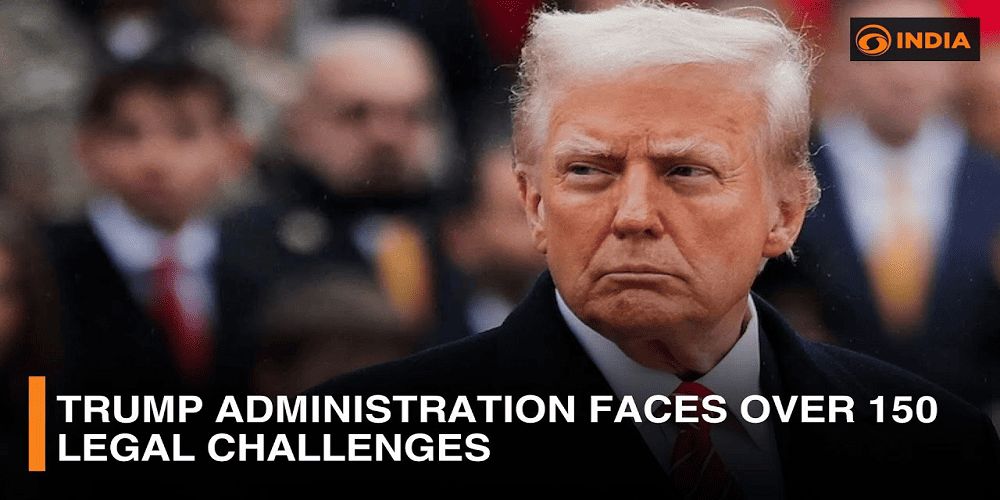
The phrase Trump administration legal losses has become a significant topic in American politics and law. During and after Donald Trump's presidency, numerous legal challenges emerged against executive actions, immigration policies, environmental regulations, election-related claims, and administrative decisions. Courts at different levels, including federal district courts, appellate courts, and even the Supreme Court, reviewed many of these actions.
Legal losses are not uncommon for any administration. However, the volume and visibility of cases involving the Trump administration attracted national and international attention. Supporters often argued that the administration was attempting to fulfill campaign promises and exercise executive authority. Critics claimed that several policies exceeded constitutional limits or violated existing laws.
Understanding Trump administration legal losses requires examining the major cases, policy disputes, judicial responses, and long-term effects on American governance.
Understanding Legal Challenges Against Presidential Administrations
Every U.S. president faces legal scrutiny. Executive orders, agency regulations, and policy initiatives can be challenged in court by states, advocacy groups, businesses, and individuals.
When courts determine that government actions violate federal statutes, constitutional protections, or administrative procedures, those actions may be blocked or overturned. This process serves as an important part of the checks and balances system.
The discussion surrounding Trump administration legal losses highlights how the judiciary can influence policy implementation and limit executive power when legal standards are not met.
Immigration Policies and Court Defeats
One of the most significant areas of Trump administration legal losses involved immigration policies.
Travel Ban Controversies
The administration's travel restrictions targeting several predominantly Muslim countries faced immediate legal opposition. Multiple federal courts issued injunctions, arguing that aspects of the policy raised constitutional concerns.
The administration revised the policy several times before portions of it ultimately survived Supreme Court review. However, the early legal setbacks demonstrated the challenges of implementing sweeping immigration restrictions.
DACA Disputes
The Deferred Action for Childhood Arrivals (DACA) program became another major legal battleground. The administration sought to terminate the Obama-era program, which protected certain undocumented immigrants who arrived in the United States as children.
Courts found procedural problems with the administration's approach. Eventually, the Supreme Court ruled that the effort to end DACA had not followed proper administrative procedures.
This decision became one of the most notable Trump administration legal losses because it affected hundreds of thousands of individuals.
Asylum Restrictions
The administration also attempted to impose stricter asylum rules. Several federal judges blocked portions of these regulations, citing conflicts with existing immigration laws and procedural requirements.
These cases demonstrated the judiciary's role in reviewing immigration policies that significantly impact vulnerable populations.
Border Wall Litigation
The border wall initiative represented a central campaign promise. However, financing and construction efforts generated extensive litigation.
The administration redirected certain federal funds toward wall construction after Congress declined to provide requested funding levels. Opponents argued that this move exceeded executive authority.
Several courts questioned aspects of the funding strategy. While some decisions favored the administration and others favored challengers, the litigation created substantial obstacles.
Border wall disputes became a prominent example of Trump administration legal losses because they involved constitutional questions regarding congressional spending authority.
Census Citizenship Question Case
The administration sought to add a citizenship question to the 2020 U.S. Census.
Supporters argued that collecting citizenship data would improve government decision-making. Critics claimed the question could discourage participation and reduce census accuracy.
The Supreme Court ultimately blocked the proposed addition, concluding that the government's explanation appeared insufficient and raised concerns about administrative decision-making.
This case became one of the most discussed Trump administration legal losses because census data affects congressional representation and federal funding distribution.
Environmental Regulation Setbacks
Environmental policy generated another major category of Trump administration legal losses.
Rollbacks of Environmental Protections
The administration pursued significant deregulation efforts aimed at reducing federal oversight and promoting economic growth.
Many environmental groups challenged these actions, arguing that agencies failed to follow required procedures or adequately justify policy changes.
Federal courts frequently scrutinized agency decisions under the Administrative Procedure Act.
Climate-Related Policies
Several attempts to weaken environmental regulations faced judicial resistance. Courts emphasized that agencies must provide reasoned explanations when changing existing rules.
These legal defeats reinforced the principle that policy shifts must comply with statutory and procedural requirements, regardless of political objectives.
Healthcare Litigation
Healthcare policies also contributed to Trump administration legal losses.
Affordable Care Act Challenges
The administration supported efforts to dismantle portions of the Affordable Care Act (ACA).
Numerous legal disputes emerged regarding healthcare mandates, insurance protections, and regulatory changes.
Although some challenges achieved limited success, many efforts encountered judicial obstacles.
Administrative Actions
Several healthcare-related administrative decisions were overturned because courts found procedural deficiencies or inconsistencies with federal law.
These outcomes illustrated how healthcare policy often becomes intertwined with administrative law and constitutional interpretation.
Election-Related Court Defeats
Among the most widely publicized Trump administration legal losses were election-related cases following the 2020 presidential election.
The administration and its allies filed numerous lawsuits challenging election procedures and results in multiple states.
Courts consistently required credible evidence to support claims of widespread irregularities or fraud.
Judges appointed by both Republican and Democratic presidents rejected many challenges due to insufficient evidence, procedural issues, or lack of legal merit.
These court decisions played a major role in affirming election outcomes and reinforcing confidence in judicial independence.
Executive Power and Constitutional Questions
The Trump presidency sparked extensive debates regarding executive authority.
Several legal disputes centered on whether presidential powers had been exercised within constitutional limits.
Congressional Oversight Cases
Congressional committees sought access to financial records, documents, and testimony from administration officials.
These disputes frequently reached federal courts, which had to balance executive privilege claims against legislative oversight responsibilities.
Court rulings often emphasized the importance of accountability within democratic institutions.
Separation of Powers Issues
Many Trump administration legal losses reflected broader separation-of-powers principles.
The judiciary repeatedly examined whether executive actions respected congressional authority and constitutional constraints.
These cases contributed to ongoing discussions about the proper scope of presidential power.
Administrative Procedure Act Challenges
A significant number of Trump administration legal losses stemmed from violations of the Administrative Procedure Act (APA).
The APA requires federal agencies to follow specific procedures when creating, modifying, or rescinding regulations.
Courts repeatedly found that agencies failed to:
- Provide adequate explanations
- Consider relevant evidence
- Follow required procedures
- Address important policy consequences
As a result, many administrative actions were delayed, blocked, or overturned.
Legal experts often point to these procedural deficiencies as a major reason behind numerous court defeats.
Sanctuary City Litigation
The administration attempted to pressure sanctuary jurisdictions by linking federal funding to immigration cooperation.
Several cities and states challenged these measures in court.
Judges frequently ruled that the executive branch could not impose funding conditions beyond what Congress authorized.
These decisions became another important chapter in the story of Trump administration legal losses, particularly regarding federal-state relations.
Military and National Security Cases
National security policies traditionally receive substantial judicial deference. However, some administration actions still encountered legal challenges.
Issues involving military service, detention policies, and emergency powers generated litigation.
While courts occasionally sided with the administration, several cases resulted in setbacks that limited policy implementation.
These outcomes demonstrated that national security claims do not entirely shield executive actions from judicial review.
Impact on Federal Agencies
The accumulation of Trump administration legal losses affected how federal agencies approached policymaking.
Agencies became more cautious about:
- Regulatory changes
- Documentation requirements
- Public comment processes
- Legal risk assessments
Future administrations may also learn from these experiences by ensuring stronger compliance with procedural requirements before implementing major policy changes.
Role of the Federal Judiciary
The judiciary played a central role in many disputes involving the Trump administration.
Federal judges across the ideological spectrum issued decisions based on statutory interpretation, constitutional principles, and administrative law.
The pattern of legal outcomes highlighted the independence of the judicial branch.
Many observers viewed the court system as an important safeguard against potential government overreach.
Others argued that judicial intervention sometimes slowed policy implementation and complicated governance.
Regardless of perspective, the courts remained a crucial check within the constitutional framework.
Political Consequences of Legal Defeats
The political effects of Trump administration legal losses extended beyond courtrooms.
Public Perception
Supporters often portrayed legal setbacks as evidence of institutional resistance to policy reforms.
Critics viewed the losses as proof that certain initiatives lacked legal foundations.
These competing narratives influenced public opinion and media coverage throughout the administration.
Electoral Implications
Legal battles frequently became campaign issues.
Candidates referenced court rulings to support arguments about executive leadership, judicial appointments, immigration policy, healthcare reform, and constitutional governance.
As a result, legal disputes became closely connected to broader political debates.
Long-Term Significance
The long-term significance of Trump administration legal losses extends beyond one presidency.
Several important precedents emerged regarding:
- Executive authority
- Immigration enforcement
- Administrative procedures
- Congressional oversight
- Federal funding powers
- Election-related litigation
Future administrations, regardless of party affiliation, may face similar judicial scrutiny when implementing controversial policies.
The legal battles also reinforced the importance of following established procedures when pursuing major policy changes.
Lessons from Trump Administration Legal Losses
Several lessons can be drawn from these cases.
First, executive authority remains subject to constitutional and statutory limits.
Second, federal agencies must carefully follow administrative procedures.
Third, courts continue to serve as a critical check on government power.
Fourth, legal preparation is essential when implementing major policy initiatives.
Finally, judicial review remains a fundamental component of the American system of governance.
The extensive litigation surrounding the Trump administration provides a valuable case study for scholars, policymakers, lawyers, and citizens interested in constitutional law and public administration.
Conclusion
The topic of Trump administration legal losses represents one of the most significant legal and political stories in recent American history. From immigration disputes and environmental regulations to election-related litigation and constitutional questions, courts played a major role in shaping the administration's policy agenda.
These legal battles demonstrated the strength of the American system of checks and balances. While presidents possess considerable authority, their actions remain subject to judicial review and legal constraints.
Whether viewed as necessary oversight or obstacles to policy implementation, the numerous court challenges faced by the Trump administration will continue to influence legal scholarship, public policy debates, and future presidential administrations for years to come.
FAQs
What are Trump administration legal losses?
Trump administration legal losses refer to court cases in which judges blocked, overturned, or limited actions taken by the Trump administration due to constitutional, statutory, or procedural concerns.
Why did the Trump administration face so many lawsuits?
The administration pursued numerous controversial policy changes involving immigration, healthcare, environmental regulations, and executive authority, leading to legal challenges from states, organizations, and private citizens.
What was the most significant Trump administration legal loss?
Many legal experts consider the Supreme Court's decision regarding DACA and the ruling against adding a citizenship question to the census among the most significant legal setbacks.
Did the Trump administration lose all of its court cases?
No. The administration won several important cases, including some before the Supreme Court. However, it also experienced a substantial number of high-profile legal defeats.
How did immigration policies contribute to Trump administration legal losses?
Immigration policies such as travel restrictions, asylum rules, and efforts to terminate DACA faced repeated legal challenges and judicial scrutiny.
What role did the Supreme Court play?
The Supreme Court reviewed multiple Trump administration policies, sometimes ruling in favor of the administration and other times against it.
Why is the Administrative Procedure Act important in these cases?
Many court defeats occurred because agencies failed to follow the procedural requirements established by the Administrative Procedure Act.
How do Trump administration legal losses affect future presidents?
These legal precedents may influence how future administrations design policies, exercise executive authority, and comply with procedural requirements.
Were election-related lawsuits part of Trump administration legal losses?
Yes. Numerous election-related challenges after the 2020 presidential election were rejected by courts due to procedural and evidentiary issues.
Why do these legal losses matter today?
They continue to shape debates about executive power, judicial review, administrative law, and constitutional governance in the United States.
Leave A Comment
0 Comment