
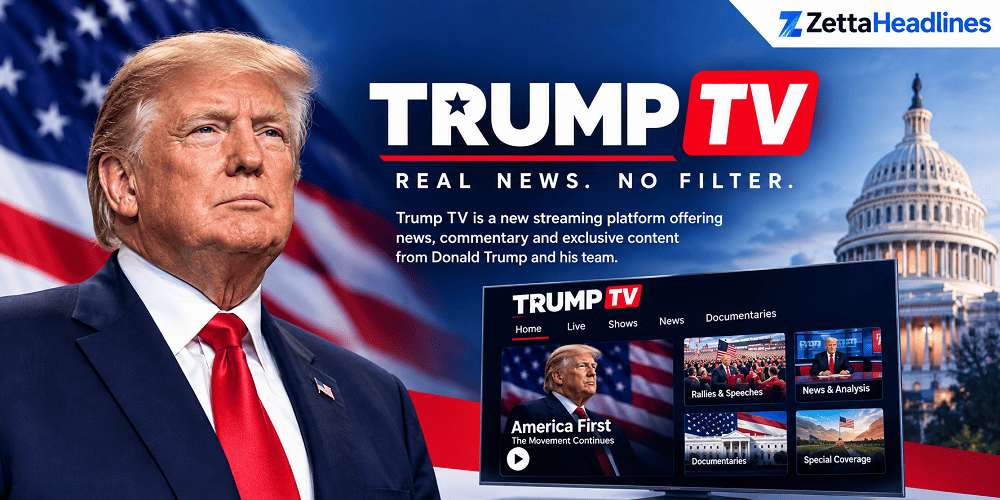
The phrase Trump TV has attracted significant attention among people interested in politics, media, and Donald Trump’s growing influence on the American media landscape. As political communication continues to change, digital platforms have become an important way for public figures to reach audiences directly.
The idea behind Trump TV is closely connected with the broader movement toward alternative media, online broadcasting, political commentary, and direct-to-audience communication. Supporters often see this type of media as a way to access political content outside traditional television networks, while critics may view it as another example of the increasing connection between politics and media.
But what exactly does Trump TV mean? Is it a specific television network, an online platform, or a general term used to describe media associated with Donald Trump?
The answer depends on the context in which the term is being used. In many discussions, Trump TV can refer broadly to Trump-related video content, political programming, digital broadcasts, or proposed media ventures connected with the Trump brand.
In this article, we will explain the meaning of Trump TV, its connection with Donald Trump, how political media has changed, where people may encounter Trump-related programming, and why the concept continues to attract attention.
What Is Trump TV?
Trump TV is not always used to describe one single traditional television network. Instead, the term can be used to refer to media programming and digital content associated with Donald Trump, his political movement, or organizations connected with his media interests.
The term has become popular because Donald Trump has developed a strong relationship with direct communication platforms. Rather than relying entirely on traditional news organizations, Trump has frequently used social media, video platforms, campaign websites, interviews, and other digital channels to communicate with his supporters.
This approach has changed the way political figures communicate with audiences.
Traditional political communication generally depended on television interviews, newspapers, radio, and major news networks. Today, politicians can publish videos, livestream events, release statements, and communicate with millions of followers without waiting for a traditional broadcaster to cover the story.
That environment has helped create interest in the idea of Trump TV.
Depending on the source, the term may therefore describe a specific media initiative, online Trump-related programming, or the wider ecosystem of digital media surrounding Trump.
Why Is Trump TV Getting Attention?
One major reason for the popularity of the term is Donald Trump's ability to attract a large audience.
Trump has spent years building a political identity that extends beyond traditional campaign events. His speeches, rallies, interviews, political statements, and social media posts frequently generate substantial public discussion.
When millions of people are interested in what a political figure says, there is a natural demand for media that delivers that content directly.
This creates opportunities for websites, video channels, streaming services, podcasts, and social media accounts.
Another factor is the growing frustration some viewers have with traditional media. Some audiences believe that major television networks do not represent their political views accurately. As a result, they look for alternative sources where they can watch political speeches, commentary, interviews, and analysis.
Trump-related media can appeal to this audience by providing content that focuses heavily on Trump and his political movement.
At the same time, other viewers may follow Trump-related media because they want to understand his political strategy, public statements, and influence.
The Connection Between Trump and Digital Media
Donald Trump's relationship with digital media is one of the most significant aspects of his political career.
Social media played a major role in Trump's communication strategy during his presidential campaigns. Instead of depending entirely on press conferences and traditional interviews, he could communicate directly with followers.
This direct communication model has several advantages.
First, it allows a political figure to control the timing and wording of a message. Second, supporters can receive information directly rather than waiting for a news organization to report it. Third, online content can spread rapidly through social networks.
Video is particularly powerful because viewers can hear a politician's words and see the surrounding event without relying entirely on written reports.
This has contributed to the broader popularity of Trump-focused video content.
Is Trump TV an Actual TV Channel?
One of the most common questions surrounding Trump TV is whether it is an actual conventional television channel.
The answer is that people should be careful about assuming that every reference to Trump TV means there is a traditional cable or broadcast network operating under exactly that name.
The phrase can be used informally to describe Trump-related broadcasting or digital media.
There have also been various reports, discussions, rumors, and business ideas involving media ventures associated with Trump and people within his broader political and business network. Because the media landscape changes quickly, readers should verify current information before assuming that a particular Trump-related television project is officially operating.
The easiest way to avoid confusion is to distinguish between official Trump-related communication channels, independent media outlets, streaming platforms, and third-party political commentary.
Trump TV and Streaming
Streaming has fundamentally changed television.
People no longer need a traditional cable subscription to watch political content. A political speech can be livestreamed online, uploaded to a video platform, shared on social media, or embedded into a news website.
This creates an environment where a concept such as Trump TV can exist without looking like a traditional television station.
A streaming-based political media service could potentially offer interviews, speeches, commentary, documentaries, news analysis, and live events.
The biggest advantage of streaming is flexibility.
Traditional television schedules require viewers to watch programs at particular times. Online platforms allow users to watch content whenever they want. They can also search for older speeches and interviews.
This is particularly useful for political audiences who want continuous access to specific types of content.
What Kind of Content Could Trump TV Include?
Trump-focused media can cover a wide range of subjects.
One common category is political speeches. Trump's rallies and public appearances often generate significant interest, especially among his supporters.
Another category is interviews. Interviews can provide longer conversations than short television news clips and may allow viewers to hear a political figure explain a position in greater detail.
Political commentary is another major category. Commentators can analyze election campaigns, policy decisions, congressional developments, polling, and political strategy.
Breaking news can also become part of political media programming.
During major political events, audiences often want immediate updates. Digital platforms can respond much faster than traditional television schedules.
A Trump-focused media platform could also include documentaries, opinion programs, podcasts, panel discussions, and historical political content.
Trump TV and Social Media
Social media is an important part of the modern political media ecosystem.
Political content can move from one platform to another within minutes. A speech may be livestreamed, clipped into short videos, quoted in posts, discussed on podcasts, and reported by news organizations.
Trump has been particularly successful at generating this type of attention.
A single statement can become a major news story because supporters share it while critics respond to it. News organizations may then report on the reaction, creating another cycle of coverage.
This means that Trump-related media does not operate in isolation.
Instead, it exists within a larger network that includes social media users, political commentators, journalists, influencers, independent publishers, and traditional broadcasters.
Why People Look for Trump TV
People search for Trump TV for different reasons.
Some viewers want political news that focuses specifically on Donald Trump.
Others may want to watch speeches and rallies without commentary.
Some people are interested in Trump's policy positions and political strategy.
There are also viewers who follow Trump-related media because they disagree with him and want to understand his messaging.
This is an important point because political media audiences are not always politically uniform.
A person watching Trump-related programming is not necessarily a supporter. They may be researching a political topic, following a breaking story, or comparing different perspectives.
The growth of digital media has made this kind of targeted viewing much easier.
Trump TV and Political Branding
The concept of Trump TV is also connected to the strength of the Trump brand.
Political campaigns traditionally create recognizable slogans, logos, advertisements, and television appearances. Modern political branding extends into digital video, podcasts, social media, email newsletters, and online communities.
A strong political brand can make it easier for audiences to recognize and engage with content.
Trump's name is already widely recognized, which means Trump-related media can attract attention quickly.
This creates both opportunities and challenges.
The opportunity is obvious: a large existing audience can support new media projects.
The challenge is maintaining credibility.
Political audiences increasingly have access to information from thousands of different sources. A media platform needs to provide content that audiences consider useful, accurate, entertaining, or relevant if it wants them to keep returning.
How Trump TV Could Influence Political Media
The idea of Trump TV reflects a larger shift in the media industry.
Political figures are no longer dependent on a small number of television networks to reach large audiences.
A politician can build a digital audience independently.
This could have a long-term impact on political communication.
Candidates and political organizations may increasingly invest in their own media operations. Instead of simply purchasing advertisements on existing television channels, they can create podcasts, livestreams, video channels, newsletters, and websites.
This gives political organizations more control over their messaging.
However, it also places greater responsibility on viewers.
When people receive information from sources that strongly support one political viewpoint, they may not always encounter opposing arguments or independent verification.
For this reason, media literacy is becoming increasingly important.
How to Follow Trump-Related Media Responsibly
Anyone following Trump TV or other political media should consider checking information across multiple reliable sources.
Watching a political speech directly can be useful because it allows viewers to hear the full statement. However, understanding the context may require additional reporting.
For example, a politician may make a claim about the economy, immigration, taxes, foreign policy, or elections. Viewers can benefit from checking the underlying data and comparing reports from multiple reputable sources.
This approach does not require people to avoid political media.
Instead, it encourages viewers to distinguish between news, opinion, commentary, political promotion, and verified facts.
The same principle applies to media supporting or opposing any political figure.
The Future of Trump TV
The future of Trump TV will depend on how political media continues to develop.
Streaming services are becoming increasingly important, while traditional cable television faces competition from online platforms.
Younger audiences are also more comfortable watching political content through smartphones, social media, podcasts, and video platforms.
This creates opportunities for political brands that can produce consistent and engaging content.
If Trump-related media continues to grow, it could become part of a broader trend in which major political personalities develop independent media ecosystems.
The most important question will be whether audiences continue to engage with this content over the long term.
Political interest can rise sharply during elections, major controversies, and important policy debates. Maintaining an audience between major political events requires regular programming and strong content.
Final Thoughts on Trump TV
Trump TV is a term that reflects the changing relationship between politics, television, streaming, and digital communication.
Rather than thinking about it only as a traditional television channel, it is useful to understand the term within the broader Trump-related media ecosystem.
Donald Trump's large political following has created significant demand for direct political communication. Digital platforms have made it easier than ever for political figures and organizations to reach audiences without relying completely on traditional broadcasters.
Whether people follow Trump-related media because they support him, oppose him, or simply want to understand American politics, the growth of political digital media is an important development.
The future of Trump TV and similar political media projects will ultimately depend on audience demand, technology, business models, and the changing way Americans consume news and political information.
As television continues moving toward streaming and digital platforms, political communication is likely to become even more personalized. Trump TV represents one example of this broader transformation.
FAQs About Trump TV
1. What is Trump TV?
Trump TV is a term commonly used to describe Trump-related television, streaming, video programming, or digital media. Depending on the context, it may refer to a specific media project or the broader ecosystem of content associated with Donald Trump.
2. Is Trump TV a traditional television network?
Not necessarily. The phrase Trump TV is often used broadly, and not every reference means that a conventional cable or broadcast television network exists under that exact name. Readers should verify the specific service or organization being discussed.
3. What type of content can viewers find in Trump-related media?
Trump-related media can include political speeches, interviews, campaign coverage, rallies, political commentary, podcasts, livestreams, news analysis, and discussions about American politics.
4. Why is Trump-related digital media popular?
Trump has a large political audience and has used direct digital communication extensively. Online platforms make it possible for viewers to access speeches, interviews, statements, and political discussions without depending entirely on traditional television networks.
5. How can I verify information from Trump TV or political media?
Viewers should compare important political claims with multiple reputable sources. It is useful to distinguish between factual reporting, opinion, political commentary, campaign messaging, and independently verified information.
Leave A Comment
0 Comment