
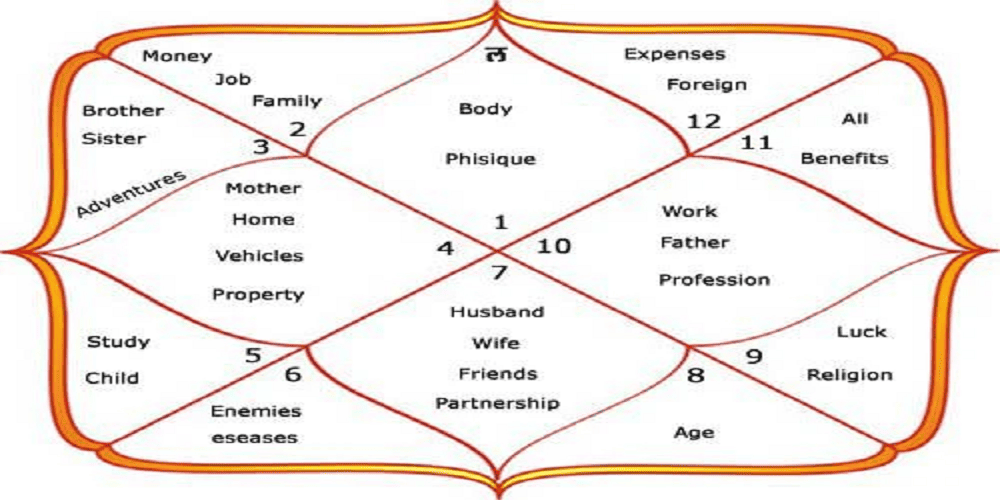
A vedic astrology chart is the foundation of Vedic astrology, an ancient system of knowledge that originated in India thousands of years ago. Also known as a Janam Kundli or birth chart, it is a cosmic snapshot of planetary positions at the exact moment of a person’s birth. This chart is used to analyze personality traits, life events, career paths, relationships, health, and spiritual growth.
Unlike Western astrology, which mainly focuses on the Sun sign, Vedic astrology places deep importance on the Moon sign, Ascendant (Lagna), planetary periods (Dashas), and precise astronomical calculations. Understanding a vedic astrology chart can help individuals gain clarity about their life direction and karmic patterns.
In this detailed guide, you will learn what a vedic astrology chart is, how it is created, how to read it, and why it plays such a powerful role in predicting life events.
What Is a Vedic Astrology Chart?
A vedic astrology chart is a diagram that represents the placement of planets in the twelve zodiac signs and twelve houses at the time of birth. It is calculated using the sidereal zodiac, which is based on the actual position of constellations in the sky.
This chart acts as a blueprint of your life. According to Vedic astrology, your past-life karma influences your present birth, and that karma is encoded in your birth chart. Every planet, sign, and house in the chart has a specific meaning and influence.
A standard vedic astrology chart includes:
- Ascendant (Lagna)
- Twelve zodiac signs (Rashis)
- Twelve houses (Bhavas)
- Nine planets (Navagrahas)
Each of these components works together to shape different aspects of life.
Importance of a Vedic Astrology Chart in Life Predictions
The vedic astrology chart is not just about predicting the future; it is about understanding yourself and your life journey. It helps answer important questions such as:
- What are my natural strengths and weaknesses?
- Which career path suits me best?
- When is the right time for marriage?
- Why am I facing repeated challenges?
- What remedies can reduce negative planetary effects?
Astrologers study the vedic astrology chart to identify favorable and unfavorable planetary periods, known as Dashas, and transits (Gochar). These techniques make Vedic astrology highly detailed and time-specific.
How a Vedic Astrology Chart Is Created
To create an accurate vedic astrology chart, three details are essential:
- Date of birth
- Time of birth
- Place of birth
Even a small error in birth time can change the Ascendant and house placements, which can significantly alter predictions. The chart is calculated using precise astronomical formulas based on the sidereal zodiac and the Lahiri Ayanamsa.
Once calculated, the chart is drawn in a square or diamond format, which is traditional in Vedic astrology.
Structure of a Vedic Astrology Chart
A vedic astrology chart is divided into twelve sections known as houses. Each house represents a specific area of life.
The Twelve Houses in Vedic Astrology
- First House (Lagna): Personality, physical appearance, self-image
- Second House: Wealth, family, speech
- Third House: Courage, communication, siblings
- Fourth House: Home, mother, comfort, property
- Fifth House: Intelligence, creativity, children
- Sixth House: Health, enemies, debts
- Seventh House: Marriage, partnerships
- Eighth House: Transformation, longevity, hidden matters
- Ninth House: Luck, spirituality, higher knowledge
- Tenth House: Career, profession, reputation
- Eleventh House: Income, gains, social circle
- Twelfth House: Expenses, losses, liberation
Each house gains meaning depending on which planets occupy it and which sign rules it.
Role of Planets in a Vedic Astrology Chart
In a vedic astrology chart, there are nine main planets, known as Navagrahas. Each planet represents specific energies and psychological tendencies.
- Sun: Soul, authority, confidence
- Moon: Mind, emotions, mental health
- Mars: Energy, courage, aggression
- Mercury: Intelligence, communication, business
- Jupiter: Wisdom, growth, spirituality
- Venus: Love, beauty, relationships
- Saturn: Discipline, karma, delays
- Rahu: Ambition, illusion, material desires
- Ketu: Detachment, spirituality, past-life karma
The strength, weakness, and placement of these planets determine how their energies manifest in life.
Zodiac Signs in a Vedic Astrology Chart
A vedic astrology chart uses twelve zodiac signs, also called Rashis. Each sign has its own characteristics and ruling planet.
- Aries to Pisces represent different personality traits
- Signs influence how planets express their energy
- The Ascendant sign plays a major role in shaping behavior
Unlike Western astrology, Vedic astrology emphasizes the Moon sign and Ascendant more than the Sun sign.
Understanding Lagna (Ascendant) in Vedic Astrology Chart
Lagna is the most important point in a vedic astrology chart. It represents the sign rising on the eastern horizon at birth. The Ascendant sets the foundation of the entire chart.
The Lagna determines:
- Physical appearance
- Natural temperament
- Overall life approach
All house placements are calculated from the Ascendant, making it the backbone of chart interpretation.
Planetary Aspects and Yogas
In a vedic astrology chart, planets influence each other through aspects (Drishti). These aspects can be positive or challenging.
Certain planetary combinations create Yogas, which are special formations that bring success, wealth, fame, or spiritual growth. Examples include:
- Raj Yoga for authority and leadership
- Dhan Yoga for wealth
- Gajakesari Yoga for intelligence and prosperity
The presence or absence of such yogas greatly affects life outcomes.
Dashas: Timing Events Using Vedic Astrology Chart
One of the strongest features of a vedic astrology chart is the Dasha system. Dashas are planetary time periods that activate specific planets in your chart.
The most widely used system is the Vimshottari Dasha, which divides life into periods ruled by different planets. When a planet’s Dasha runs, its placement and strength in the chart determine the experiences during that time.
This system allows astrologers to predict:
- Career growth periods
- Marriage timing
- Financial ups and downs
- Health challenges
Transits and Their Impact on Vedic Astrology Chart
Planetary transits refer to the current movement of planets across zodiac signs. When transiting planets interact with your birth chart planets, they trigger events.
Saturn, Jupiter, and Rahu-Ketu transits are especially important in Vedic astrology. A vedic astrology chart combined with transit analysis provides accurate short-term predictions.
Remedies Based on Vedic Astrology Chart
Vedic astrology also offers remedies to balance negative planetary influences. These remedies are not superstition but symbolic methods to harmonize planetary energies.
Common remedies include:
- Mantra chanting
- Wearing gemstones
- Charity and donations
- Fasting on specific days
Remedies are always recommended based on the individual vedic astrology chart.
Difference Between Vedic and Western Astrology Charts
A vedic astrology chart differs from a Western chart in several ways:
- Uses sidereal zodiac instead of tropical
- Focuses more on Moon sign and Ascendant
- Includes Rahu and Ketu as planets
- Strong emphasis on Dashas and karma
These differences make Vedic astrology more predictive and life-event oriented.
Why Accuracy Matters in a Vedic Astrology Chart
Accuracy is crucial when analyzing a vedic astrology chart. Incorrect birth time can shift the Ascendant and house placements, leading to wrong interpretations.
Rectification techniques are often used when birth time is unknown, based on life events and planetary periods.
Can a Vedic Astrology Chart Change?
A vedic astrology chart itself never changes because it represents the sky at birth. However, planetary transits and Dashas change continuously, activating different areas of the chart at different times.
This is why life goes through phases of growth, struggle, success, and transformation.
Practical Uses of Vedic Astrology Chart Today
In modern times, a vedic astrology chart is used for:
- Career counseling
- Marriage matching (Kundli Milan)
- Business planning
- Health analysis
- Spiritual guidance
Many people use their chart as a self-development tool rather than just a prediction system.
Common Misconceptions About Vedic Astrology Chart
Some people believe that a vedic astrology chart fixes destiny permanently. In reality, Vedic astrology teaches that awareness and right action can change outcomes.
Another misconception is that negative placements always bring suffering. Often, challenging planets help build strength, discipline, and wisdom.
Learning to Read Your Own Vedic Astrology Chart
Basic understanding of a vedic astrology chart is possible for anyone willing to study. Learning house meanings, planetary significations, and sign qualities is the first step.
However, advanced interpretation requires experience, intuition, and deep knowledge of classical texts.
Spiritual Significance of Vedic Astrology Chart
Beyond material predictions, a vedic astrology chart reveals the soul’s journey. It highlights spiritual lessons, karmic debts, and liberation paths.
Many saints and spiritual teachers have used astrology as a tool for self-realization rather than prediction.
FAQs About Vedic Astrology Chart
What is a vedic astrology chart used for?
A vedic astrology chart is used to analyze personality, predict life events, understand karmic patterns, and identify favorable and unfavorable periods in life.
Is a vedic astrology chart more accurate than Western astrology?
Many people find a vedic astrology chart more precise because it uses the sidereal zodiac and detailed timing systems like Dashas.
Can I generate my vedic astrology chart online?
Yes, many astrology websites and software can generate a vedic astrology chart using your birth details.
Which is more important in a vedic astrology chart, Sun sign or Moon sign?
In Vedic astrology, the Moon sign and Ascendant are generally more important than the Sun sign.
Can remedies really change results shown in a vedic astrology chart?
Remedies help reduce negative influences and strengthen positive planetary energies, but personal effort and awareness are equally important.
Does everyone have good and bad planets in their vedic astrology chart?
Yes, every chart has both supportive and challenging planetary placements. Balance is part of human life.
How often should a vedic astrology chart be analyzed?
A full chart analysis is usually done once, while Dashas and transits can be reviewed yearly or during major life decisions.
Conclusion
A vedic astrology chart is a powerful tool that combines astronomy, psychology, and spirituality. It does not merely predict the future but provides deep insight into who you are and why certain patterns repeat in your life. When understood correctly, it becomes a guide for making better decisions, improving self-awareness, and aligning with your life’s true purpose.
Whether you seek clarity in career, relationships, or spiritual growth, the vedic astrology chart serves as a timeless map of human destiny and free will working together.
Leave A Comment
0 Comment