
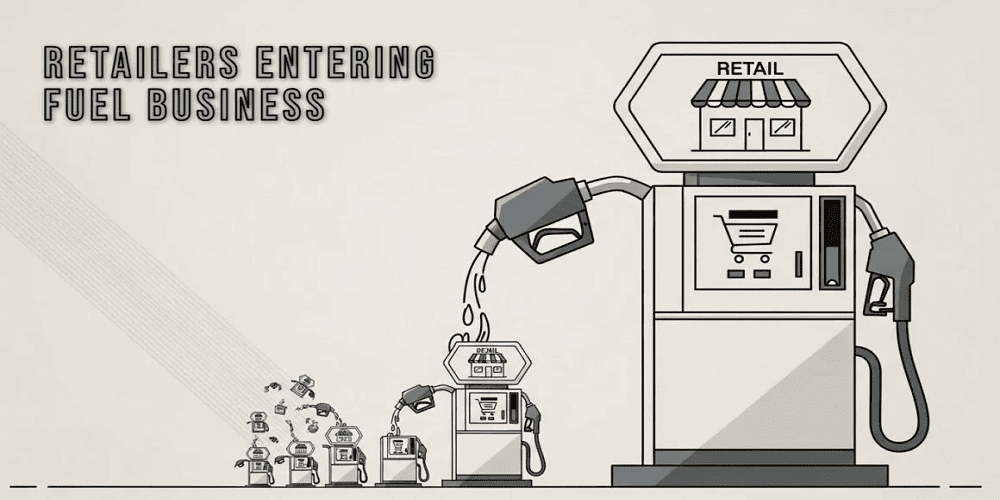
The global retail industry is evolving rapidly, and one of the most notable shifts in recent years is retailers entering fuel business. Traditionally, fuel retailing was dominated by oil companies and specialized fuel station operators. Today, large retailers, supermarkets, hypermarkets, and even convenience store chains are expanding into fuel sales to diversify revenue, increase foot traffic, and strengthen customer loyalty.
This transformation is reshaping both the retail and energy sectors. From supermarkets opening fuel forecourts to global retail giants launching private-label fuel stations, the trend of retailers entering fuel business is becoming a strategic move rather than an experiment. In this article, we explore why this shift is happening, how it works, its benefits, challenges, and what the future holds for retailers entering fuel business.
Understanding the Concept of Retailers Entering Fuel Business
Retailers entering fuel business refers to non-traditional fuel sellers, such as supermarkets, big-box retailers, and retail chains, expanding their operations to include fuel retailing. These retailers typically operate fuel stations adjacent to or near their existing stores, integrating fuel sales with their core retail offerings.
Unlike traditional fuel stations that rely heavily on fuel margins, retailers entering fuel business often treat fuel as a traffic driver rather than a primary profit source. The goal is to attract customers to refuel and then encourage them to shop inside the retail store.
This approach has proven successful in multiple markets, including the United States, Europe, and parts of Asia.
Why Retailers Are Entering the Fuel Business
The rise of retailers entering fuel business is not accidental. Several strategic and economic factors are driving this trend.
Increasing Competition in Retail
Retail margins are under constant pressure due to e-commerce, price comparison, and changing consumer behavior. By entering the fuel business, retailers create an additional reason for customers to choose their store over competitors.
Fuel acts as a necessity-based product that brings consistent footfall.
Fuel as a Customer Acquisition Tool
One of the main reasons retailers entering fuel business succeed is because fuel drives frequent visits. Customers may refuel weekly or bi-weekly, increasing store visit frequency compared to traditional retail shopping patterns.
Retailers often bundle fuel discounts with grocery purchases or loyalty programs to encourage repeat visits.
Higher Basket Value
When retailers enter fuel business, they often see an increase in in-store sales. Customers who come for fuel are more likely to purchase groceries, snacks, or household items during the same trip.
This cross-selling opportunity significantly boosts overall revenue.
Strong Loyalty Program Integration
Retailers entering fuel business frequently integrate fuel purchases with existing loyalty programs. Customers earn points on fuel or receive fuel discounts based on in-store spending.
This creates a closed-loop ecosystem where fuel and retail reinforce each other.
Types of Retailers Entering Fuel Business
Different types of retailers are entering fuel business in various ways, depending on scale, market, and business model.
Supermarkets and Hypermarkets
Large supermarket chains are among the earliest adopters of fuel retailing. They typically build fuel stations adjacent to their stores, offering competitive pricing and loyalty-linked discounts.
Convenience Store Chains
Convenience retailers entering fuel business focus on quick refueling combined with high-margin impulse purchases such as snacks, beverages, and ready-to-eat food.
Big-Box Retailers
Big-box retailers use fuel as a value proposition to attract price-sensitive customers. Fuel pricing is often aggressive, supported by high-volume sales.
Independent Retailers
Smaller retailers are also entering fuel business through partnerships, franchises, or co-branded fuel stations.
How Retailers Enter the Fuel Business
Retailers entering fuel business follow several operational models depending on their risk appetite and expertise.
Owned and Operated Fuel Stations
Some retailers fully own and operate fuel stations. This model offers greater control over pricing and branding but requires higher capital investment and regulatory compliance.
Partnerships with Oil Companies
Many retailers entering fuel business partner with established oil companies. The oil company supplies fuel and branding, while the retailer manages the site and customer experience.
This reduces operational complexity and risk.
Franchise or Lease Models
Retailers may lease fuel station operations to third parties while benefiting from increased foot traffic and rent income.
Private Label Fuel
In some markets, retailers entering fuel business sell fuel under their own private label, focusing on competitive pricing and brand trust.
Benefits of Retailers Entering Fuel Business
The benefits of retailers entering fuel business extend beyond fuel margins.
Increased Customer Footfall
Fuel drives consistent traffic. Even small fuel discounts can significantly influence customer behavior.
Improved Brand Loyalty
When fuel is integrated into loyalty programs, customers become more engaged with the retailer’s ecosystem.
Diversified Revenue Streams
Fuel sales provide an additional revenue channel that helps retailers offset slowdowns in other retail categories.
Competitive Advantage
Retailers entering fuel business can differentiate themselves in crowded retail markets.
Challenges Faced by Retailers Entering Fuel Business
Despite the advantages, retailers entering fuel business face several challenges.
Low Fuel Margins
Fuel margins are thin and highly sensitive to price fluctuations. Retailers must rely on volume and cross-selling to remain profitable.
High Initial Investment
Building fuel infrastructure requires significant capital investment in land, equipment, and safety systems.
Regulatory and Environmental Compliance
Fuel retailing is heavily regulated. Retailers entering fuel business must comply with safety, environmental, and licensing requirements.
Operational Complexity
Managing fuel logistics, storage, and pricing adds complexity to retail operations.
Impact on Traditional Fuel Retailers
The trend of retailers entering fuel business has disrupted traditional fuel retailers.
Traditional fuel stations now face increased price competition and must enhance their convenience offerings, loyalty programs, and in-store experiences to remain competitive.
Some fuel-only retailers are responding by expanding convenience retail or forming alliances with food and beverage brands.
Role of Technology in Retailers Entering Fuel Business
Technology plays a critical role in the success of retailers entering fuel business.
Dynamic Pricing Systems
Retailers use real-time pricing tools to remain competitive while protecting margins.
Digital Loyalty Integration
Mobile apps and digital wallets allow seamless integration of fuel rewards with retail purchases.
Data Analytics
Retailers entering fuel business leverage customer data to personalize offers and optimize pricing strategies.
Sustainability and Alternative Fuels
Sustainability is becoming a major factor as retailers enter fuel business.
Many retailers are investing in:
- Electric vehicle charging stations
- Biofuels
- Hydrogen fuel pilots
By doing so, retailers entering fuel business position themselves for a future where traditional fuel demand may decline.
Global Examples of Retailers Entering Fuel Business
Across the world, retailers entering fuel business have seen varying levels of success.
In developed markets, fuel retailing is often mature and competitive, while in emerging markets, it offers growth opportunities due to rising vehicle ownership.
Retailers entering fuel business in urban areas focus on convenience and speed, while suburban locations emphasize price competitiveness.
Future Outlook for Retailers Entering Fuel Business
The future of retailers entering fuel business looks promising but evolving.
As electric vehicles grow, fuel retailing will gradually transform into energy retailing. Retailers entering fuel business today are likely to expand into charging, mobility services, and on-the-go convenience solutions.
Retailers that invest early in technology, sustainability, and customer experience will gain long-term advantages.
Is Fuel Retailing Still Profitable for Retailers?
Fuel retailing alone is rarely highly profitable. However, for retailers entering fuel business, profitability comes from the combined value of fuel sales, increased footfall, and higher in-store spending.
Fuel is best viewed as a strategic asset rather than a standalone profit center.
Key Strategies for Successful Fuel Retail Expansion
Retailers entering fuel business should focus on:
- Competitive pricing without eroding margins
- Strong loyalty program integration
- Efficient fuel supply chain management
- High-quality convenience offerings
- Compliance and safety excellence
Conclusion
The trend of retailers entering fuel business reflects a broader transformation in retail strategy. Fuel is no longer just an energy product; it is a powerful customer engagement tool. By integrating fuel with retail ecosystems, loyalty programs, and digital platforms, retailers entering fuel business can unlock sustainable growth.
While challenges such as regulation, low margins, and operational complexity remain, the long-term benefits make fuel retailing an attractive diversification strategy. As mobility patterns evolve, retailers entering fuel business will play a critical role in shaping the future of energy retail.
Frequently Asked Questions (FAQs)
What does retailers entering fuel business mean?
Retailers entering fuel business refers to non-traditional fuel sellers like supermarkets and retail chains offering fuel alongside their core retail operations.
Why are retailers entering the fuel business now?
Retailers are entering fuel business to increase foot traffic, improve customer loyalty, and diversify revenue streams in a competitive retail environment.
Is fuel retailing profitable for retailers?
Fuel margins are low, but retailers entering fuel business benefit from increased store visits and higher in-store spending.
Do retailers own the fuel stations they operate?
Some retailers fully own fuel stations, while others partner with oil companies or use franchise models.
How does fuel impact customer loyalty?
Fuel purchases are frequent, making them ideal for loyalty programs that reward customers for both fuel and retail spending.
Are retailers entering fuel business investing in electric charging?
Yes, many retailers entering fuel business are adding EV charging stations to prepare for future mobility trends.
What challenges do retailers face in fuel retailing?
Key challenges include regulatory compliance, high setup costs, operational complexity, and fluctuating fuel prices.
Will electric vehicles reduce fuel retail opportunities?
While traditional fuel demand may decline, retailers entering fuel business can transition to energy and charging services.
Leave A Comment
0 Comment