
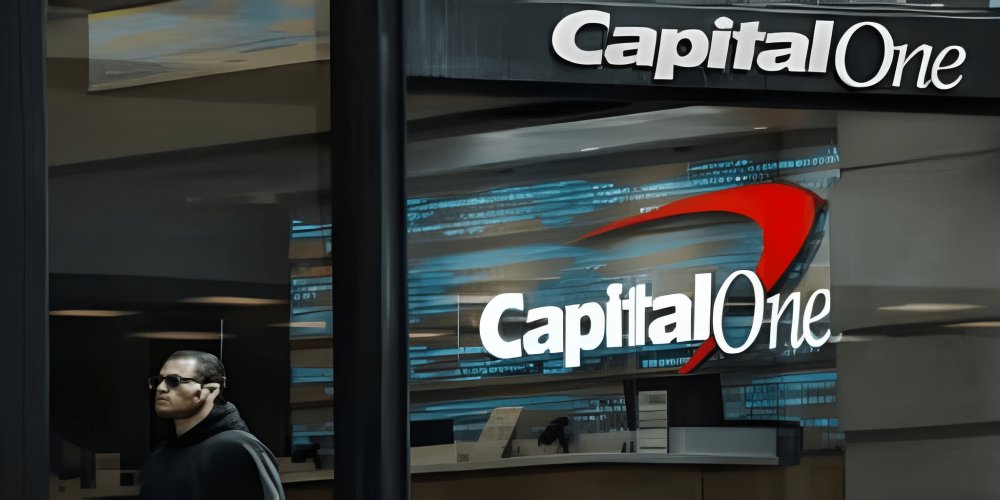
If you follow consumer news or have a credit card, you have probably heard about the $425 million Capital One settlement. It sounds like a giant pile of money, and it is. But where did that number come from? Who gets paid? And more importantly, are you too late to claim anything? This article walks you through the entire story from the beginning. You will learn how the data breach happened, why the bank agreed to pay so much, and what the settlement actually covers. There is also a long list of frequently asked questions at the end. Every answer is straightforward and practical.
The story starts in July 2019. Capital One, one of the largest banks in the United States, announced that someone had broken into its systems. The person who did it was not a criminal mastermind in a foreign country. Actually, the hacker was a former software engineer living in Seattle. She exploited a misconfigured firewall on Capital One's cloud server. That small mistake led to one of the biggest financial data breaches ever recorded. In total, about 106 million people had their personal information exposed. That includes Americans and Canadians.
Think about what that means. The hacker got access to names, addresses, credit scores, credit limits, payment histories, and social security numbers. For about 140,000 people, the hacker also took bank account numbers. For another 80,000 people, linked bank accounts were exposed. The breach affected not just current Capital One customers but also people who had applied for a card years earlier and even those who were only referred for promotional offers. Some records went back to 2005.
After the news broke, the lawsuits came fast. Angry customers hired lawyers. Consumer advocacy groups joined in. All those separate lawsuits were combined into one big case in a federal court in Virginia. The plaintiffs accused Capital One of being careless with their data. They said the bank broke promises about keeping information safe. They also claimed invasion of privacy and violations of various state laws. Capital One did not admit fault. That is standard in most large settlements. But the bank agreed to pay a huge sum to make the lawsuits go away.
That is where the $425 million Capital One settlement comes into play. In January 2021, a judge gave preliminary approval to the deal. Then in August 2021, the court held a final approval hearing. By September 2021, the settlement became official. The bank set aside the full amount to compensate victims, pay lawyers, and cover administrative costs. At the time, this was one of the largest data breach settlements ever paid by a financial institution in the United States.
Now, you might be wondering whether you are included in the $425 million Capital One settlement. Here is how the class was defined. Anyone living in the United States whose personal information was accessed during that breach is a class member. That includes roughly 98 million people. If Capital One sent you a letter or an email about the breach, you are almost certainly part of the class. Canadian residents were not included in this particular settlement because a separate Canadian class action handled them.
Being a class member does not mean you automatically get a check. You actually had to do something. The settlement created a claims process. People who wanted cash had to fill out a form online or by mail. They also had to provide proof of their losses. The deadline for filing those claims was September 27, 2021. If you missed that date, you cannot get any cash payment now. However, you might still be eligible for free credit monitoring services. That part of the $425 million Capital One settlement is automatic for all class members, even if you never filed a claim.
Let us talk about how the money was divided. The $425 million Capital One settlement fund was split into several buckets. The biggest bucket went to documented out-of-pocket losses. That means expenses you actually paid because of the breach. For example, if you had to pay bank fees to close a compromised account, you could get that money back. If you bought credit monitoring on your own, you could claim those costs. If you spent money on postage, notary services, or long-distance phone calls to deal with identity theft, those were reimbursable.
The second bucket covered lost time. The settlement recognized that people spent hours of their own time fixing problems caused by the breach. Maybe you had to call credit bureaus to place fraud alerts. Maybe you had to dispute fraudulent charges with multiple companies. The settlement paid $25 per hour for up to fifteen hours. That came out to a maximum of $375 for lost time. You had to provide a log showing what you did and how long it took.
The third bucket was for people who had no documented losses and did not spend hours on remediation. Those class members could claim a flat cash payment instead. The initial estimate was around $25 per person. But because so many people filed claims, the actual amount ended up being approximately $21.50. It is not a life-changing sum, but the point was to acknowledge that even without direct financial harm, having your personal data stolen is still an invasion.
The fourth bucket paid for five years of credit monitoring and identity restoration services. Every class member gets this regardless of whether they filed a claim. The monitoring covers all three major credit bureaus. There is also up to one million dollars in identity theft insurance. If someone steals your identity, the insurance helps cover legal fees and lost wages.
Finally, the $425 million Capital One settlement also paid the lawyers. The court approved up to 96 million dollars for plaintiffs attorneys fees. That sounds like a huge number, and it is. But in class action law, this percentage is fairly standard. The lawyers took the risk of working on contingency and spent years on the case with no guarantee of winning. Administrative costs for running the claims website, sending notices, and processing forms took another chunk.
What did actual people receive? This varies wildly. Someone who had no real damage got about twenty dollars. Another person who spent ten hours on the phone and paid fifty dollars in bank fees got around three hundred dollars. A few people who suffered severe identity theft received thousands. One claimant had fraudulent tax returns filed in their name and had to spend months working with the IRS. That person reportedly received over five thousand dollars. But those are the exceptions. Most payouts were modest.
The $425 million Capital One settlement did not exist in a vacuum. The bank also faced separate fines from government regulators. The Office of the Comptroller of the Currency hit Capital One with an eighty million dollar penalty. The Federal Reserve added another eighty million dollars. So the total cost to Capital One from this breach exceeded five hundred eighty five million dollars. On top of that, the bank had to sign a cease and desist order. That order forced Capital One to rebuild large parts of its cybersecurity program. The bank has since spent more than five hundred million dollars on security upgrades.
Other financial companies watched the $425 million Capital One settlement very closely. It became a benchmark for how much a cloud misconfiguration could cost. Before this case, many banks thought the biggest risks came from outside hackers breaking in. But here, the problem was an internal setup error. The firewall was simply configured wrong. That mistake allowed the hacker to move freely through Capital One cloud storage. After this settlement, banks started auditing their cloud security far more aggressively.
There are also some fair criticisms of the settlement. Consumer advocates pointed out that twenty one dollars is not meaningful compensation for the stress of having your social security number exposed. Others noted that the settlement barred class members from ever suing Capital One individually for anything related to the breach. That is a very broad release of claims. If you did nothing and did not opt out by the August 2021 deadline, you lost your right to take the bank to court on your own. For most people, that trade off was not worth it. But the lawyers decided it was better to get something rather than risk a trial where they could have gotten nothing.
Another limitation is the timing of identity theft. Sometimes stolen data takes years to be used. Criminal marketplaces sell old batches of social security numbers and addresses. Fraud could happen six or seven years after the breach. But the five years of credit monitoring from the $425 million Capital One settlement might not cover that later fraud. If someone opens a fraudulent account in your name in 2028 and the monitoring has expired, you are on your own. The settlement does not extend beyond the five year period.
As of early 2026, the $425 million Capital One settlement is effectively finished. The claims administrator has processed almost all claims. Checks and electronic payments were mailed out in multiple batches from 2022 through 2024. The settlement website is still online, but only for basic inquiries like checking payment status or enrolling in credit monitoring if you never did. No new cash claims are being accepted. The court closed the case in late 2024. The money is gone.
If you missed the deadline, do not waste time looking for another way in. There is no second chance for the cash portion. However, you should still freeze your credit reports if you have not already. A credit freeze is free and much stronger than a fraud alert. Go to Equifax, Experian, and TransUnion. Freeze your file. Keep the PIN or password in a safe place. That freeze will block anyone from opening new accounts in your name. The $425 million Capital One settlement cannot do that for you. Only a credit freeze can.
Frequently Asked Questions
Below are the most common questions people still ask about the $425 million Capital One settlement. Each answer is direct and based on the official court documents.
- Am I automatically getting money from the $425 million Capital One settlement?
No. Nothing is automatic except the credit monitoring. To get cash, you had to file a claim by September 27, 2021. That deadline passed years ago. If you did nothing, you receive no cash. But you still have the right to the five years of credit monitoring and identity restoration services.
- I never received a notice about the settlement. What should I do?
You can still contact the settlement administrator to confirm whether you were a class member. However, without a timely claim, you cannot receive cash. The administrator may still let you enroll in the credit monitoring services. You will need to provide proof of your identity and likely proof that your information was exposed. This is not guaranteed, but it is worth a phone call.
- How much did people actually get from the $425 million Capital One settlement?
Most people received between twenty one dollars and a few hundred dollars. A small number of people with severe identity theft received between one thousand and five thousand dollars. No one received more than ten thousand dollars from the class action fund. The average payout for documented losses was roughly two hundred fifty dollars.
- Do I have to pay taxes on money from this settlement?
Generally no. The IRS does not tax compensatory damages for actual losses or for time spent remediating identity theft. This settlement did not include punitive damages. That means the money is treated as a reimbursement, not as income. But if you are unsure, ask a tax professional. Every situation is slightly different.
- Can I still sue Capital One by myself after this settlement?
Only if you opted out of the class action before the August 2021 deadline. If you did nothing or if you filed a claim, you gave up your right to sue individually. The settlement release is permanent and covers every claim related to the data breach. That includes future identity theft that happens years from now. You cannot go back and undo that release.
- What if I moved and never got my check from the settlement?
Contact the settlement administrator as soon as possible. They have a process for reissuing lost or expired checks. But there is a time limit. Most checks had to be cashed within one hundred eighty days. If you waited too long, the money may have gone back into the settlement fund. You should still try. Some administrators hold unclaimed funds for a longer period.
- Is the $425 million Capital One settlement still accepting new claims for identity theft?
Only in very rare circumstances. If you can prove that you suffered direct identity theft from the Capital One breach after the original claim deadline, you may file a late claim. You need strong evidence. For example, you need to show that the fraudulent account used exactly the information that Capital One confirmed was exposed. You also need to show that no other data breach could have caused the fraud. These late claims are hard to win.
- What happens to any leftover money from the settlement?
The settlement agreement says that any leftover funds after all valid claims and costs are paid must go to a court approved nonprofit organization focused on consumer privacy and cybersecurity. In practice, almost all the money was distributed. There were no significant leftovers. The fund was fully exhausted by the end of 2024.
- How do I get the free credit monitoring from this settlement?
Visit the official settlement website. You will need your class member ID. That ID was printed on the notice Capital One sent you. If you lost that notice, call the administrator. They will verify your identity and give you instructions. Once enrolled, you will get daily monitoring from all three credit bureaus. You will also have access to identity restoration specialists who will help you clean up any fraud.
- Is this the same settlement as the one with the Office of the Comptroller of the Currency?
No. The $425 million Capital One settlement is a class action lawsuit brought by private consumers. The OCC and Federal Reserve fines are separate government enforcement actions. Those fines go to the government, not to victims. The class action money goes directly to affected individuals. Do not confuse the two. They are different pots of money with different purposes.
Final Thoughts
Looking back, the $425 million Capital One settlement did two things well. It forced a large bank to pay for its security failures. It also gave millions of people free credit monitoring for half a decade. But it also showed the limits of class actions. Small cash payments do not undo the anxiety of having your private data floating around on the dark web. And a five year monitoring period does not protect you forever. If you were affected by this breach, the best thing you can do today is ignore the settlement itself. It is finished. Instead, freeze your credit, check your bank statements every month, and use strong passwords everywhere. That is the real lesson of the $425 million Capital One settlement. No amount of money from a court case can replace your own daily vigilance.
Leave A Comment
0 Comment