
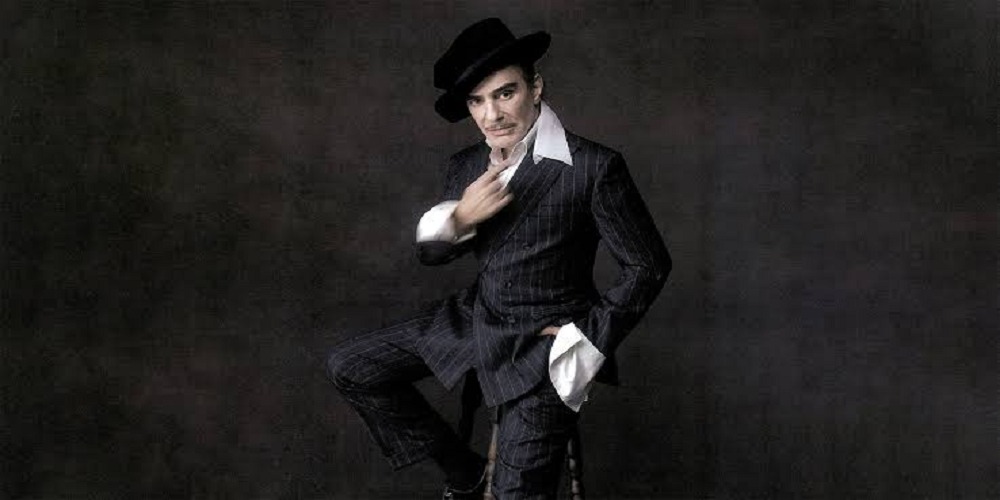
John Galliano is one of the most influential and controversial designers in modern fashion. Known for dramatic runway shows, historical references, theatrical storytelling and extraordinary craftsmanship, he has spent decades pushing the boundaries of what fashion can communicate. His career has included major creative roles at Givenchy, Christian Dior and Maison Margiela, while his own label also became an important part of his identity as a designer.
At the same time, the story of John Galliano cannot be separated from the controversy that changed his career in 2011. His antisemitic and racist remarks led to his dismissal from Dior and resulted in a criminal conviction in France. The years that followed became a period of personal recovery, reflection and professional rebuilding.
Galliano's later work at Maison Margiela demonstrated another side of his creativity. Rather than simply repeating the extravagant approach associated with his Dior years, he explored deconstruction, craftsmanship, transformation and the relationship between clothing and identity. His departure from Maison Margiela in 2024 marked the end of another major chapter.
In 2026, interest in his work remains strong. The Metropolitan Museum of Art has announced a major 2027 exhibition dedicated to his career, making him only the third living designer to receive a solo Costume Institute exhibition. The exhibition is expected to examine both his artistic achievements and the difficult events that shaped his public life.
Who Is John Galliano?
John Galliano is a British fashion designer born in Gibraltar on November 28, 1960. His full name is John Charles Galliano. His family moved to South London when he was six, and his upbringing exposed him to different cultural influences that would later become important elements in his creative work.
Galliano studied at Central Saint Martins in London, where he graduated in 1984. His graduation collection, inspired by the French Revolution, attracted immediate attention and was purchased by Browns, the influential London fashion retailer. This early success gave Galliano the opportunity to establish his own label and begin presenting collections that were already recognizable for their historical references and theatrical quality.
His rise was unusually fast for a young British designer. By the 1990s, Galliano had begun showing in Paris and was attracting international attention. In 1995, he was appointed to lead Givenchy, becoming the first British designer to head an established French haute couture house.
The appointment represented a major turning point. It showed that the traditional French luxury industry was willing to embrace a designer whose approach was considerably more experimental than the conventional image of haute couture.
John Galliano's Early Fashion Career
The early work of John Galliano was built around storytelling. Instead of treating clothing as isolated objects, he often created entire worlds around his collections.
His shows could reference historical periods, fictional characters, films, literature, cultures and personalities. Models were not simply walking down a runway; they were often presented as characters within a larger story.
This approach made his shows memorable and helped establish the designer as one of fashion's great theatrical figures.
Galliano's graduation collection demonstrated this interest in history. His fascination with the past continued throughout his career, but he rarely copied historical clothing directly. Instead, he transformed historical references into something contemporary, exaggerated and emotionally charged.
His early label also struggled financially at various points, but the originality of his work continued to attract influential supporters within the fashion industry.
By the early 1990s, his reputation had grown considerably. Showing in Paris brought him closer to the major European fashion houses and helped create the conditions for his eventual appointment at Givenchy.
John Galliano at Givenchy
In 1995, John Galliano became the creative force at Givenchy. His appointment was significant because Givenchy was one of France's historic couture houses, and Galliano was a relatively unconventional British designer.
His first haute couture collection for the house was presented in January 1996 and received significant attention from the fashion press.
Galliano brought energy, theatricality and experimentation to Givenchy. His designs demonstrated that traditional couture techniques could be combined with a much more dramatic contemporary sensibility.
However, his time at Givenchy was relatively short. In 1996, LVMH moved him to Christian Dior, one of the most important luxury fashion houses in the world.
That move would define much of his international reputation.
John Galliano at Christian Dior
John Galliano joined Christian Dior in 1996, succeeding Gianfranco Ferré. The appointment was initially viewed as a bold decision because Dior represented one of the most prestigious names in French fashion.
Galliano quickly demonstrated that he could work within Dior's heritage while giving the brand a more dramatic and contemporary identity.
His Dior collections frequently combined historical silhouettes with unexpected materials, exaggerated proportions, elaborate styling and theatrical presentations.
One of the most important aspects of his Dior period was his ability to connect couture-level creativity with a commercially powerful luxury brand.
His designs were not restricted to the runway. His influence could be seen in handbags, shoes, accessories, advertising and celebrity fashion.
One of his most recognizable creations was the Dior Saddle bag, introduced for the Spring/Summer 2000 collection. The distinctive curved shape became one of the most recognizable accessories associated with the Galliano era at Dior.
His Dior career also produced numerous memorable red-carpet moments. Celebrities and public figures wore his designs at major events, helping transform fashion shows into cultural spectacles.
The designer's ability to create an atmosphere around clothing was particularly important during this period. A Galliano Dior show was often more than a presentation of garments. It could feel like theatre, cinema and historical fantasy combined.
The Design Philosophy of John Galliano
One reason John Galliano remains so important is his approach to fashion as storytelling.
Rather than beginning only with a garment, Galliano often began with a character, period, emotion or narrative.
Historical clothing could be distorted, exaggerated or combined with modern elements. A corset might be reinterpreted through contemporary construction. A traditional dress could be cut, draped or reconstructed in a completely different way.
This made his collections visually complex.
Several techniques became strongly associated with his work, including bias cutting, corsetry, draping and detailed tailoring. His runway presentations also relied heavily on styling, makeup, hair, music and set design.
The result was an immersive fashion experience.
His approach also demonstrated that fashion could be used to create fantasy. Clothing did not have to simply reflect everyday life. It could allow the wearer to become someone else.
This theatrical approach influenced an entire generation of designers and helped change expectations surrounding fashion shows.
Why John Galliano Became So Famous
The popularity of John Galliano came from several different factors.
First, his designs were visually distinctive. Even when inspired by historical references, they rarely looked like straightforward reproductions.
Second, he understood the importance of presentation. His shows created strong emotional reactions and were often discussed long after the runway lights went out.
Third, he combined creativity with technical knowledge. The drama of his work was supported by sophisticated construction techniques.
Fourth, he understood the power of fashion imagery. His work translated effectively into photographs, magazines, advertising campaigns and celebrity appearances.
This combination made Galliano more than a traditional fashion designer. He became a cultural figure associated with the spectacle of modern luxury fashion.
The 2011 Scandal
The most difficult chapter in John Galliano's career came in 2011.
In February of that year, he was filmed making antisemitic and racist remarks in a Paris café. A second video later emerged, intensifying the controversy.
The incident had major professional consequences.
Dior suspended him and subsequently dismissed him from the company. He was also suspended from his own label. In September 2011, a French court found him guilty of making public racist and antisemitic insults and imposed a suspended fine.
The scandal fundamentally changed the public perception of Galliano.
For many people, his artistic achievements could not be separated from his behavior. Others argued that his personal struggles and substance abuse were relevant to understanding the circumstances, while still emphasizing that his remarks were unacceptable.
Galliano later apologized publicly and entered a long period of recovery and rehabilitation.
The controversy remains an essential part of any serious discussion of his career.
The Road Back to Fashion
After leaving Dior, John Galliano largely disappeared from the fashion spotlight for several years.
He worked on rebuilding his personal life and addressing his substance abuse problems. He also received support from people within the fashion industry.
One important figure during this period was Oscar de la Renta, who allowed Galliano to work with him temporarily in 2013.
The experience helped Galliano reconnect with the creative process while remaining away from the enormous pressure of leading a major fashion house.
This period became important in his eventual return.
In 2014, Maison Margiela announced that Galliano would become its creative director. The appointment surprised many people because Margiela had a very different identity from Dior.
Maison Margiela was associated with anonymity, deconstruction, conceptual clothing and a rejection of conventional fashion celebrity.
Galliano was associated with theatricality, glamour and a highly recognizable personal image.
The contrast made the appointment particularly interesting.
John Galliano at Maison Margiela
Galliano joined Maison Margiela in 2014 and spent roughly a decade leading its creative direction.
His work at Margiela became one of the most fascinating chapters of his career.
Instead of simply recreating the extravagant style associated with Dior, he adapted his creative language to the philosophy of the house.
Deconstruction became especially important.
Garments could appear unfinished, reconstructed or transformed. Traditional techniques were combined with unconventional materials and unusual silhouettes.
Galliano also explored the concept of transformation. Clothing could alter the way a person moved, stood or appeared.
This was particularly visible in his haute couture work for Maison Margiela.
His January 2024 Artisanal collection became one of the most widely discussed fashion shows of recent years. Presented beneath Paris's Pont Alexandre III, the collection created an almost dreamlike environment and emphasized character, makeup, silhouette and extraordinary craftsmanship. The official Maison Margiela presentation described the collection as an exploration of the relationship between the body, clothing and emotional identity.
The show was widely celebrated as evidence that Galliano remained capable of producing groundbreaking fashion decades into his career.
John Galliano's Departure From Maison Margiela
In December 2024, John Galliano announced that he was leaving Maison Margiela after approximately ten years.
His departure marked the end of his longest major creative-director role outside Dior.
British Vogue reported that his January 2024 Artisanal collection ultimately became his final show for the house. Galliano thanked the company and his collaborators while indicating that he would reveal his next chapter when the time was right.
His departure immediately generated speculation about what he might do next.
Galliano had already demonstrated that his creative identity could evolve significantly. His move from Dior to Margiela had shown that he was capable of adapting his methods rather than simply repeating past successes.
That makes his future direction particularly interesting to the fashion industry.
John Galliano and His Influence on Modern Fashion
The influence of John Galliano can be seen in several areas of contemporary fashion.
One is the importance of narrative.
Many modern fashion houses now treat runway shows as large-scale experiences involving music, set design, casting and visual storytelling. Galliano was one of the designers who helped establish this approach as an important part of luxury fashion.
Another area is historical reinterpretation.
Galliano demonstrated that fashion history could be used as raw material for new ideas. Instead of simply reproducing historical garments, designers could distort, combine and transform references.
His work also showed the importance of craftsmanship.
Behind the theatrical presentation were highly technical garments requiring advanced cutting, draping, embroidery and construction.
His Margiela period further demonstrated how these techniques could be used for conceptual fashion.
John Galliano's Legacy at Dior
The Dior years remain one of the most discussed parts of Galliano's career.
His tenure helped establish a new relationship between haute couture and popular culture.
The dramatic collections created enormous media interest, while accessories such as the Saddle bag demonstrated how runway concepts could become commercially successful products.
His influence also helped create the image of the modern celebrity fashion designer.
Today, many creative directors are expected to be not only designers but also storytellers, brand strategists and cultural personalities.
Galliano was one of the designers who pushed this model forward.
John Galliano's Legacy at Maison Margiela
His Margiela legacy is different.
At Dior, Galliano transformed a historic luxury house through spectacle and glamour.
At Margiela, he worked within a house famous for deconstruction and anonymity and found new ways to express his creativity.
The result was a more mature form of theatrical fashion.
Instead of relying solely on extravagance, Galliano increasingly focused on construction, transformation and the emotional relationship between clothing and the body.
This period also changed the conversation surrounding his career.
It demonstrated that his creativity was not limited to one particular aesthetic.
The Future of John Galliano
As of 2026, Galliano's next major creative position remains a subject of interest.
His departure from Maison Margiela created widespread speculation, but there has not been a universally confirmed new permanent creative-director appointment for him.
At the same time, his influence remains visible in fashion.
His archival work continues to attract collectors, fashion historians and designers. Vintage Galliano pieces from the Dior period have also become important references for contemporary fashion enthusiasts.
His career is increasingly being studied not simply as a sequence of successful collections but as a complicated story about creativity, fame, failure, recovery and reinvention.
John Galliano: Horizons at The Metropolitan Museum of Art
One of the biggest developments in Galliano's post-Margiela story is the announcement of a major exhibition at The Metropolitan Museum of Art.
The exhibition, titled "John Galliano: Horizons," is scheduled to open on May 9, 2027, and continue through January 9, 2028.
According to The Met and reporting about the exhibition, it will examine approximately four decades of Galliano's work, including his early career, Givenchy, Dior and Maison Margiela. It will also address the controversies surrounding his career rather than presenting a purely celebratory portrait.
The exhibition is particularly significant because Galliano will become only the third living designer to receive a solo Costume Institute exhibition, following Yves Saint Laurent and Rei Kawakubo.
The decision has already generated debate.
Supporters argue that Galliano's artistic contribution to fashion deserves serious historical examination. Critics believe any celebration of his work must also confront the harm caused by his antisemitic and racist remarks.
The exhibition's organizers have indicated that both aspects of his story will be addressed.
This makes the exhibition more than a retrospective of clothing. It is also an opportunity to examine the complicated relationship between artistic achievement and personal accountability.
Why John Galliano Still Matters
John Galliano remains important because his career illustrates how fashion can simultaneously be beautiful, innovative, commercial, controversial and deeply personal.
His strongest work shows an extraordinary ability to transform references into new visual languages.
His career also demonstrates that creative success does not erase personal responsibility.
The controversy of 2011 permanently changed how many people view him. His later work, however, showed an attempt to rebuild his professional identity through craftsmanship and creativity.
Whether someone sees Galliano primarily as a fashion genius, a controversial figure, or both, his influence on modern fashion is difficult to ignore.
His work at Dior helped redefine fashion spectacle. His work at Maison Margiela demonstrated the possibilities of reinvention.
For students of fashion, designers, collectors and historians, his career offers a complex case study in creativity, reputation and transformation.
Conclusion
John Galliano has experienced one of the most dramatic careers in modern fashion.
From his graduation collection at Central Saint Martins to his rise through his own label, Givenchy and Dior, he became one of the industry's most celebrated creative figures.
His designs were known for theatrical presentation, historical inspiration, technical complexity and emotional storytelling.
The events of 2011 created a devastating professional setback and permanently complicated his public legacy. His later return through Maison Margiela, however, showed that his creative career could evolve.
At Margiela, he produced some of the most technically ambitious and visually memorable work of his career. His departure in 2024 opened another uncertain chapter.
Now, with the planned 2027 Metropolitan Museum of Art retrospective, Galliano's work is being placed within a larger historical conversation.
His story is ultimately not simple. It is a story of extraordinary talent, serious failure, personal recovery and creative reinvention. That complexity is precisely why John Galliano continues to attract attention decades after his first breakthrough.
FAQs About John Galliano
Who is John Galliano?
John Galliano is a British fashion designer born in Gibraltar in 1960. He is known for his work at Givenchy, Christian Dior, his own label and Maison Margiela.
What is John Galliano famous for?
John Galliano is famous for theatrical fashion collections, historical references, couture craftsmanship and dramatic runway presentations. He is particularly known for his years at Christian Dior and Maison Margiela.
When did John Galliano work for Dior?
Galliano was appointed creative director of Christian Dior in 1996 and remained there until 2011. His Dior period became one of the most influential chapters of his career.
What happened to John Galliano in 2011?
In 2011, Galliano was filmed making antisemitic and racist remarks in Paris. Dior dismissed him, and he was later convicted by a French court for public racist and antisemitic insults.
Did John Galliano work for Maison Margiela?
Yes. John Galliano became the creative director of Maison Margiela in 2014 and remained with the house until his departure in 2024.
Why is John Galliano important to fashion?
Galliano is important because he helped redefine the fashion show as a form of theatrical storytelling. His work also demonstrated how historical references, couture techniques and contemporary design could be combined.
What is John Galliano doing now?
After leaving Maison Margiela in 2024, Galliano's next permanent creative role has remained uncertain. His work continues to receive significant attention, including through the upcoming Metropolitan Museum of Art retrospective planned for 2027.
What is the John Galliano Met exhibition?
"John Galliano: Horizons" is a major Costume Institute exhibition planned at The Metropolitan Museum of Art in New York. It is scheduled to open in May 2027 and will examine Galliano's four-decade career as well as the controversies surrounding it.
What was John Galliano's most famous Dior creation?
Among the best-known creations associated with Galliano's Dior period is the Dior Saddle bag, which debuted in the Spring/Summer 2000 collection and later became a major fashion accessory.
Is John Galliano still influential?
Yes. His influence remains visible in runway storytelling, historical reinterpretation, couture craftsmanship and theatrical fashion presentation. His archival work continues to attract collectors, designers and fashion historians.
What makes John Galliano's design style unique?
His style combines historical research, dramatic storytelling, exaggerated silhouettes, couture craftsmanship and theatrical presentation. At Maison Margiela, he also incorporated deconstruction and transformation into his design language.
Did John Galliano return to fashion after leaving Dior?
Yes. After several years away from a major creative-director position, he returned to fashion leadership in 2014 when he joined Maison Margiela.
Why is John Galliano controversial?
His career is controversial because of the antisemitic and racist remarks he made in 2011. The incident led to his dismissal from Dior and a criminal conviction in France. His later career has therefore been discussed alongside questions about accountability, rehabilitation and forgiveness.
What is John Galliano's fashion legacy?
His legacy includes influential Dior collections, memorable couture, dramatic runway presentations and a later body of work at Maison Margiela that explored deconstruction and transformation. His career remains both highly influential and deeply debated.
Leave A Comment
0 Comment