
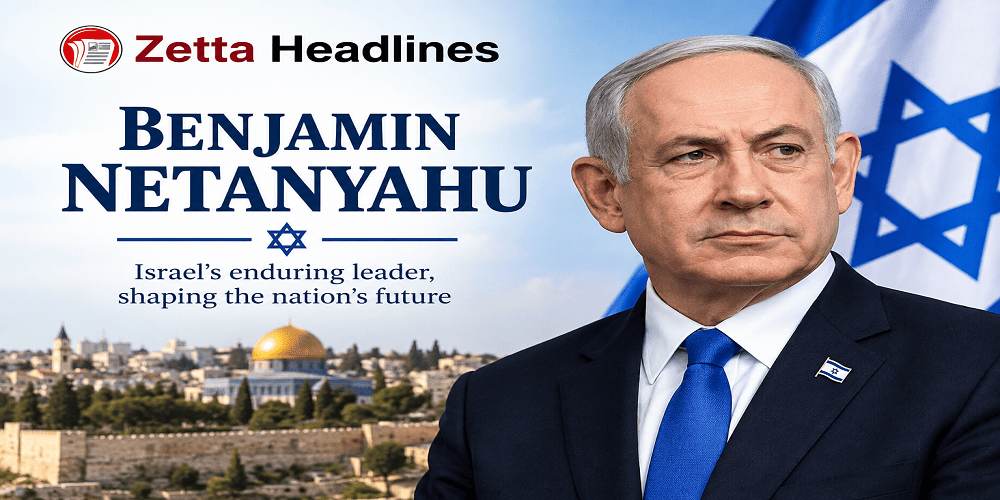
Benjamin Netanyahu is one of the most recognizable and influential political figures in modern Israeli history. He has served multiple terms as Israel’s prime minister and has played a central role in the country’s domestic politics, foreign relations, security policy and debates over the Israeli-Palestinian conflict.
As of September 2026, Benjamin Netanyahu is serving as Israel’s prime minister and leads the government formed following the 2022 Knesset election. The Knesset records the current government as Israel’s 37th government, established on December 29, 2022, with Netanyahu as prime minister and the Likud party as his political faction.
His political career stretches back several decades. During that period, Benjamin Netanyahu has served as prime minister, opposition leader, foreign minister and finance minister. His career has also included diplomatic work, military service and international advocacy on issues involving terrorism and Israel’s security.
Who Is Benjamin Netanyahu?
Benjamin Netanyahu was born in Tel Aviv in 1949 and grew up partly in Jerusalem and the United States. His father, Benzion Netanyahu, was a historian and academic. The family’s connection with historical and political subjects influenced Netanyahu's early intellectual environment.
According to an official Israeli government curriculum vitae, Netanyahu returned to Israel in 1967 and joined the Israel Defense Forces. He served as a soldier and officer in Sayeret Matkal, an elite military unit. His military career included participation in operations such as the 1972 rescue of hostages from a hijacked Sabena aircraft. He also served during the Yom Kippur War in 1973.
After leaving the military, Netanyahu developed an international career that included work in business, diplomacy and public advocacy. He studied architecture and business management at the Massachusetts Institute of Technology and later became increasingly involved in Israeli politics.
His combination of military experience, international exposure and political communication skills eventually helped establish him as a major figure within the Likud movement.
Early Political and Diplomatic Career
Before becoming prime minister, Benjamin Netanyahu held several important government and diplomatic positions.
From 1984 to 1988, he served as Israel’s ambassador to the United Nations. His time at the United Nations gave him extensive experience in international diplomacy and media communication.
He entered the Knesset in the late 1980s and became increasingly prominent within Likud. He later served as deputy minister and eventually became leader of the opposition.
In the 1990s, Netanyahu became a national political figure. His first term as prime minister began in 1996 after he won the election. He served from 1996 to 1999. The official Israeli government biography lists this as his first period as prime minister.
Following his first term, Netanyahu remained active in politics and eventually returned to government.
Benjamin Netanyahu and the Likud Party
Benjamin Netanyahu has been closely associated with Likud, one of Israel’s major political parties. He became chairman of Likud in the 1990s and later returned to the position after periods outside government.
Likud generally represents a right-wing political tradition in Israel, with emphasis on national security, economic liberalism in various periods and a strong national identity. However, the party's positions and coalition relationships have changed over time.
Netanyahu's leadership has been central to Likud's electoral strategy for many years. He has often campaigned around national security, economic development, Israel's international relationships and opposition to threats from regional actors.
His long tenure has also made him closely associated with the direction of the party itself.
Return to the Prime Minister's Office
Benjamin Netanyahu returned to the position of prime minister in 2009 after his political comeback. He remained in office for more than a decade before a new coalition replaced his government in 2021.
The Israeli State Comptroller records that Netanyahu held the premiership from March 2009 until the end of the relevant audit period, apart from an approximately one-and-a-half-year period in which Naftali Bennett and then Yair Lapid served as prime ministers.
His second major period in office made him one of the longest-serving leaders in Israeli history.
During these years, his government focused heavily on security, Iran's nuclear program, relations with the United States, economic policy and Israel's relationships with other countries.
Netanyahu also became known internationally for his frequent appearances in foreign media and speeches to international organizations.
Benjamin Netanyahu and Israel's Foreign Relations
Foreign policy has been one of the most important areas of Benjamin Netanyahu's political career.
The relationship between Israel and the United States has been particularly important. Netanyahu has worked with multiple American administrations, although the relationship has sometimes included disagreements over settlements, Iran, Palestinian statehood and military strategy.
During his years in office, Israel also expanded diplomatic relationships with several Arab and Muslim-majority countries through the Abraham Accords. The agreements represented a significant development in Israel's regional diplomacy.
Netanyahu has consistently emphasized the importance of international pressure against Iran and has argued that Iran's nuclear ambitions represent a serious security concern for Israel.
His approach to foreign affairs has often centered on national security, military deterrence and strengthening Israel's diplomatic partnerships.
Benjamin Netanyahu and the Israeli-Palestinian Conflict
The Israeli-Palestinian conflict has been one of the most difficult issues throughout Netanyahu's political career.
His governments have supported Israeli security measures and maintained positions concerning Israeli settlements, Palestinian political leadership and the possibility of a negotiated settlement.
Netanyahu has expressed opposition to what he considers security risks associated with Palestinian armed groups. At different points in his career, he has also discussed forms of Palestinian self-government while emphasizing Israeli security requirements.
The conflict remains deeply disputed, and Israelis, Palestinians and international organizations frequently disagree about responsibility, policy and possible solutions.
Because of the complexity of the issue, descriptions of Netanyahu's policies should distinguish between documented government actions and political interpretations made by supporters or opponents.
The October 7, 2023 Attack and the Gaza War
The most consequential period of Netanyahu's latest premiership began after the Hamas-led attack on Israel on October 7, 2023.
The attack resulted in the deaths of approximately 1,200 people in Israel and the taking of 251 hostages, according to figures cited by Reuters. Israel subsequently launched a major military campaign in Gaza against Hamas.
The war transformed Netanyahu's government and became the central issue surrounding his leadership.
The Israeli government has said that its military campaign is aimed at Hamas and at preventing another attack against Israel. Palestinian officials and international critics have raised serious concerns about civilian deaths, destruction and humanitarian conditions in Gaza.
Reuters reported in September 2026 that Palestinian health officials had reported more than 73,000 deaths in Gaza since the beginning of the Israeli military campaign, while noting that the figures include civilians and combatants and that Israel disputes allegations of genocide.
The conflict has also affected Israel's relations with the United States, European governments, Arab countries and international institutions.
International Criminal Court Proceedings
Another major issue surrounding Benjamin Netanyahu is the International Criminal Court.
The ICC issued an arrest warrant for Netanyahu in connection with allegations concerning the Gaza conflict. The development has created significant international legal and diplomatic controversy.
The Israeli government has rejected the allegations and challenged the court's jurisdiction and conclusions.
The issue remained active in September 2026. Reuters reported that the United States was preparing sanctions against the International Criminal Court in response to warrants involving Israeli officials, among other issues.
It is important to distinguish an arrest warrant from a criminal conviction. An ICC warrant represents a judicial action alleging that there are grounds to pursue an individual; it does not itself establish guilt.
Benjamin Netanyahu's Domestic Political Agenda
Domestic politics have also played a major role in Netanyahu's recent governments.
One particularly controversial subject has been judicial reform. Netanyahu and members of his coalition have argued that Israel's system needs a different balance among the branches of government.
In February 2026, Netanyahu told the Knesset that he wanted to restore what he described as a balance among the legislative, executive and judicial branches. He also referred to the importance of protecting individual rights alongside majority rule.
The judicial reform debate has generated substantial disagreement within Israeli society.
Supporters of the government's proposals have argued that elected institutions require greater authority. Opponents have argued that some reforms could weaken judicial oversight and institutional checks and balances.
These competing arguments have contributed to some of the most significant domestic political debates in Israel in recent years.
Leadership Style and Public Image
Benjamin Netanyahu has developed a distinctive international public profile.
He is known for delivering speeches in English and regularly addressing audiences outside Israel. His background as a former ambassador to the United Nations helped him become an experienced international communicator.
Supporters often point to his experience in foreign affairs, security policy and international diplomacy. Critics, meanwhile, have questioned various aspects of his policies, coalition choices and handling of the Gaza war.
Because Netanyahu has been in Israeli politics for so long, public assessments of his record vary significantly depending on political perspective.
His supporters emphasize national security, diplomatic achievements and economic policies. His opponents focus on issues including the Israeli-Palestinian conflict, judicial reform, the Gaza war and domestic political disputes.
Benjamin Netanyahu and the Economy
Before returning to the prime minister's office, Netanyahu served as Israel's finance minister from 2003 to 2005.
During that period, he supported economic reforms intended to reduce government spending and encourage market-oriented policies.
His economic approach has often emphasized private enterprise, technology, international investment and reducing certain government controls.
Israel's technology sector expanded significantly during the broader period in which Netanyahu was active in national politics. However, economic performance depends on many factors beyond any single political leader, including global markets, technology investment, monetary policy, demographics and international trade.
Personal Life and Family
Benjamin Netanyahu is married to Sara Netanyahu. They have two sons, Yair and Avner.
His family has frequently appeared in Israeli and international media, particularly because of Netanyahu's long political career.
Netanyahu's brother, Yonatan Netanyahu, was an Israeli military officer who was killed during the 1976 Entebbe rescue operation in Uganda. The event became an important part of Israeli national memory and has also influenced Netanyahu's public discussions of terrorism and hostage rescue.
The family's history has therefore been connected to several important moments in Israel's modern history.
Legal Proceedings in Israel
Benjamin Netanyahu has also faced a long-running domestic corruption trial.
The proceedings involve several cases and allegations concerning relationships with businesspeople and media figures. Netanyahu has denied wrongdoing and has described the accusations as politically motivated.
As with any ongoing legal proceeding, allegations should not be treated as established facts unless determined by a court.
His legal situation has remained an important part of Israeli political discussion because the trial has continued alongside his political career.
Benjamin Netanyahu's Current Role in 2026
As of September 2026, Benjamin Netanyahu remains Israel's prime minister. The Knesset identifies him as prime minister of the 37th government, which began on December 29, 2022.
His current government operates in an exceptionally complex environment shaped by the Gaza conflict, regional security concerns, diplomatic pressure, domestic political disagreements and legal controversies.
In September 2026, Netanyahu was also preparing to address the United Nations General Assembly. Reuters reported that he planned to defend Israel's military actions and respond to international criticism.
His government's decisions continue to receive significant attention from governments and international organizations around the world.
Why Benjamin Netanyahu Remains Important
Benjamin Netanyahu's importance extends beyond his position as Israel's prime minister.
He has been a central figure in Israeli politics for decades and has influenced discussions about security, Iran, relations with the United States, economic policy, Palestinian statehood and regional diplomacy.
His long career also provides an unusual example of political longevity. Few modern Israeli politicians have remained at the center of national politics for such an extended period.
At the same time, his career is surrounded by significant controversy. Supporters and opponents have sharply different interpretations of his record, particularly regarding security policy, judicial reform and the Gaza war.
Understanding Benjamin Netanyahu therefore requires looking at documented events, government decisions and public statements while separating those facts from political interpretations.
Conclusion
Benjamin Netanyahu has played a defining role in Israel's political history for more than three decades. From his early military service and diplomatic career to his multiple periods as prime minister, he has remained a prominent figure in both Israeli and international politics.
His leadership has included major developments in Israel's foreign relations, economic policy and regional diplomacy. His governments have also faced some of the country's most difficult challenges, particularly the Israeli-Palestinian conflict, the October 7 attack and the subsequent Gaza war.
As of September 2026, Netanyahu continues to serve as prime minister while facing major security, diplomatic, legal and domestic political challenges. His political career remains closely connected to the broader debates surrounding Israel's future, its relationship with neighboring countries and its place in the international community.
For anyone researching Benjamin Netanyahu, it is useful to consider both his long historical record and the rapidly changing circumstances of his current term. The most reliable understanding comes from distinguishing verified events and official records from political claims, interpretations and opinions.
FAQs About Benjamin Netanyahu
1. Who is Benjamin Netanyahu?
Benjamin Netanyahu is an Israeli politician and the leader of the Likud party. He has served multiple terms as Israel's prime minister and, as of September 2026, is serving as prime minister of Israel's 37th government.
2. When did Benjamin Netanyahu first become prime minister?
Benjamin Netanyahu first became prime minister in 1996. He served his first term from 1996 to 1999 before returning to government years later.
3. How long has Benjamin Netanyahu been involved in Israeli politics?
Benjamin Netanyahu has been involved in Israeli public life and politics for several decades. His career has included military service, diplomacy, Knesset membership, opposition leadership and several senior government positions.
4. What is Benjamin Netanyahu's position on Israel's security?
Security has been a central theme throughout Netanyahu's political career. He has consistently emphasized military preparedness, counterterrorism and preventing threats against Israel, particularly from Hamas, Hezbollah and Iran.
5. Is Benjamin Netanyahu still Israel's prime minister in 2026?
Yes. As of September 2026, Benjamin Netanyahu remains Israel's prime minister. The Knesset lists him as prime minister of the country's 37th government, which was formed in December 2022.
Leave A Comment
0 Comment