
The landscape of American politics is often shaped by invisible lines. Nowhere is this truth more apparent than in the Deep South, where a seismic legal shift in the spring of 2026 has triggered a frantic battle over congressional maps. As the midterm elections approach, the states of the Deep South—Georgia, Alabama, Mississippi, and Louisiana—have become the central battleground for a fight that will determine the balance of power in Washington and the fate of minority political representation for the next decade.
This Deep South 2026 redistricting update provides a comprehensive analysis of the current situation, examining how a single Supreme Court ruling has unraveled decades of voting rights protections, how individual states are responding, and what these changes mean for the future of democracy in the American South. While earlier forecasts predicted a sweeping Republican "redrawing blitz," recent developments suggest a more complex picture of halting steps, fierce legal battles, and significant political risk.
The Legal Earthquake: The Supreme Court’s April Ruling
To understand the current chaos, one must look back to late April 2026. The Supreme Court issued a ruling in a case originating from Louisiana that fundamentally altered the interpretation of the Voting Rights Act (VRA). While the specifics of the ruling are technical, the practical outcome was stark: the court significantly weakened Section 2 of the VRA, which had historically prohibited voting practices that discriminated against race or color.
For decades, Section 2 was the primary legal tool used by civil rights groups to challenge gerrymandered maps that diluted the voting power of Black communities. The recent Supreme Court decision effectively removed a major barrier for Republican-controlled legislatures in the Deep South, allowing them to redraw lines with less fear of federal court intervention. Almost immediately, the political calculus shifted across the region. Legislators who had been waiting for an opportunity to redraw competitive or minority-majority districts moved swiftly to call special sessions.
The reaction from voting rights advocates was immediate and fierce. Kristen Clarke, former assistant attorney general for civil rights, described the ruling as putting "the death knell into our nation’s most singularly important federal civil rights law". The NAACP Legal Defense Fund warned that the decision "opens the door for states to enact discriminatory maps with impunity". However, with the legal guardrails lowered, Republican strategists saw a narrow window to fortify their majorities before the 2026 midterms.
State-by-State Breakdown of the 2026 Maps
The impact of the Supreme Court’s decision has not been uniform across the Deep South. While some states attempted aggressive immediate redraws, others have pulled back, creating a patchwork of political instability. Here is the latest Deep South 2026 redistricting update for the core states of the region.
Louisiana: A Suspended Election and a Shrinking Map
Louisiana found itself at the epicenter of the chaos immediately following the ruling. The state had previously operated under a map that included two majority-Black congressional districts. The Supreme Court’s decision invalidated this map, leading Republican Governor Jeff Landry to take the unprecedented step of suspending the state’s ongoing congressional primary elections.
The suspension caused a firestorm of controversy because early voting had already begun. Ballots had been printed, mailed, and in some cases, already cast. Governor Landry defended the move by arguing that the state could not legally continue an election using maps the court had rejected. This argument was immediately challenged in court by voting rights attorneys who accused the governor of unlawfully disenfranchising voters mid-election.
Initially, there were fears that Republicans in Louisiana would eliminate both Black-majority districts. However, the final redraw resulted in a compromise of sorts. Republicans opted to eliminate only one of the two Black-majority seats. Consequently, Democratic Representatives Cleo Fields and Troy Carter are now forced to compete against each other for the remaining single seat, guaranteeing the loss of one Black voice in Congress regardless of the election outcome.
Mississippi: The Reeves Pivot
Mississippi presented a surprising development in this Deep South 2026 redistricting update. Initially, Governor Tate Reeves signaled an aggressive posture, preparing to call a special session to redraw congressional maps. The target was widely believed to be longtime Democratic Representative Bennie Thompson, a powerful Black lawmaker and former chair of the January 6 Committee.
However, in a significant reversal, Governor Reeves canceled the special session scheduled for late May 2026. He announced that Republicans would wait to redraw the districts ahead of the 2027 statewide elections instead of rushing for 2026. Reeves framed this delay as a strategic move to end what he called Thompson’s "reign of terror," though the practical effect is a temporary reprieve for the incumbent congressman.
This decision suggests that Republicans in Mississippi may have balked at the potential political fallout of an immediate, aggressive redraw so close to the election, or perhaps they recognized logistical hurdles in implementing a new map in time for the 2026 filing deadlines.
Georgia: A Delay Until 2028
Georgia, a critical swing state with a growing and diverse population, also made headlines. There was significant speculation that Governor Brian Kemp would call a special session to redraw maps specifically to target Democratic Representative Sanford Bishop. Given Georgia’s status as a political battleground, any changes to its congressional lines have national implications.
However, when Governor Kemp acted, he pulled his punch. On May 13, 2026, Kemp announced he was calling for a special session on redistricting—but specifically for the 2028 election cycle, not 2026. This decision effectively freezes the current maps for the upcoming midterms.
By delaying the redistricting fight, Kemp avoids injecting massive uncertainty into the 2026 election while preserving the option to draw favorable lines for the presidential election cycle. For Democrats like Bishop, this is a welcome, though likely temporary, sigh of relief.
Alabama and South Carolina: Moving in the Opposite Direction
While Louisiana, Mississippi, and Georgia stepped back from the brink, other states in the region chose to steam ahead. Alabama immediately moved to take advantage of the Supreme Court ruling. The state had previously been under an injunction preventing it from eliminating a Black-majority seat. With the injunction lifted, Alabama proceeded with a map that reduces Black representation, confident that the new conservative legal environment will protect the map from being overturned.
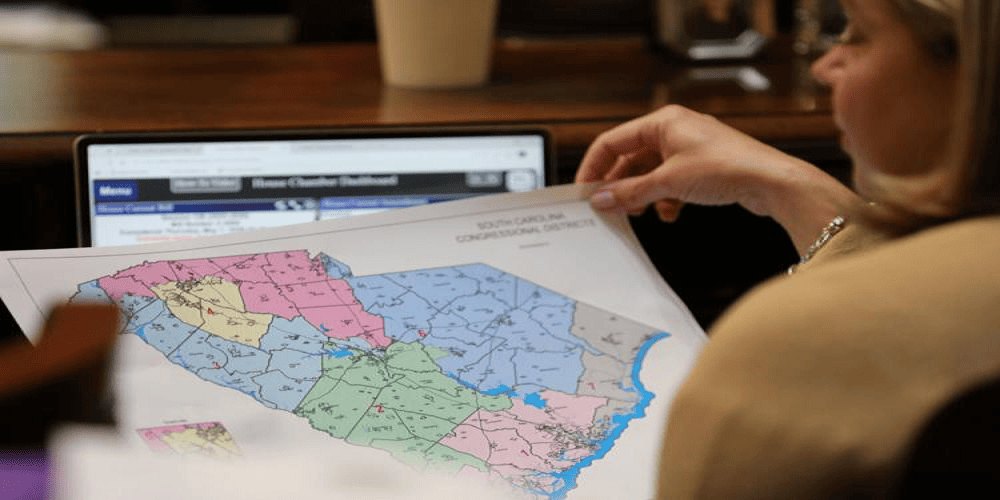
South Carolina also reversed its cautious posture. Reports emerged that the governor is expected to call a special session specifically to redraw the district lines affecting Democratic kingmaker Representative Jim Clyburn. Clyburn, a towering figure in the Democratic Party, had previously appeared safe until 2028. The current push in South Carolina represents one of the most aggressive moves in the region, targeting a specific high-profile individual based on the new legal realities.
The National Political Implications
The redistricting battles in the Deep South do not exist in a vacuum. They are part of a larger national chess match for control of the U.S. House of Representatives. Republicans had initially hoped to launch a "redistricting blitz" across the South that would net them significant gains, potentially picking up as many as four seats in Florida alone.
However, the current Deep South 2026 redistricting update reveals that the predicted wave has slowed to a ripple. As many as 19 members of the Congressional Black Caucus could have been affected in a maximized national scenario. The fact that several states chose to wait suggests that the political risks of "mid-decade redistricting" are substantial.
Strategists warn about the risk of a "dummymander." This occurs when map drawers dilute minority voters so aggressively to create safe Republican seats that they actually spread their own voters too thin. If 2026 turns out to be a Democratic wave year—fueled by backlash against these very redistricting efforts—those artificially created Republican seats could flip blue. A district drawn to be 55% Republican is vulnerable in a wave election; a district drawn to be 80% Republican is safe, but it requires packing Republicans in so tightly that neighboring districts become competitive. The halting nature of the 2026 redraw suggests some Republican legislatures are wary of overplaying their hand.
Furthermore, the legal fights are far from over. Florida’s new map is currently being challenged in court by the Equal Ground Education Fund, which argues the map violates the state’s Fair Districts amendment. A circuit judge is expected to decide whether to pause the new boundaries, adding another layer of uncertainty to the November elections.
Regional Context and Historical Significance
The term "Deep South" historically refers to the states most dependent on plantation agriculture and slavery prior to the Civil War: South Carolina, Georgia, Alabama, Mississippi, and Louisiana. These states have always been characterized by a large African American population and a history of legal segregation under Jim Crow laws.
The current redistricting fight is a direct continuation of the post-Civil War struggle for representation. For a century after the end of the Civil War, Black voters in the Deep South were systematically disenfranchised through poll taxes, literacy tests, and violence. The Voting Rights Act of 1965 was the legislative crowning achievement of the Civil Rights Movement, specifically designed to break the grip of white minority rule in the Deep South.
House Minority Leader Hakeem Jeffries drew a direct line from that era to the present day. He told CNN that the Republican redistricting efforts threaten to "bring us back to the Jim Crow era in terms of black representation in the Deep South". While the physical violence of Jim Crow is gone, the political mechanics of dilution and packing are being deployed to achieve similar results: minimizing the electoral impact of Black voters.
The Role of the Congressional Black Caucus
The stakes of this redistricting fight are intensely personal for the members of the Congressional Black Caucus (CBC). Historically, the Deep South has been a primary source of Black political leadership in America, from John Lewis to John Conyers. The current maps threaten to eliminate several of those seats simultaneously.
CBC Chair Yvette Clarke has been vocal about the threat, noting that the caucus stands to lose a substantial portion of its membership if the most aggressive maps are allowed to stand. The battles in Louisiana, where two incumbents are forced to run against each other, and South Carolina, where Clyburn’s district is under direct assault, illustrate this point clearly.
However, the response from Black political leaders has not been one of passive acceptance. In South Carolina, a full-scale effort to dismantle Clyburn’s district stalled when five Republicans broke ranks and voted with Democrats to block the proposal. This demonstrates that even in the current environment, raw partisan power has limits, and the political influence of popular incumbents remains a significant factor.
Looking Ahead to 2027 and 2028
While the immediate crisis for the 2026 midterms has been partially averted, the Deep South 2026 redistricting update serves as a warning for the future. The decisions by Georgia and Mississippi to delay their redraws until 2027 and 2028 respectively mean that the fight is merely postponed, not cancelled.
If Republicans maintain control of these state legislatures and win the relevant gubernatorial elections in 2026 and 2027, the maps for the 2028 presidential election could be even more aggressive than those proposed today. The Supreme Court ruling will remain in place, and the legal precedents set by the 2026 challenges (such as the one in Florida) will dictate the boundaries of what is permissible.
Furthermore, the situation remains fluid in states like Virginia, where the state Supreme Court has blocked a Democratic gerrymander, a decision currently being appealed to the U.S. Supreme Court. The outcome of that appeal could have secondary effects on the Southern political landscape.
Frequently Asked Questions (FAQs)
Q1: What triggered the 2026 redistricting changes in the Deep South?
A1: The changes were triggered by a U.S. Supreme Court ruling in late April 2026 that significantly weakened Section 2 of the Voting Rights Act. This ruling removed key legal barriers that previously prevented states from redrawing maps in ways that dilute minority voting power, allowing Republican-controlled legislatures to pursue aggressive redistricting.
Q2: Which states are considered part of the Deep South for this redistricting update?
A2: The core Deep South states are Louisiana, Mississippi, Alabama, Georgia, and South Carolina. Sometimes areas of Florida and Texas are included in broader definitions, but the primary legal and political battles in May 2026 are focused on the five core states.
Q3: Did Republicans succeed in redrawing all the maps they wanted for 2026?
A3: No. While Republicans initially planned a massive "redistricting blitz," the effort slowed down. Louisiana eliminated only one of two Black districts. Mississippi and Georgia delayed their aggressive redraws until 2027 or 2028. However, Alabama and South Carolina moved forward aggressively.
Q4: How does this affect the 2026 Midterm Elections?
A4: The effects are mixed. In most Deep South states, the maps will remain largely similar to 2024, giving incumbents a temporary reprieve. However, in Louisiana, two Democratic incumbents must run against each other. In Florida and Texas, aggressive maps are already in place or under legal challenge, which could shift control of the House.
Q5: What is a "dummymander"?
A5: A "dummymander" is a term for a political gerrymander that backfires. If Republicans dilute Democratic votes too much to create safe seats, they may spread their own voters too thin. If a Democratic wave occurs in 2026, those supposedly safe Republican seats could unexpectedly flip to the Democrats.
Q6: Can these new maps be challenged in court?
A6: Yes, several are already being challenged. Florida’s map is facing a lawsuit for allegedly violating the state’s Fair Districts amendment. Civil rights groups like the NAACP and the ACLU have also filed suits in Tennessee and other states, arguing the new maps are racially discriminatory despite the Supreme Court ruling.
Q7: Why did Mississippi delay its redistricting plan?
A7: Governor Tate Reeves canceled a special session scheduled for May 2026. While he stated he wanted to wait for the 2027 elections, political analysts suggest the delay may be due to logistical challenges of implementing a new map so close to an election or concerns over political backlash against removing a popular incumbent like Bennie Thompson.
Q8: What is the future of the Voting Rights Act after this?
A8: The recent Supreme Court ruling has severely weakened the enforcement mechanisms of the VRA. Unless Congress passes new legislation to update the act (which is unlikely in a divided government), the Deep South will likely see aggressive redistricting every two years, leading to constant legal battles and unstable electoral maps for the foreseeable future.
Q9: Who is specifically targeted by these new maps?
A9: Several high-profile Black Democratic incumbents are targets. In Louisiana, Reps. Cleo Fields and Troy Carter were forced into the same district. In South Carolina, Rep. Jim Clyburn’s district is under threat. In Mississippi, Rep. Bennie Thompson was the original target of a proposed redraw.
Q10: Is there a chance the maps will change again before November 2026?
A10: Yes. Court rulings in Florida could force a change in that state’s lines. Furthermore, if public pressure mounts or if internal polling shows the "dummymander" risk is high, some state legislatures might tweak their maps again. However, as of mid-May 2026, most Deep South maps for 2026 are finalized.
Leave A Comment
0 Comment