
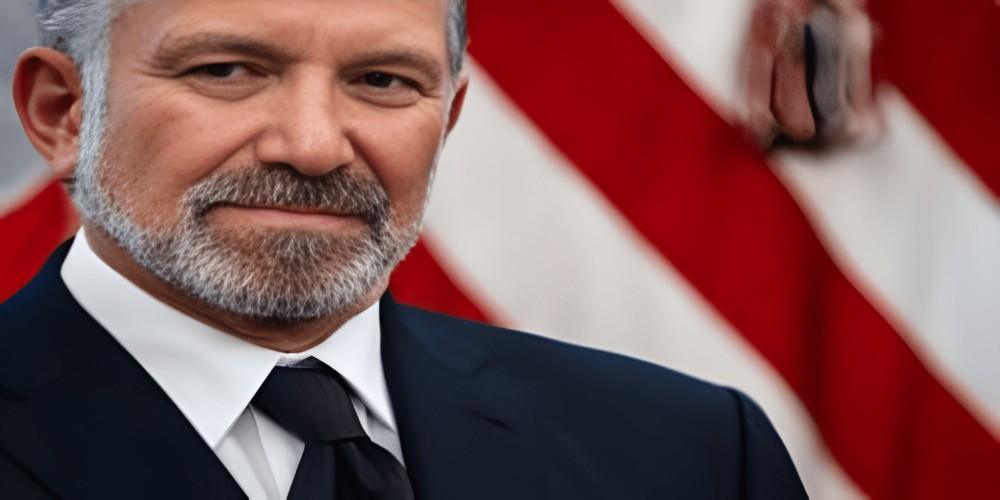
The narrative of Howard Lutnick is one of the most dramatic and polarizing stories in modern American finance. It is a tale that spans the pinnacle of Wall Street success, the abyss of unspeakable tragedy, and the ultimate transition into the highest corridors of political power. As the 41st United States Secretary of Commerce, Lutnick has moved from running a private financial empire to shaping global trade policy. However, to understand the man currently steering American economic strategy under President Donald Trump, one must first understand the crucible of September 11, 2001, and the fierce, often controversial, survival instinct that defines him .
This biography explores the life of Howard William Lutnick, examining his rise from a childhood marked by loss to the helm of Cantor Fitzgerald, his defining moment during the 9/11 attacks, his aggressive pivot into cryptocurrency, and his current role as a key architect of the "America First" economic agenda.
Early Life and the Forging of Resilience
Howard Lutnick was born on July 14, 1961, in Jericho, New York, into a Jewish family that valued education . His father, Solomon Lutnick, was a history professor who had supported himself through college by working in his family’s laundromat, while his mother was an artist and teacher . By all accounts, Lutnick had a stable, middle-class upbringing on Long Island.
Tragedy, however, struck early and with brutal force. While Lutnick was in the eleventh grade, his mother passed away from lymphoma. Shortly after he began his studies at Haverford College in Pennsylvania, his father died from cancer . Lutnick was just eighteen years old. He was left, along with his twenty-year-old sister, to care for his fifteen-year-old brother, Gary . This sudden transition from adolescence to guardianship instilled a deep-seated sense of responsibility and self-reliance that would define his later business decisions.
Despite the trauma, Lutnick excelled. The president and dean of Haverford offered him a full scholarship following his father’s death, allowing him to stay in school . He graduated in 1983 with a degree in economics. Desperate to start earning a living, he leveraged a family connection to land a job at Cantor Fitzgerald, a boutique investment bank known for its dominance in bond trading . He was driven, intense, and quickly caught the eye of the firm’s flamboyant founder, Bernie Cantor.
The Rise to Power on Wall Street
Lutnick joined Cantor Fitzgerald in 1983 and rose through the ranks with remarkable speed . He was named president and CEO of the company in 1991 at the tender age of 29 or 30, depending on the source, and assumed the role of chairman in 1996 . During the 1990s, Lutnick modernized the firm, aggressively pushing electronic trading to compete with traditional voice brokers. This technological savvy would later become the lifeline of the company.
Lutnick’s management style was, and remains, intensely hands-on. Described as a "workaholic," he tracked virtually every aspect of his business, famously reviewing employee phone bills, expenses, and every revenue metric . He demanded personal loyalty from his staff, operating the privately held firm as a "personal fiefdom" . Associates note that Lutnick drives an extraordinarily hard bargain, that he is a master of the fine print, and that his partnership agreements often ran hundreds of pages, giving him "sole and absolute discretion" over decisions . This aggressive, controlling nature made him a fortune, but it also earned him a reputation as a figure to be feared on Wall Street, with some former colleagues labeling him the "most hated man on Wall Street" due to his litigious nature and strict enforcement of non-compete clauses .
The Unimaginable: September 11, 2001
On the morning of September 11, 2001, Howard Lutnick was not at his desk. The offices of Cantor Fitzgerald occupied the 101st to 105th floors of the World Trade Center’s North Tower . That Tuesday, Lutnick was delayed because he was dropping his son, Kyle, off for his first day of kindergarten . American Airlines Flight 11 struck the North Tower between the 94th and 98th floors at 8:46 AM. The impact severed the stairwells, trapping everyone above the crash zone. There was no way down.
The loss was biblical in scale. Of the 960 employees in the New York office, 658 perished instantly . Cantor Fitzgerald lost more employees than any other single private company in the attacks. Among the dead was Lutnick’s 36-year-old brother, Gary Lutnick, as well as his best friend, Doug Gardner, the firm's CFO . In total, 28 pairs of siblings working at the firm were wiped out.
Lutnick, watching from a nearby street, survived the collapse of the South Tower by taking cover under a car . While the world mourned, Lutnick faced an impossible leadership test. The company’s trading floors, its data, and its people were gone. Yet, the electronic trading platform Lutnick had championed was backed up in New Jersey. Within days, Cantor Fitzgerald was trading again, a feat of technological resilience that stunned the financial world .
However, his first major decision as the "surviving CEO" sparked immediate controversy. Four days after the attacks, Lutnick announced that he would stop the paychecks of the missing and deceased employees . While it was technically a standard financial protection to prevent the firm from immediate bankruptcy, the optics were devastating. Grieving families accused him of abandoning them. Lutnick later explained that the move was a cold, hard necessity to keep the "entity" of Cantor alive so that he could help them long-term.
The $180 Million Promise and Charity Day
Despite the initial backlash, Lutnick pivoted to what would become his most celebrated legacy. He made a vow: for the next five years, he would give 25% of Cantor Fitzgerald’s profits to the families of the victims . This commitment resulted in
180millionindirectcashdistributionstothefamilies,alongwithtenyearsofpaidhealthcare[citation:2].HealsocreatedtheCantorFitzgeraldReliefFund,seededwithhisown
180millionindirectcashdistributionstothefamilies,alongwithtenyearsofpaidhealthcare[citation:2].HealsocreatedtheCantorFitzgeraldReliefFund,seededwithhisown1 million donation, to manage the aid .
To ensure the victims were never forgotten, Lutnick established an annual "Global Charity Day" held every September 11. On this day, 100% of the firm’s daily revenues from Cantor Fitzgerald and BGC Partners are donated to charities worldwide . Since its inception, these events have raised nearly $200 million, turning a day of utter horror into one of massive global giving . The event is famous for bringing in celebrities, athletes, and politicians to work alongside the brokers.
This period cemented Lutnick’s public persona. He was a man who had looked into the abyss and refused to blink. He cried in interviews, described recurring nightmares of trying and failing to pull his friends into the elevator before the plane hit, and dedicated his life to "taking care of the people who were left behind" .
The Pivot to Crypto and Bitcoin Advocacy
While rebuilding the traditional finance business, Lutnick kept his eyes on the next frontier. In the 2020s, he emerged as one of Wall Street’s most vocal and significant advocates for cryptocurrency, specifically Bitcoin. This pivot was not merely speculative; it was strategic.
Lutnick argued that Bitcoin should be treated as a commodity, similar to gold or oil, rather than a security . This distinction is crucial for regulatory purposes. He positioned Cantor Fitzgerald as the bridge between digital assets and traditional finance. In a stunning disclosure, Lutnick revealed that he personally invested "hundreds of millions of dollars" in Bitcoin and suggested that his holdings could eventually reach "billions" .
He viewed Bitcoin’s fixed supply as a hedge against the inflationary policies of governments. "In a world of unlimited expansion, fixed supply wins," he often argued . His firm facilitated massive financing for Bitcoin investors, launching a $2 billion Bitcoin financing business to provide leverage for institutional holders . His appearance at the 2024 Bitcoin Conference in Nashville, standing alongside Donald Trump and other MAGA figures, signaled the full integration of crypto into the mainstream Republican donor base.
The Trump Administration and Secretary of Commerce
Howard Lutnick’s relationship with Donald Trump deepened significantly following Trump’s 2020 election loss. While many in corporate America distanced themselves from the former president, Lutnick leaned in. He became a major donor, a fierce MAGA loyalist, and co-chaired Trump’s 2024 transition team . He used his media savvy to defend Trump’s trade policies, arguing that tariffs would bring in billions of dollars in revenue.
In November 2024, President-elect Trump nominated Lutnick to serve as the 41st United States Secretary of Commerce . The Senate confirmed him on a tight 51-45 vote, reflective of his polarizing nature . Upon assuming office on February 19, 2025, Lutnick was forced to divest his stake in Cantor Fitzgerald, transferring his shares to his children and other investors to avoid conflicts of interest .
As Commerce Secretary, Lutnick is tasked with implementing Trump’s aggressive tariff agenda, managing export controls, and promoting economic growth . Critics describe him as Trump’s "yes man," tasked with selling often controversial economic schemes, such as the "Trump Card"—a $5 million "gold card" visa route to citizenship for the ultra-wealthy . Supporters argue that his demanding, detail-oriented nature—the same approach that allowed him to track phone bills at Cantor—makes him uniquely qualified to renegotiate complex trade imbalances.
Philanthropy and Personal Life
Away from the lectern, Lutnick is a family man. He married Allison Lambert, a law associate, in 1994, and they have four children together . His philanthropic efforts, primarily channeled through the Cantor Fitzgerald Relief Fund, have extended beyond 9/11. The fund has donated to disaster relief efforts globally, including victims of the 2010 Haiti earthquake and Hurricane Katrina, distributing over $280 million in total aid .
FAQ
1. How did Howard Lutnick survive the 9/11 attacks?
Howard Lutnick survived the September 11 attacks because he was not in his office at the World Trade Center that morning. He was delayed while taking his son, Kyle, to his first day of kindergarten. Cantor Fitzgerald’s offices were located on the 101st to 105th floors of the North Tower, and none of the employees present in the office that morning survived .
2. How much money did Howard Lutnick give to the 9/11 families?
Lutnick pledged 25% of Cantor Fitzgerald's profits for five years following the attacks to the families of the victims. This effort raised
180milliondirectlyforthefamilies.Thefirmalsocoveredthehealthcarecostsofthefamiliesfortenyears.Additionally,theannualCharityDayeventshaveraisedapproximately
180milliondirectlyforthefamilies.Thefirmalsocoveredthehealthcarecostsofthefamiliesfortenyears.Additionally,theannualCharityDayeventshaveraisedapproximately180 million to $200 million for various charities and relief efforts .
3. What is Howard Lutnick’s net worth?
Estimates of Howard Lutnick’s net worth vary. While he has an official government salary as Secretary of Commerce, his wealth stems from his ownership of Cantor Fitzgerald and BGC Partners. Sources estimate his net worth to be between
1.5billionand
1.5billionand2.2 billion, though some analyses suggest his holdings could be higher depending on market valuations . He owns approximately 60% of Cantor Fitzgerald .
4. What is Howard Lutnick’s connection to cryptocurrency?
Lutnick is a major Bitcoin advocate. He argues that Bitcoin is a commodity (like gold) and has positioned Cantor Fitzgerald to be a bridge between traditional finance and digital assets. He personally claims to hold hundreds of millions of dollars worth of Bitcoin and has launched billion-dollar financing operations for Bitcoin investors .
5. Why is Howard Lutnick considered a controversial figure?
Lutnick is controversial for two main reasons. First, his immediate decision to stop paychecks for missing employees just four days after 9/11 was seen as callous by some, even though he later provided massive financial support. Second, his management style on Wall Street is viewed as extremely aggressive; critics cite long, restrictive contracts that allow him to withhold compensation from departing employees, earning him the nickname "the most hated man on Wall Street" .
Leave A Comment
0 Comment