
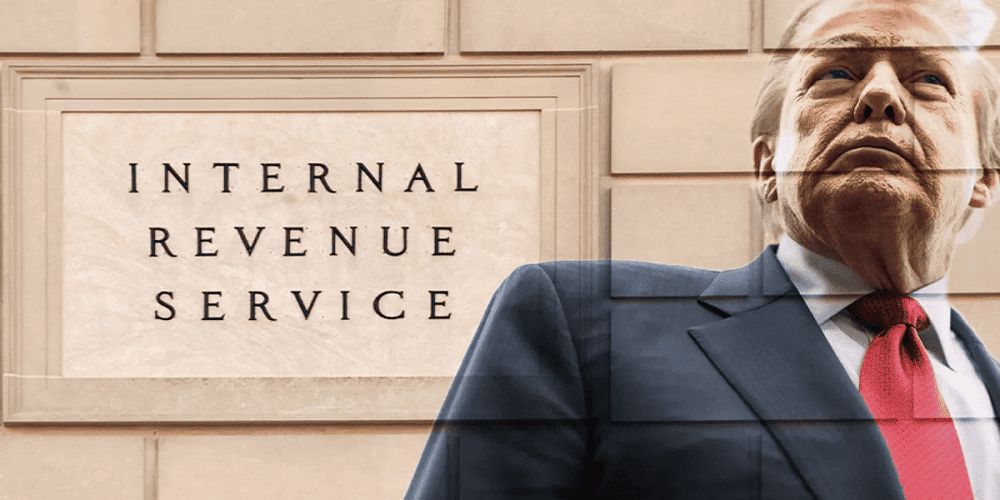
In the annals of American legal and political history, few scenarios present as stark a paradox as the ongoing settlement talks surrounding President Donald Trump’s ten billion dollar lawsuit against the Internal Revenue Service. This litigation, filed in January 2026, pits a sitting president against federal agencies he directly oversees, creating a circular legal dilemma that has captivated constitutional scholars, ethics watchdogs, and the American public alike . As the Department of Justice engages in internal deliberations regarding a potential resolution, the contours of this unprecedented case reveal fundamental questions about executive power, conflict of interest, and the safeguarding of taxpayer dollars.
The trump irs lawsuit settlement talks represent more than a routine legal negotiation. They embody a constitutional confrontation where the traditional boundaries between plaintiff and defendant have dissolved. President Trump, along with his sons Donald Trump Jr. and Eric Trump, together with the Trump Organization, initiated this legal action seeking astronomical damages stemming from the unauthorized disclosure of personal tax information by a former IRS contractor . The irony of a president suing his own administration’s tax collection agency while simultaneously possessing authority over its operations has rendered this case a lightning rod for criticism and constitutional scrutiny.
The timing of these settlement discussions proves equally significant. With a federal judge requesting legal briefs addressing whether a genuine case and controversy exists by May twentieth, the pressure to reach an agreement before an adverse judicial ruling intensifies . The trump irs lawsuit settlement talks therefore operate against a backdrop of potential dismissal, where the very foundation of the lawsuit remains vulnerable to judicial skepticism. This creates a race toward resolution that may prioritize expediency over substantive justice.
Understanding the full scope of these settlement negotiations requires examining their origin in the unauthorized tax return leak, the extraordinary legal conflicts they present, the emerging details regarding potential settlement terms, and the broader implications for American governance and the principle that no person, not even the president, should profit from their public position through self-dealing arrangements.
The Origins: The Littlejohn Leak and the Filing of the Lawsuit
The genesis of the trump irs lawsuit settlement talks traces directly to the actions of Charles Littlejohn, a former IRS contractor employed by Booz Allen Hamilton who pleaded guilty to unauthorized disclosures of tax returns and received a maximum five year prison sentence in 2024 . Littlejohn leaked President Trump’s confidential tax information to The New York Times and ProPublica, publications that subsequently revealed the billionaire president paid merely seven hundred fifty dollars in federal income tax for both 2016 and 2017, while paying no income taxes in ten of the preceding fifteen years . These revelations contradicted decades of presidential transparency norms, as Trump remained the only modern president to withhold his tax returns from public inspection.
The lawsuit filed in January 2026 alleged that the IRS wrongly permitted a rogue politically motivated employee to leak private and confidential information about President Trump, his family, and the Trump Organization to left wing news outlets . The plaintiffs sought at least ten billion dollars in damages under the Internal Revenue Code and the Privacy Act, provisions designed to offer ordinary taxpayers an opportunity to seek redress for harm caused by unauthorized government disclosures . However, legal experts quickly noted that Trump’s filing appeared to exceed standard damage claims, as civil actions under these statutes typically require filing within two years of discovering the unauthorized disclosure, and Trump’s tax information first became publicly known in 2020 .
The timing of the lawsuit raised additional questions. Trump filed this action after returning to the White House in January 2025, meaning he initiated litigation against agencies he now controls from the Oval Office . This represented his third legal claim against his own administration, joining two administrative claims seeking two hundred thirty million dollars from the Department of Justice related to the FBI’s Russia investigation and the Mar a Lago document search . Unlike the IRS lawsuit, however, those administrative claims did not require judicial oversight, allowing Trump’s own Justice Department to determine whether to pay the president the amounts he sought . The IRS lawsuit introduced a district court judge into the equation, potentially complicating any self serving resolution.
The ten billion dollar figure itself appeared disconnected from any demonstrable harm. Critics observed that Trump has not articulated specific economic damages resulting from the tax return leak, nor has he explained how disclosures that occurred before his return to office caused cognizable injury to his businesses or reputation . The lawsuit skips over the fact that Trump chose to deviate from presidential transparency norms, and that political scrutiny accompanies elected office by its very nature. This disconnect between the magnitude of damages sought and the absence of proven injury suggests the trump irs lawsuit settlement talks may prioritize political or financial considerations over legal merit.
The Constitutional Paradox: A President Suing Himself
The most extraordinary dimension of the trump irs lawsuit settlement talks involves the complete collapse of adversarial party structure that underpins American jurisprudence. For a valid lawsuit to exist, courts require genuine controversy between opposing parties, with each side advancing distinct interests through zealous advocacy . In this case, President Trump serves as plaintiff while simultaneously controlling the defendant agencies through his authority over the Treasury Department and the Department of Justice, which represent the IRS. As Trump himself acknowledged, it is awfully strange to make a decision where I am paying myself .
Federal Judge Kathleen M. Williams of the Southern District of Florida, an Obama appointee, identified this fundamental problem in an April 2026 order requiring both parties to produce memoranda addressing whether a case and controversy exists . Judge Williams noted that although President Trump avers he is bringing this lawsuit in his personal capacity, he remains the sitting president whose named adversaries are entities subject to his direction . This creates a situation where the same executive authority that filed the lawsuit also controls the defense, raising questions about whether any genuine legal dispute actually exists.
The Department of Justice faces an impossible position in the trump irs lawsuit settlement talks. Led by acting Attorney General Todd Blanche, who previously served as Trump’s personal attorney and whom Trump publicly credited with keeping him out of jail for years, the Department must ostensibly defend the IRS against the president’s claims . Yet Blanche’s personal loyalty to Trump, combined with the president’s authority to remove him at will, creates overwhelming pressure to resolve the case favorably to the plaintiff. Court appointed attorneys assisting Judge Williams filed a brief noting reason to believe that the President is exercising his control over the Defendants, suggesting the court could investigate whether Trump meddled in Justice Department decision making .
This constitutional paradox extends beyond mere appearances to strike at the separation of powers doctrine. The Domestic Emoluments Clause of the Constitution forbids the president from receiving profits, gains, or advantages from the federal government outside of his government salary and benefits . Any monetary settlement paid to Trump from the Treasury Department’s Judgment Fund would potentially violate this constitutional provision, as it would represent a profit from the federal government beyond his prescribed compensation. Watchdog groups including Citizens for Responsibility and Ethics in Washington have filed amicus briefs arguing that any settlement would be unconstitutional on precisely these grounds .
The situation represents what legal scholars describe as a heads I win, tails you lose scenario. If the Justice Department vigorously defends the IRS and defeats Trump’s claims, the president’s own appointees have frustrated his personal financial interests. If instead the Department negotiates a generous settlement, critics will charge that Trump used his official position for private gain. The only way to avoid this untenable choice would be for independent counsel to represent the government’s interests, but no such mechanism exists in the current structure of the trump irs lawsuit settlement talks . This constitutional limbo explains why settlement discussions have accelerated so dramatically.
The Emerging Settlement Terms: Beyond Simple Compensation
Initial reporting on the trump irs lawsuit settlement talks suggested relatively straightforward terms centered on monetary compensation and the cessation of audits. According to sources familiar with the discussions, settlement options under review included the possibility of the IRS dropping any audits of Mr. Trump, his family members, or businesses . This non-monetary provision carries potentially enormous value, as a New York Times investigation found that Trump could owe more than one hundred million dollars in back payments on a single Chicago property if the IRS revised its contested tax bill . Dropping audits would effectively immunize Trump from tax enforcement actions during his presidency.
However, subsequent reporting revealed far more ambitious terms under consideration in the trump irs lawsuit settlement talks. ABC News reported that Trump may agree to drop his lawsuit in exchange for the launch of a one point seven billion dollar fund to compensate people he says were wrongfully targeted by the Biden administration . This weaponization fund, as critics have dubbed it, would draw from the Treasury Department’s Judgment Fund, a pool of taxpayer money reserved for paying court judgments and settlements against the federal government. Among those eligible for compensation would be more than fifteen hundred January sixth rioters whom Trump previously pardoned .
The proposed structure of this fund raises alarming governance concerns. According to settlement terms reported by ABC News, President Trump would possess the authority to remove members of the commission running the fund without cause, and the commission would face no obligation to disclose its procedures or decision making process for awarding more than a billion dollars . This would create essentially a secret slush fund under direct presidential control, with no transparency regarding how taxpayer money is distributed or to whom. Representative Jamie Raskin characterized this as the president systematically converting neutral government mechanisms into a presidential slush fund to build his army of political dependents .
Beyond the financial slush fund, the trump irs lawsuit settlement talks reportedly include demands for the IRS to issue a public apology to Trump for the disclosure of his personal financial records . This apology provision appears designed to provide symbolic vindication while avoiding any admission that Trump’s own refusal to release his tax returns voluntarily contributed to public curiosity about his finances. The combination of monetary compensation for allies, audit immunity for Trump, and a public apology from a federal agency would represent an unprecedented triumvirate of benefits flowing to a sitting president from his own administration.
Notably, the proposed settlement reportedly prohibits Trump from directly receiving payments related to the three legal claims he has asserted against the government . However, entities associated with Trump are not explicitly barred from filing additional claims, creating an obvious loophole through which Trump affiliated businesses or super PACs could apply for compensation from the weaponization fund. This structure allows Trump to claim he is not personally profiting while potentially channeling taxpayer dollars toward organizations that support his political agenda. The distinction between direct and indirect benefit appears designed to provide legal cover rather than genuine ethical separation.
Judicial Oversight and Procedural Maneuvering
The trump irs lawsuit settlement talks unfold against a specific judicial deadline that concentrates minds on both sides. Judge Williams scheduled a May twenty seventh hearing to address the case and controversy question, and ordered both parties to submit briefs by May twentieth explaining why the lawsuit should not be dismissed . Rather than confront this embarrassing legal question, the parties appear to be racing toward a settlement that would render the hearing moot. If the case settles before Judge Williams can rule on its constitutionality, she would have limited authority to interfere with a private agreement between the president and federal agencies .
This procedural dynamic reveals the strategic calculation underlying the trump irs lawsuit settlement talks. By settling before an adverse ruling, Trump avoids a judicial declaration that suing oneself is legally impossible. Such a ruling would not only dismiss this case but could also cast doubt on his other administrative claims pending before the Justice Department. A settlement also allows Trump to frame the outcome as a victory without enduring discovery or trial, where additional embarrassing financial information might become public. The rushed timeline suggests the president’s team recognizes the weakness of their legal position and seeks to extract maximum value before the court intervenes.
The court appointed attorneys assisting Judge Williams have already signaled skepticism about the government’s litigation posture. Their brief noted numerous possible defenses the Department of Justice could raise but has not, including arguments that the lawsuit was filed after the statute of limitations expired and that the IRS bears no liability for a contractor’s independent criminal acts . The attorneys raised the specter that Defendants and their attorneys may be operating at the President’s direction rather than exercising independent litigation judgment. This extraordinary language from court appointed officers underscores how the trump irs lawsuit settlement talks deviate from normal legal practice.
If Judge Williams receives a proposed settlement before the May twentieth deadline, she faces difficult choices. She could approve the settlement as a private resolution between parties, effectively blessing the arrangement despite its constitutional infirmities. Alternatively, she could reject the settlement as collusive or reached in bad faith, though her authority to block an agreement between the executive branch and its own head remains legally uncertain . The judge could also request additional briefing on whether the settlement itself violates the Constitution, potentially delaying resolution while higher courts weigh the issues. Each option carries significant implications for the separation of powers and judicial authority over executive branch self dealing.
The possibility of legislative intervention adds another layer of complexity to the trump irs lawsuit settlement talks. Senator Elizabeth Warren introduced legislation that would bar presidents, vice presidents, and their families from collecting settlement payments from the federal government while in office, and would require independent counsel to represent agencies in such cases . However, with Republicans controlling both chambers of Congress, this bill has received little traction. Representative Jamie Raskin has called on Congress to reassert the power of the purse and stop this brazen looting of taxpayer funds, but legislative action appears unlikely before any settlement is finalized . This leaves the judiciary as the only potential check on executive self dealing.
Ethical and Legal Criticisms
The trump irs lawsuit settlement talks have attracted sharp condemnation from ethics watchdogs, former government officials, and legal scholars across the political spectrum. Common Cause Senior Policy Director Abigail Bellows stated that presidents should not be allowed to use their power for personal gain, arguing that any settlement is unacceptable whether it involves a ten billion dollar check, non monetary benefits such as dodging IRS audits, or a new slush fund from which Trump can pay out his allies including violent insurrectionists . These measures, she argued, would enable tax evasion, invite corruption, and reward criminality.
The financial scale of the proposed settlement dwarfs any comparable government payout. A ten billion dollar payment would more than double Trump’s family net worth, according to court filings, and would equal approximately two thirds of the IRS’s total budget for the 2026 fiscal year . Federal data shows that the Treasury Judgment Fund paid out nothing approaching this magnitude between January 2020 and September 2025, making any settlement for even a fraction of Trump’s demand historically unprecedented. Representative Don Beyer characterized the potential settlement as the largest single act of grand larceny in American history .
Legal critics point to multiple independent grounds for rejecting Trump’s claims entirely. The statute of limitations likely bars the lawsuit, as Trump’s tax returns were first shared in 2019 and the leak became widely known by 2020, yet he did not file suit until January 2026 . The IRS also arguably bears no liability for Littlejohn’s actions, as he was a private contractor rather than an officer or employee of the United States, and the tax code limits damages to disclosures by actual government employees. A similar lawsuit in 2024 resulted only in a public apology, not a government payout, suggesting Trump’s demand for billions exceeds standard practice .
The conflict of interest permeating the trump irs lawsuit settlement talks extends beyond the president himself to encompass his entire legal team. Trump’s personal attorney Alina Habba attended a 2023 court hearing for Littlejohn and identified herself on behalf of President Trump who was a victim, yet she now negotiates with a Justice Department led by Trump’s former personal defense lawyer Todd Blanche . The revolving door between Trump’s private legal representation and government service has eliminated any pretense of arm’s length negotiation. As one commentator observed, there is no difference between Trump directing the IRS to pay his family billions of dollars versus telling the treasury secretary that he deserves a ten billion dollar bonus because he claims to be the smartest president ever .
The proposed weaponization fund component of the trump irs lawsuit settlement talks raises distinct legal concerns. The Treasury Judgment Fund exists to pay valid court judgments and settlements arising from actual litigation, not to create discretionary compensation programs for political allies . Using this fund to pay January sixth rioters who were convicted of crimes related to the Capitol attack would stretch the fund’s statutory purpose beyond recognition. Legal challenges from taxpayer advocacy groups would almost certainly follow any such payout, potentially leading to years of additional litigation even if the initial settlement receives judicial approval.
Conclusion: Implications for American Governance
The trump irs lawsuit settlement talks represent more than an unusual legal case; they test whether the constitutional structure of American government can withstand a president who operates simultaneously as plaintiff, defendant, and judge in his own financial dispute with the state. If the administration successfully negotiates a settlement that diverts taxpayer funds to the president’s allies while immunizing him from tax enforcement, it would establish a precedent that future presidents could exploit for personal enrichment. The principle that no person should be a judge in their own case, dating back to Magna Carta, would suffer a grievous erosion.
The outcome of these negotiations will signal whether institutional checks on executive power retain any vitality. Judge Williams represents the judicial branch’s opportunity to declare that suing oneself cannot constitute a genuine case or controversy under Article Three of the Constitution. Congress retains the power of the purse and could refuse to appropriate funds for any settlement, though the Judgment Fund operates outside the annual appropriations process . The Department of Justice’s own attorneys could refuse to participate in what they might view as an unethical settlement, though no such refusal has materialized. Each of these potential checks depends on institutional actors willing to resist presidential pressure.
For the American public, the trump irs lawsuit settlement talks illuminate the challenges of maintaining accountable government when executive power concentrates in a single figure. The framers of the Constitution designed separation of powers to prevent precisely this scenario, where one person controls both the prosecution and defense of claims against the government. Yet the constitutional mechanisms they created depend on officials willing to enforce limits on executive authority, even when doing so conflicts with the president’s personal interests. Whether such officials exist in sufficient numbers to constrain this unprecedented situation remains an open question.
As the May twentieth deadline approaches, the nation watches whether the trump irs lawsuit settlement talks produce a resolution that respects the rule of law or instead demonstrates that presidential power has expanded beyond constitutional boundaries. The answer will shape not only Trump’s financial future but also the fundamental character of American democracy for generations to come. A settlement that channels billions of taxpayer dollars to a president’s political allies while shielding him from tax enforcement would mark a transformation in how Americans understand the relationship between public office and private gain. Whether that transformation proves permanent depends on whether any branch of government proves willing to say no.
Frequently Asked Questions
What exactly is the Trump IRS lawsuit about?
President Trump, along with his sons and the Trump Organization, sued the Internal Revenue Service for at least ten billion dollars following the leak of his tax returns by a former IRS contractor named Charles Littlejohn. The leak occurred during Trump’s first term, with The New York Times and ProPublica publishing stories revealing that Trump paid very little in federal income taxes. The lawsuit alleges the IRS failed to prevent a rogue politically motivated employee from disclosing confidential information. Littlejohn pleaded guilty and received a five year prison sentence for his actions .
How can a president sue his own administration?
This is precisely the constitutional problem at the heart of the case. President Trump controls the Treasury Department, which oversees the IRS, and the Department of Justice, which represents the IRS in court. This means the same executive authority that filed the lawsuit also controls the defense. Federal Judge Kathleen Williams has questioned whether a genuine case and controversy exists, which is required for any valid lawsuit. Trump himself acknowledged it is awfully strange to make a decision where I am paying myself. The case is unprecedented in American history .
What settlement terms are being discussed?
Reporting indicates multiple options under consideration. The simplest would involve the IRS dropping all audits of Trump, his family, and his businesses, which could save Trump more than one hundred million dollars in potential back taxes. More ambitiously, Trump reportedly seeks creation of a one point seven billion dollar fund from the Treasury Judgment Fund to compensate allies who claim the Biden administration wrongfully targeted them, including January sixth rioters. The proposed settlement would also include a public apology from the IRS. Trump himself would not directly receive money, but entities associated with him could apply for compensation from the fund .
Can a judge block this settlement?
Judge Williams possesses authority to reject a settlement she finds collusive or reached in bad faith, but her power to block an agreement between the president and federal agencies remains legally uncertain. If the parties settle before Judge Williams rules on whether the lawsuit itself is constitutional, she would have limited ability to intervene. The parties face a May twentieth deadline to submit briefs on the constitutional question, with a hearing scheduled for May twenty seventh. This creates strong incentive to settle before an adverse ruling .
What makes this settlement different from normal government settlements?
Several factors distinguish this case. First, the plaintiff is the sitting president who controls the defendant agencies. Second, the damages sought astronomically exceed any comparable government payout, with ten billion dollars representing two thirds of the IRS’s annual budget. Third, the proposed weaponization fund would give the president direct control over distributing taxpayer money with no transparency requirements. Fourth, dropping audits of the president would violate IRS protocols requiring automatic audits of presidential tax returns. Fifth, the Domestic Emoluments Clause of the Constitution arguably prohibits the president from receiving profits from the federal government beyond his salary .
Who is representing the government in this case?
The Department of Justice represents the IRS, led by acting Attorney General Todd Blanche. Blanche previously served as Trump’s personal defense attorney between presidential terms, and Trump has publicly praised him for keeping me out of jail for years. This personal relationship between the attorney general and the president, combined with Trump’s authority to fire Blanche at will, raises serious questions about whether the government’s lawyers can exercise independent judgment. Court appointed attorneys have raised the specter that the Justice Department may be operating at the President’s direction rather than exercising independent litigation judgment .
Could Congress stop this settlement?
Congress has the constitutional power of the purse and could theoretically refuse to appropriate funds for any settlement. However, the Treasury Judgment Fund operates outside the normal appropriations process, making legislative intervention more difficult. Senator Elizabeth Warren has introduced legislation that would bar presidents from collecting settlement payments while in office and would require independent counsel to represent agencies in such cases, but with Republicans controlling both chambers, the bill has received little traction. Representative Jamie Raskin has called on Congress to act immediately to reassert the power of the purse, but no legislative action appears imminent before any settlement is finalized .
Has Trump made similar claims against his administration before?
Yes, this represents Trump’s third legal claim against his own administration. He previously filed two administrative claims under the Federal Tort Claims Act seeking two hundred thirty million dollars total from the Department of Justice. One claim relates to the FBI’s investigation into potential ties between his 2016 campaign and Russia, known as the Russiagate probe. The second relates to the FBI’s execution of a search warrant at his Mar a Lago residence in 2022 related to classified documents. Unlike the IRS lawsuit, these claims did not go before a judge, meaning Trump’s own Justice Department will determine whether to pay him the amounts he seeks .
What happens to the one point seven billion dollar weaponization fund if the settlement proceeds?
According to reports, the fund would be administered by a five member commission whose members Trump could remove without cause. The commission would face no obligation to disclose its procedures or decision making process for awarding more than a billion dollars, essentially creating a secret slush fund. Eligibility would reportedly include individuals who claim they were wrongfully targeted by the Biden administration, including January sixth rioters already pardoned by Trump. The fund would draw from the Treasury Judgment Fund. Trump himself would not be eligible to file claims, but entities associated with Trump could potentially receive compensation .
What are the chances this settlement actually happens?
Reporting indicates serious internal discussions at the Department of Justice and White House regarding settlement options. The parties face intense pressure to resolve the case before Judge Williams rules on its constitutionality, which could result in dismissal. Both sides have strong incentives to avoid an adverse ruling that would embarrass the administration and potentially affect Trump’s other claims against the government. However, the unprecedented nature of the proposed terms, combined with likely legal challenges and public backlash, means no settlement is guaranteed. The situation remains fluid, with new developments reported daily as the May twentieth deadline approaches .
Leave A Comment
0 Comment