
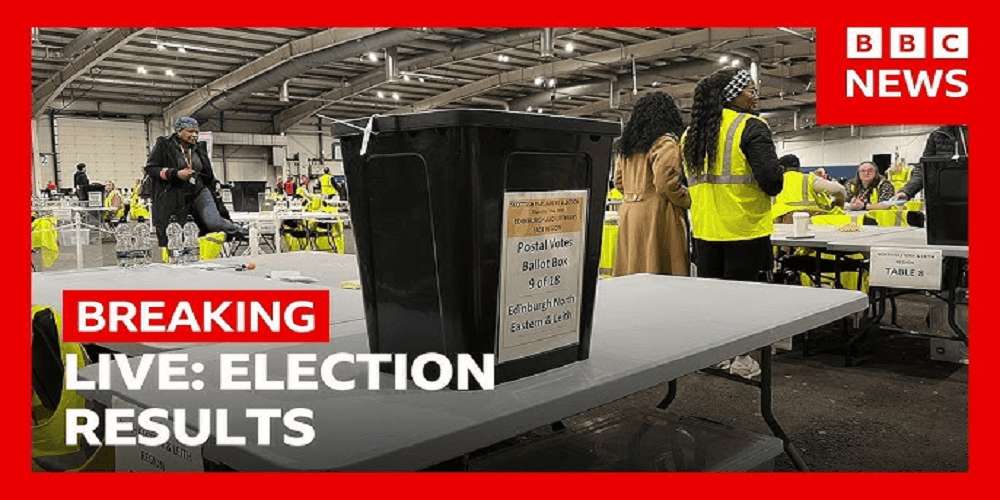
You have probably seen the headlines. A general election happens. The votes get counted. And then the UK election results flash across every screen in the country. But what do those numbers actually tell you? More than you might think. Less than you might hope.
The truth is, the UK election results are not just about who gets to be prime minister. They reveal how a nation feels about the economy, the health service, immigration, climate change, and a dozen other issues. They show where people are happy and where they are furious. And sometimes, they produce outcomes that nobody expected.
I have followed the UK election results for years. I have stayed up until four in the morning watching counts. I have seen the exit polls shock the commentators and the swingometers go wild. And I have learned that the simple figures on a screen are just the start of a much bigger conversation.
So let us walk through it together. No complicated jargon. No boring tables with numbers you will forget. Just a plain English guide to the UK election results, how they work, why they matter, and what happens after the last constituency declares.
What Are the UK Election Results Anyway?
Let us start with the basics. The UK election results refer to the outcome of a general election for the House of Commons. There are 650 seats. Each seat is a constituency. Each constituency has one Member of Parliament. The party that wins at least 326 seats gets to form a government.
But that simple description hides a lot of chaos.
Because the UK election results are not decided by the total number of votes across the country. They are decided by who wins each individual constituency. You could get fewer total votes than your opponent and still win the election. That has happened before. It will happen again. It is just how the first-past-the-post system works.
So when you look at the UK election results, ignore the national vote share at first. Look at the seats. Specifically, look at the marginal seats. Those are the ones where the winner’s margin is small. Five percent or less. Those seats decide everything.
A Quick Trip Through History
The UK election results from different decades tell very different stories. In 1945, Labour won in a landslide. Clement Attlee became prime minister. The National Health Service was born out of those UK election results. That was a genuine turning point.
Then came 1979. Margaret Thatcher’s Conservatives won. Those UK election results changed the economy, the trade unions, and the relationship between the state and the individual. People still argue about them today.
More recently, the 1997 UK election results gave Tony Blair a majority of 179 seats. That was enormous. New Labour looked unstoppable. But by 2010, the UK election results produced a hung parliament. No majority for anyone. That led to the first coalition government since the Second World War. David Cameron and Nick Clegg sharing power. Strange times.
The 2015 UK election results shocked everyone. The pollsters said it would be close. Instead, the Conservatives won a small but comfortable majority. The SNP swept Scotland. And Ed Miliband resigned as Labour leader within hours.
Then 2017 happened. Another hung parliament. The UK election results showed Theresa May losing her majority even though she had called an early election hoping to increase it. That backfired spectacularly.
And 2019? The UK election results gave Boris Johnson a big majority. Eighty seats. Enough to push through Brexit without much trouble. Those results redrew the political map, especially in northern England.
So you see, every set of UK election results has its own personality. Its own surprises. Its own lessons.
How the Numbers Come Together on Election Night
Imagine this. It is ten o’clock at night. Polling stations have just closed. The first sign of the UK election results appears within seconds. The exit poll. This is not a guess. It is a survey of thousands of voters as they left polling stations. And it is usually very accurate.
The exit poll for the 2017 UK election results predicted a hung parliament. Most pre-election polls had said the Conservatives would win easily. The exit poll was right. The other polls were wrong.
Then the actual counts begin. The first few UK election results come from places like Houghton and Sunderland South. They have a tradition of counting very fast. By midnight, you have half a dozen results. But do not jump to conclusions. The early results are not always representative of the whole country.
Between one and four in the morning, the UK election results come thick and fast. Dozens of constituencies declare every hour. This is when the picture becomes clear. You can see which way the wind is blowing. By six in the morning, you usually know who will be prime minister.
Sometimes the UK election results take longer. Recounts happen when the margin is tiny. Postal votes can slow things down. But within twenty four hours, it is all over.
Why the Popular Vote Does Not Matter as Much as You Think
Here is something that confuses a lot of people. The party that wins the most votes does not always win the most seats. That is because of how the constituencies are drawn and how votes are distributed.
Take the 2015 UK election results. The Conservatives got 36.9 percent of the vote and 330 seats. Labour got 30.4 percent of the vote and 232 seats. But what if the UK election results were based purely on the popular vote? Different outcome entirely.
This is why some people want to change the voting system. They say the UK election results are unfair. That millions of votes are wasted. That safe seats mean your vote does not really matter.
Other people defend the current system. They say it produces stable governments. That coalitions cause chaos. That the UK election results under first-past-the-post are easier to understand than complicated proportional systems.
I am not going to tell you which side is right. But you should know the argument exists. And it comes up every time the UK election results produce a government that most voters did not vote for.
Regional Differences You Need to Know
The UK election results look very different depending on where you are standing. Scotland is its own world. Since 2015, the SNP has won the vast majority of Scottish seats. The UK election results north of the border have been remarkably consistent. Labour used to dominate Scotland. Now it barely exists there.
Wales is different. Labour usually wins the most Welsh seats. But the Conservatives have made gains in recent years. Plaid Cymru holds a few seats in the Welsh speaking areas. The UK election results in Wales tend to follow the national trend but with a Labour tilt.
Northern Ireland is another planet entirely. Sinn Fein, the DUP, the Alliance Party, the SDLP. These parties do not even compete in Great Britain. And Sinn Fein MPs do not sit in Westminster. They refuse to swear allegiance to the King. So the overall UK election results are slightly affected by their absence. A majority technically needs 326 seats, but because Sinn Fein does not take theirs, the real number is slightly lower.
England is where most of the action happens. The Red Wall in the north and the Midlands used to be solid Labour. The 2019 UK election results turned large parts of it blue. The Conservatives broke through. Whether that lasts is one of the big questions for future UK election results.
What Happens After the Results Are Declared
Once the UK election results are final, the machinery of government kicks in. If one party has a majority, the outgoing prime minister goes to Buckingham Palace to resign. Then the winner goes to the Palace to be invited to form a government. That same day. Sometimes within hours.
The new prime minister stands outside 10 Downing Street. They give a speech. They walk inside. They start appointing ministers. Life moves fast.
But if the UK election results produce a hung parliament, things slow down. No automatic majority. The incumbent prime minister stays in office while parties talk to each other. They might form a coalition. They might agree to a confidence and supply arrangement. That is when a smaller party agrees to support the government on money bills and no confidence votes without actually joining the cabinet.
The 2017 UK election results led to a confidence and supply deal between the Conservatives and the DUP. The DUP supported Theresa May’s government in exchange for extra money for Northern Ireland. That deal lasted until the next election.
Sometimes the negotiations fail. Then another party gets a chance. In rare cases, the UK election results lead to a second election soon after. That happened in 1974. Two elections in one year. Exhausting for everyone.
Common Problems with the System
Nobody thinks the UK election results are perfect. Not even the people who defend first-past-the-post. There are real issues.
One problem is wasted votes. If you live in a safe seat, your vote for the losing candidate changes nothing. The UK election results in that constituency were decided before you even walked into the polling station. That feels bad.
Another problem is geographical bias. The UK election results can give a huge majority to a party that only got forty percent of the vote. That does not feel very democratic to some people.
Tactical voting is a response to these problems. Voters hold their noses and vote for someone who is not their first choice. Just to keep someone else out. The UK election results are full of tactical voting stories. People voting Labour to keep out the Conservatives. People voting Liberal Democrat to keep out Labour. It gets complicated.
Voter ID is a newer issue. Some people think it stops fraud. Others think it stops poor people and young people from voting. There is evidence on both sides. So far, the impact on the overall UK election results seems small. But keep watching.
How to Follow the Results Without Losing Your Mind
Social media is a mess on election night. People share fake screenshots. They claim fraud without evidence. They call results before the returning officer announces them. Ignore most of it.
Stick to a few reliable sources. The BBC has a dedicated election team. So does ITV and Sky News. Their coverage of the UK election results is usually careful and accurate. They have access to the same data as everyone else, but they also have fact checkers.
The Electoral Commission publishes official UK election results. No spin. No commentary. Just the numbers. That is a good place to go if you want to verify something you saw on Twitter.
And be patient. The UK election results take time to fully report. Small errors get corrected. Recounts happen. Do not believe the first number you see for a close constituency. Wait for the official declaration.
Final Thoughts
The UK election results matter. They decide who runs the country. They shape laws about healthcare, education, defence, and the environment. They reflect the mood of the nation, for better or worse.
But they are also just one moment in a long conversation. The day after the UK election results, the arguments start again. The losing party chooses a new leader. The winning party tries to deliver its promises. The voters begin thinking about the next time.
Understanding the UK election results does not require a degree in political science. It requires curiosity and a willingness to look past the headlines. The numbers tell a story. You just have to learn how to read it.
Frequently Asked Questions About UK Election Results
How often do we get new UK election results?
General elections happen at least every five years. But the prime minister can call one earlier. That is why the UK election results do not come on a fixed schedule like the United States. Local elections happen in between, but when people say UK election results, they usually mean general elections.
What time do the first results appear?
Around eleven pm on election night. A few constituencies have very fast counts. They race to be first. The actual UK election results from those places are not very important for the overall picture, but they are fun to watch.
Can you challenge the UK election results?
Yes, but only individual constituency results. If you think there was fraud or a counting mistake, you can take it to an election court. The overall UK election results are rarely overturned. Recounts happen automatically if the margin is very small. That is more common.
Why do some places take longer to declare?
Lots of reasons. Big urban constituencies have more votes to count. Places with enormous numbers of postal votes take longer because each envelope has to be checked. Sometimes the UK election results from a single constituency are delayed by hours because of a recount.
What is a safe seat in simple terms?
A constituency where the same party wins over and over by a huge margin. Safe seats do not matter much for the final UK election results. The election is usually decided by fifty to a hundred constituencies that could go either way. Those are the marginal seats.
Do by-elections change the UK election results?
They can change the numbers a little. When an MP resigns or dies, their seat holds a by election. The UK election results from by elections attract a lot of media attention because they show how the political wind is blowing. But one by election rarely changes which party runs the country.
What is the difference between the popular vote and seats?
The popular vote is how many people voted for each party across the whole country. Seats are how many constituencies each party won. Because of first-past-the-post, the party that wins the most seats in the UK election results often does not win the most votes. That confuses newcomers to British politics.
How can I find the UK election results for my area?
Go to your local council’s website. They publish the official result for every constituency in their area. The Electoral Commission also has a search tool. You can type in your postcode and see the UK election results for your neighbourhood going back many years.
What is a hung parliament exactly?
It is when the UK election results give no party 326 seats or more. Nobody has a majority. Then parties have to negotiate. Coalitions or minority governments happen. Hung parliaments are rare but not impossible. They occurred in 2010 and 2017 most recently.
How accurate are exit polls for predicting UK election results?
Very accurate in recent years. The 2017 exit poll correctly predicted a hung parliament when everyone else thought the Conservatives would win easily. But exit polls are not perfect. They miss some postal votes. The final UK election results can differ by a few seats. But usually they are close enough to call the winner.
Leave A Comment
0 Comment