
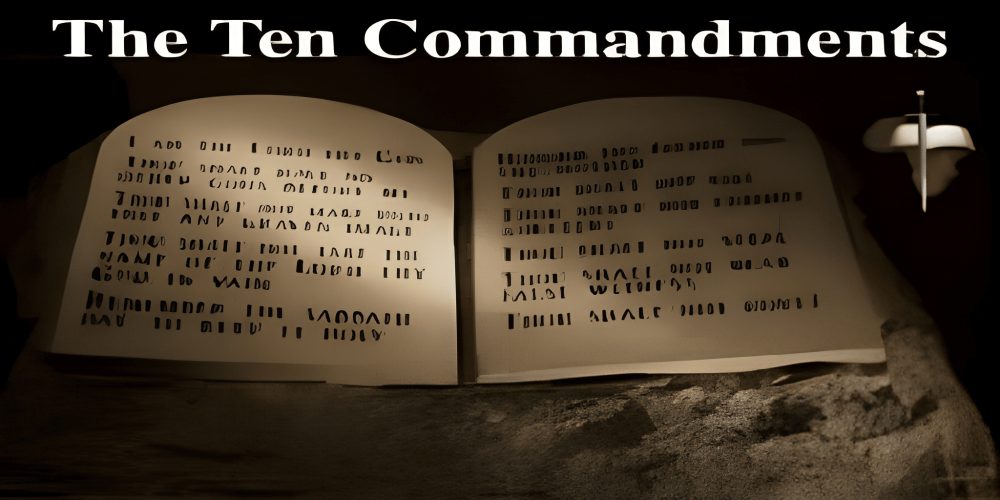
You have probably heard of them. Most people have. But when was the last time you really thought about the ten commandments? Not just as a museum piece or something you see in a old movie. These ten rules are older than the Roman Empire, older than the pyramids almost. And yet they still show up everywhere. Courtroom walls. Political debates. Even arguments about what kind of country we want to live in.
So what makes the ten commandments so special? Why do people still fight over them after three thousand years?
I think the answer is simpler than you might expect. The ten commandments work because they deal with things that never go away. Murder. Theft. Lying. Wanting what your neighbor has. These problems are as old as humanity itself. And the ten commandments offer a response to each one. Not a complicated philosophy. Just a clear, short statement.
Let me walk you through them. Not like a preacher. More like someone trying to understand why these ancient laws still matter.
Where the Ten Commandments Came From
The story goes like this. A group of former slaves is wandering in the desert. They have just escaped a powerful empire. They are free, but freedom is messy. People steal from each other. They lie. They forget who they are. So their leader, a man named Moses, goes up a mountain. When he comes back down, he carries two stone tablets. On them are written the ten commandments.
Whether you believe that story literally or not, the point is clear. The ten commandments were never just religious rules. They were a social contract. A way to turn a bunch of tired, scared people into a functioning community.
The first few of the ten commandments deal with God. Or whatever you consider the highest thing in life. The rest deal with your parents, your neighbor, and your own worst impulses. That structure matters. Because the ten commandments assume that how you treat invisible things affects how you treat visible people.
The First Commandment
"You shall have no other gods before me."
That is the opener. In the ancient world, this was shocking. Everyone around the Israelites had multiple gods. A god for the rain. A god for the war. A god for the harvest. But the ten commandments said no. Just one. Complete loyalty.
Now, most of us do not bow down to statues anymore. But we still put things first. Your career. Your social media followers. Your bank account. Your political party. The ten commandments would call those "other gods." They are not bad in themselves. But when they become the most important thing, you run into trouble.
I have seen people destroy their health for a promotion. Families break apart because someone cared more about a brand than about a person. The first of the ten commandments is really a question. What comes first in your life? And are you sure that is a good idea?
The Second Commandment
"No carved images."
This one confuses people. What is wrong with art or statues? The problem the ten commandments are pointing to is not art itself. It is the danger of shrinking something infinite down to something you can hold in your hand. When you do that, you start treating the thing as more important than the reality behind it.
Think about celebrity culture. We spend hours following the lives of famous people. We buy products they endorse. We defend them like they are family. The ten commandments would ask whether we have turned a human being into an idol. The same goes for money. For power. For a perfect body.
The second of the ten commandments is a warning against reducing life to objects.
The Third Commandment
"Not taking the name in vain."
Most people hear this and think of swearing. But the ten commandments mean something deeper here. Taking a name in vain means using it for empty or dishonest purposes. Lying under oath. Claiming divine authority for something selfish. Manipulating spiritual language to control other people.
You see this all the time. Leaders who say God told them to start a war. Influencers who use religious words to sell detox tea. Politicians who wrap themselves in sacred symbols while doing corrupt deals. The ten commandments say that is off limits. If you use holy things, you had better be serious about it.
This one also applies to everyday honesty. When you promise something and break that promise lightly, you are taking something valuable and treating it like trash. The ten commandments remind us that words have weight.
The Fourth Commandment
"Remember the Sabbath."
This might be the most practical of the ten commandments. It says stop working one day a week. Rest. Let the ground rest. Let the animals rest. Let the servants rest. In the ancient world, that was revolutionary. Slaves never rested. Poor people worked until they dropped. But the ten commandments said rest is not a reward for the rich. It is a basic right.
Try that today. Really try it. No email. No chores. No checking work messages. Just a full day of being instead of doing. For most people, that sounds impossible or even terrifying. That is exactly why the ten commandments included this rule.
We have convinced ourselves that our value comes from what we produce. The Sabbath says no. Your value is built in. You do not have to earn it. Taking a day off is not laziness. It is a statement about what matters.
The Fifth Commandment
"Honor your father and mother."
This is the only one of the ten commandments that comes with a reward. "So that you may live long in the land." Honor does not mean obey without question. It does not mean pretending parents are perfect when they are not. The ten commandments are not stupid. They know parents fail. They know some parents are cruel.
But honor means recognizing what you owe. Life. Food. Shelter. Basic care. Even in a bad situation, those things came from somewhere. The fifth commandment asks for a posture of gratitude. Not blind loyalty. Just a willingness to see what was given to you.
In a time when people cut off family members over politics or small arguments, this one hits hard. The ten commandments say there is something sacred about the parent-child bond. It deserves protection.
The Sixth Commandment
"Do not murder."
Short and direct. You would think every society would agree on this. But the ten commandments placed this rule at the center of their legal code for a reason. Human life is fragile. And human beings are good at convincing themselves that some lives do not count. The enemy. The outsider. The person who disagrees with us.
The sixth commandment draws a line. You do not get to cross it. No excuse. No loophole.
Now, the ten commandments do not forbid all killing. The ancient text makes exceptions for war and for certain legal punishments. But the core message is clear. Taking an innocent life is always wrong. That principle underlies almost every legal system on earth.
The Seventh Commandment
"No adultery."
This one makes people uncomfortable. Why should the ten commandments care about what happens in a bedroom? Because adultery is not just about sex. It is about broken promises. It is about betrayal. When you commit adultery, you destroy trust. You hurt children. You introduce lies into the center of a family.
The ten commandments take marriage seriously because families are the building blocks of communities. When families fall apart, everything else gets harder. Kids struggle. Neighbors fight. Trust erodes.
You do not have to be religious to see the damage that infidelity causes. The seventh commandment names that damage and says stop.
The Eighth Commandment
"Do not steal."
Simple. To the point. The ten commandments say that what belongs to someone else is not yours to take. That includes physical objects. But it also includes time. Cheating on taxes. Fudging your timesheet. Taking credit for a coworkers idea. All of that is stealing too.
The eighth commandment is the foundation of economic justice. You can work hard and earn things. That is good. But you cannot take from others to get ahead. Every honest business, every fair trade, every contract signed in good faith builds on this one rule from the ten commandments.
The Ninth Commandment
"No false witness."
In ancient courts, a lying witness could get someone killed. The ten commandments made that a crime. But false witness happens outside of court too. Spreading a rumor. Repeating gossip. Sharing a story you have not verified. All of those things damage real people.
Social media has made this worse. A lie can travel around the world before the truth puts its shoes on. The ninth commandment asks you to slow down. To check your facts. To ask yourself whether you would say this thing to the persons face.
The ten commandments treat truth as sacred. Not because truth is always easy or comfortable. But because without truth, nobody can trust anybody. And a society without trust does not last long.
The Tenth Commandment
"Do not covet."
This is the sneakiest of the ten commandments. The first nine are about actions. Murder. Theft. Lying. You can see those from the outside. But coveting happens inside your head. It is wanting what someone else has. Their house. Their spouse. Their success. Their life.
The tenth commandment goes straight to the heart. Because the ten commandments understand something important. Actions start with desires. Before you steal, you covet. Before you commit adultery, you covet. Before you lie about someone, you envy them.
In a world full of advertising and social media, coveting is practically encouraged. Everyone looks happier. Richer. More successful. The tenth commandment pushes back against that whole system. It says contentment is a virtue. Learning to want what you already have is a kind of freedom.
Why People Still Argue About the Ten Commandments
You have probably seen the debates. Should the ten commandments be displayed in schools? In courthouses? In public parks? Some people say yes. These are the foundations of our laws. Other people say no. They are religious texts. Not everyone believes the same things.
Both sides have a point. The ten commandments have influenced Western law enormously. The prohibitions on murder, theft, and perjury came straight from these ancient rules. At the same time, the ten commandments are undeniably religious. The first four assume the existence of God. You cannot separate that out.
I do not have an easy answer to that argument. But I will say this. Understanding the ten commandments does not require believing in them. You can study them as history. As literature. As philosophy. And you will still learn something valuable.
The Ten Commandments in Everyday Life
So what does this mean for you, right now, on a random Tuesday?
Maybe you start with the fourth commandment. Take a real day off this week. See what happens. Maybe you look at the ninth commandment and decide to stop sharing stories you cannot verify. Maybe the tenth commandment hits close to home, and you spend five minutes listing things you are grateful for instead of scrolling through someones vacation photos.
The ten commandments were never meant to be a checklist that you complete and then forget. They were meant to be lived. Imperfectly. Repeatedly. Day after day.
You will break them. Everyone does. That is not the point. The point is that they give you a direction. A north star. When you are trying to figure out the right thing to do, the ten commandments offer a starting place.
Do not murder. That is easy. Do not steal. Also clear. But do not covet? That one takes a lifetime.
And maybe that is okay. The ten commandments have been around for three thousand years. They are not going anywhere. You have time to figure them out.
Frequently Asked Questions About the Ten Commandments
People ask all kinds of things about these ancient rules. Here are the most common ones. No complicated language. Just straight answers.
1. Are the ten commandments the same in every religion?
No. That surprises a lot of people. Jewish lists number them one way. Catholic and Lutheran Bibles combine the first two. Most Protestant Bibles use the list I just walked through. Eastern Orthodox churches have another variation. The actual commands are almost identical. They just group them differently. So when someone says the ten commandments, ask which version they mean.
2. Do I have to believe in God to follow the ten commandments?
Not really. The first few commands assume you do. But the last six are basically universal. You do not need faith to know that murder is wrong. You do not need religion to see the value of telling the truth. Many atheists and agnostics live by most of the ten commandments without even thinking about it. The rules work whether you believe in the rule giver or not.
3. What about the Sabbath? Does that have to be Sunday?
The ten commandments do not specify a day. Jewish tradition has Saturday. Most Christians worship on Sunday. Some groups meet on other days entirely. The point of the fourth commandment is not which day you pick. The point is that you actually rest. One day in seven. No work. That is the part people struggle with.
4. Are the ten commandments the most important laws in the Bible?
For many traditions, yes. They are treated as the summary. The foundational principles that all the other laws build on. Think of it this way. The ten commandments are the constitution. The other six hundred or so laws in the Old Testament are the detailed regulations. The constitution matters more. It tells you the spirit of the whole system.
5. What if my parents were abusive? Do I still have to honor them?
This is a hard question. The ten commandments expect parents to act in a way that deserves honor. When parents are cruel or abusive, the situation changes. Many religious teachers say that honoring an abusive parent does not mean staying in danger. It does not mean pretending everything is fine. Honoring might mean praying for them. Or forgiving them from a distance. Or breaking the cycle of abuse with your own children. The ten commandments are not a license for someone to hurt you.
6. Is coveting really as bad as murder?
The ten commandments put them on the same list. That suggests yes. But here is the difference. Everyone knows murder is wrong. Coveting feels harmless. It is just thoughts, right? But the ten commandments understand that coveting leads to actions. You do not steal something you do not want. You do not lie about someone you do not envy. Catching coveting early prevents worse things later.
7. Can you name all ten commandments from memory?
Most people cannot. And that is fine. Studies have been done. Ask someone on the street to list the ten commandments, and they will usually name four or five correctly. They will add a few that are not there. Do not steal, do not murder, and honor your parents are the ones people remember best. The prohibition on coveting is almost always forgotten. So do not feel bad if you cannot recite them. You are in good company.
8. What happened to the original stone tablets?
According to the biblical story, Moses broke the first set when he saw the golden calf. God had him carve a second set. Those went into the Ark of the Covenant. That gold chest was kept in the Temple in Jerusalem until the Babylonians destroyed the Temple in 586 BCE. After that, the ark and the tablets vanish from history. People have claimed to find them. Ethiopia says they have the ark. Some say it is under the Temple Mount. But nobody has proven anything. The original ten commandments tablets are probably gone forever.
9. Do the ten commandments forbid killing animals?
No. The sixth commandment uses a specific Hebrew word that means the premeditated killing of a human being. It does not apply to animals. The same biblical text that gives the ten commandments also includes rules about animal sacrifices and dietary laws. So killing animals for food or religious purposes was allowed. That said, many people today extend the spirit of the ten commandments to oppose cruelty to animals. But that is an interpretation. Not the plain text.
10. How do I start following the ten commandments if I never have before?
Pick one. Just one. The fourth commandment is a good place to start. Take a full day off from work and screens. See how it feels. Or try the ninth commandment. For one week, refuse to repeat any negative information about another person unless you know for certain it is true and necessary. You will be surprised how hard that is. The point is not to become perfect. The point is to start moving in the right direction. The ten commandments have been waiting three thousand years for you to give them a serious try. No rush.
Leave A Comment
0 Comment