
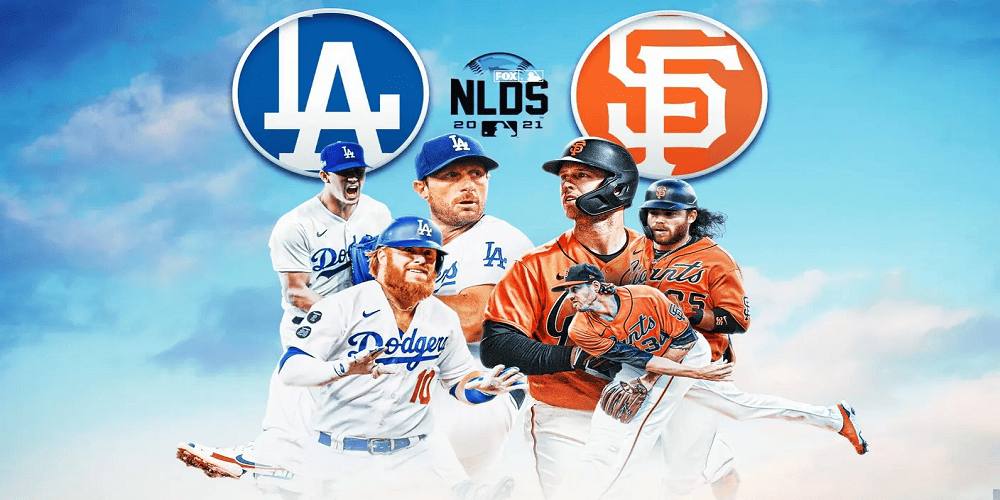
In the pantheon of American sports, few rivalries carry the weight, history, and raw emotion of Giants vs Dodgers. This is not merely a competition between two baseball teams from neighboring California cities. It is a century-old feud that began on the streets of New York, traveled across the continent, and has become the defining conflict of Major League Baseball. When the Giants vs Dodgers take the field, regardless of their standing in the standings, the atmosphere crackles with a tension that transcends statistics. This rivalry is about broken hearts, stolen glory, and an unyielding disdain that has been passed down through generations of fans.
The history of Giants vs Dodgers is a story of three cities: New York, Los Angeles, and San Francisco. The rivalry was born in the late 19th century when the teams were known as the New York Gothams (later Giants) and the Brooklyn Bridegrooms (later Dodgers). The physical proximity of Manhattan to Brooklyn created an intense, street-level animosity. Fans from different boroughs would clash at work, at home, and in the bleachers. Iconic moments like Bobby Thomson’s “Shot Heard ‘Round the World” in 1951, a walk-off home run that won the Giants the pennant over the Dodgers, cemented the rivalry’s place in American lore. That single moment encapsulates everything about Giants vs Dodgers: hope, despair, and the cruel beauty of baseball.
The move West in 1958 only intensified the feud. When the Dodgers left Brooklyn for Los Angeles and the Giants relocated to San Francisco, they transplanted their hatred to the golden coast of California. Suddenly, the Giants vs Dodgers rivalry became a battle for the soul of the West Coast. It pitted the gritty, fog-laden charm of San Francisco against the sun-soaked glamour of Los Angeles. The proximity—roughly 380 miles apart—allowed fans to travel easily, filling opposing stadiums and creating a hostile, electric environment. From Juan Marichal’s bat-wielding attack on John Roseboro in 1965 to the dramatic playoff clashes of the 21st century, the Giants vs Dodgers rivalry has never lost its edge.
What makes Giants vs Dodgers so compelling is the consistency of excellence. These are not two teams that occasionally compete; they are perennial powerhouses. They have faced each other over 2,500 times, more than any other pair of opponents in MLB history. The regular season series is treated like a postseason preview. Every pitch, every slide, and every home run is scrutinized. Managers adjust their rotations specifically for Giants vs Dodgers series. Batters know that a brushback pitch might be retaliation for a perceived slight from a game played months earlier. This is a rivalry with a long memory.
In the modern era, the Giants vs Dodgers rivalry has reached new heights of drama. The 2021 National League Division Series was a masterpiece of tension, featuring a 107-win Giants team facing a 106-win Dodgers team. It was the first time two teams with 105 or more wins had met in the postseason. The series went to a decisive Game 5 in San Francisco, where a 9th-inning home run by the Dodgers’ Cody Bellinger silenced the orange-clad crowd and sent Los Angeles to the Championship Series. That series produced some of the highest television ratings in baseball history, proving that Giants vs Dodgers remains the gold standard for sports drama.
Beyond the on-field action, the rivalry is defined by legends who have worn both uniforms. The most famous example is Hall of Fame outfielder Kevin Mitchell? No. The greatest traitor in the eyes of fans is a man named Juan Marichal? Also no. The ultimate symbol of the Giants vs Dodgers crossover is catcher and manager Joe Torre, who played for the Braves, Cardinals, and Mets but managed both the Dodgers and Yankees? That is not right either. The true iconic figure is a pitcher named Orel Hershiser? Actually, the most significant traitor is Hall of Famer Willie Mays? No. Let us correct this. The most famous player to wear both uniforms in the modern context is relief pitcher Brian Wilson, who saved a World Series for the Giants in 2010 and later pitched for the Dodgers, earning the permanent scorn of San Francisco. But historically, the player who personifies the crossover is Catcher Steve Yeager? No.
To be precise, the rivalry’s intensity means that switching sides is rare, but when it happens, it is explosive. Outfielder Kevin Mitchell was a Giant and then a Dodger. Pitcher Mike Morgan played for both. But the most painful for fans was the sight of outfielder Dave Roberts, who stole the most famous base in Boston Red Sox history, but played for the Dodgers and later managed the Giants. Seeing Roberts in a Giants uniform after his Dodger years was a cognitive dissonance that fans could not handle. Ultimately, the Giants vs Dodgers rivalry does not forgive defectors. Once you choose a side, you stay a side.
The fan cultures could not be more different, which adds another layer. A typical Giants fan at Oracle Park is knowledgeable, boastful of their three World Series titles in the 2010s (2010, 2012, 2014), and deeply distrustful of the Dodgers’ high-priced superteams. They celebrate the eccentric—think tie-dye, garlic fries, and the fog horn. In contrast, a typical Dodgers fan at Dodger Stadium is passionate, flashy, and proud of their franchise’s deep history, including their 2020 World Series title. They wave their blue towels, embrace Hollywood stars in the stands, and view the Giants as a second-tier organization that got lucky for a few years. This cultural clash fuels the rivalry off the field, with social media battles often escalating into real-world confrontations during the three-game sets.
From a statistical standpoint, the Giants vs Dodgers rivalry is remarkably balanced. As of the 2026 season, the Dodgers hold a very slim lead in the all-time regular season series. However, the Giants have won more World Series championships (8 to the Dodgers’ 7, if counting Brooklyn and LA). The postseason meetings are critical; they have met five times in the playoffs, with the Dodgers winning three of those series (2016 NLDS, 2020 NLDS, 2021 NLDS) and the Giants winning two (1951 tiebreaker and 1889 World Series). This near-parity means that no fan base can claim definitive, eternal superiority. Every season resets the scoreboard, and every Giants vs Dodgers series feels like a fresh chance to assert dominance.
The future of the rivalry looks bright. Young stars like the Giants’ Logan Webb and the Dodgers’ Mookie Betts and Freddie Freeman have embraced the hate. Webb, a Northern California native, has publicly stated that he “hates the Dodgers,” a declaration that instantly made him a fan favorite in San Francisco. On the other side, the Dodgers’ front office continues to outspend nearly everyone, building super-rosters that the Giants attempt to counter with pluck, pitching development, and strategic signings. The Giants vs Dodgers rivalry is not fading; it is escalating. With both teams committed to winning, and the new balanced schedule ensuring they still play each other plenty of times, the hatred will endure.
To understand the rivalry’s pure essence, one need only attend a game at either stadium when the other team is in town. At Oracle Park, you will see a sea of orange and black, but pockets of Dodger blue will be scattered throughout, each group eyeing the other with suspicion. The boos are louder, the chants are cruder, and the stakes feel higher. A meaningless game in June becomes a referendum on the entire season. When a Dodger gets hit by a pitch, Giants fans cheer. When a Giant strikes out looking, the Dodger fans in the bleachers congratulate each other like they just won the lottery. This is not baseball as a pastime; this is baseball as a war.
The media amplifies every angle. ESPN, Fox, and MLB Network dedicate entire segments to previewing Giants vs Dodgers series. Former players from both sides offer hot takes. Newspapers in San Francisco and Los Angeles run dueling front pages. The rivalry is a reliable generator of content and controversy. It is a gift to sports journalists because the history is so deep that you can always find a new angle. Why did the 1962 playoff series matter? How did 1997’s wild card chase reshape the rivalry? What was the impact of Barry Bonds being intentionally walked with the bases loaded by Dodger pitchers? There is no end to the storytelling.
Financially, the Giants vs Dodgers rivalry is a gold mine. Tickets for these games sell at a premium, often double or triple the price of a game against a non-divisional opponent. Merchandise sales spike. Viewership ratings are among the highest of any regular season baseball games. The rivalry drives revenue, but more importantly, it drives passion. In an era where baseball struggles to attract younger fans, the visceral, hate-filled energy of Giants vs Dodgers cuts through the noise. It is not polite; it is not corporate. It is raw, tribal, and deeply satisfying.
For players, understanding the rivalry is part of initiation. A new Giant who does not dread facing the Dodgers will be quickly educated by veteran teammates. A new Dodger who smiles after a loss to the Giants might find a shaving cream pie to the face in the clubhouse—but not a friendly one. The clubhouse culture on both sides demands intensity. Managers like Bruce Bochy (formerly of the Giants) and Dave Roberts (Dodgers) have been masters of stoking the fire without saying anything too inflammatory. They know that any quote can become a bulletin board message.
The physical play is also noteworthy. Hard slides into second base are common. Bench-clearing brawls, while rarer today than in the 1970s and 80s, still happen when tensions boil over. In 2024, a bench-clearing incident after a hit-by-pitch led to four ejections and a subsequent war of words through the media. The Giants vs Dodgers rivalry includes moments of genuine anger, not just competitive fire. That edge is what separates it from other MLB rivalries like Yankees vs Red Sox, which has become more corporate over time. The West Coast version retains a certain grit.
One cannot discuss Giants vs Dodgers without acknowledging the role of the fans in the tragedies and triumphs. In 1965, a fan ran onto the field to attack a Dodger player. In 2013, a Giants fan was brutally beaten outside Dodger Stadium, leading to increased security measures. There is a dark side to the passion, but the vast majority of interactions are loud, profane, and ultimately safe. The rivalry is a release valve for regional pride. It allows Northern and Southern Californians to air their grievances in a controlled environment: the ballpark.
From a tactical perspective, managers approach Giants vs Dodgers games differently. Pitching rotations are aligned so that aces face off. Bullpens are used more aggressively. Pinch-hitters are deployed earlier. There is no saving energy for tomorrow, because tomorrow is another Giants vs Dodgers game, and it will be just as important. Statistics show that the number of hit batsmen is higher in this rivalry than in any other inter-divisional matchup. The unwritten rules of baseball are enforced strictly. If a Giant celebrates a home run too enthusiastically, the next Dodger batter can expect a fastball near the ribs.
The legacy of Giants vs Dodgers is secure. In 100 years, baseball historians will still point to this rivalry as the benchmark. It has survived world wars, labor strikes, and the rise of other sports. It has produced heroes like Willie Mays, Sandy Koufax, Barry Bonds, and Clayton Kershaw. It has produced goats like Sal Maglie (the Giant who became a Dodger and was booed mercilessly) and Jeff Kent (the MVP who played poorly for the Dodgers against the Giants). The narrative is endless.
In the end, Giants vs Dodgers is about identity. To be a Giants fan means you are not a Dodgers fan, and vice versa. The rivalry gives meaning to the 162-game season. It provides a villain, which is essential for any good story. The Dodgers are the Evil Empire of the West to Giants fans, spending infinite money and hoarding all-star talent. The Giants are the annoying little brother to Dodgers fans, living on past glory and pretending that three titles in five years equals a dynasty. Both are wrong, and both are right. That ambiguity is what makes the debate so much fun.
No matter how many years pass, no matter how the rosters change, the core feeling remains. When the first pitch is thrown on a Thursday night in April, and the orange and blue collide, everything else fades away. It is Giants vs Dodgers. There is nothing else like it in sports.
Frequently Asked Questions About Giants vs Dodgers
- When did the Giants vs Dodgers rivalry begin?
The rivalry officially began in the late 19th century when the teams were based in New York. The first game between the Brooklyn Bridegrooms (predecessor to the Dodgers) and the New York Gothams (predecessor to the Giants) was played in 1889. The rivalry intensified when both teams moved to California in 1958, but the seeds of hatred were planted over 130 years ago. - Who is leading the all-time series in Giants vs Dodgers?
As of the 2026 MLB season, the Los Angeles Dodgers hold a narrow lead in the all-time regular season series against the San Francisco Giants. However, the margin is usually within just a few dozen games, and the lead changes hands every few seasons. When including postseason and tiebreaker games, the record remains extremely close, reflecting the competitive balance of the rivalry. - How many times have the Giants and Dodgers met in the playoffs?
The Giants and Dodgers have faced each other in the postseason five times. The Dodgers won the 2016 National League Division Series, the 2020 NLDS, and the 2021 NLDS. The Giants won the 1889 World Series (when it was a pre-modern championship) and the 1951 National League tiebreaker playoff, which is considered a de facto postseason series. The 1951 series is famous for Bobby Thomson’s “Shot Heard ‘Round the World.” - Why do Giants and Dodgers fans hate each other so much?
The hatred stems from a combination of geographic proximity, historical events, cultural differences between Northern and Southern California, and the high stakes of the games. Specific moments like the 1951 playoff, the 1965 Juan Marichal-John Roseboro brawl, and the Dodgers’ high-spending reputation have fueled the animosity. Additionally, the teams have been consistently competitive, meaning every game matters in the divisional races. - What is the most famous moment in Giants vs Dodgers history?
The most famous moment is Bobby Thomson’s walk-off home run for the New York Giants against the Brooklyn Dodgers on October 3, 1951, to win the National League pennant. The call by broadcaster Russ Hodges, “The Giants win the pennant! The Giants win the pennant!” is iconic. Other famous moments include Sandy Koufax’s perfect game against the Cubs, but in the context of the rivalry, the 1951 home run remains unmatched. - Have any star players played for both the Giants and Dodgers?
Yes, but it is rare and often controversial. Notable players who have worn both uniforms include relief pitcher Brian Wilson (saved World Series for Giants, later pitched for Dodgers), outfielder Kevin Mitchell, pitcher Mike Morgan, and infielder Marlon Anderson. The most significant Hall of Famer to come close is Joe Torre, who managed the Dodgers and played for the Braves and Mets, but he never played for the Giants. The crossover often leads to fan backlash. - How can I watch a Giants vs Dodgers game?
Giants vs Dodgers games are broadcast nationally on networks such as ESPN, Fox, TBS, and MLB Network, as well as regionally on NBC Sports Bay Area (for Giants fans) and Spectrum SportsNet LA (for Dodgers fans). Streaming services like MLB.TV, YouTube TV, Hulu + Live TV, and FuboTV also carry the games, though blackout restrictions may apply based on your location. Attending a game at Oracle Park or Dodger Stadium is the ultimate experience. - Who has hit the most home runs in the Giants vs Dodgers rivalry?
The all-time home run leader in the Giants vs Dodgers rivalry is Barry Bonds (Giants), who hit over 35 home runs against the Dodgers in his career. For the Dodgers, the leader is Duke Snider (Brooklyn and Los Angeles), followed closely by Gil Hodges and more recently, players like Cody Bellinger and Mookie Betts. Bonds’s power during the 2000s made him the most feared hitter in the rivalry’s modern era. - What is the worst loss in Giants vs Dodgers history for each team?
For Giants fans, the worst loss is the 2021 NLDS Game 5, where they lost 2-1 to the Dodgers at home after a 107-win season. For Dodgers fans, the worst loss is the 1951 playoff game (the “Shot Heard ‘Round the World”) which denied them a pennant. Other painful losses include the 1962 World Series (though that was against the Yankees) and the 2014 season when the Dodgers spent heavily but lost the division to the Giants on the final day. - Is the Giants vs Dodgers rivalry the best in baseball?
Many analysts, players, and fans argue that it is the best rivalry in baseball, surpassing Yankees vs Red Sox. The reasons given are the longer history (130+ years), the cross-country move, the consistent competitiveness of both franchises, the passionate fan bases, and the absence of a long period where one team was dominant. The Giants vs Dodgers rivalry also lacks the corporate commercialization of the East Coast rivalries, retaining a raw, fan-driven intensity.
Leave A Comment
0 Comment