
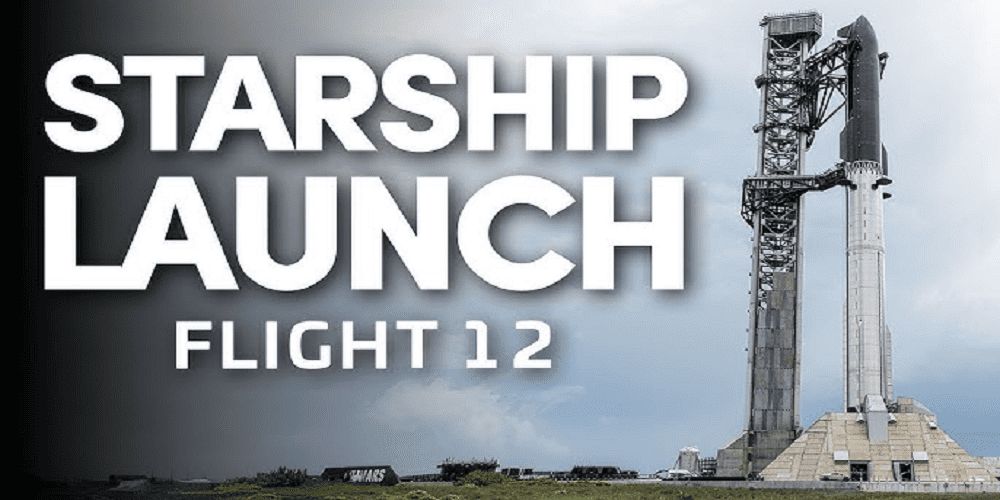
When you hear the phrase "SpaceX Starship launch," what exactly comes to mind? For many, it is the image of a stainless-steel behemoth lifting off from Boca Chica, Texas, kicking up a dust storm of epic proportions. For others, it is the explosive fireball that ended the first few integrated test flights. But beyond the spectacle, the SpaceX Starship launch campaign represents a fundamental shift in how humanity approaches heavy-lift rocketry.
Since its unveiling in 2019, the rocket has been a magnet for controversy, awe, and engineering debate. To understand the present and future of space exploration, one must understand the nuances of every SpaceX Starship launch attempt. This document breaks down the vehicle’s design, the history of its test campaigns, the regulatory hurdles, and answers the most common public questions, all while maintaining a focus on what makes this rocket different from anything that has flown before.
The Anatomy of a Giant: Why This Rocket Matters
Before discussing the launch timeline, it is crucial to understand what is being launched. The system consists of two stages: the Super Heavy booster and the Starship spacecraft itself. Together, they stand nearly 400 feet tall, making it the tallest rocket ever constructed.
The first SpaceX Starship launch attempt in April 2023 illustrated the sheer power of the Super Heavy booster’s 33 Raptor engines. That event produced approximately 17 million pounds of thrust. To put that in perspective, the Saturn V of the Apollo era produced about 7.9 million pounds. Therefore, when you watch a SpaceX Starship launch, you are witnessing the most powerful flying object ever built.
Why such power? The mission statement is clear: full reusability and interplanetary travel. Unlike the Falcon 9, which gives airlines style landings, the Starship requires a "belly flop" maneuver followed by a last-second flip to land vertically. This complexity is why early SpaceX Starship launch tests often ended in what engineers call "rapid unscheduled disassembly."
A Timeline of Flight Attempts
To date, the integrated SpaceX Starship launch campaign has seen several major flight tests. Each attempt has provided valuable, albeit expensive, data.
The first integrated SpaceX Starship launch took place on April 20, 2023. From the outside, it looked chaotic. Several Raptor engines failed to ignite or shut down prematurely. The rocket began to tumble. The flight termination system finally activated forty seconds later, destroying the vehicle at altitude. However, the success was that the pad didn't collapse entirely, and the rocket cleared the tower. For SpaceX, any SpaceX Starship launch that gets past max q is considered a win.
The second integrated SpaceX Starship launch occurred on November 18, 2023. This was a marked improvement. Hot-staging worked flawlessly, meaning the upper stage lit its engines while still attached to the booster. The booster exploded moments later, but the Starship reached space for the first time. This SpaceX Starship launch proved that the vehicle could survive reentry heating, even if it eventually disintegrated over the ocean.
The third SpaceX Starship launch, on March 14, 2024, achieved orbital velocity for the first time. The ship flew halfway around the Earth. Although it broke up during reentry, the mission demonstrated successful propellant transfer technology. Every SpaceX Starship launch since has refined the control surfaces and heat shield tiles.
The fourth and fifth flights showed the public what landing looks like. During the June 2024 flight, the Super Heavy booster executed a soft splashdown in the Gulf of Mexico. Then, in October 2024, history was made. The fifth SpaceX Starship launch saw the booster return to the launch mount, caught by the "Mechazilla" arms. This was a genuine breakthrough.
The Regulatory Landscape: The FAA and Environmental Concerns
No discussion of a SpaceX Starship launch is complete without mentioning the Federal Aviation Administration. The pace of testing is dictated not just by engineering, but by paperwork. Following the April 2023 flight, the FAA grounded the rocket for months, citing environmental and safety reviews.
The spray of debris from the first launch scattered concrete chunks into sensitive wetlands. This forced SpaceX to install a water deluge system and a steel plate under the pad. Consequently, every subsequent SpaceX Starship launch required an updated environmental assessment. Activists have sued the FAA multiple times, arguing that the rapid cadence of testing harms local wildlife. While these lawsuits slow things down, they rarely stop the program entirely. As of late 2025, the license for the next SpaceX Starship launch remains under review, though it is expected to be granted for the orbital refueling demonstration.
Technical Hurdles: The Heat Shield and The Flip
One cannot look at a SpaceX Starship launch video without noticing the hexagonal tiles covering the belly. These are the heat shield. During the SpaceX Starship launch on March 14, 2024, cameras showed tiles glowing white hot. Later inspection revealed that many tiles had fallen off during ascent. SpaceX has since moved to a bonding method that allows for faster replacement, but the problem persists.
Furthermore, the landing flip remains a high-risk maneuver. During suborbital tests of the upper stage in 2021, the vehicle landed successfully after a flip. However, the velocity during an orbital SpaceX Starship launch is ten times higher. The fuel slosh dynamics are unpredictable. Engineers at Starbase are currently testing a new header tank design that isolates the landing propellant from the main tanks. Until this is solved, a reusable SpaceX Starship launch will not be economically viable.
The Human Element: Crews and the Moon
SpaceX has sold the Starship to NASA for the Artemis program. This means that the first humans to walk on the Moon since 1972 will do so from a Starship. However, a crewed SpaceX Starship launch requires life support, radiation shielding, and an elevator. The current test launches carry no life support. They use ballast.
The Human Landing System version of the Starship has no heat shield because it never returns to Earth. It will stay in lunar orbit. But before that happens, SpaceX must prove that a uncrewed SpaceX Starship launch can land on the lunar surface. This demonstration is scheduled for 2026. If that mission fails, the Artemis timeline slips by years. Consequently, the pressure on every SpaceX Starship launch between now and then is immense.
Payload Capacity and Orbital Refueling
The Starship is designed to put 100 to 150 metric tons into low Earth orbit. But to get that payload to the Moon or Mars, the vehicle needs refueling in space. This requires a complex dance. One SpaceX Starship launch will carry the payload and some fuel. Then, a second SpaceX Starship launch will act as a tanker, docking in orbit to transfer cryogenic methane and oxygen.
This has never been done with fluids that boil off rapidly. The first orbital refueling test, involving two separate SpaceX Starship launch vehicles, is slated for mid-2026. The tanker version has no heat shield or flaps, making it cheaper to produce. However, docking in orbit with such large structures is a hazard. A collision could create a debris field that endangers other satellites. Thus, the FAA and NASA are requiring a very strict safety analysis before that specific SpaceX Starship launch profile is approved.
Economic Realities: Cost Per Launch
How much does a SpaceX Starship launch cost? Elon Musk has stated that the marginal cost of a Starship launch could eventually drop to 10 million dollars. That is absurdly cheap. A Falcon 9 launch costs roughly 67 million dollars. At 10 million dollars, the SpaceX Starship launch would undercut every heavy-lift provider on the planet.
However, that price assumes rapid reusability. Currently, the Super Heavy booster has flown twice at most. The upper stage has never been reused. To achieve 10 million dollars, SpaceX needs to fly the same booster fifty times. Until we see a booster fly ten times, the price is speculative. For now, a commercial SpaceX Starship launch is not available on the open market. All launches are internal tests or NASA contracts.
Comparison to Competitors: SLS and New Glenn
It is impossible to write about the SpaceX Starship launch without comparing it to NASA’s Space Launch System. SLS is more expensive per launch about 2 billion dollars and is expendable. It has flown once successfully. But SLS is ready now. Starship is still experimental. If you need to send a payload to the Moon tomorrow, you use SLS. If you are willing to wait and take a risk, you bet on the SpaceX Starship launch.
Jeff Bezos’ New Glenn rocket is a more direct competitor. It has a reusable first stage and flies frequently. However, New Glenn’s upper stage is not reusable. Only the SpaceX Starship launch offers full two-stage reusability. That is a game-changer. Until Blue Origin demonstrates orbital refueling, Starship remains the only vehicle that theoretically allows a base on Mars.
Public Perception and Media Coverage
The way the media covers a SpaceX Starship launch is unique. When NASA launches a rocket, the coverage is reverent. When SpaceX launches, it is treated like a sporting event. YouTubers stream every SpaceX Starship launch attempt live, complete with explosion reaction compilations. This has created a feedback loop. Culture expects explosions, so when a SpaceX Starship launch succeeds perfectly, the viewership actually drops. Excitement requires risk.
This has its downsides. The "test early, fail often" philosophy works for software, but hardware failures are expensive. The loss of a single Starship costs approximately 90 million dollars. Yet, because SpaceX is private, they can absorb these losses. A public company could not survive three consecutive SpaceX Starship launch failures. But as a private entity, they have the patience to iterate.
Future Milestones: 2026 and Beyond
Looking forward, we have a packed manifest. The next SpaceX Starship launch, Flight 6, is scheduled to attempt a payload deployment. It will carry a dummy satellite and release it in orbit. Flight 7 will attempt the first reflight of a previously flown booster. Flight 8 will attempt the propellant transfer test.
By the end of 2026, we will likely see the first lunar uncrewed landing attempt. That SpaceX Starship launch will carry rovers from multiple universities. If it lands hard, the program resets. But if it succeeds, NASA will feel comfortable scheduling the human landing for 2027. Meanwhile, a private mission led by Jared Isaacman, called Polaris III, aims to be the first crewed SpaceX Starship launch to orbit. That mission will test the life support systems.
Risks and Concerns
Let us be blunt. There is a non-zero chance that the SpaceX Starship launch program fails entirely. The technical challenges are staggering. The heat shield is not yet solved. The orbital refueling requires millimeter precision docking. The engines still suffer from turbine blade cracking. Any one of these issues could cause a catastrophic failure that damages the launch pad for a year.
Moreover, the launch site at Boca Chica is vulnerable. Hurricanes in the Gulf frequently threaten the facility. A direct hit from a Category 5 storm could destroy the production tents and the launch tower. SpaceX would then have to move operations to Cape Canaveral, which is not configured for the same cadence. So, while the dream is large, the infrastructure is fragile.
Conclusion
The SpaceX Starship launch is the most watched, most analyzed, and most debated event in modern rocketry. It has redefined what the public expects from a rocket: reusability, stainless steel aesthetics, and live streaming of failures. Whether you view the explosions as progress or waste depends on your tolerance for risk.
What is undeniable is that the SpaceX Starship launch cadence has forced every other space agency to accelerate their plans. China is building a reusable rocket. Europe is redesigning Ariane. Russia is copying the Raptor engine. In that sense, regardless of whether this vehicle ever lands on Mars, it has already changed the industry. The next time you watch a SpaceX Starship launch, remember that you are not just watching a rocket. You are watching a philosophy of rapid iteration made manifest. And if history is any guide, the next SpaceX Starship launch will be even more surprising than the last.
Frequently Asked Questions About the SpaceX Starship Launch
1. Why does a SpaceX Starship launch keep getting postponed?
The primary reasons are weather and regulatory approval. The FAA requires a detailed mishap investigation after every test flight that ends in an explosion. Furthermore, the range at Boca Chica must be cleared of boats and planes. Strong upper-level winds also delay a SpaceX Starship launch, as the rocket is very tall and sensitive to shear forces.
2. How much does a single SpaceX Starship launch cost to build?
Estimates vary, but the manufacturing cost of the Super Heavy booster and Starship upper stage is approximately 90 million dollars. This is significantly less than the SLS, which costs over 2 billion dollars per launch. As reusability increases, the cost of a SpaceX Starship launch will drop primarily to the price of fuel and refurbishment, roughly 10 to 20 million dollars.
3. Has any SpaceX Starship launch successfully landed?
No. As of early 2025, no upper stage has survived reentry and landing. The Super Heavy booster has been caught by the launch tower once, during the fifth flight in October 2024. However, the Starship itself has always broken up during atmospheric reentry. The goal for the next few launches is to achieve a soft splashdown in the Indian Ocean.
4. Can I watch a SpaceX Starship launch in person?
Yes, but only from designated areas. The best public viewing spots are on South Padre Island, Texas, specifically at Isla Blanca Park. Road closures on Highway 4 near Boca Chica are strictly enforced. Do not attempt to drive to the launch pad. For a major SpaceX Starship launch, thousands of spectators gather on the beach, and local police manage the crowds.
5. What happens if a SpaceX Starship launch fails over land?
The flight termination system is designed to destroy the vehicle before it flies over populated areas. The trajectory of every SpaceX Starship launch is programmed to go over the Gulf of Mexico or the ocean. This ensures that debris falls into the water. During the first flight, pieces of concrete hit a parked car, but no human injuries have occurred from a SpaceX Starship launch failure.
6. What is "rapid unscheduled disassembly" that SpaceX mentions?
This is SpaceX’s internal euphemism for an explosion. When a SpaceX Starship launch ends in a fireball, the company does not call it a failure. They call it a rapid unscheduled disassembly. The logic is that every explosion provides data points that no computer simulation can match. It is a cultural choice to destigmatize failure.
7. Will the SpaceX Starship launch be used for point-to-point travel on Earth?
Elon Musk has discussed using Starship to fly from New York to Shanghai in 40 minutes. However, a SpaceX Starship launch for point-to-point travel requires landing on offshore platforms near cities. The noise levels are prohibitive 120 decibels. Furthermore, the G-forces of a ballistic reentry are too high for untrained civilians. Do not expect commercial point-to-point Starship flights before the 2030s.
8. How does the SpaceX Starship launch affect the Starlink internet network?
Each SpaceX Starship launch can carry as many Starlink satellites as five Falcon 9 launches. The larger door on the Starship allows for bulk deployment of the V3 satellites. Once the SpaceX Starship launch becomes operational for Starlink, the constellation can expand to 40,000 satellites very quickly, which raises concerns among astronomers about light pollution.
9. What is the hot-staging ring, and why is it important?
The hot-staging ring is a vented section between the booster and the upper stage. During a SpaceX Starship launch, the upper stage ignites its engines while still attached to the booster. This pushes the stages apart actively instead of using mechanical pushers. It adds reliability, but it also subjects the booster to extreme heat. The ring itself is jettisoned after separation.
10. Is the SpaceX Starship launch safe for the environment?
This is controversial. The launch pad uses a water deluge system to suppress sound and debris. That water contains ablated concrete and metal particles. Additionally, the Raptor engines burn methane, which produces less black carbon than kerosene, but methane leaks are a potent greenhouse gas. Environmental groups have sued to stop the SpaceX Starship launch cadence, arguing that the Texas wetlands are being damaged. SpaceX counters that the long-term benefit of a multiplanetary species outweighs the localized impact.
11. What is the maximum payload that a SpaceX Starship launch can return to Earth?
This is a unique capability. Unlike other rockets, the Starship is designed to bring payloads back from Mars or the Moon. A SpaceX Starship launch returning from the lunar surface could theoretically land fifty tons of lunar rocks or supplies. No other vehicle currently planned has that down-mass capability. This is critical for building a sustainable base.
12. How do I tell the difference between a test and an operational SpaceX Starship launch?
Currently, all flights are tests. An operational SpaceX Starship launch will carry paying customer payloads. The first commercial launch is likely to be the deployment of a large telescope or a lunar lander for a private company. Look for the presence of a payload deployment mechanism and a press release from a customer like Astrolab or Vast. Until then, assume every SpaceX Starship launch is an engineering test and expect the unexpected.
Leave A Comment
0 Comment